

Two held for firebomb attack on settlement gas station
Group connected with the Popular Front for the Liberation of Palestine admitted to burning down gas station, Shin Bet says
 Add ToI as a Preferred Source on Google
Raoul Wootliff is a former Times of Israel political correspondent and Daily Briefing podcast producer.
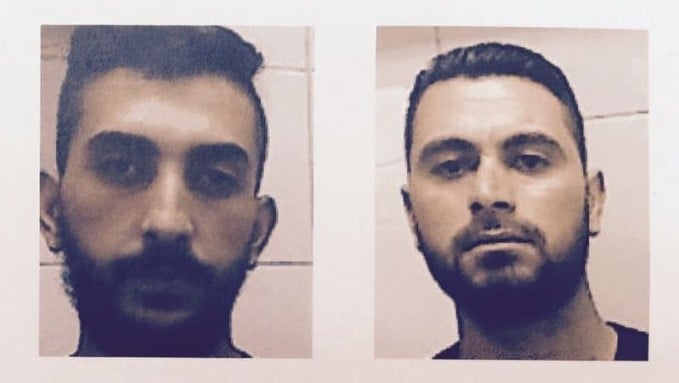
Two West Bank Palestinians were arrested over a July firebombing of a gas station inside an Israeli settlement, Israel’s Shin Bet security agency said Tuesday.
The Shin Bet said the two men, from the village of Awarta, admitted to setting fire to the gas station in Eli in the central West Bank August 14, and to vandalizing nearby buildings, in revenge over the fatal firebombing of a Palestinian family two weeks earlier.
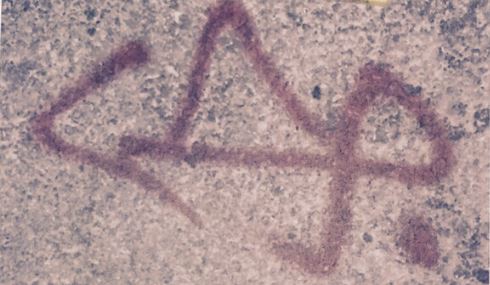
The perpetrators also sprayed the symbol of the Popular Front for the Liberation of Palestine at the site.
The arrests were made in the West bank village of Awarta south of Nablus in a joint operation of the Shin Bet, the army and the police, according to an official statement. The suspects were found as a result of forensic evidence from the scene and eyewitness testimony of the attack.
Under interrogation, Ahmed Abdat, 23, and Majdi Kowarik, 22, confessed to carrying out the attack, according to the Shin bet. Kowarik admitted to planing the attack, while Abdat drove the vehicle and threw a fire bomb at the gas station.
The Shin Bet described the two as a “terror cell.”
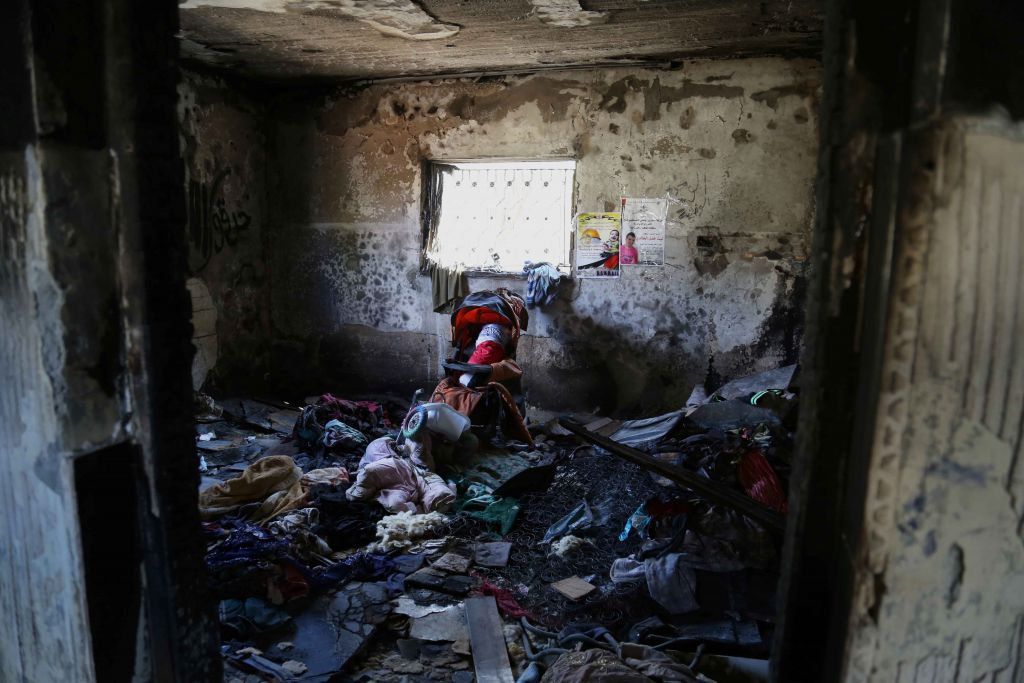
They claimed to have executed the attack as revenge for the Duma village firebombing, which left three Palestinians dead and was likely perpetrated by Jewish terrorists.
The July 31 attack in the northern West Bank village of Duma killed 18-month-old Ali Dawabsha. His father Saad and mother Riham succumbed to severe burns the following week and in early September, respectively. Four-year-old Ahmed was the sole surviving member of the family.
No arrests have yet been made in that attack, despite a crackdown on Jewish extremist groups, though Defense Minister Moshe Ya’alon has indicated Israeli authorities know what group is behind the attack.
Security officials said later that Ya’alon did not say that Israel knew the specific perpetrators, but rather the group from which they had come.
[mappress mapid=”5270″]






The Times of Israel Community.