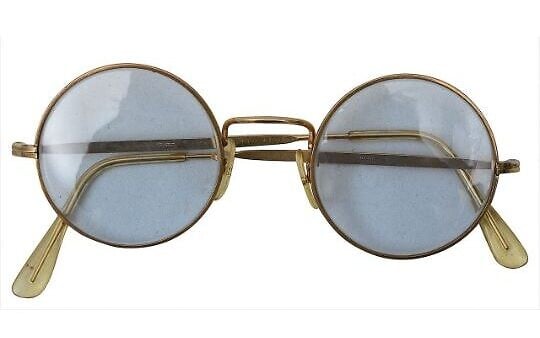
A pair of blue-tinted glasses gifted by John Lennon. (Catherine Southon Auctions)
Israeli-British psychic and spoon-bender Uri Geller said Thursday he bought John Lennon’s iconic blue-tinted glasses for £40,000 ($51,000) at an auction held a day earlier.
Geller told the BBC he was “elated” with his acquisition and planned to display them in his museum in Tel Aviv in the John Lennon section next to an alien egg the late former Beatle presented to him.
“John Lennon and I were very good friends while we were living in New York in the 1970s,” Geller said. “I knew I had to buy these glasses whatever. I would have gone up to £500,000.”
Lennon gave the glasses to a man — identified as Michael, a resident of Surrey — in 1968 as a birthday present. Catherine Southon Auctions auctioned off the spectacles at Farleigh Golf Club in Surrey on Wednesday.
The auction house said Lennon gave them to Michael at Abbey Road Studios in 1968, when he and his girlfriend were invited to the studio on what was Michael’s birthday.
Get The Times of Israel's Daily Editionby email and never miss our top stories
According to the auction house as quoted in the Guardian, Michael said: “I picked up a pair of glasses from a piano. Penny said: ‘Don’t touch.’”
But “John Lennon turned around and said, ‘He’s all right. In fact, he can have them. Happy birthday!’”
Michael noted: “They are not John Lennon’s prescription glasses, but he gave them to me and wished me happy birthday, so that is good enough for me.”
Advertisement
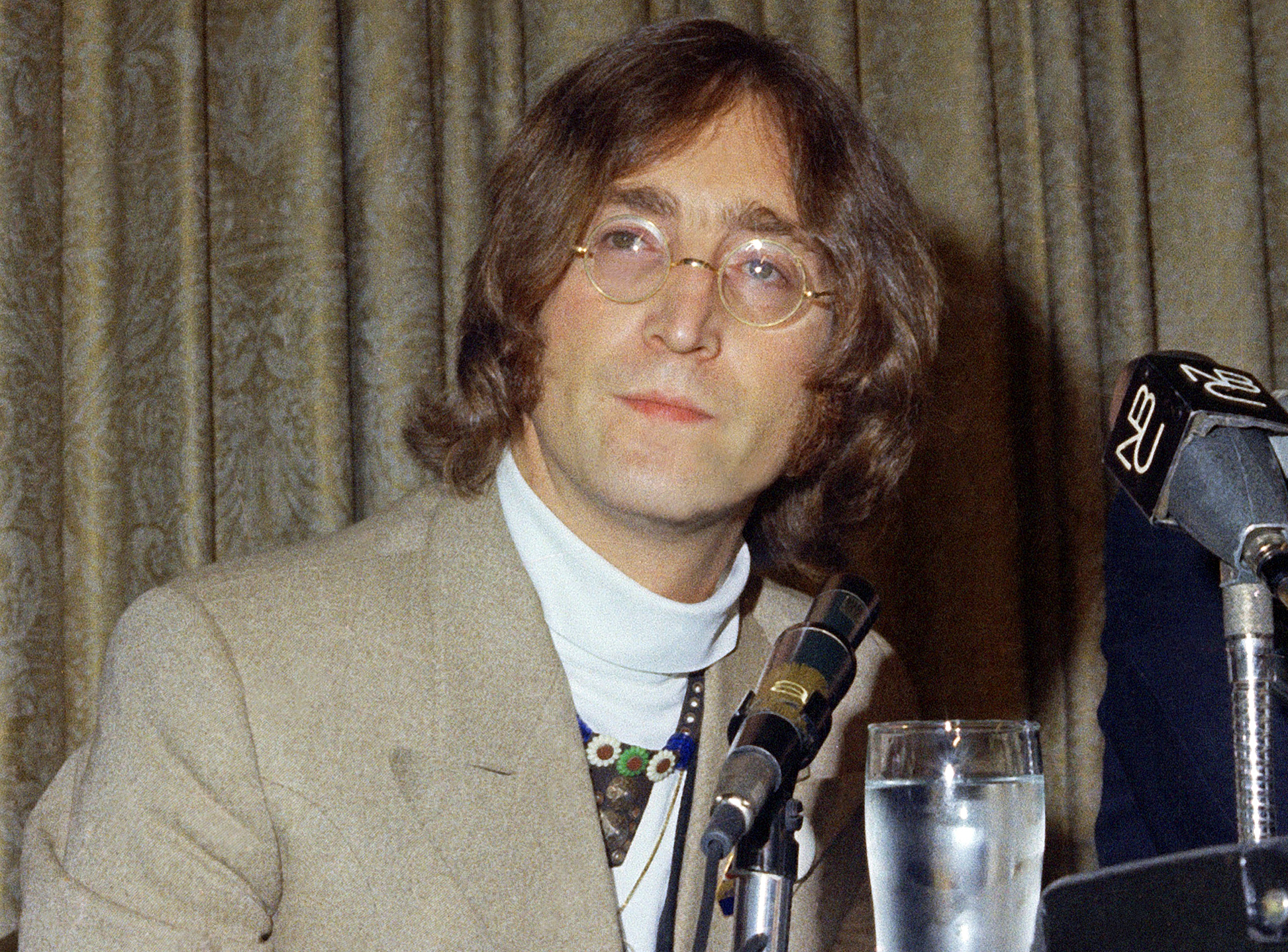
John Lennon appears during a press conference at the Hotel Americana on May 13, 1968, in New York. (AP Photo, File)
“John changed my life as that’s where I learned about spirituality,” Geller told the BBC, noting his “amazing connection” with the musician, who was murdered in 1980.
“He believed in UFOs and I believed in UFOs and he was fascinated by my alien collection,” he said.
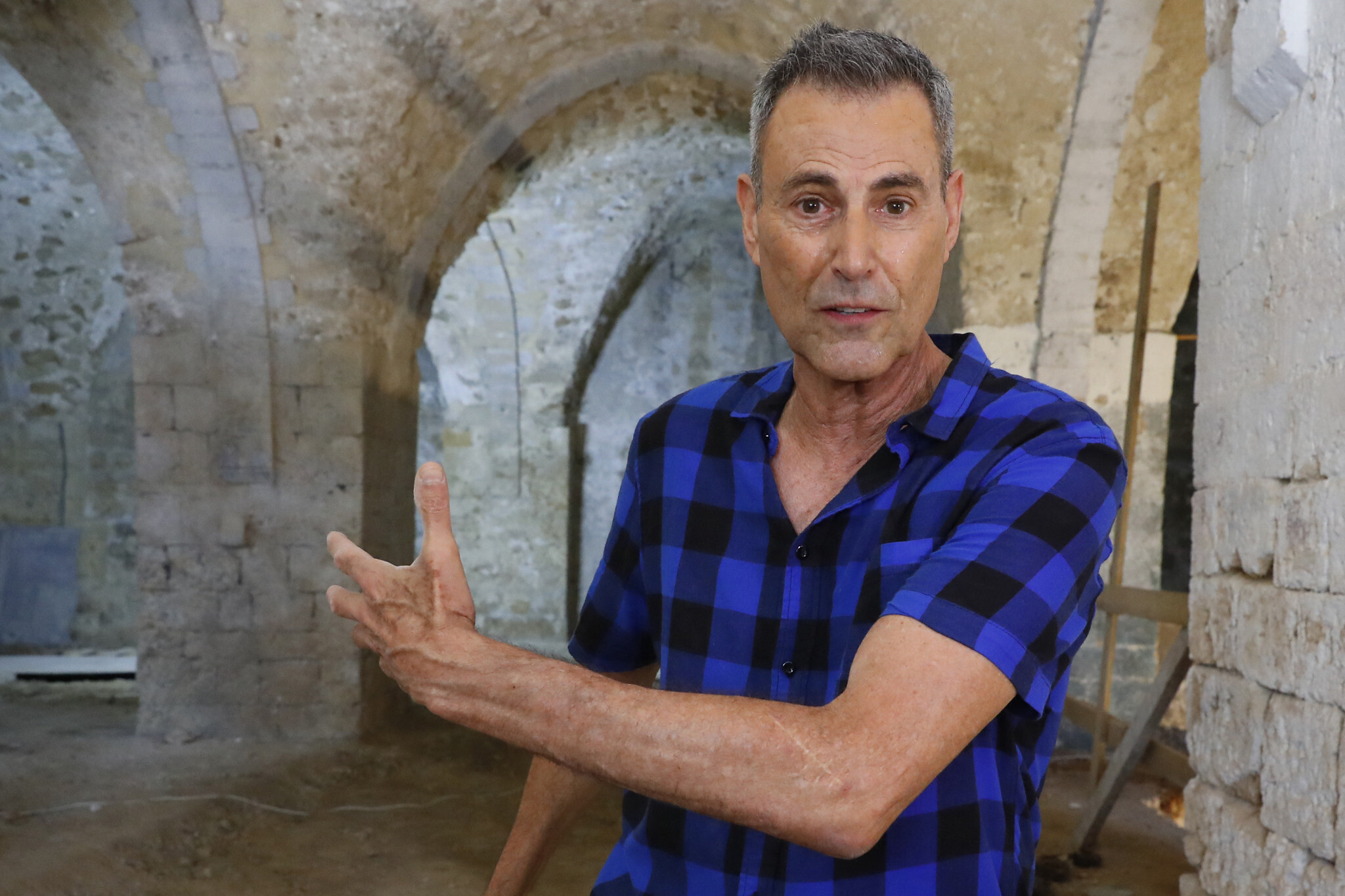
Israeli illusionist and television personality Uri Geller addresses the media during work on his museum in Jaffa on the outskirts of Tel Aviv on August 14, 2018. (JACK GUEZ / AFP)
Help us report truthfully on social media
As a multimedia journalist, my job is to take the quality, fact-based journalism produced by The Times of Israel newsroom and make it accessible across every platform — from Instagram posts to podcasts to short-form videos.
This is how many, especially young people, consume news these days. But misinformation is rampant on social media. Our team at ToI produces accurate, responsible short-form reporting on Israel and the Jewish world.
If you believe in the importance of factual social media journalism, please consider joining our reader support group, The Times of Israel Community. Your financial support is essential to sustain responsible multimedia reporting.
We’re really pleased that you’ve read X Times of Israel articles in the past month.
That’s why we started the Times of Israel - to provide discerning readers like you with must-read coverage of Israel and the Jewish world.
So now we have a request. Unlike other news outlets, we haven’t put up a paywall. But as the journalism we do is costly, we invite readers for whom The Times of Israel has become important to help support our work by joining The Times of Israel Community.
For as little as $6 a month you can help support our quality journalism while enjoying The Times of Israel AD-FREE, as well as accessing exclusive content available only to Times of Israel Community members.
Thank you, David Horovitz, Founding Editor of The Times of Israel


 Add ToI as a Preferred Source on Google