

World Zionist Congress leaders preach unity as delegates spar over Jewish future
Opening night of the ‘parliament of the Jewish people’ is filled with festivities even as debate flares between right and left, secular and religious, over where critical funding will go
 Add ToI as a Preferred Source on Google
Zev Stub is the Times of Israel's Diaspora Affairs correspondent.
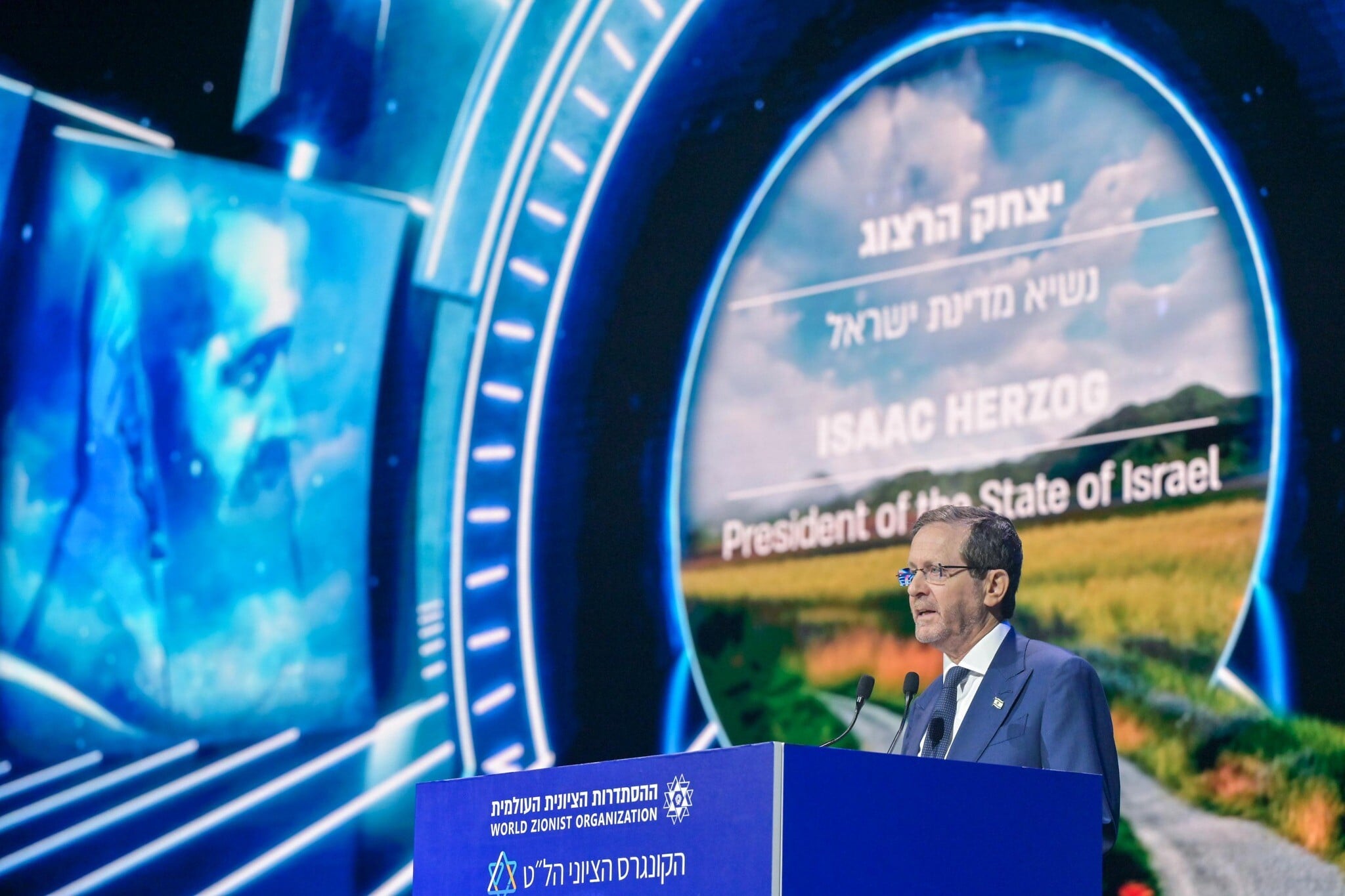
The excitement was palpable in the main hall of Jerusalem’s International Convention Center as government officials, heads of Jewish organizations, and youth from 42 countries gathered to discuss the future of the Jewish people at the opening of the 39th World Zionist Congress on Tuesday night.
This session of the congress, known as the “parliament of the Jewish people,” continues through Thursday, and is the largest since the World Zionist Congress was first founded by Theodor Herzl in Basel 128 years ago. It was also the first one ever led by a woman, Gusti Yehoshua-Braverman, head of the WZO’s Department for Organization and Connection with Israelis Abroad in the World Zionist Organization.
Many attendees spent their discussions speculating about who will take control over national institutions such as the World Zionist Organization, Jewish National Fund-KKL and Keren Hayesod. Meanwhile, Zionist General Council members were deep in negotiations over whether the new leaders of these organizations, which control billions of dollars in funding to be directed toward Jewish causes, would be from the right wing, the left wing, or evenly split.
According to a WZO source, under the terms of the deal reached Wednesday, Rabbi Doron Perez, chairman of the religious Zionist World Mizrachi movement, will serve as the next chair of the WZO. Halfway through his five-year term, he will be replaced by a representative of the Yesh Atid party.
Yesh Atid MK Meir Cohen will serve as the next chairman of the Jewish National Fund-KKL. He will be replaced in the middle of his term by a representative of Likud.
The agreement, which has not yet been signed, is seen as a balanced compromise between the liberal and conservative blocs, based on the relative parity of the size of each bloc, the WZO source said. During the previous term, both positions were held by Likud figures, Yaakov Hagoel and Ifat Ovadia-Luski.
The opening event was studded with addresses by public figures, including Israel’s President Isaac Herzog and WZO chairman Yaakov Hagoel, and a musical performance by Yuval Raphael, who placed second representing Israel in the most recent Eurovision contest.
Herzog spoke about the need to stand strong in the face of an ongoing rise in antisemitism targeting Jewish communities and the Jewish state.
“Those who once called us ‘zhids‘ now call us ‘zios,’” Herzog said, referring to derogatory slang terms for Jews and Zionists, respectively. “Well, these zios have now returned to their land. They are the finest of human beings, who have built a Jewish, democratic, life-affirming and peace-seeking state.”
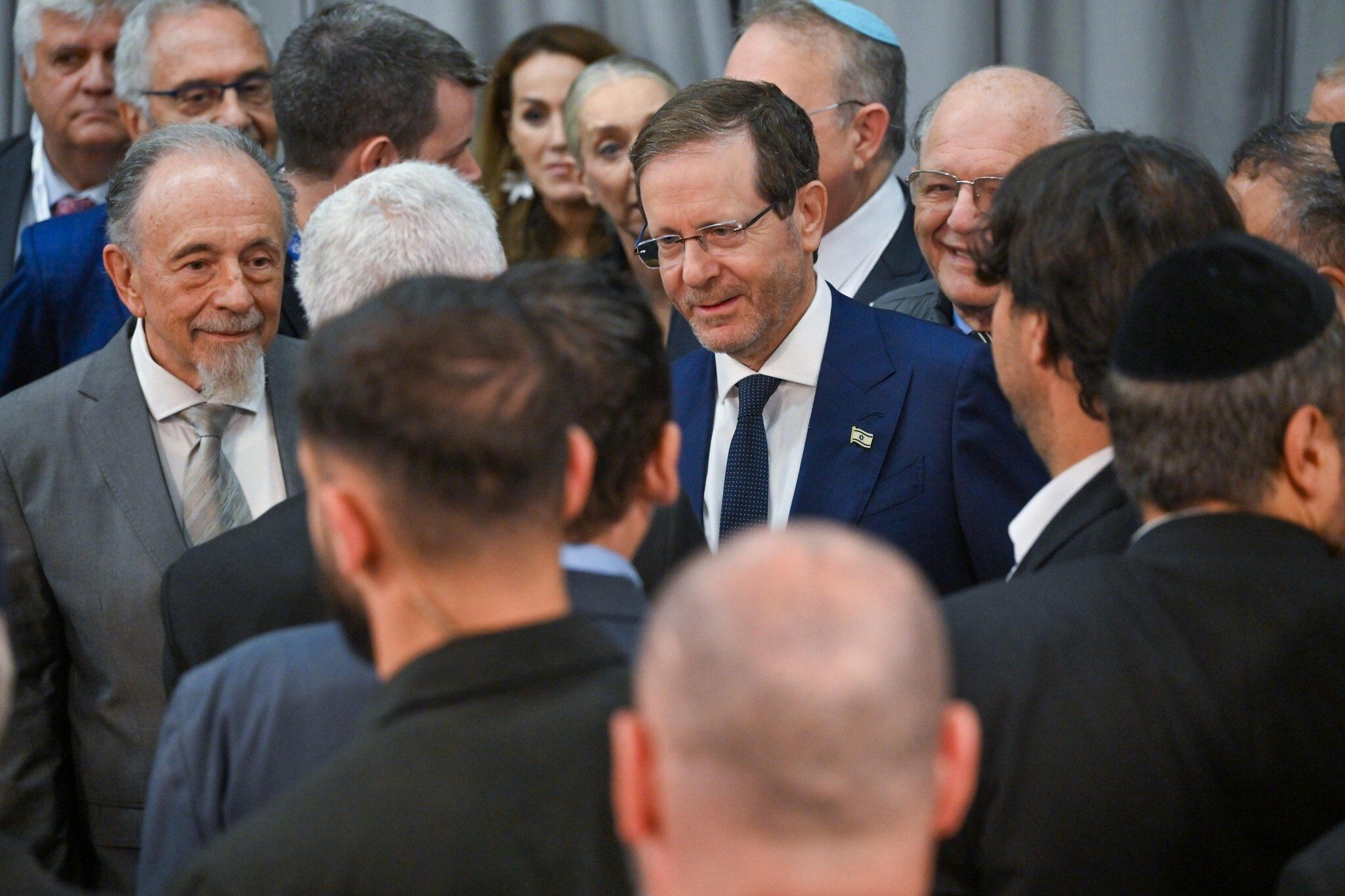
As activists and influencers from across the political and religious spectrum gathered to deliberate over competing visions for Israel and Jewish communities, several told The Times of Israel they relished the opportunity to debate the issues respectfully, regardless of the outcome.
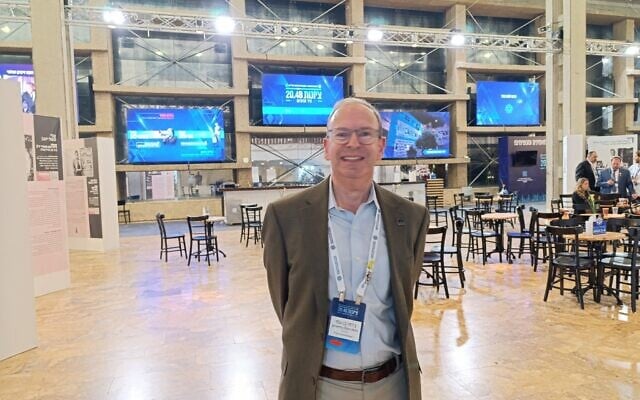
“The biggest thing I hope for is that Zionists of different backgrounds will get to meet each other and find out that they may disagree on a lot of things, but they don’t have to demonize each other,” said Herbert Block, executive director of the American Zionist Movement. “The power of this movement is that we have Zionists of wildly different stripes who all came together today. People are civil and cordial, getting to know people they never thought they would talk to.”
In particular, Block said he hoped the congress would help amplify Diaspora voices, particularly those from American Jewish communities, in Israel’s decision-making processes.
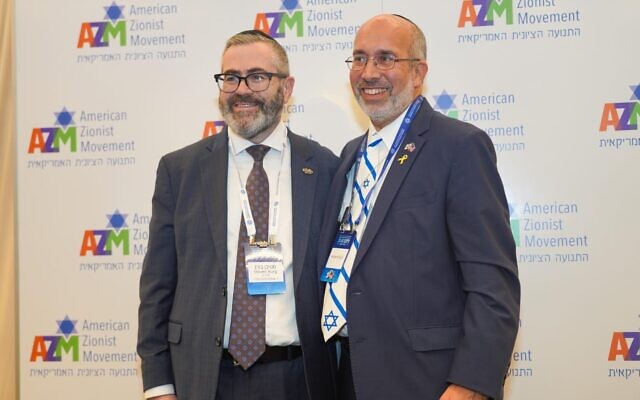
Rabbi Steven Burg, head of the Aish Ha’am slate and CEO of Aish, also stressed that achieving unity was his primary goal.
“We’ve been talking about how much the Jewish people need to be family,” he said. “After the elections, we decided that we were going to meet with every single party from left to right, and by doing so, we’ve built relationships that we expect will allow us to work hand-in-hand with other Jews around the world to make the Jewish nation strong. Since October 7, we’ve all been fighting the good fight around the world in a very united way, and we need to make sure now that we don’t lose that lesson.”
Unity will be difficult to achieve as delegates debate more than two dozen proposed resolutions and 18 proposed amendments to the World Zionist Organization Constitution, many of which are extremely controversial, on topics ranging from social justice to national policies to fighting antisemitism to Jewish education to rebuilding Israel after its two-year war with Hamas in Gaza.
Jeremy Ben-Ami, president of the liberal advocacy organization J Street, said he was looking forward to engaging in “civil discourse” by arguing against right-wing positions his organization opposes, such as Israeli annexation of the West Bank and the extension of sovereignty on the Temple Mount.
“It’s very important for the voice of progressive and liberal American Jews who care about Israel to be heard in the Zionist conversation,” Ben-Ami said. “The ability to disagree with civility is so important to the Jewish people. And so by being here, I’m hoping to engage in disagreement through civil discourse.”
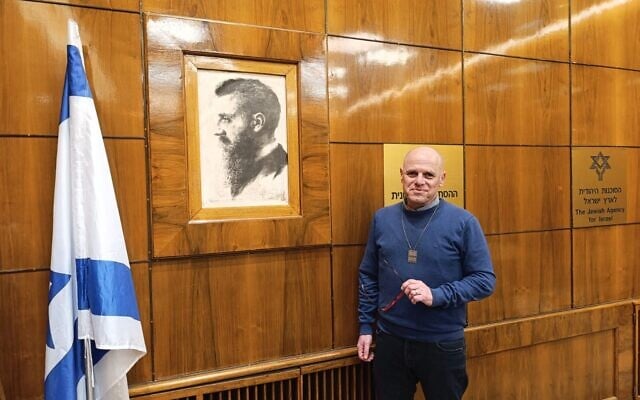
Yizhar Hess, vice chairman of the World Zionist Organization and representative of Mercaz, the slate of the global Masorti/Conservative Movement, described a clear agenda his party has for the congress.
“Our goals this week are clear: make sure the national institutions will continue helping Israel rebuild and recover after these difficult two years, will promote Jewish pluralism, equality and democratic values in Israel, and will support our communities worldwide that are facing the challenges of antisemitism and educating our next generation,” Hess said.
“Making this a reality means first and foremost ensuring these institutions don’t fall under the control of divisive extremists with a radically different agenda that would sideline the clear majority of global Jewry that embraces pluralism and liberal values. This would be a tragedy for Israel, Zionism, and the Jewish people,” he said.
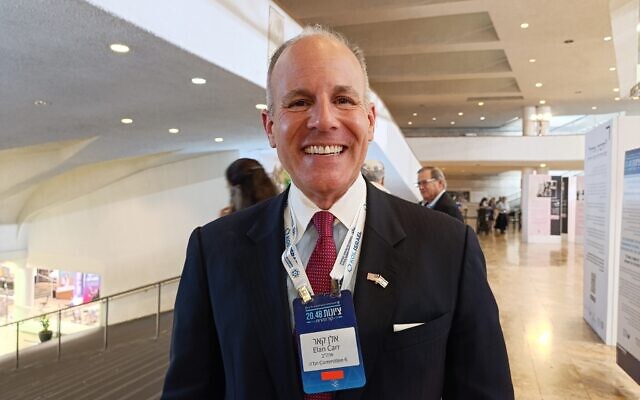
Elan Carr, CEO of the Israeli-American Council, participating in the World Zionist Congress for the first time, said he looked forward to using the platform to help strengthen Israel-Diaspora relations.
“The goal of this meeting is to set the agenda of the Zionist project, and who deserves to be here more than the IAC, where we sit at the borderline between Israel and the Diaspora, between Israelis who live here and live there,” Carr said.
“Being here is critically important, whether for inculcating a proud Jewish and Israeli identity in the next generation or fighting antisemitism as we do every day in classrooms and on campuses,” he said. “This is where we need to make our voices heard.”







The Times of Israel Community.