

X cracks down on AI-generated war footage as Iran misinformation runs rampant
Social media platform to strip revenue from users posting fake videos; false images of strikes on Tel Aviv viewed millions of times, UN officials Albanese, Frazier share AI photos
 Add ToI as a Preferred Source on Google
Luke Tress is The Times of Israel's New York correspondent.
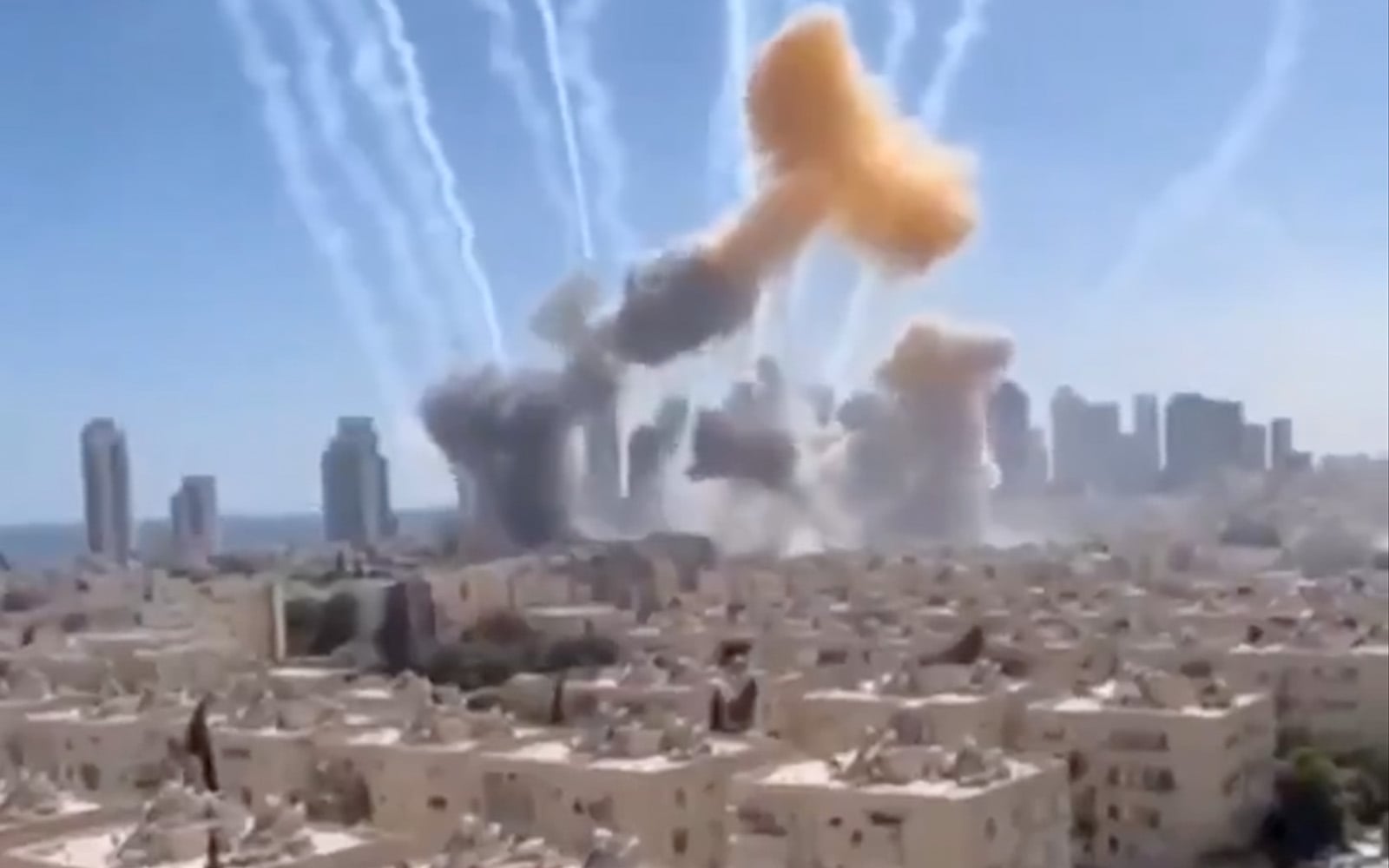
The social media platform X, formerly Twitter, said on Tuesday that it will crack down on AI-generated war footage as fake videos of the war in Iran proliferated online, part of a broader struggle for influence and attention during the conflict.
Nikita Bier, X’s head of product, said the influential platform had identified dozens of accounts that were spreading fake war videos and would halt payments to users posting AI-generated Iran footage.
“During times of war, it is critical that people have access to authentic information on the ground. With today’s AI technologies, it is trivial to create content that can mislead people,” Bier wrote in a post.
Rapidly improving AI technology has allowed members of the public who have little technical experience to create realistic videos and photos to gain attention or spread false narratives about the war.
X users who post “AI-generated videos of an armed conflict,” without stating that the footage was made with AI, will be suspended from the platform’s creator revenue sharing, Bier said. Creator revenue sharing allows eligible users to earn money on X. To earn eligibility, users must have a sizable reach.
The policy will effectively disincentivize users from spreading fake war footage.
If a user violates the AI policy a second time, they will be permanently suspended from earning revenue, Bier said.
X will identify AI content through community notes — a feature that allows users to flag falsehoods — or if the video has other signals of AI, Bier said.
Limiting the policy to users who earn revenue means most X users, who do not earn money on the platform, will not be affected. Bier’s statement also did not mention AI-generated photos, or whether X would lessen the reach of fake footage.
Not all misleading images on the platform are AI-generated, either — some users have posted footage of video games, claiming they are war videos, or have falsely labeled real images that are unrelated to the conflict as coming from Iran.
While X has fewer users than platforms such as Instagram, Facebook and TikTok, X is influential as a news space. Public officials, governmental institutions, news outlets, commentators and reporters share information on the platform, swaying the public discourse.
Fake content related to the Iran conflict has proliferated on the platform since the start of the war this week.
Bier highlighted an AI video, posted by a user identifying as a “journalist from northern Gaza,” that claimed to show an airstrike on Tel Aviv, but was actually generated by AI.
Another account identifying as a Gazan journalist posted another fake video of airstrikes pummeling Tel Aviv that was viewed millions of times.
Tel Aviv, stripped of illusion, as you have never witnessed it. pic.twitter.com/HE3ckjBMti
— Abdulruhman Ismail (@a_abdulruhman) March 3, 2026
“We found a guy in Pakistan that was managing 31 accounts posting AI war videos. All were hacked and the usernames were changed on Feb 27 to ‘Iran War Monitor’ or some derivative,” Bier said. “We are getting much faster at detecting this—and also eliminating the incentive to do this.”
He said that the content was not only anti-Israel.
“We did a sweep of ‘IDF Girl’ accounts that were run out of Pakistan,” he said, adding that, in nearly all cases, the users posting fake content were people “looking to game monetization,” piggybacking on the attention surrounding the war, and did not appear to have political motivations.
Other videos showed fake Iranian strikes on Dubai.
Iran attacks civilian targets? Crazy pic.twitter.com/HeA6xpveKC
— Grant Cardone (@GrantCardone) March 2, 2026
Fake photos have also spread, such as AI images claiming to show rescuers recovering the body of Iranian supreme leader Ayatollah Khamenei.
Photos of Iranian girls’ bodies, also created by AI, have been shared widely, including by the UN special rapporteur for the Palestinians, Francesca Albanese, and other purportedly legitimate sources, such as journalists and elected officials.
Iran’s regime is illiberal and brutal, and the Iranian people deserve the freedom they have long fought for. This gives no right to the US or Israel -whose own policies in Palestine are also illiberal and brutal- to bomb Iran, nor to EU leaders to cloak escalation in hypocrisy. https://t.co/GM1SrxhCPa
— Francesca Albanese, UN Special Rapporteur oPt (@FranceskAlbs) March 3, 2026
Albanese defended posting the fake image, saying, “The picture is not the issue: the facts are.”
“It could be a painting or a blank image. The point would remain,” she said.
The UN special representative for children and armed conflict, Vanessa Frazier, also defended her use of a misleading image on X.
Frazier posted a photo from months ago showing Iranians who had been killed by the Iranian regime, but said that the image showed the bodies of children killed in strikes on Iranian schools.
“You don’t need to deflect from the horrors of this attack by criticizing a photo! The facts remain,” she said.



The Times of Israel Community.