

Amona, no way to it nor path
On the eve of the outpost evacuation, the press offers a window into the Israeli psyche, saddled with both pity and a higher calling to the rule of law
 Add ToI as a Preferred Source on Google
Joshua Davidovich is The Times of Israel's Deputy Editor
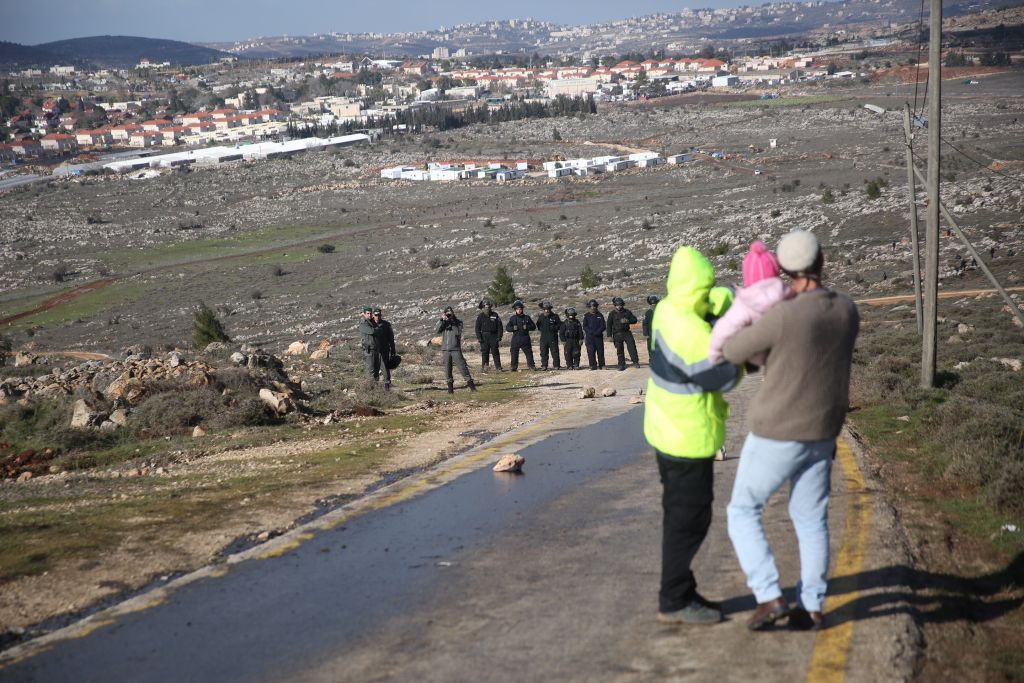
Tabloids in the Israeli press are smeared with a healthy dollop of pathos Wednesday morning, as they preview the imminent evacuation of the Amona outpost.
Don’t blame the papers, though. Blame the Israeli psyche.
Saddled with the emotional baggage wrought by millennia of Jews being thrown out of their homes, yet also imbued with a higher calling to ethics and the rule of law, the Israeli mind as seen through the papers is sad and sympathetic over the coming eviction yet experiencing a “get ‘er done” sensibility.
Even the name of the evacuation operation, “Gan Na’ul 2” — which recalls a song by poet Rachel that speaks of man as a “locked garden, no way to it nor path” — evokes a sense of the illegal outpost as a beautiful thing but one which Israel cannot have.
“It’s tough. These are my last hours here,” Yedioth Ahronoth quotes Amona resident Hoyada Nizri saying in its lead story, a sympathetic writeup on the Nizri family and their home, which has filled with supporters in recent days.
Yedioth columnist Yifat Ehrlich, a former resident of Amona whose home was destroyed in the 2006 partial evacuation, also chimes in with a heartfelt account of a final visit to the site where she spent her first years as a wife and mother.
“I’ve come back to Amona several times, to visit friends, to breathe the air and take in the view, but for years I haven’t dared to enter the mobile home that was my [first] home. The wound had scabbed over, I was afraid to scratch it. Today I came to say goodbye. Goodbye and not see you later,” she writes. “With the first light, the tractors will come and debase the mountain, swallow memories and scratch away at hearts. And the dawn will bring a new day, with a new-old hope. Pioneers don’t get broken. They always get up and climb the mountain again.”
Some pioneers don’t even wait. Haaretz’s lead story, which is a 180-degree turn from Yedioth’s pity-inducing coverage, counts about 500 protesters who managed to avoid roadblocks and make it to the outpost in a bid to fight off the impending evacuation.
While there was some confusion as to when the actual evacuation will go down, partially due to a pending High Court ruling on the government plan to move the settlers peacefully, the paper quotes from one of the justices making it look like the bench will likely strike down the deal, paving the way for the forceful eviction.
“It doesn’t seem [the state] took into account the desires of the owners, those who are there and those who are not in the area,” Salim Joubril is quoted saying.
The paper also previews the various challenges the army was preparing for in evacuating the outpost, with troops drilling for scenarios going well beyond the tire-burning, rock-throwing and barricading that is a hallmark of settler youth resistance. One scenario includes settlers opening fire on the nearby village of Silwad in revenge, but the others deal with preparing for the possibility that troops will refuse orders or evacuation forces will know the people they are booting.
“As part of the preparations, troops were asked not wear their berets but rather their combat caps, so that the evacuation won’t be identified with one specific brigade,” the paper reports.
Bridging the two sides of the coin, Israel Hayom’s Haim Shine toes the government line, backing the evacuation but also the building of more houses in the West Bank, like the 3,000 announced Tuesday night as a salve to the settler movement.
“The great ideal of settling the land must be realized on the foundation or honesty and justice, and definitely not on the private land of Arabs. What was heatedly done to us over hundreds of years we must not do to others. You can be angry and rage against the leftist groups that work for the Palestinians and cause them to claim ownership, but when a court decision is handed down, you need to bite your lip, shed tears and not lose the fervor of the vision,” he writes. “The amazing settlers of Amona should not be ashamed. There’s no shame in the world. From the pain and sorrow … with the help of the Israeli government nearby will be built a big new Amona, flowering and booming. For every house that’s evacuated, dozens more will be built lawfully.”
Left out of all these reports is the political shakshouka that led to the delayed evacuation, and the mess of shifting alliances, orchestrated by Prime Minister Benjamin Netanyahu and other top officials, who have tried to maintain a balancing act between appeasing the court and the settlers (see the 3,000 homes mentioned above).
Israel Hayom’s Dan Margalit writes that the evacuation should have happened years ago, terming the saga a “tale of flip-flops.”
“This whole affair looks like a legal octopus, made fatter by the lack of decision making on the part of Netanyahu, [Jewish Home leader Naftali] Bennett and other senior coalition figures,” he writes.
Haaretz’s lead editorial also goes after Netanyahu, though it focuses on his Trumpian reaction of blaming the media for his criminal investigations.
“Independent media are a major basis of any democratic government. Their role is to criticize the government and the person at its helm, even if Netanyahu opposes this. That is the justification for the media’s existence and for the constitutional rights, such as confidentiality of sources, granted to the media,” the paper writes. “The reports on the suspicions against the prime minister have not been fabrications, as he has falsely claimed, but have been based on recordings, evidence and documents uncovered in the police investigation. That’s precisely like the investigations of his predecessor, Ehud Olmert, who is serving time in prison now, or of Ariel Sharon. Instead of playing the victim, Netanyahu should tell the truth to his investigators and the public and let media outlets do their job.”







The Times of Israel Community.