

Ancient sexual ‘cult sites’ discovered near Eilat
Findings, including 8,000-year-old stone phallic structures, provide new insight into desert Neolithic societies
 Add ToI as a Preferred Source on Google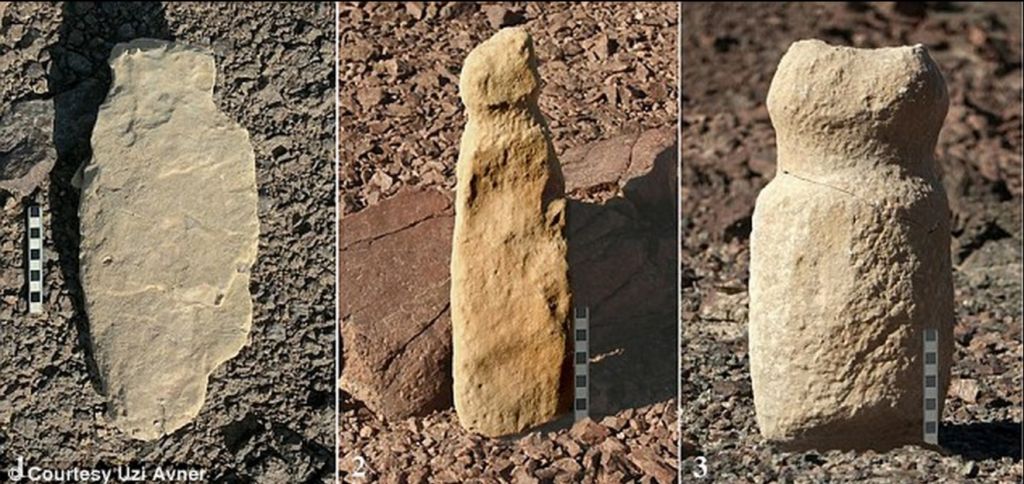
Over 100 neolithic “cult sites” containing sexual carvings, graves and human-like figures, and dating back roughly 8,000 years, have been found in the Eilat Mountains in southern Israel.
The findings, which include a variety of phallic stone structures and artifacts, were found 12 kilometers from the resort city of Eilat, in an area previously thought to contain few prehistoric sites, the Daily Mail reported Tuesday.
Uzi Avner, a desert archaeology expert at the Arava-Dead Sea Science Center who led the team that discovered the sites, said a preliminary interpretation of the objects suggests two symbolic aspects of the objects: fertility and death.
Fertility is represented by “stones with elongated perforation (vulva-shape) and by the very combination of the elongated cell and the circle,” according to the research team, who recently published their findings in the Journal of the Israel Prehistoric Society.
Death is likely signified by the burial of stone objects, set upside down. Among the artifacts, a human-like figure was found nearly entirely buried, with only the top visible on the surface.
According to Avner and his team, similar sites were found in other regions in Israel and in Jordan, leading them to believe they represent a broad phenomenon that offers new insights into desert Neolithic societies and their spiritual culture.
“The combination of fertility and death symbols is typical of ancestral worship in traditional societies,” Avner told the Israeli news site Ynet Wednesday.
“According to ancestral worship, the deceased does not leave the family, but continues to live with them as a spirit – the departed are invited to feasts and celebrations, taking active part in communal life, even after death.”
The research team says the density of the sites is phenomenal, taking into consideration the habitation patterns of Neolithic societies, as well as the rough topographical and environmental conditions in the area.
The researchers further stated that the large amount of cult sites found suggest many more await discovery on the Negev, southern Jordan and Sinai mountains.










The Times of Israel Community.