

Brahimi: ‘Syria may become worse than Somalia’
World leaders urge peace talks as Syrian opposition faces collapse; Egyptian city sees private militia take control of streets
 Add ToI as a Preferred Source on Google
Michael Bassin is a founding member of the Gulf-Israel Business Council, a co-founder at ScaleUpSales Ltd, and the author of "I Am Not a Spy: An American Jew Goes Deep In The Arab World & Israeli Army."
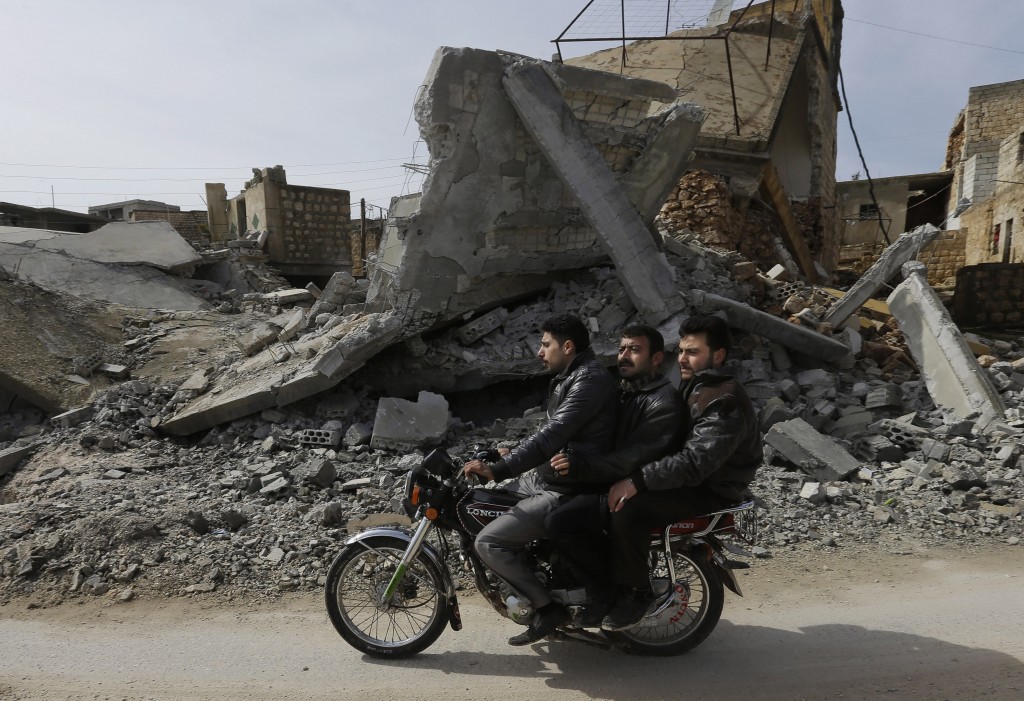
World leaders are urging the government of Syrian President Bashar Assad and leaders of the Syrian opposition to get to the negotiating table to figure out a way to stop the violence that engulfs the country and compose a transitional government.
However, as effective as the Syrian rebels have been at fighting off the regime’s forces, there is serious worry that its political leadership will splinter apart as soon as discussions begin over how a transitional government will look, Arab dailies report.
“Kerry: We want to see Assad and the Syrian opposition sitting at the same table for the establishment of a transitional government” reads the main headline in the London-based newspaper Al-Quds Al-Arabi.
“What we want and what the whole world wants is to stop the violence,” US Secretary of State John Kerry said at a press conference in Washington yesterday. “We want to see… a framework laid out by the Geneva Protocol, which requires mutual consent of both parties on the formation of a transitional government… The most important issue now is that the international community, especially the (UN) Security Council, send a clear message about how to move forward towards a political process that will include the end of the Assad regime.”
While Assad’s forces and the Syrian opposition continue to fight with neither side taking a clear upper hand, the international community is becoming increasingly worried that, in the words of UN Special Envoy to Syria Lakhdar Brahimi, “Syria may become worse than Somalia.”
The pan-Arab London-based daily Al-Hayat relays Brahimi’s frustration at the lack of progress on Syria.
“This is the gravest crisis that haunts the world,” Brahimi said. “There must be a peaceful solution or Syria will become even worse than Somalia.”
Still, the situation does not seem to be heading in the right direction, especially considering the recent cancellation of a meeting of Syrian opposition leaders over the formation of an interim government because of severe internal disputes. What also has not helped matters is the ongoing disagreements within the European Union and the US State Department regarding what kind of military support to grant the rebels.
What will happen to the Syrian resistance if a complete breakdown in leadership occurs is a question that might need answering sooner rather than later. The Dubai-based media station Al-Arabiya reports that Moaz al-Khatib, the president of the Syrian National Coalition, is considering resigning over intractable disagreements between various factions.
Al-Khatib worries that serious risks will abound if an interim government is established at this juncture in time. While the Syrian opposition is united in its fight against Assad, it is unclear if it can function as one polity in the event that Assad is deposed.
‘Popular Security Committees’ take control in Egypt
Islamist supporters of the Muslim Brotherhood in Assiut, a city in southern Egypt, are making good on their promise to establish private “popular security committees” in light of a protest recently launched by Egyptian policemen.
According to Al-Hayat, the leaders of these private militias are Muslim Brotherhood activists who were imprisoned throughout the 1980s for plotting a violent overthrow of the Mubarak regime. Arab social media networks are abuzz with photos and video clips of Islamist men marching through Assiut’s streets waving flags and small firearms.
“We will sacrifice our souls and blood. We will put all our efforts into bringing security and stability to the people of Assiut,” the leadership of the committees said in an official statement.
‘We will sacrifice our souls and blood. We will put all our efforts into bringing security and stability to the people of Assiut’
Although the Muslim Brotherhood is quickly forming other such committees in the rest of the country, critics are pointing out that such efforts are in fact in direct violation of the Egyptian Constitution, which the Muslim Brotherhood instituted in November.
The Egyptian Constitution prohibits the formation of private military or armed groups. However, the Muslim Brotherhood argues, in effect, that desperate times call for desperate measures.
The Cairo-based Al-Masry Al-Youm reports that just yesterday two people were killed in Assiut after a dispute between an owner of a gas station and people seeking to purchase diesel fuel escalated into violence. Egypt continues to suffer from a severe fuel shortage.




The Times of Israel Community.