

Cleaning up the Sinai and shaking up the Middle East
Morsi’s actions have raised eyebrows, while Iranian fatigue begins to set in
 Add ToI as a Preferred Source on Google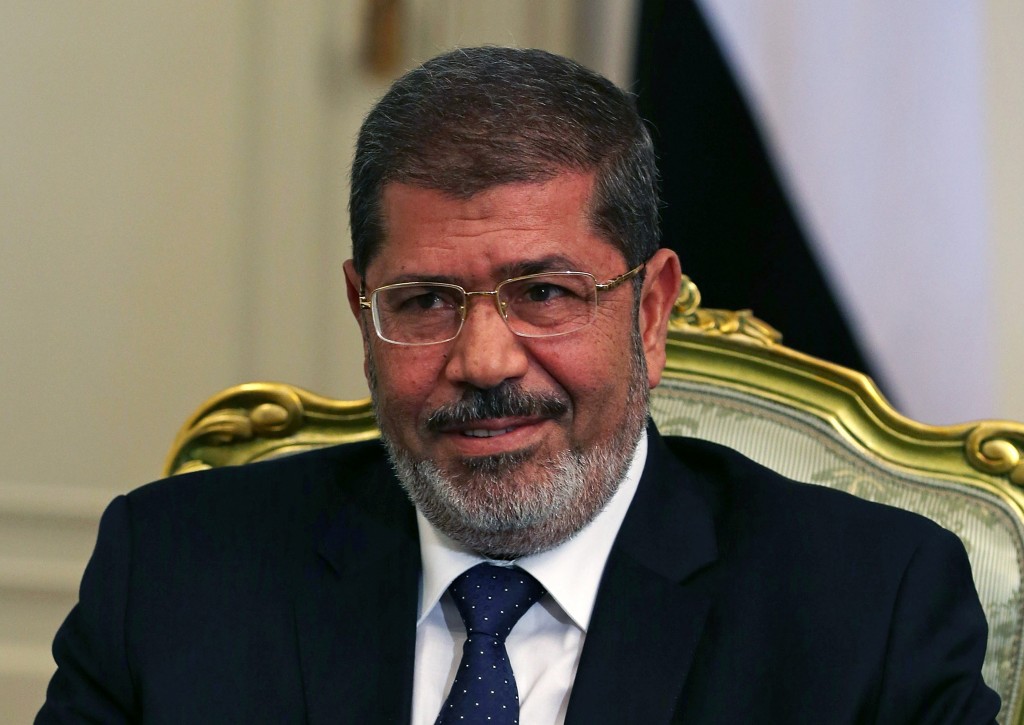
Egypt’s military shuffle and the ever-present question as to whether or not to attack Iran duke it out for top billing on the front pages of Israel’s newspapers. Most of the papers combine the two stories, save for Haaretz (which stuffs the Iran story at the bottom of the page) and Maariv (which does the same for the story on Egypt).
Sunday’s sacking of Egypt’s top generals by newly-instated President Mohammed Morsi generated headlines announcing the commencement of phase two of the Egyptian revolution. Haaretz and Maariv both use the phrase, “Completing the revolution,” in their headlines, while Israel Hayom calls it “The second revolution.” Only Yedioth Ahronoth goes for the sensationalist headline, “The Islamists conquered the Egyptian army.”
Yedioth Ahronoth writes warily of Morsi’s actions and calls the Egyptian army, “the last stronghold that held the peace with Israel together at any price.” In an opinion piece accompanying the article, Alex Fishman, worries the move will hurt Egypt-Israel relations.
“It’s safe to say on a tactical level, that in Sinai, shared strategic interests will remain so there will be continued contact. But that will cool down.” Fishman believes the only thing that will save the peace is Egypt wanting to preserve its tourism industry, rather than the shared peace between the two countries.
In Israel Hayom, Boaz Bismuth writes in a similar vein about the peace treaty in an article titled, “Israel is losing all of its veteran sources.” He despairs at the loss of all the well-known Egyptian personalities Israel has lost in the past year — “first Mubarak, now the army.” Bismuth writes that the Muslim Brotherhood was given a unique opportunity after last week’s attack on the Israeli border in which 16 Egyptian soldiers were killed.
“Last week’s terror attack in Sinai not only gave the Muslim Brotherhood the opportunity to clean up terror in the Sinai, but also to ‘clean out’ the army from the power centers in Cairo,” Bismuth writes.
In Haaretz’s front page editorial, Zvi Barel points out the inherent Israeli suspicion surrounding the move. The fact that the Sinai terror attack has given Egypt the opportunity to throw off the shackles of military rule that began in 1952, is not met with celebration. This is because the government is now “headed by a member of the Muslim Brotherhood, and his every move against the army is immediately interpreted as a struggle to impose a radical Islamist agenda, instead of as an effort to establish a civil state in which the army is subject to the government.”
To attack or not to attack?
Maariv reports that should Israel attack Iran, “the US will need to join the attack.” The article (which despite its front page headline placement is on page six) states that political and diplomatic sources have told Israel that if Israel attacks, the US will be forced to take military action.
Perhaps more telling than its lead story on Iran is Maariv’s article about the possible attack on Iran stressing out the Israeli public. “Atomic anxiety,” reads the headline, with the constant discussion about Iran and a possible strike apparently causing a spike in the number of people turning to mental health organizations. The paper reports that there has been a 12 percent increase in patients claiming to be seeking help due to the fear of a potential war with Iran.
Yedioth reports that Ehud Barak erred regarding Syria’s atomic program five years ago, prior to Israel reportedly destroying a nuclear facility near Deir Ez-Zour. Barak may be gung-ho for an attack on Iran today but the article states that Barak was against striking Syria’s nuclear site, despite the rest of the cabinet and heads of the intelligence communities advocating it.
Haaretz dedicates the majority of its page four to Iran, complete with stories about the UN, NATO, and Netanyahu. One story focuses on Ban Ki-moon anger at Netanyahu for leaking their conversation in which Netanyahu called on Ban to cancel his trip to Iran. Another article focuses on how Netanyahu views the threats to Israel, “The threats to the home front pale in comparison to the nuclear threat.” Another article is based on an interview with a former NATO general who warns that an attack on Iran will be “very costly.” Finally, Israel Air Force drones able to reach Iran have returned to service after a crash last year near Gedera prompted the necessity of a software reboot.
Trials and ceremonies
Also making all the papers is the story about disciplinary action against several Israeli sailors who participated in joint exercises with the Greek navy. The Israeli sailors allegedly visited a brothel while on shore leave. When news reached the commander of the ship, he reportedly gave them a medal and congratulated them on “losing their virginity.” According to the paper, the IDF has stated that the sailors will “stand trial for defying orders and acting contrary to expectations of a solider in the IDF.”
Yedioth Ahronoth dedicates two pages to the Olympic closing ceremony on Sunday. While there were few Israeli highlights to recap, the paper included some of its favorite moments from the London Games, including US swimmer Michael Phelps as the “most decorated” and South African runner Oscar Pistorius as the “most exciting.” Israel Hayom writes an appropriate sendoff in its article headline, “It was great, see you at Carnival.”
Perhaps Rio De Janeiro will be kinder to the Israeli athletes than London.






The Times of Israel Community.