

Fanning flames with a fire extinguisher
For a fleeting moment, papers thought the wave of violence could be nothing but a bad memory, as officials sought to lower the heat – kinda
 Add ToI as a Preferred Source on Google
Joshua Davidovich is The Times of Israel's Deputy Editor
After a week of rising, mounting, boiling, escalating, intensifying, pejorative-laden violence, officials from both sides of the Israeli Palestinian divide seemed ready to lower the flame and bring tensions down a notch or 50 in Wednesday morning’s press reports.
The bid to calm tensions didn’t quite work, as Thursday’s papers will undoubtedly profess in the wake of rock-throwing and stabbing attacks, but Wednesday’s front pages, statically and joyfully stuck in ye olde simpler times, are full of hope that things can still be pulled back to tolerable levels of hatred and odium before they reach full-fledged intifada mode.
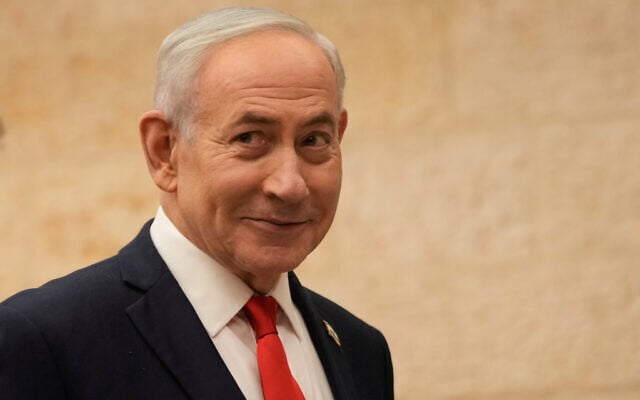
Israel Hayom, as the unofficial voice of the Israeli government, contains a front page headline with the quote “We want to calm things,” above pictures of tough-talking Prime Minister Benjamin Netanyahu. On the other side of the ideological divide, Haaretz – the closest thing the Palestinians have to a voice in the mainstream Israeli press – runs an interview with Palestinian Authority President Mahmoud Abbas with the headline “I’m working so the violence won’t get worse.”
“I’m for nonviolent popular resistance, but against any use of arms, I have made that clear several times – we don’t want a return to the cycle of violence,” he tells the paper, before going on to blame Israel for the fighting, somewhat justifying it along the way. “We didn’t cause this violence and didn’t act to escalate it, but the attacks against the al-Aqsa Mosque and worshipers led us to here. How do you expect the Palestinians street to respond after the murder of Muhammad Abu Khdeir, the arson of the Dawabshe family home, attacks by settlers and damage to property while soldiers watch?”
Just as Abbas seems to be fanning the flames with his fire extinguisher, the Israeli side is apparently doing the same thing.
“Israel is asking to lower the size of the flames, but at the same time, adding that it will fight the wave of terror with strength and determination,” Israel Hayom leads off its story.
After quoting officials on both sides saying they are doing just that, the paper also runs an interview with a senior IDF source predicting that the terror trend is under control and on the out and out.
“There is a wave of escalation. We don’t see the end of the wave right now, but this is a period of waves and we know about this from the past. We aren’t talking about a general explosion,” says the officer, who apparently really likes the word “wave.” “We are identifying some elements that are decreasing, and now we need to see how we can turn that into a wave and not a collapse. Not everything is dependent on us, but we are making the largest effort ever in the West Bank and working for security together with large forces.”
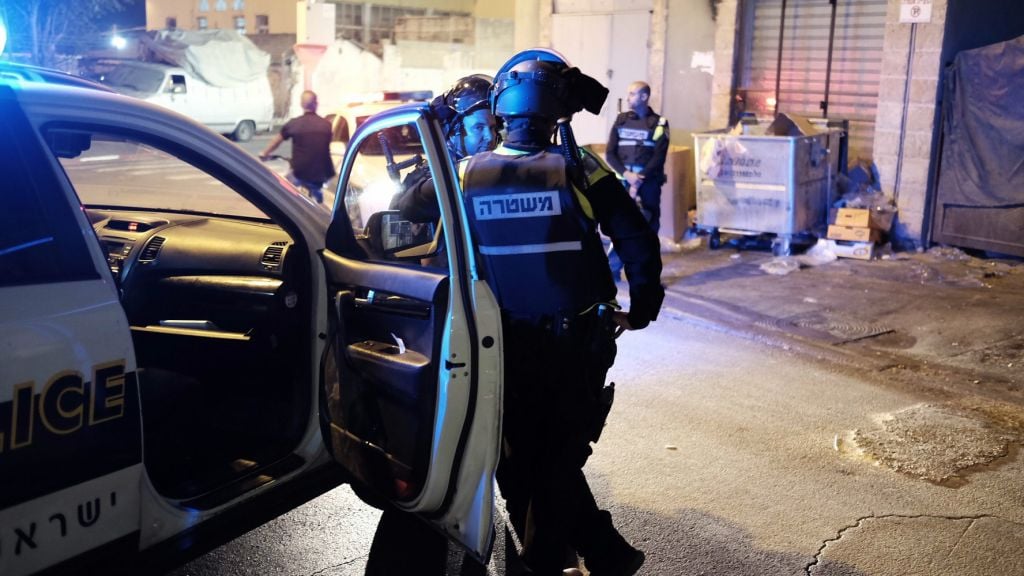
While other papers may have seen signs that the violence was heading south, Yedioth Ahronoth sees it going west instead, giving wide coverage to a protest in Jaffa Tuesday night that saw the city do its best East Jerusalem impression, with rock throwing and Palestinian flags and Hamas banners aloft.
“Yefet street in Jaffa looked last night like at the height of the intifada: injured police, buses damaged by rocks, flags of the Islamic Movement flying from every corner, and masked faces crying out ‘Allahu akhbar’ and ‘With spirit and blood we will free al-Aqsa,’” the paper reports, noting that the demonstration started as a spontaneous rally for al-Aqsa but quickly turned violent.
The tabloid offers two voices on the incident, Arab and Jewish, who both similarly vacillate between saying the violence was a blip and that it was a bellwether of changing attitudes in the city where coexistence between Jews and Arabs has often been a hallmark.
“It’s hard to write about coexistence right when your neighbor reports that within spiting distance from his house they are throwing rocks at cops and buses,” Oded Shalom writes.
But whereas Shalom says that the next day everyone will go back to their lives, with only memories of the violence, Ayman Aghbaria writes of his anxiety over how the city will move forward.
“I write from a place of worry. Worry that the security situation will deteriorate, and worry over the fate of my fellow city-dwellers,” he writes. “The feeling is that something bad is happening here. That the direction is toward riots. The new generation of Arabs of Jaffa are more politically informed, and it’s important to them to show their presence, and though we live in serenity, we identify with our people.”
While the ongoing violence has prompted Israeli crackdowns, including large arrest raids in the West Bank, Haaretz reports that the Shin Bet security service has turned itself into something of a revolving door, seeking to cut plea bargains to let suspects go quickly so they don’t have to testify about torture methods.
While the paper does little to explain why it’s so important that the Shin Bet keep its interrogation methods out of court, it reports the issue has become a liability since the agency accidentally jailed and worked over dozens of members of a Hamas cell it thought was responsible for the kidnapping of three Israeli teens last summer.
“Since the suspects’ attorneys are aware of the Shin Bet’s dilemma, they are asking for light sentences – release within the coming year – in exchange for confessions,” the paper reports. “Hani Aasi, a relatively junior member of the network, managed to cut such a deal. The military advocate general initially offered him five years and a 1 million shekel fine. His lawyer, Fadi Qawasmeh, would only agree to a 20-month prison term, so a trial ensued. But when it was the Shin Bet’s turn to testify, the agents did not appear. The court thus ordered another hearing, but before that hearing took place, the military prosecution, at the Shin Bet’s request, accepted Qawasmeh’s offer.”
The broadsheet also goes on to detail some of these interrogation methods, based on testimony from suspect Shukri Khawajeh, including tying a person up like a banana, and yes, tickling him: “’Each interrogator had a feather,’ he recalled, explaining that the interrogators put a feather in his ear or nose, and when he moved they would slap him.”





The Times of Israel Community.