

For Netanyahu, the word is mightier than the deed
Rabin and Sharon also addressed the UN, but who remembers that? They were less talented speakers than the current PM, but they knew how to take action
 Add ToI as a Preferred Source on Google
Raphael Ahren is a former diplomatic correspondent at The Times of Israel.
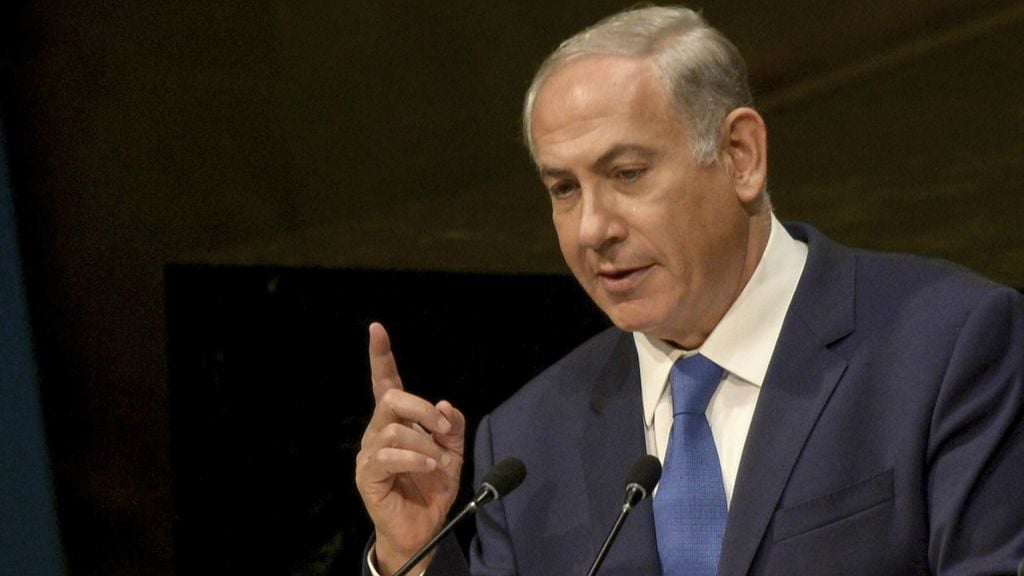
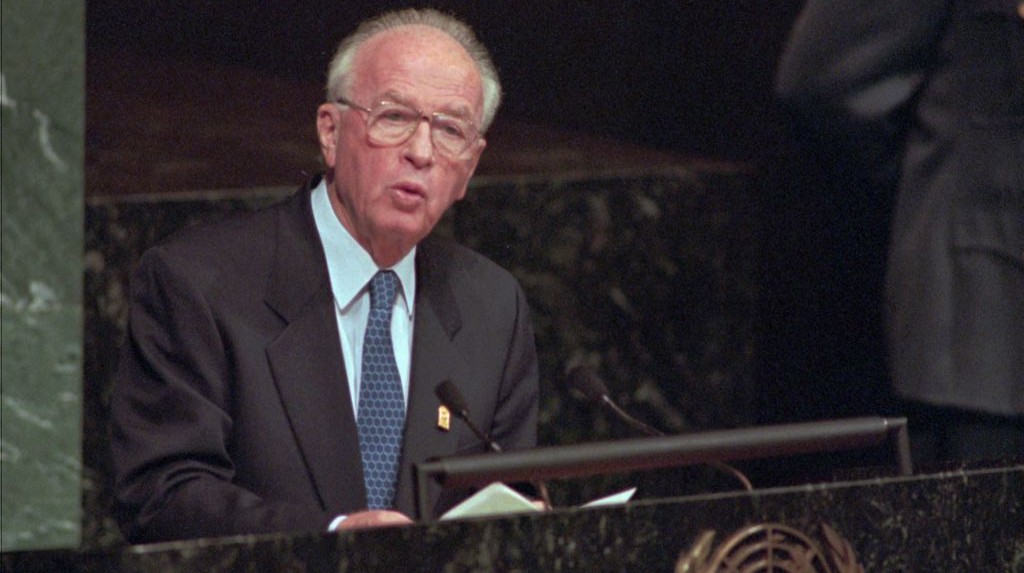
Does anybody remember former prime minister Yitzhak Rabin’s 1995 speech to the United Nations, in which, less than two months before he was assassinated, he called terrorism “the world’s cancer”? Or that of Ariel Sharon a decade later, days after he withdrew the last Israeli soldier from Gaza, when he told the General Assembly that he viewed “peace and understanding” with the Palestinians as his “calling and primary mission for the coming years”?
Significant as they were at the time, few people recall these speeches today, mostly because they were just that: speeches. Ehud Olmert never actually bothered to fly to New York for the annual UN circus during his three years as prime minister.
Benjamin Netanyahu, on the other hand, has only missed one UN General Assembly in his last six years in office. His speeches — which almost always contain visual aids designed to help make them memorable — have become media events, getting prime time treatment, and not only in the Israeli media. His 2012 cartoon bomb was featured above the fold in The New York Times.
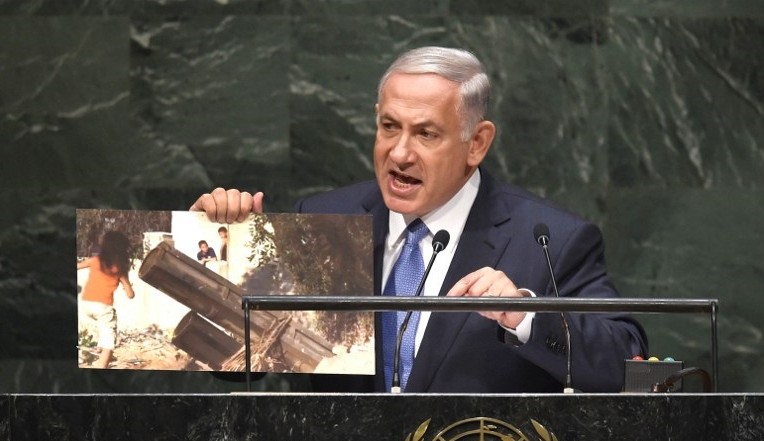
It’s no coincidence that the current prime minister has turned the spectacularly boring General Assembly into a spectacle. One aspect of this phenomenon is Netanyahu’s rhetorical talent. Not everyone likes the props and the wordplay — remember 2013’s “have your yellowcake and eat it too”? — but few deny that he is a gifted speaker.
More significantly, though, Netanyahu, more than any previous Israeli prime minister, places tremendous value on the spoken word. In his view, declarations are deeds.
When pressured to move on the Palestinian front, he often responds by giving a speech. His 2009 Bar-Ilan University address, during which he accepted the two-state solution in principle, has been championed by his more centrist supporters as a groundbreaking declaration, a path charted across the landscape of the conflict. But it barely resonates today, lost in a void of inaction and currently intensifying hostility on the ground.
His almost religious belief in the power of pronouncements also explains why he insists Palestinian Authority President Mahmoud Abbas speak words of recognition: that Israel is the nation state of the Jewish people. Even were Abbas to utter them — and the Palestinian leader insists that he won’t — Netanyahu wouldn’t know whether Abbas had genuinely accepted the Jewish people’s right to sovereignty in the Holy Land and truly forsaken the Palestinian national struggle for sovereignty between the river and the sea. And yet, for Netanyahu, such a declaration remains a key prerequisite for a peace deal.
For his controversial March 3 speech to Congress, in which he made the case against the burgeoning nuclear agreement with Iran, Netanyahu knowingly risked ratcheting up already high tensions with the US administration. He was essentially lobbying the American political leadership and the American public against the American president. He knew that even the most eloquent address would be highly unlikely to prevent the deal from moving forward. And yet, he accepted the invitation from the Republican speaker of the House to come to Capitol Hill. To declaim. To expatiate. To speak.
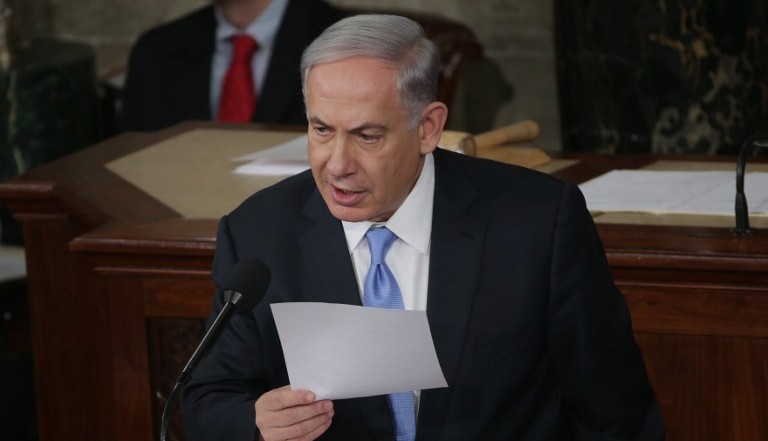
Even after the accord was signed in July, Netanyahu did not relent in his vocal, verbal opposition, risking even more damage to the Jerusalem-Washington relationship with even less prospect of practical benefit.
During his painstakingly crafted speech at the UN last week, Netanyahu explained the rationale that guided this insistent talking:
For Netanyahu, to be silent is to be impassive. Being active is to give a speech
“Believe me, it would be far easier to remain silent. But throughout our history, the Jewish people have learned the heavy price of silence. And as the prime minister of the Jewish state, as someone who knows that history, I refuse to be silent,” he said. “The days when the Jewish people remained passive in the face of genocidal enemies — those days are over. Not being passive means speaking up about those dangers.”
That last sentence is telling. For Netanyahu, to be silent is to be passive. Being active is to give a speech.
It is also in this context that his 44-second silence and reproachful stare at the UN delegates can best be understood. He admonished them not for rushing to do business with Iran but for responding to the Iranian leader’s threat to annihilate Israel with “deafening silence.” He wasn’t protesting their inaction. He was protesting the absence of condemnation, of criticism, of verbal outrage… of words.
Israel lives in a precarious, ever-unstable neighborhood. Its leaders are called upon to take actions to steer it through turbulent times. Many have taken bold, unexpected steps they thought were in the country’s best interest. Yitzhak Rabin signed the Oslo Accords. Ariel Sharon withdrew from Gaza. Ehud Olmert reportedly blew up a Syrian nuclear reactor.
Benjamin Netanyahu has stamped his words on the pages of history. He has been right about many of the meta trends in the Middle East: he immediately read the Arab Spring as the winter it became; he accurately warned against extremists filling territorial vacuums in Gaza, the West Bank, south Lebanon and elsewhere across the region; his concerns about the Iran deal are very difficult to dismiss.
But he didn’t send planes to Fordo, he didn’t retake Gaza, he didn’t establish one millimeter of new and permanent border lines along the still disputed contours of the State of Israel.
And this abundance of words and paucity of action is increasingly shaping his leadership, and his legacy.
Mitch Ginsburg contributed to this report.




The Times of Israel Community.