

Glomaring the news
The press still knows some things are happening, but can’t really say what, leading to some fancy footwork and not so subtle hinting
 Add ToI as a Preferred Source on Google
Joshua Davidovich is The Times of Israel's Deputy Editor
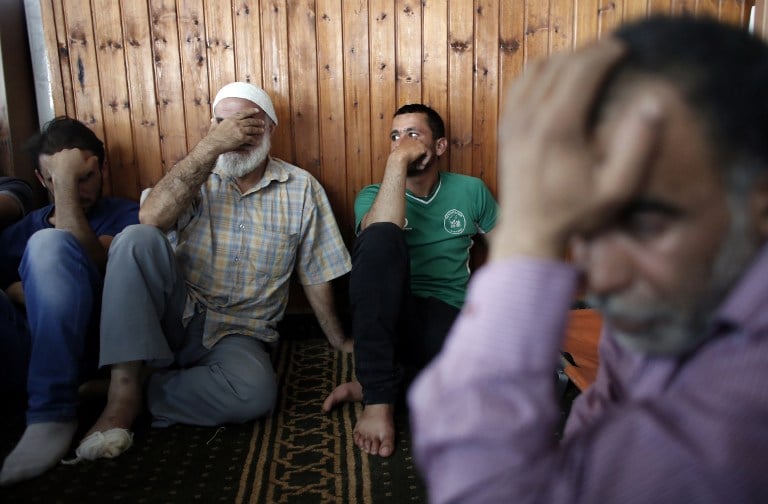
The original formulator of the Glomar response — he who can neither confirm nor deny the existence of anything — would be pleased to see Israeli papers Wednesday morning, where hints and verbal acrobatics are forced to replace actual reporting of information being kept under wraps.
In the realm of what can be said, kinda, Haaretz and Yedioth Ahronoth’s front pages even seem to have a back-and-forth with Yedioth’s main headline a quote from a relative of the Palestinian family burned to death in Duma earlier this year saying she hopes the killer will be caught, and Haaretz leading off with an interview from outgoing acting police commish Bentzi Sau promising that yes, the perps will soon find themselves in cuffs.
Sau tells the paper that solving the murder of three members of the Dawabsha family is a high priority for police. He also tells the paper that violence in Jerusalem “has been largely halted,” and that the Temple Mount is the quietest it’s been in years, but he also tells an Old City merchant that’s there’s not yet quite enough security to remove the hated metal detectors set up there.
“We want to bring normalcy to the Old City but that will happen only when there is security,” Sau is quoted telling the merchant. “If there are stabbings and violence the tourists also won’t come. We won’t remove the metal detectors now because women also come with knives and stab people. This is our way to check in a respectful manner.”
Yedioth devotes much of its coverage to reported major developments in a high-profile Jewish terror case, but don’t ask which, since journalists are gagged from giving out any more details. While the paper packages the story with its coverage of the Dawabsha murder, it of course assumes no connection between the two, and neither should you, dear reader.
Using the vaguest terms possible, the paper reports that police are now telegraphing that the developments might not actually break the case open and there is still a long way to go. According to the report, police hoped a wave of arrests of leading Jewish extremists figures would help push the investigation along, but have been stymied by the suspects’ refusal to talk, on religious grounds.
“I didn’t cooperate with investigators because I don’t cooperate with people who fight the Jewish nation and Eretz Yisrael, agents of a foreign ruler in our land,” one suspect tells the paper, referring to the Israeli government.
Commentator Yossi Yehoshua tackles the lack of forthcomingness by Israeli officials on the case, saying that while some secrecy is normal, this game of trying to keep things under wraps may be doing more harm than good.
“Given the witchhunts and rumors running rampant across the country, the correct thing to do would have been to allow publication of at least some basic details of the case that had the developments. Everybody involved already knows what’s being talked about, and in the last few days, every household as well. The train has already left the station, and it would be good for all the bodies to coordinate among themselves to keep back the flood of false rumors that inundated [social media] yesterday – from the supposed involvement of Uri Ariel’s grandson (a 12-year-old) to the “arrest of a former senior minister who passed information to a third country.”
Israel Hayom leads off with older rumors being put to bed, following the publication in The New York Times of an account recalling the grisly beatings, and in one case castration, of Israeli athletes and coaches at the hands of Palestinian terrorists in the 1972 Munich Olympic games.
The paper’s commentator Boaz Bismuth draws a direct line between the actions of the Black September group and the Islamic State today, saying the new testimony from the widows of the victims show how ahead of their time the terrorists were.
“The killing of the 11 showed the world Palestinian terror, which had already begun to act – for instance with the hijacking of the Sabina plane the same year. But the importance of the testimony of the widows, who have lived with the knowledge since September 1992, is that they expose the depravity of terrorists well before the jihadists of al-Qaeda and Islamic State, who are shocking the world today,” he writes.
Yedioth runs a curtain raiser on a state watchdog report due out later Wednesday which details dirty deeds by politicians in primaries ahead of the last elections. Because the information is under embargo until 4, the paper goes at close as it can to the line by noting that the report includes allegations of possible criminal wrongdoing by “one well known MK.”
Without implying any link, the paper packages the story with an item on well-known Knesset bad boy Oren Hazan, quoting Knesset speaker Yuli Edelstein apparently going to town on him.
“In regards to Hazan, Edelstein said he wishes that ‘we would have representatives who do their work faithfully. I hope the next Knesset will look better.’”
Haaretz sets its sights on a slightly better known lawmaker, Prime Minister Benjamin Netanyahu, chiding him in its lead editorial for what they term doublespeak, i.e., making nice to Palestinian leader Mahmoud Abbas during a photo op, then complaining about him to US President Barack Obama and making sure to tell the Hebrew-speaking public he did so, so right-wing coalition partner Naftali Bennett won’t shoot him between the eyes.
“That’s Netanyahu’s policy: The main thing is to get through another international conference, another news broadcast, another meeting with Obama without entering a serious discussion on Israel’s future, a solution to the conflict and delineating the state’s borders,” the editorial reads. “Everything is PR, spin and clumsy attempts at winning media points in a confrontation with Abbas’s ‘incitement’ while maintaining the stability of the right-wing government.”







The Times of Israel Community.