

In like Netanyahu
The Israeli press sees Flynn’s ouster as a symptom of a larger sickness within the White House, with Israel’s prime minister riding in on a white horse to help Trump forget about his troubles
 Add ToI as a Preferred Source on Google
Joshua Davidovich is The Times of Israel's Deputy Editor
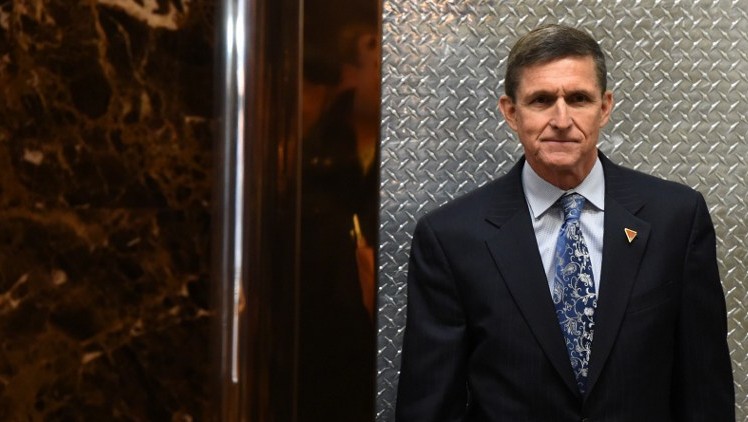
The resignation of Michael Flynn as White House national security adviser hangs heavily over Wednesday’s summit between Prime Minister Benjamin Netanyahu and US president Donald Trump in Wednesday morning’s Hebrew press.
But while the papers see a confluence between the two events, there is little actual linkage made between the two beyond their connection to the White House.
Given the earthquake that Flynn’s resignation represented, and the fact that the Trump-Netanyahu jabberfest has yet to happen, the ouster heavily overshadows the visit, with some in the Israeli press seeing the resignation as a symptom of a greater disease within the US’s halls of power.
“You can’t judge something according to its start, but you can judge the start itself and the start for Trump has been a disaster,” Channel 10 foreign desk editor Nadav Eyal writes in Yedioth Ahronoth. “The first days in the White House have been an ongoing train wreck, not because of things done well or badly, but simply because [Trump] hasn’t managed to do what he wants to do. His refugee order has been halted by the courts, his national security adviser is going home and Congress is slowing his appointments.”
In an accompanying column, Ronen Bergman reports that an intelligence source told him Trump himself knew Flynn would be trouble. “There were those around Trump that thought it was better to give Flynn a job that doesn’t need Congressional approval, to avoid any unnecessary investigations or complications,” the source is quoted saying.
In Haaretz, Chemi Shalev writes that Flynn is the second “arrow-strike” into the heart of the Trump administration, after the travel ban was struck down in court.
“This will also teach a lesson about the limits of power,” he writes. “Trump thought he could barge into the White House with a bulldozer that would run over anyone in its way, but has learned that just as Rome wasn’t built in a day, Washington can’t be destroyed with mere words of a new president.”
Pro-Trump Israel Hayom, however, paints Flynn’s ouster as a symptom not of a weak administration, but of Washington, which “has rules of its own” that don’t appreciate generals as much as Trump does, in columnist Boaz Bismuth’s telling, recounting that he, yes he, met Flynn just a few days ago, and that Flynn was very busy “as he is every day.”
Alas, just as Israel Hayom is a steady rock of support in a sea of critical journalism, so too does the tabloid anoint Netanyahu’s meeting with Trump as a balustrade amid the storm in Washington.
“I can’t remember another time a prime minister of Israel visited Washington less than a month after a new president was sworn in. There is every reason that the meeting will be one of the utmost success. Trump and Netanyahu are friends, the US and Israel are allies, Congress has Republican majorities in both houses and Obama is history. So why shouldn’t the visit be a success?” he writes, successfully turning Israel into a partisan issue.
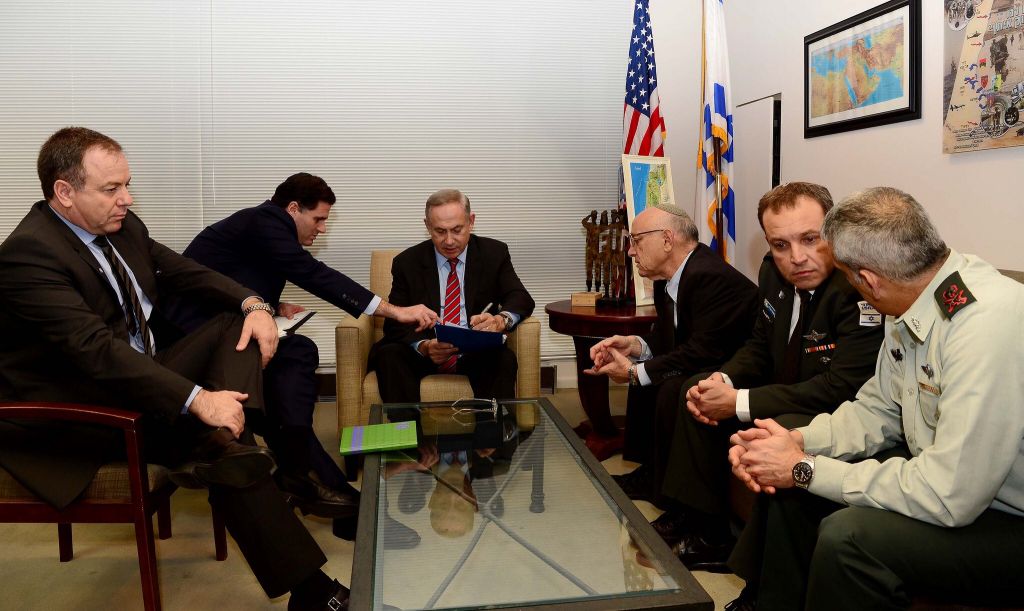
As for what will be discussed in the meeting, Haaretz’s Barak Ravid notes that while Netanyahu will want to push Iran to the front of the agenda, Israel’s role in the nuclear deal is only ancillary as far as Trump is concerned. At the same time, on the Palestinians, Netanyahu will try to push an arrangement that makes that aggrieved party only ancillary as well.
“According to Israeli officials, Netanyahu hopes Trump will support a regional peace initiative in which the Palestinians will be only one part of a wider arrangement. Obama did not support such a move because he did not trust Netanyahu,” he writes. “The prime minister would like Trump to help get not only Egypt and Jordan, but also Saudi Arabia and the United Arab Emirates, on board. A regional peace summit could be an idea that will serve both Netanyahu and Trump, who would present it as a meaningful diplomatic achievement. While the Trump administration is still forming its Middle East policy, the impression is that Kushner and other senior administration officials like the idea and want to promote it.”
Yedioth’s Orly Azoulay reports that ahead of the meeting, Trump is reading up on all of Netanyahu’s legal woes, writing that the administration ordered up a dossier “to know if the president will facing a leader at the end of his political life or someone he can make deals with.”
Yet she also predicts that with both Trump and Netanyahu facing crises at home, the powwow will be a welcome win-win for the two leaders.
“Netanyahu will give Trump a break from his worries at home and try to change the probing and critical conversation in the media surrounding the White House’s misdeeds,” Azoulay writes. “And Trump will praise Netanyahu’s leadership, among other reasons to broadcast to his political rivals that he is man whom he values, and that he is the one with whom he is willing to advance a deal with the Palestinians.”








The Times of Israel Community.