

Jewish organization urges tech lovers to ‘unplug’ for a day
Reboot, a Jewish education group, wants hyper-connected people to turn off their phones and computers this Shabbat – and enjoy a good ‘Shabbat meal’ with friends and family
 Add ToI as a Preferred Source on Google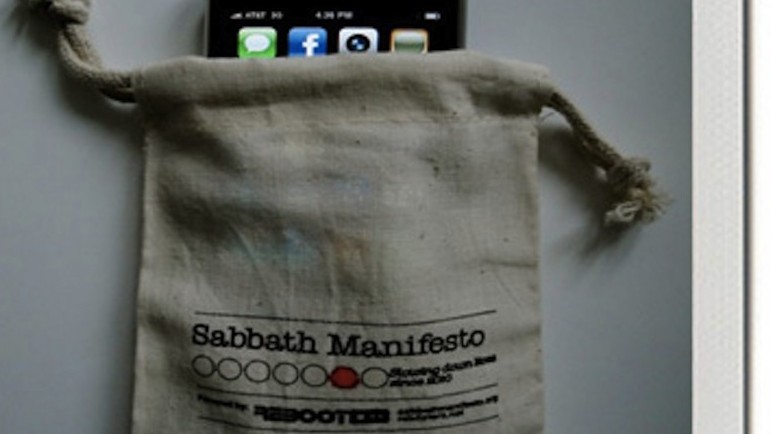
In an era when the average person is wired to the hilt, on-line and in-touch 24/7, some of the finer points of living get lost in the shuffle, according to Yoav Schlesinger, CEO of Reboot, a Jewish educational organization in the U.S.
“The never-ending stream of information that we’re exposed to on a daily basis and the ever-present glow of a screen can be overwhelming,” Schlesinger told The Times of Israel. “Technology overuse takes an immeasurable toll on our ability to give time to the things that are most important in our lives – friends, family, good food, our communities and ourselves.”
What the world needs now, says Schlesinger, is a “tech detox” program – specifically, a “National Day of Unplugging” (NDU), in which people commit to “turn off” their electronic personas for 24 hours. This year’s third annual NDU is set for this Shabbat, beginning on sunset Friday and running through sunset Saturday.
Although Reboot is a Jewish educational organization, the NDU is open to all, said Schlesinger. “Over the past two years, NDU has reached tens of millions of people internationally and resonated with people of all backgrounds, from Catholic to Hindi, Buddhist and Muslim.” And while all three NDUs have taken place on the Jewish Sabbath, it’s the concept that is important, not necessarily the timing. “Because we come from a Jewish place, we recommend unplugging for Shabbat, but those from other traditions are certainly free to unplug any time they feel appropriate.”
But make no mistake, said Schlesinger – Shabbat is a Jewish concept, and the NDU “is a Jewish solution to a universal problem. Jewish tradition has something to say about unplugging that can be appreciated by everyone.” A day of rest is a universal principle, said Schlesinger. It originated with Judaism, and has since been embraced by other traditions. So, too, the NDU has been embraced by people all over the world, Jewish and otherwise.
While the principle makes sense on paper, putting it into practice with hyper-connected 20-somethings is a challenge, said Schlesinger. But once they try unplugging, many find that they like it. Last weekend, Reboot organized an Unplugging event at the South by Southwest Festival in Austin, a mecca of social media interconnectedness. “That audience was a particularly difficult sell. Many people told us that they could never imagine unplugging for even a few hours, let alone a day. But those that did thanked us for the experience afterwards, and spread the word among their friends and acquaintances.”
The fact that there is resistance shows just how much the project is needed, said Schlesinger. “The more people resist, the more it shows how much they need to take a break, step back, and look at their lives from a different perspective.”
So what should those who unplug this Shabbat do? Schlesinger suggests having a Shabbat dinner. “This year, we’re recommending that people connect with their friends, family, neighbors, and others by breaking bread. It’s an opportunity for people to get together in a way that they usually don’t have an opportunity to” (Kiddush, of course, is optional). By sharing ideas, cultural experiences like movies and music, and, of course NDU, Reboot hopes to pull Jews closer to their heritage.
Reboot was founded in 2002, and dedicates itself to spreading the message of Judaism in a manner that young adults can relate to, without the baggage they may have picked up from Hebrew school or other situations that they had a difficult time with, Schlesinger said.. “Jewishness is one identity of many that American Jews slip into and out of, and we want to encourage greater centrality of Jewish identity.”
But is such a thing possible in the multicultural U.S.? Wouldn’t encouraging Aliyah to Israel be the best way to encourage a more solid Jewish identity? “I’m not sure. I think American Jews have ways to express their Jewishness outside of Israel, and I don’t know if questions of Jewish identity can, or should, depend only on Israel,” Schlesinger answered. Israel, he said, can be divisive, both politically and religiously, and it’s unlikely American Jews will be making mass aliyah anytime soon, anyway.
But the NDU is a good idea, regardless of whether or not one looks at it from a Jewish lens. “So far, tens of thousands of people have taken a pledge to unplug on our Facebook page, and thousands more have downloaded our smartphone app, which lets people inform their friends that they are off-line.”
And the fact that Reboot is using the exact tools it is trying to wean people off of in order to spread the NDU message makes perfect sense. “People have pointed out that it’s ironic that we turn to online tools to get people off-line, but I don’t think it’s ironic at all,” said Schlesinger. “We are not anti-tech, and we recognize that the world today revolves around the internet and social media. We realize that social media lets us communicate more easily than ever. But the need to unplug is there, and we hope that many people will take the opportunity of the National Day of Unplugging to give it a try.”







The Times of Israel Community.