

‘Liberman appointment complicates talks on US aid package’
Washington sources tell Israeli TV that Yisrael Beytenu head in defense ministry ‘creates difficulty’ for ongoing discussions on military assistance
 Add ToI as a Preferred Source on Google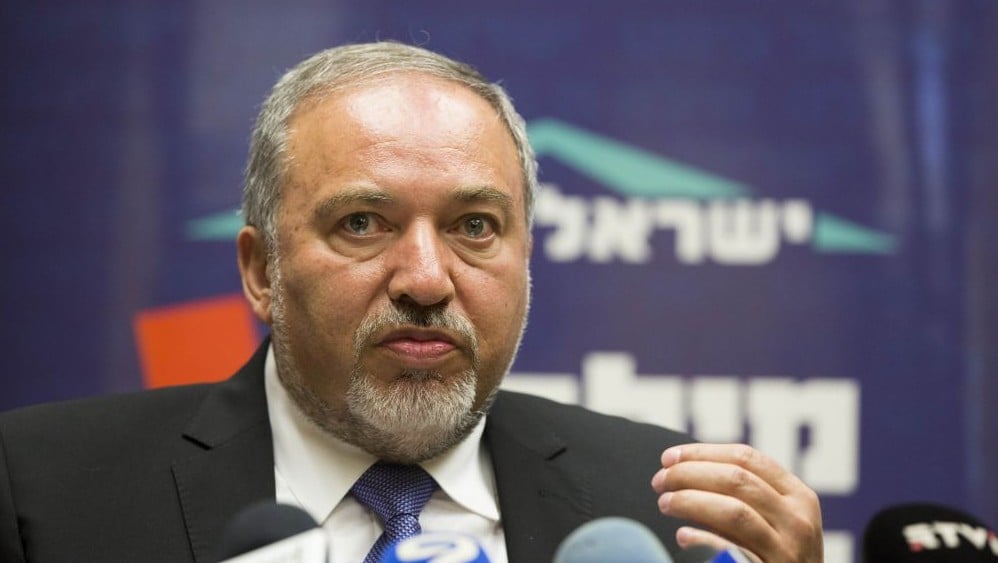
The US is said to have warned the Israeli government that the appointment of Yisrael Beytenu head Avigdor Liberman as defense minister would complicate ongoing talks on increasing US military aid to Israel.
According to Washington sources cited by Channel 2, outgoing Defense Minister Moshe Ya’alon was a key figure in the discussions and the entry of Liberman into the Defense Ministry would “create difficulty” for the talks.
The Moldova-born Liberman is also seen as pushing for closer ties with Vladimir Putin’s Russia, which the US disapproves of, according to the sources.
Liberman is set to take up the defense portfolio amid a shake-up in the governing coalition that would see his party join the governing coalition, amid efforts by Prime Minister Benjamin Netanyahu to expand his razor-thin coalition of 61 seats.
In April, a White House official indicated that the Obama administration was ready to offer Israel the largest military aid package offered to any country over the course of US history.
“We are prepared to sign an MOU [memorandum of understanding] with Israel that would constitute the largest single pledge of military assistance to any country in US history,” the official said, amid a push by a large majority of senators to increase foreign aid to Israel.
The official said discussions with Israel were ongoing on a memorandum of understanding that would increase US military aid to Israel for the next 10 years, due to be renewed before 2018.
In late April, more than 80 of the 100 sitting US senators signed a letter calling on President Barack Obama to increase aid to Israel and immediately sign an agreement on a new defense package. Democratic presidential candidate Bernie Sanders was not one of the 83 signatories.
Republican Lindsey Graham and Democrat Chris Coons were behind the letter, which was signed by 51 Republican and 32 Democratic senators.
Due to expire in 2018, the current aid package stands at $3 billion annually, and, according to reports, Israel wants to up the amount to $5 billion annually.
Israel welcomed the reports but did not comment on the status of talks over the deal.
Speaking to The Times of Israel last month, Graham, the chairman of the Senate’s Subcommittee on State, Foreign Operations and Related Programs, vowed to “do everything I can to squeeze some money out of a tight budget to help increase funding for Israel.”
“Israel has to decide what to do and when to do it. But I can say this: we’ll have more money this year than potentially next year, because sequestration kicks back in,” he explained, referring to spending cuts the US federal government enacted in 2013.

During a visit to Israel in March, US Vice President Joe Biden reportedly warned Netanyahu that the aid package will be less than what Jerusalem seeks, but offered reassurances the amount would reflect the security needs of the country.
During Biden’s meeting with Netanyahu, described by an Israeli official as “friendly, cordial and warm,” the vice president urged the prime minister to accept the offer, assuring him the agreement could always be amended at a later date.
“In the past we’ve known how to make adjustments to agreements after they’ve been signed,” he said according to Channel 10, which cited senior Israeli officials.
In November, Israel was said to have completed its “shopping list” of desired American military materiel, which reportedly included a request for V-22 Ospreys, planes believed capable of reaching Iran.
Israel also reportedly sought the V-22s from the US in 2012 when contemplating a strike on Iran’s Fordo enrichment facility, but later decided not to purchase due to budgetary restraints.
Under a separate budgetary hierarchy, the US administration is understood to be well-disposed to ensure funding for Israel’s missile defense systems — maintaining and improving the Iron Dome (short-range missile interceptor) and the Arrow (long-range) systems, and deploying David’s Sling (medium range), to ensure Israel can counter threats from neighboring Gaza, south Lebanon and Syria, as well as from an Iran that is relentlessly developing its ballistic missile systems.
The US has either jointly developed or financed all three of the programs
Raoul Wootliff, Judah Ari Gross and Raphael Ahren contributed to this report.





The Times of Israel Community.