

Massacres, marriage, and mixed emotions
The Israeli papers focus on Friday’s string of attacks, applaud the US Supreme Court, and lament overcrowded classrooms
 Add ToI as a Preferred Source on Google
Marissa Newman is The Times of Israel political correspondent.
After a weekend of multiple terror attacks and the US same-sex marriage ruling, the Hebrew newspapers on Sunday offer an erratic array of mixed emotions, including jubilation over the Supreme Court ruling, horror at the wave of Islamist terror on three continents, and frustration about overcrowded classrooms in Israel.
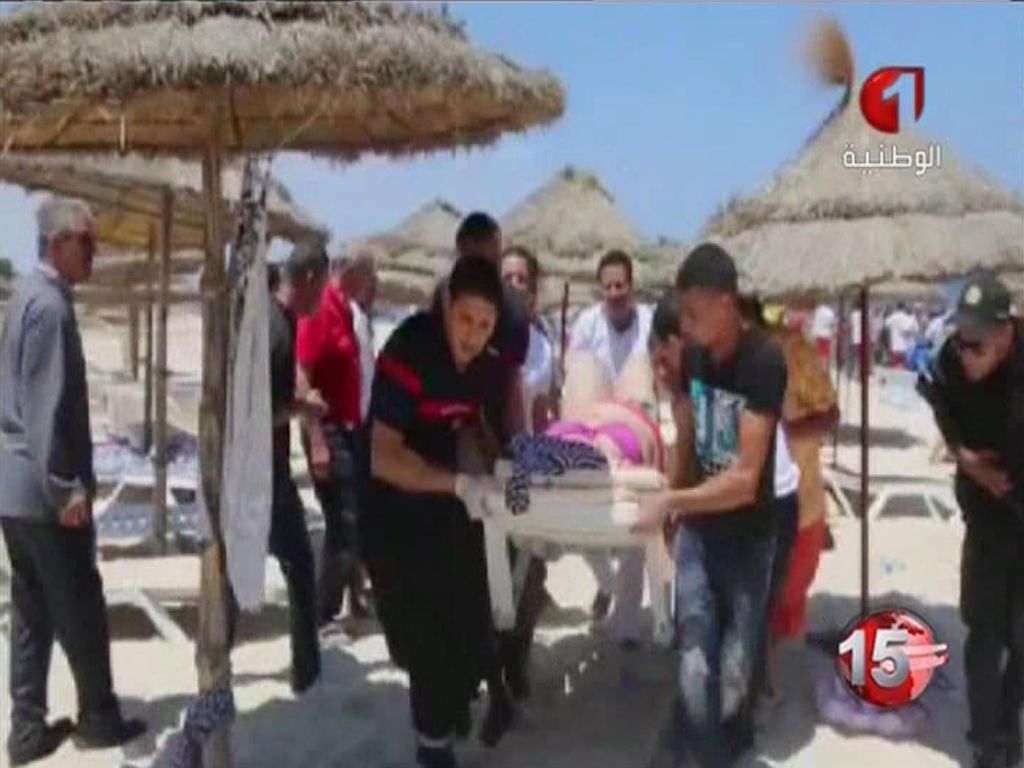
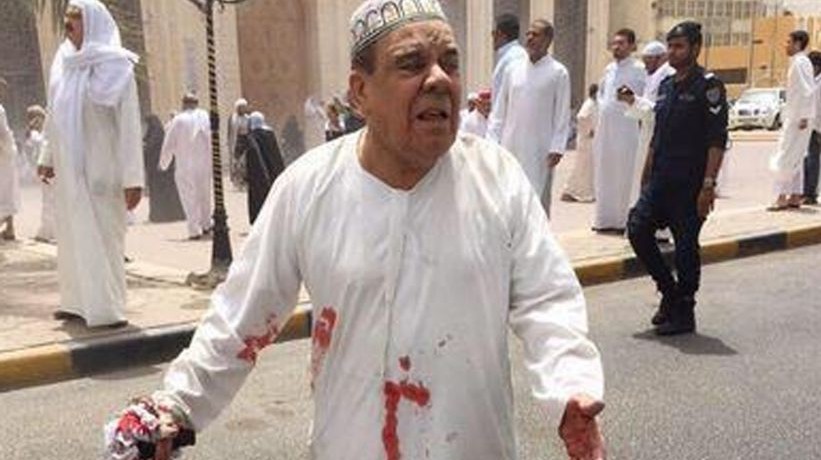
Israel Hayom leads with the three attacks on Friday — in France, Kuwait and Tunisia — under the headline “Slaughter on the Beach,” in reference to the Sousse resort massacre.
“This weekend, it became clear for the umpteenth time that terror knows no borders — not of states, nor continents — and it seems with enough boldness and innovation the terrorists can surprise nearly everywhere, even at the beach,” it reports.
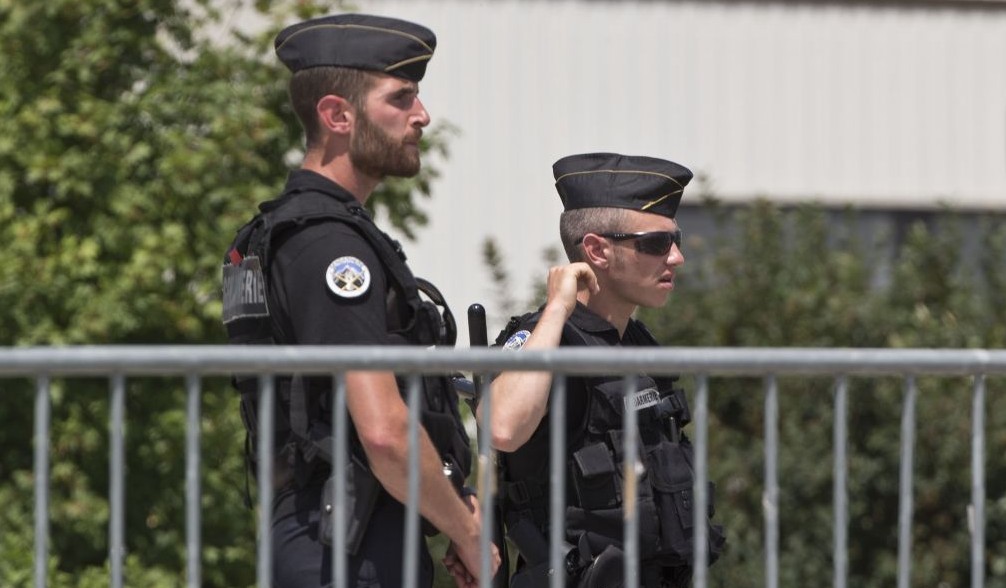
The daily spotlights the gruesome details of the attacks: the Tunisian jihadist’s maniacal laughter during the attack and his lack of a criminal record, and the France killer’s selfie with his boss’s decapitated head. Israel has since released a travel warning to Tunisia, it notes.
The paper features an interview with Morris Gabbai, a French Jew and former leader of the Grenoble Jewish community, whose business is located some 100 meters from the gas plant that was attacked Friday. Gabbai tells the paper he is moving to Israel on August 2, adding that he made the decision prior to Friday’s attack.
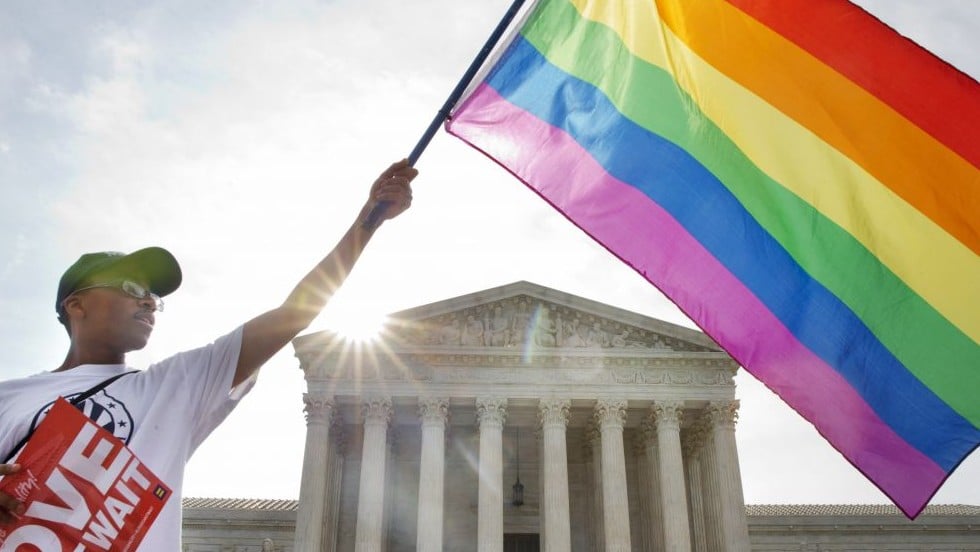
The paper’s Boaz Bismuth lauds Obama for the Supreme Court ruling on same-sex marriage, while criticizing his handling of the fight against the Islamic State.
“Obama can take pride in his great liberal achievements, like the Supreme Court ruling two days ago on gay marriage, which dominated headlines in Obama’s America, but unfortunately, we must spoil the president’s celebration: in the war on terror, on Friday he received a failing mark.”
In Haaretz, Zvi Barel urges a “new approach” to fight the Islamic State in the wake of the deadly string of attacks.
“The attacks raise, once again, the question of whether the West’s approach, based on targeted airstrikes in Iraq and Syria, can really shut down the organization’s activity. This tactic didn’t really prove itself [effective] against Al-Qaeda, even with ground incursions, and the internal conflict in the organization created the current threat. Against the Islamic State, a new strategy is needed, based on strengthening the local governments in the fight against its [the Islamic State’s] branches. But Tunisia, as the president admitted yesterday, is not capable of fighting terror by itself, in Syria there is no leadership that can or should be relied on, in Iraq the Islamic State is competing with Shiite groups, and Kuwait isn’t experienced enough to deal with terror threats,” he writes.
The Supreme Court ruling is front-and-center in Haaretz, with the daily’s Aeyal Gross noting that three landmark legal decisions on same-sex marriage were announced on June 26 — in 2003, 2013, and 2015 — in a “nearly cosmic” coincidence. All of the decisions were penned by Supreme Court Justice Anthony Kennedy.
“We must celebrate the equality given to same-sex partners, but we must also raise questions about the price of this equality, and the focus of the LGBT struggle in US on entering normalizing institutions — namely the army and marriage. The ruling emphasizes how the struggle for equality in social institutions may come at the expense of the potential of questioning the normalizing character of these institutions. Kennedy writes that the union of a man and a woman in marriage ennobles them, grants them dignity, and that marriage is essential to these hopes and aspirations, and represent its highest actualization. In these remarks, it becomes evident how gays and lesbians in their struggle for marriage adopted the social message that everyone must wed, and that marriage is the most important kind of bond and form of self-actualization — a problematic and marginalizing message for those who don’t want to or can’t participate in this institution,” he writes.
Meanwhile, Yedioth Ahronoth leads its news coverage with a school strike by disgruntled parents nationwide, who are fed up with the overcrowded classrooms.
“Three days before summer vacation, the ‘sardine protest’ goes up a notch: today parents will go on strike in elementary schools around the country around the country, in protest against the overcrowded classrooms and the Education Ministry directive to allow 40 students per class,” it reports.
The situation affects Israel’s middle-class public schools the most, with larger classes than the ultra-Orthodox and Orthodox schools on average, it reports.
Writing for the paper, a teacher from Ein Hahoresh laments the situation.
“The last lesson for the 11th grade class, with 38 students in it, was supposed to be a happy [one]. It was designed to celebrate the students’ success on the matriculation exams, but when I looked at them, I felt a sense of loss, I understood that the test may have been a success, but the educational experience failed,” writes Guy Yisor. “They say that during a class, a teacher makes a similar number of decisions as a fighter pilot, and is able to see many things at once. During that lesson, I saw the faces of the students that I seemingly guided to their success without getting to know them, and without reaching them as I had hoped to. I understood how little I know about their dreams and talents.”








The Times of Israel Community.