

Nuclear bombast in the echo chamber
A panoply of voices are featured across the Israeli press as everyone scrambles to weigh in on the Iran deal. If only they had something original to say
 Add ToI as a Preferred Source on Google
Joshua Davidovich is The Times of Israel's Deputy Editor
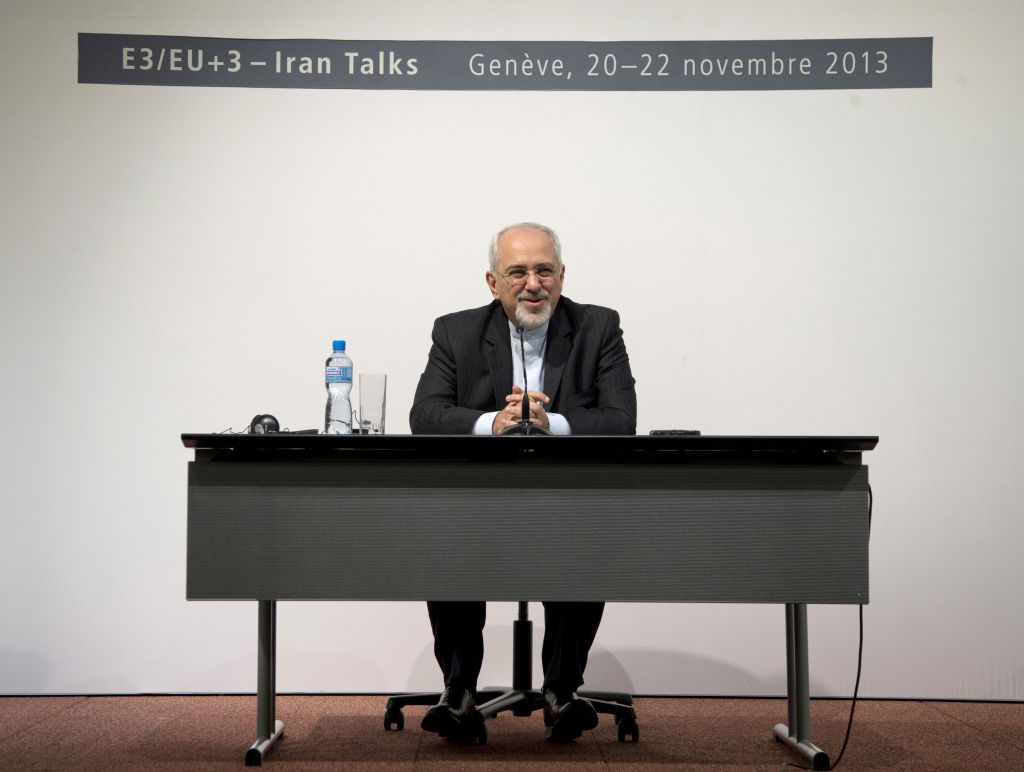
The nuclear deal between six world powers and Iran unsurprisingly dominates the newspapers Monday morning, with front pages enriched to damn near 90 percent with opinions (though the writers would call them peaceful analyses) to say nothing of the inside pages, indicating that the Israeli press has already crossed the red line to break out toward an arsenal of nuclear bombast.
Most papers feature a bipolar mix of worry and calls to give the deal a chance, with a little bit of the actual news sprinkled in. Despite the wide range of voices (over 20 opinion pieces on the deal) they all basically repeat each other and the talking points of either Jerusalem (against) or Washington (for). Welcome to the echo chamber.
Yedioth Ahronoth features a big ol’ “the deal and the worry” headline on Page 1, together with a Nahum Barnea analysis titled “It’s not the end of the world.” Barnea’s bottom line is that “Instead of crying over the signed deal, or threatening Obama with a military strike that won’t happen, Netanyahu would do well to concentrate on moderating the next agreement.”
Former Military Intelligence chief Amos Yadlin also takes much the same tack in the paper, writing that the deal is something Israel can certainly live with.
“In my estimation, in a scenario of failure, Iran would definitely continue to enrich uranium in advanced centrifuges to 20 percent, and continue to advance work on the heavy water reactor in Arak. A failure in the talks — which would have been blamed on Israel — could have ended the cooperation of the world powers against Iran, and cracked the sanctions regime. The interim deal signed in Geneva is the preferred alternative for the next six months.”
On the more hysterical side of the spectrum, Israel Hayom’s Dror Eidar wastes no time in comparing the deal to Munich 1938 (in which Nazi Germany was appeased by the West), with editors even throwing in a picture of Neville Chamberlain touting the agreement.
“Don’t just say Munich 1938. Seventy-five years have passed and we thought we learned. Fools line the road to ruin with negotiations with the evil one. It’s hard to use comical terms like that, primitive. Who talks about the evil one? But yes, look at Iran, at the death industry of the Islamic Republic. See what has happened since 1979, when the West watched with indifference and even helped the Islamofascists take over Iran. What happens in the Middle East will happen in the world. ‘They have eyes yet do not see.’”
On the reporting end, the paper reveals a confusing poll according to which 76 percent of respondents think Iran will continue its nuclear program in the wake of the deal (which should be 100 percent, since the deal does allow it to continue its civilian program), and 45 percent who support striking Iran in such a case.
In Maariv, Nadav Eyal, while not in love with the deal, calls for supporters and detractors to pull back from hyperbole and what-ifs and see the pact for what it is: “The deal with Iran is not a historic breakthrough for world peace, as some international news outlets have promised. … The deal with Iran is not the moment when Israel fell into the hands of a deranged regime which will soon sling a nuclear missile or send a dirty bomb with a terror group. This moment is not Munich for Israel, it’s not Versailles for the Iranians, and it definitely doesn’t justify the early Nobel Prize that Obama got. The deal with Iran is exactly what it is, a first interim accord.”
Bucking the trend and doing some actual reporting, diplomatic correspondent Eli Berdenstein writes that diplomats in Geneva were, unsurprisingly, unhappy with Netanyahu’s behavior surrounding the nuclear talks, and that Israel hurt itself with its absolute oppositionist stance.
“According to the sources, Israel didn’t carry out a true deep dialogue with the Americans, and were not involved enough in the process. The stance was one of opposition to every type of interim deal. … Israel, the sources say, needed to be more involved and at a higher level, through the advising of the prime minister. In practice, they say, Israel locked itself out,” he writes.
Not surprisingly, Most of Haaretz’s pen jockeys are happy with the deal, including diplomatic correspondent Barak Ravid, who throws all objectivity out the window with the headline “Good deal,” in a point-by-point hit piece on Netanyahu’s stance (which could have been written by Ben Rhodes).
“Despite the irate responses from the Prime Minister’s Office to the agreement signed in Geneva early Sunday between Iran and six world powers, the deal is not really a bad one. Even from an Israeli perspective, it is actually a reasonable deal. Maybe even a good one. For the first time in a decade, Iran will be freezing its progress on its nuclear program, and is even rolling back certain parts of the program that particularly concerned Israel.”
Getting a bit out of the echo chamber, Zvi Bar’el writes that the deal is indicative in a change in policy in Tehran, which will now try and get foreign investment to pour back into the coffers: “The same ‘heroic flexibility’ that Khamenei coined and turned into the practical policy replaced the arrogant claims that Iran could continue to live under the sanctions for years to come. It is reminiscent of the ‘cup of poison’ that Ayatollah Ruhollah Khomeini decided to drink to put an end to the Iran-Iraq War in the 1980s. It is likely that this decision will guide Tehran’s policy not just over the next six months, but afterwards as well, assuming the Iranian decision makers remain in power.”




The Times of Israel Community.