

Ukraine’s brawling parliament hopes to learn from Israel’s
Famously contentious lawmakers impressed by Knesset’s transparency — but is their admiration warranted?
 Add ToI as a Preferred Source on Google
Cnaan Liphshiz was a Jewish World reporter at The Times of Israel
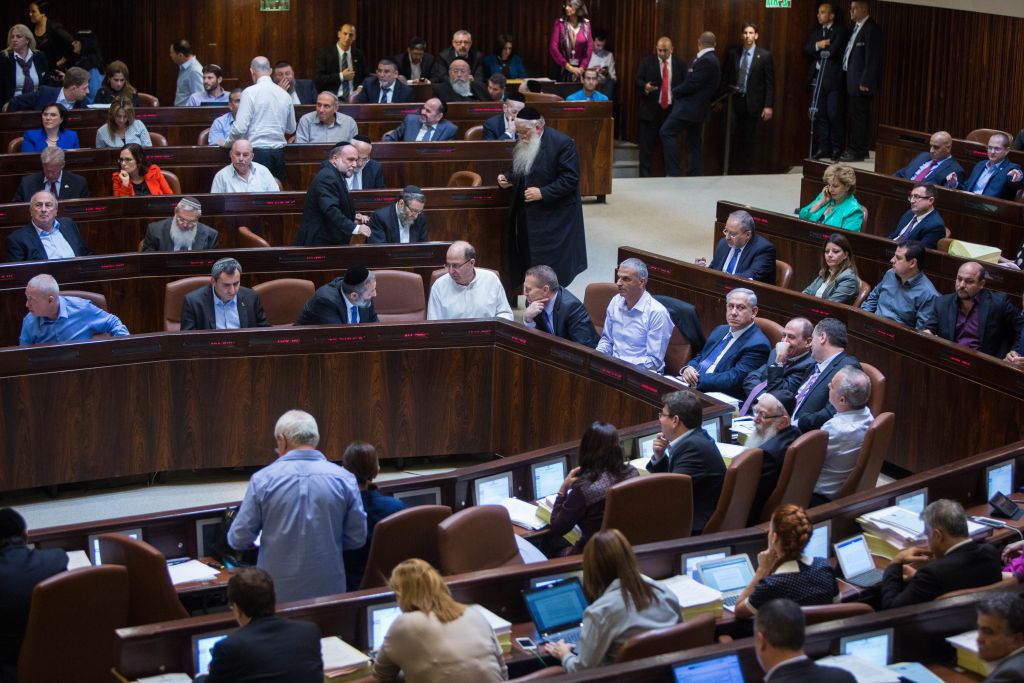
JTA — When Israelis rank the things that make them proud of their country, the Knesset is rarely first on the list. Or second. Or third.
In a survey in April, Israelis put their parliament last among potential sources of national pride — behind the army, judiciary, education system and media. It doesn’t help that the Knesset’s 120 members are known for serious attendance issues and a propensity for corruption and sex crimes.
Yet for Ukrainian lawmakers, who are struggling with even worse PR problems, the Knesset is a role model.
Last week, the Knesset hosted a delegation of senior officials from Ukraine’s Verkhovna Rada — a parliament with such severe discipline issues that it descended earlier this month into a fist fight for the second time in two years, after an opposition lawmaker shoved the prime minister.
Aired live on TV, the brawl on December 11 received international coverage and went viral on social media. An observant art student noted that one photo of the brouhaha had classic Renaissance composition.
The Verkhovna Rada in Kiev is especially susceptible to brawls because its ushers lack the authority to lay a finger on the 450 lawmakers, who all have immunity, according to Oleg Vyshniakov, a Jewish Ukrainian businessman who last year became the honorary Israeli consul in western Ukraine.
“One problem is that lawmakers resort to violence, the other is that when this happens, they are allowed to fight it out because no one has the authority to stop them,” said Vyshniakov, who last week hosted the delegation of four members. “It’s bad publicity for the country.”
To address the problem of authority, the Ukrainian delegation, headed by the chairman of the Verkhovna Rada, want to adopt the Knesset Guard model, in which the officers are under the command of the speaker, whose authority within the Knesset trumps the members’ immunity.
What appealed especially to the Ukrainians was the Knesset attendance board: a television screen with head shots of every Knesset member, on which the photos of absentees appear in black and white. The screen and monthly attendance statistics are also constantly updated online – a practice that it meant to name and shame lawmakers into showing up for work.
“This is our biggest problem, actually,” said Vyshniakov, “lawmakers simply not showing up for work, sometimes days on end, with few tools to call them to the order.”
Does the board work, though? The data suggests not.
A Czech comparative study from 2014 of 34 parliaments put Israel in last place in terms of lawmaker attendance. In the years 2009-2013, only 32 percent of Israeli lawmakers were present at the Knesset on an average day. Ukraine ranked 29th with a 58-percent attendance rate.
With 95 percent attendance, the United States Congress came in second, behind only the European Parliament’s 96 percent.



The Times of Israel Community.