

A crowd chanted death threats outside an NYC synagogue. Mamdani found fault with both sides
Mayor-elect has previously denounced obvious instances of antisemitism, but this was his first real test, a case of antisemitism motivated by anti-Zionism, and he didn’t exactly condemn it

 Add ToI as a Preferred Source on Google
The day after his election to be the next mayor of New York City, Zohran Mamdani condemned a swastika that had been graffitied onto a Jewish day school in Brooklyn.
To the many Jews who had expressed concern about the mayor-elect, a longtime, outspoken anti-Israel activist, this was a heartening sign — an immediate, clear condemnation of Jew hatred in the city with the largest Jewish population in the world.
It was also somewhat obvious. In terms of the hierarchy of fighting antisemitism, condemning a swastika on a school is literally the lowest of bars. The same could be said of when Mamdani condemned another instance of clearly antisemitic graffiti this week in Brooklyn — this time, it said “Fuck Jews” — though some of his supporters still gave him flak for those posts.
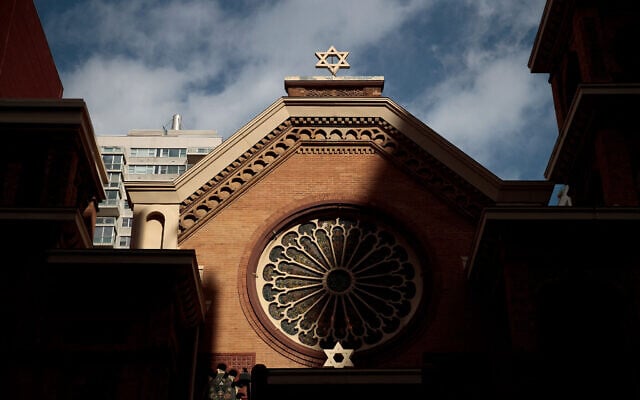
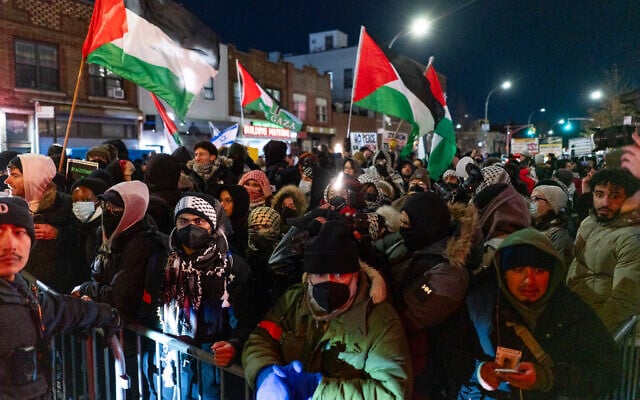
Mamdani’s first real test, when it comes to antisemitism, actually came Wednesday night, when a crowd gathered outside Park East Synagogue, an Orthodox congregation on Manhattan’s Upper East Side, and chanted “From New York to Gaza, globalize the intifada” and “Resistance you make us proud, take another settler out,” and individual protesters shouted antisemitic epithets.
The occasion for the protest was an open house organized by Nefesh B’Nefesh, the group that facilitates North American Jewish aliyah, or immigration, to Israel.
No one seriously thought Mamdani would be okay with a swastika. The question was always how he would respond to antisemitism motivated by anti-Zionism, an ideology he supports.
On Thursday, we found out the answer: He didn’t really condemn the protest. And he blamed both sides.
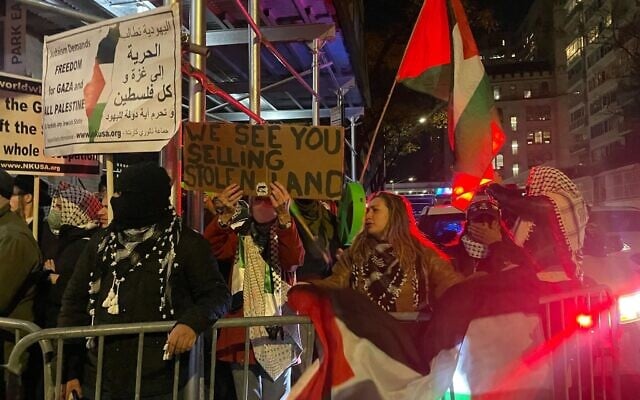
As opposed to the other instances of antisemitism in recent weeks, Mamdani, as of this writing, had posted nothing about this on Twitter. His office did, upon request, send a statement to a few outlets, including The Times of Israel.
“The Mayor-elect has discouraged the language used at last night’s protest and will continue to do so,” Mamdani spokesperson Dora Pekec said Thursday. “He believes every New Yorker should be free to enter a house of worship without intimidation, and that these sacred spaces should not be used to promote activities in violation of international law.”
The statement does not mention Jews. It does not mention antisemitism. It does not refer at all to the protesters who screamed antisemitic invective, only saying Mamdani has “discouraged the language used.” Which language, exactly? It doesn’t say.
That’s a far cry from his reaction to the antisemitic street graffiti earlier this week, upon which he posted, “Another horrific act of antisemitism on our streets. We cannot stand for this.”

Then there’s the last line of the statement, declaring that “these sacred spaces should not be used to promote activities in violation of international law.”
What, exactly, was the violation of international law here? Defenders of the protest — some of them Jewish — are claiming that the demonstration wasn’t against Jews, it was against the promotion of Israeli settlements, where NBN does facilitate some aliyah. Most of the world considers West Bank settlements a violation of international law.
But NBN’s blurb about the open house didn’t mention the West Bank.
The protesters, in any case, did not distinguish between the West Bank and Israel. And neither, it seems, did Mamdani.
His statement did not attempt to explain to his future Jewish constituents or others why an aliyah open house constitutes a promotion of “activities in violation of international law.” But the statement does suggest that he feels there’s fault on both sides — the open house at a synagogue, and the protesters shouting antisemitic insults outside of it.
It is perfectly legal in the United States, of course, to protest Israel and, like Mamdani, consider its nature as a Jewish state illegitimate. It’s also true that a growing number of American Jews are critical of Israel, and that a third of New York Jews voted for Mamdani.
But beyond the explicitly antisemitic statements on Wednesday night, it’s important to note that, according to surveys taken both before and after October 7, 2023, most US Jews felt attached to Israel. Most said they wanted the US to support Israel. In 2020, at least, more than 80% of American Jews said caring about Israel was important to their Jewish identity.
Perhaps ironically, Nefesh B’Nefesh could hardly have wished for a better advertisement than the protest. It’s unlikely that masses of New York Jews are going to pick up and move to Israel, but a protest calling for “intifada” outside of a shul will only increase the chances.
Indeed, a Nefesh B’Nefesh staffer told The Times of Israel that Wednesday’s event saw “more serious discussion of aliyah as an option” than previously.
Unlike Mamdani, New York City’s outgoing mayor Eric Adams, and the state’s Democratic governor clearly condemned the protest.
“No New Yorker should be intimidated or harassed at their house of worship,” Gov. Kathy Hochul posted. “What happened last night at [Park East Synagogue] was shameful and a blatant attack on the Jewish community. ”
This isn’t an isolated event. Protests like this one have happened over and over across New York City since October 7, whether in heavily Jewish neighborhoods, at an exhibit about the Nova music festival massacre, or beyond, though some of the chants explicitly calling for death were new.
Public officials — even ones hardly sympathetic to Israel — have condemned those previous incidents. Thursday’s statement is an indication that, as mayor, Mandani’s response will likely be different.







The Times of Israel Community.