

After car-ramming, son of elderly suspect casts doubt on IDF story
Ayoub Sha’arawi says his 73-year-old mother had no intention of harming anyone when she was shot dead by Israeli soldiers, dismisses links to Hamas, claims knives may have been planted

 Add ToI as a Preferred Source on Google
Avi Issacharoff, The Times of Israel's Middle East analyst, fills the same role for Walla, the leading portal in Israel. He is also a guest commentator on many different radio shows and current affairs programs on television. Until 2012, he was a reporter and commentator on Arab affairs for the Haaretz newspaper. He also lectures on modern Palestinian history at Tel Aviv University, and is currently writing a script for an action-drama series for the Israeli satellite Television "YES." Born in Jerusalem, he graduated cum laude from Ben Gurion University with a B.A. in Middle Eastern studies and then earned his M.A. from Tel Aviv University on the same subject, also cum laude. A fluent Arabic speaker, Avi was the Middle East Affairs correspondent for Israeli Public Radio covering the Israeli-Palestinian conflict, the war in Iraq and the Arab countries between the years 2003-2006. Avi directed and edited short documentary films on Israeli television programs dealing with the Middle East. In 2002 he won the "best reporter" award for the "Israel Radio” for his coverage of the second intifada. In 2004, together with Amos Harel, he wrote "The Seventh War - How we won and why we lost the war with the Palestinians." A year later the book won an award from the Institute for Strategic Studies for containing the best research on security affairs in Israel. In 2008, Issacharoff and Harel published their second book, entitled "34 Days - The Story of the Second Lebanon War," which won the same prize.
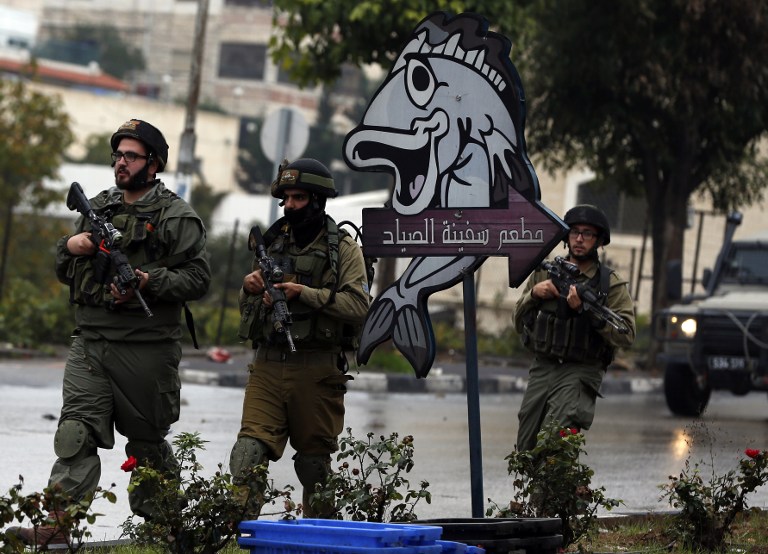
HEBRON, West Bank — Ayoub Sha’arawi was meeting with guests Saturday at a local mosque in Hebron who had gathered to pay their final respects to his mother, Tharwat al-Sha’arawi, who was killed during an suspected attempted car ramming attack outside the West Bank city a day earlier.
“Does the Israeli public think it’s logical that a 73-year-old woman that has a hard time climbing the steps would go and carry out a car-ramming or stabbing attack?” asked 53-year-old Sha’arawi,
Sha’arawi spoke to The Times of Israel while organizing lunch for everyone, which was supposed to be delivered to the mosque. “We prayed together, everyone, at the mosque and after prayers she was supposed to go to my uncle’s house. But on the way, she decided she wanted to stop and get gas. Her car was a small gray Hyundai. She left, from this alley where we’re standing, and turned right on the main road. I ask you again. The gas station is 100 meters away from us. She drove 20-30 kilometers an hour and you see this clearly in the video filmed by the soldiers. Is that how you carry out a car-ramming attack?”
When asked about his mother’s swerve to the right, which prompted the soldiers to open fire, Sha’awari said the gas station is on the right side, which is why she swerved. “But if she wanted to run over soldiers, she would have sped up in their direction, and toward those standing on the sidewalk, and wouldn’t have continued to drive into the gas station.” He stood with us on the main road connecting Hebron and Halhul, toward “Zaid’s gas station.” “Look how close it is,” he said repeatedly.
Israeli security sources: ‘Every attempt to portray her as innocent is inconsistent with the facts’
Standing at the site where his mother was shot, Shawari reenacted the scene.
“Look,” he said. “There were soldiers at every corner. They shot dozens of bullets at the car. They didn’t even let us approach her. People called me and told me what happened.”
He pointed to one of the shop owners, who witnessed it. The shop owner said that the street was entirely empty at the time.
“There were clashes between the soldiers and youths and the street was full of smoke, so there were no cars at all on the road. And then we saw a small car approach, and suddenly we heard gunfire. We looked outside and saw they had shot at the car, but then the army came and forced us to go indoors,” the shopkeeper said.
The gas station was still full of bullet holes that hit the office and several gas pumps.
Video filmed by a camera attached to a helmet of one of the soldiers was released shortly after the incident, showing the car narrowly miss a group of soldiers on the side of the road.
Security sources involved in the incident said “all signs point to a car-ramming attack, and a woman who went out with the intention of harming IDF soldiers. Every attempt to portray her as innocent is inconsistent with the facts, her behavior, and the evidence found in her car, like the commando knife.”
“Treating her age as a factor that contradicts these facts is inconsistent with the stabbing attack that a 13-year-old kid carried out, which until this terror wave, we hadn’t seen,” the sources said, referring to an attack last month in Jerusalem.
Sha’arawi dismissed claims that IDF soldiers later found knives in her bag.
“They claim that there were knives in her bag. But I want to ask: can a woman of her age stab 19-year-olds at the height of their physical fitness? And another question: if she wanted to stab someone, why did she have the knives in her bag, and not in her hand. Explain to me, what is the logic? I can’t explain it, but maybe someone planted the knife in her bag.”
Sha’arawi said his mother did not speak about carrying an attack, or discuss recent attacks.
“Not at all. An elderly woman of her age and her status does not speak this way. We are talking about a mother of seven children, and grandmother of 24. All she cared about was them. She loved them and everyone here knew her. In 1988, my father died. He died of a tear gas inhalation and became a shahid [martyr] and since then she’s been busy with educating her children and grandchildren,” he said.
Sha’arawi himself served in Israeli prison for his affiliation with terror group Hamas, which is devoted to Israel’s destruction.
His sister is married to the head of the organization in prison, Muhammed Jamal al-Natsha. He, however, denies that his family’s links to the terror group had anything to do with his mother.
“It doesn’t work like that, logically speaking. It’s true, my sister is married to one of the Hamas leaders. So what? Does that make my mother a terrorist? She wasn’t affiliated with any organization, and even if her son-in-law is a Hamas member it doesn’t say anything about her. This is a twisted way of thinking,” he said.
Sha’arawi said his children know that “Jews are occupiers.”
“This is my 12-year-old son. He knows that the army kills people. Every time we go to a checkpoint, he sees how soldiers treat us roughly.”
Sha’arawi demanded that his mother’s remains be returned for burial and that her death be investigated.
“We want her body to be returned. This is a sacred issue for Jews and Muslims and there is no reason to hold her body. We want a joint Israeli-Palestinian investigation that will examine the circumstances of her death.”
More people arrived at the mourner’s tent, and lunch was served. One relative of the Sha’arawi family said in Hebrew: “The situation is shit. Both sides are heading toward a more serious conflict.”






The Times of Israel Community.