

‘Arab blood isn’t cheap’: Hundreds rally in capital over police failure on violent crime
Protesters call for sacking Ben Gvir amid surge in homicides, call to ‘free Tarabin al-Sana’; police withdraw from southern Bedouin town after 12-day operation
 Add ToI as a Preferred Source on Google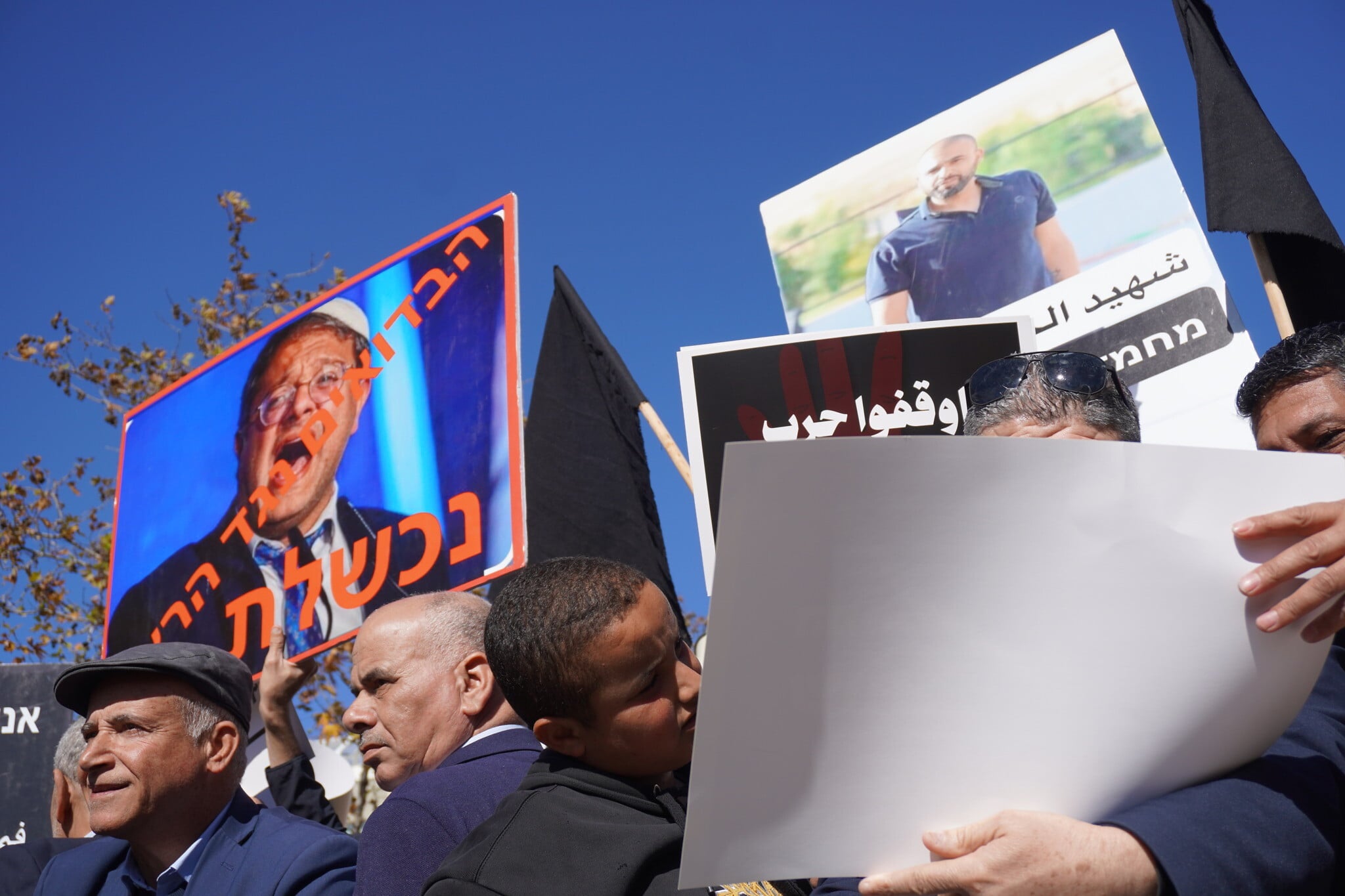
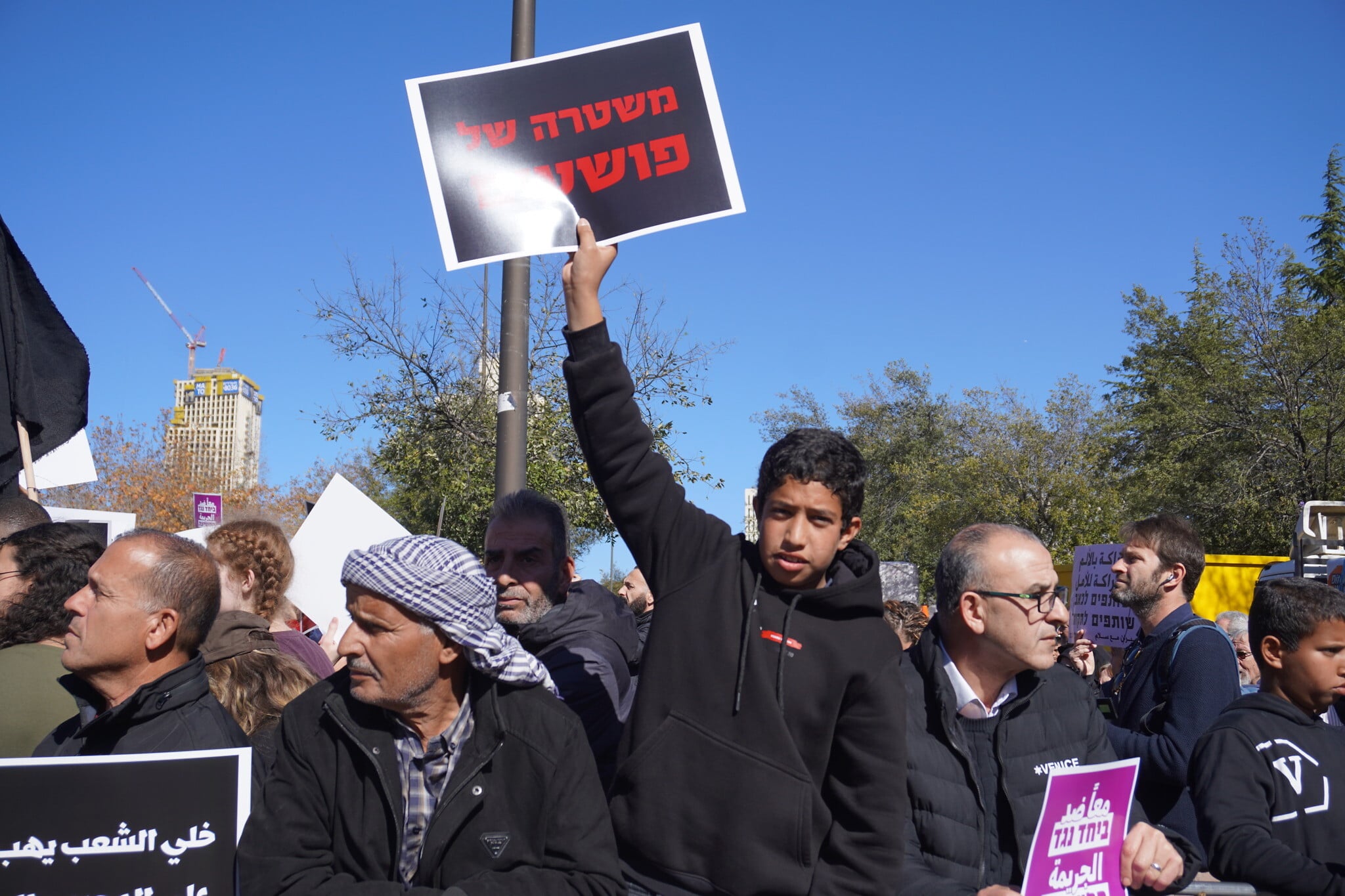
Hundreds demonstrated Sunday morning outside the Prime Minister’s Office in Jerusalem, decrying the police’s failure to curb violent crime in the Arab community under National Security Minister Itamar Ben Gvir.
Waving black flags, protesters chanted in Arabic: “Hey police, hey police, Arab blood isn’t cheap” and called for Ben Gvir’s sacking, accusing the far-right minister of turning a blind eye to the explosion of homicides in Arab society.
One protester sitting on his friend’s shoulders held up a large photo of Ben Gvir’s face overlaid by bright red Hebrew text, reading, “The Bedouins are against murder, you failed.”
“It is impossible to defeat crime so long as Ben Gvir is in charge,” declared Jamal Zahalka, the newly elected head of the High Follow-Up Committee, the leading umbrella organization for Israel’s Arab minority.
Israel closed out last year with a record 252 Arab citizens killed in violent crime-related incidents, marking the deadliest year to date for Arab society in the country.
Now, less than two weeks into the new year, the killings are continuing apace, with 16 Arab homicide victims during that span.
Arab leaders have blamed police for the sharp rise in homicides, citing the small percentage of murders solved by law enforcement. Since Ben Gvir began overseeing the police as national security minister in 2023, the homicide rate in Arab society has doubled.
“When the police allow the criminals to run rampant without interruption, there will be crime, there will be criminal organizations,” Zahalka said. “This is the root of the problem.”
Zahalka, a former Balad lawmaker, was joined by fellow Arab politicians including Ra’am chairman MK Mansour Abbas, Ta’al chairman MK Ahmad Tibi and Hadash chairman Ayman Odeh.
Tensions ran high between demonstrators and border police securing the scene at the PMO, with officers forming a cordon between the protest and reporters.
Police horses and a water cannon were stationed near the demonstration, but were not used to disperse the crowd. No arrests were made.
Police end raid on Tarabin al-Sana
A large contingent of the protesters arrived in the capital from Tarabin al-Sana, a Bedouin hamlet that was subject to a 12-day raid by law enforcement that came to an end the same morning.
Protesters called to “free Tarabin [al-Sana]” as some waved posters of a man killed there by police fire, 36-year-old Muhammad Hussein Tarabin.
Tarabin was shot on his doorstep during a midnight search of his home. While police alleged he posed a threat to the officer that shot him, his family denied the claim. The officer is under probe.

The shooting incensed residents and prompted local leaders to petition the High Court of Justice against the raid.
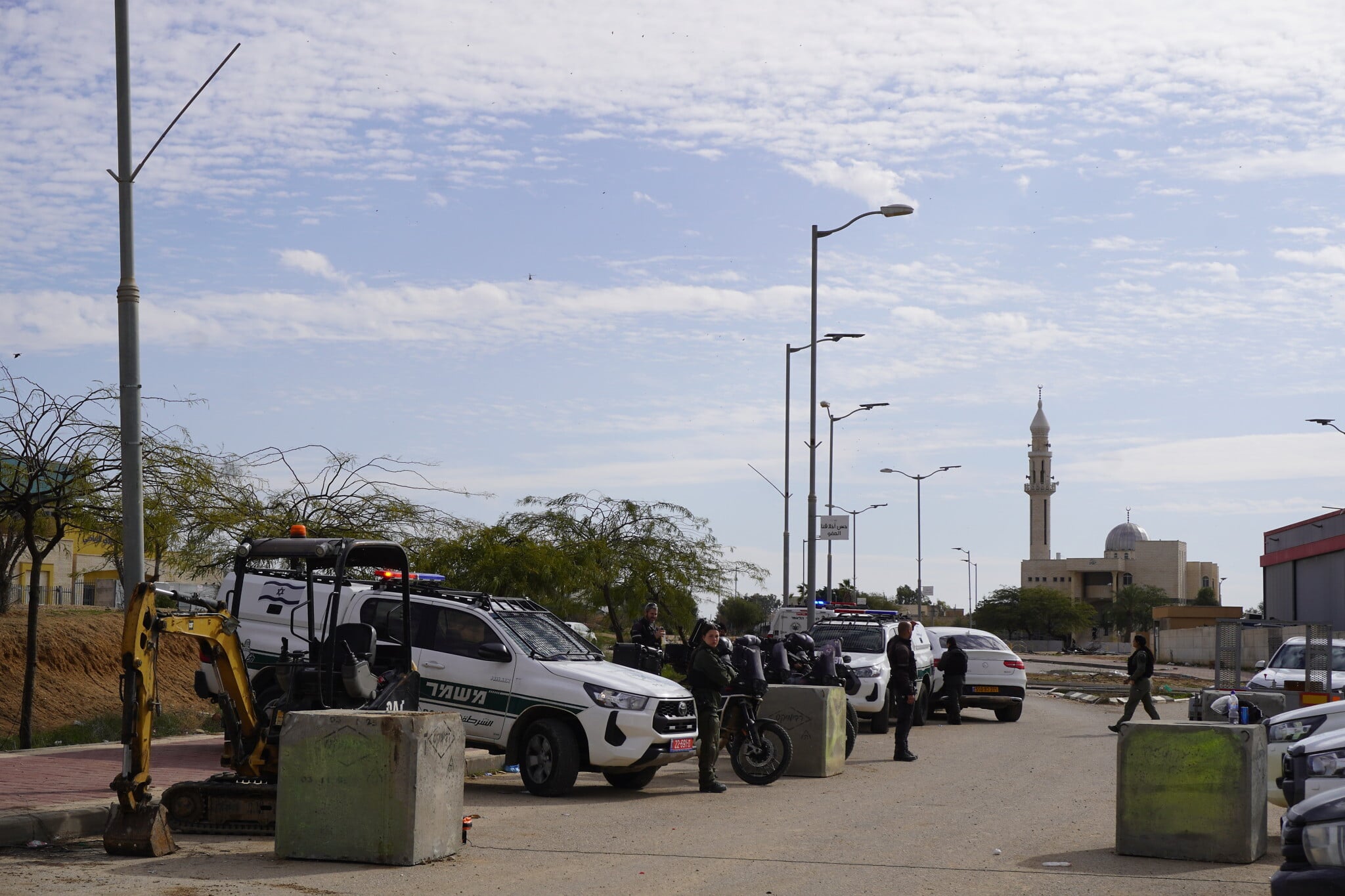
The court filing demanded the judges strike down police’s controversial practice of placing concrete blocks at the entrances to towns allowing officers to carry out spot checks on residents, claiming it amounted to collective punishment for the actions of a handful of criminals.
Before judges were able to issue a ruling, police withdrew most of their forces from the Bedouin town and removed the roadblocks from its perimeter.
Speaking to The Times of Israel, village council head Abdelbassat Tarabin claimed that police cut their operation short for fear that judges would deem the ad hoc checkpoints illegal.
While common in the West Bank and East Jerusalem, the practice was seldom used against Israeli citizens until mid-November, when Ben Gvir declared a sweeping anti-crime operation in Negev Bedouin locales.
The raid, led by the Border Police’s National Guard force, was launched after police said masked men from Tarabin al-Sana set fire to cars in nearby Jewish towns.
Police announced after ending the raid, which saw hundreds of officers deployed in the town, that they had seized four rifles, two handguns, hand grenades and stun grenades. They also arrested over 30 people, some of whom are suspected of weapons offenses.
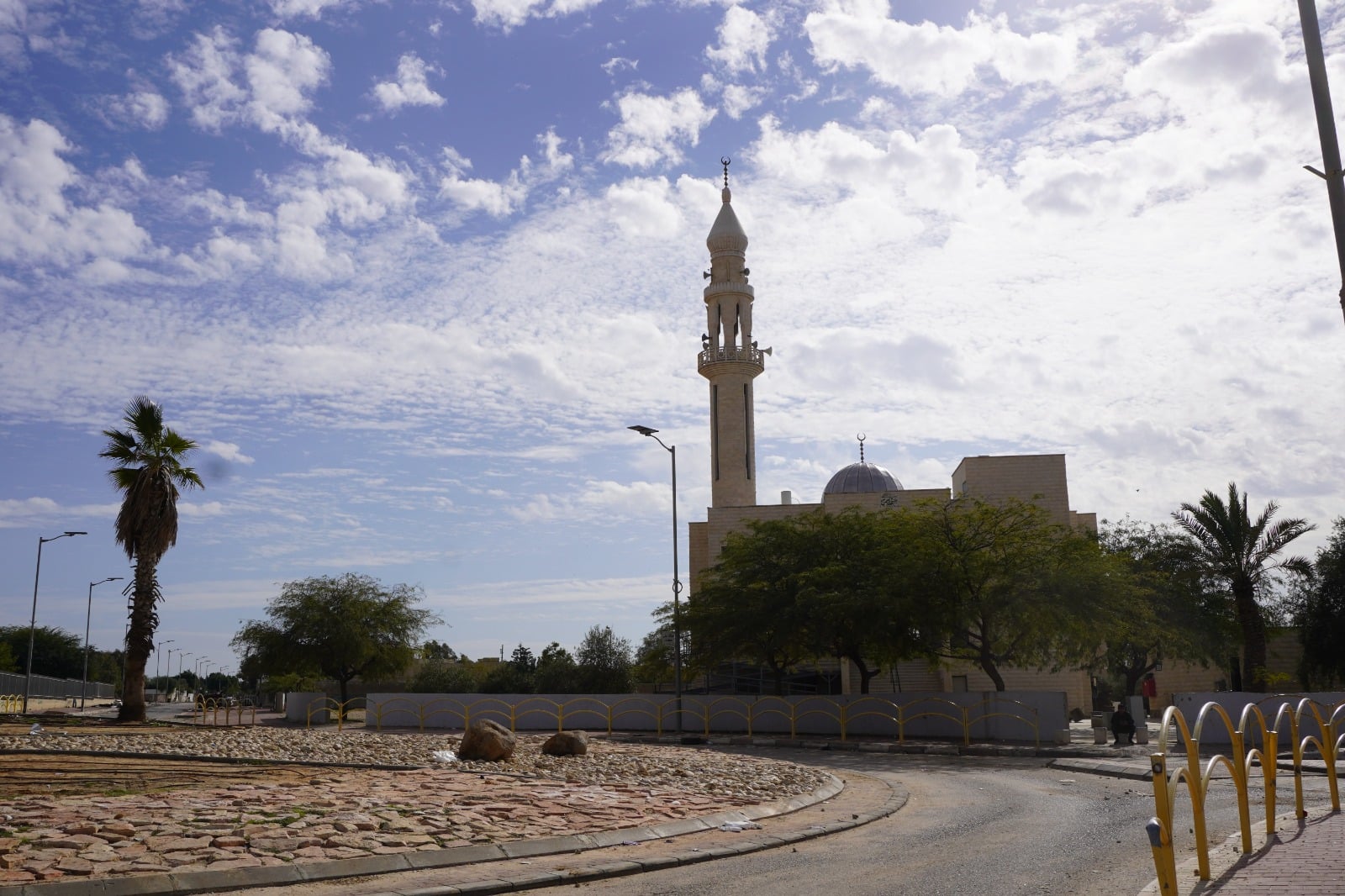
As part of the operation, dubbed New Order, police said they are shifting their focus to other Bedouin towns, namely Lakiya, Tel Sheva and Arara Banegev, where a 20-year-old medical student was gunned down last week.
Before the raid on Tarabin, police placed roadblocks in Lakiya and Tel Sheva, which have since been removed.
“Forces are prepared to provide the ‘Tarabin package’ for any conflict that arises, and with even greater strength,” said Southern District commander Haim Boublil in a statement, adding that police consider the raid a success and plan to replicate it in other Bedouin towns.
Police said there had been a 50 percent decrease in shooting incidents in the nearby areas of Carmit, Meitar and Tel Sheva since the launch of the New Order operation.





The Times of Israel Community.