

As Israel widens war against Hezbollah, northern town of Shlomi hunkers down
While all residents evacuated due to Hezbollah attacks in 2023 have returned, the town’s ‘ordinary’ routine is disrupted by almost daily first-person view drones, rocket fire and explosions
 Add ToI as a Preferred Source on Google
Reporter at The Times of Israel
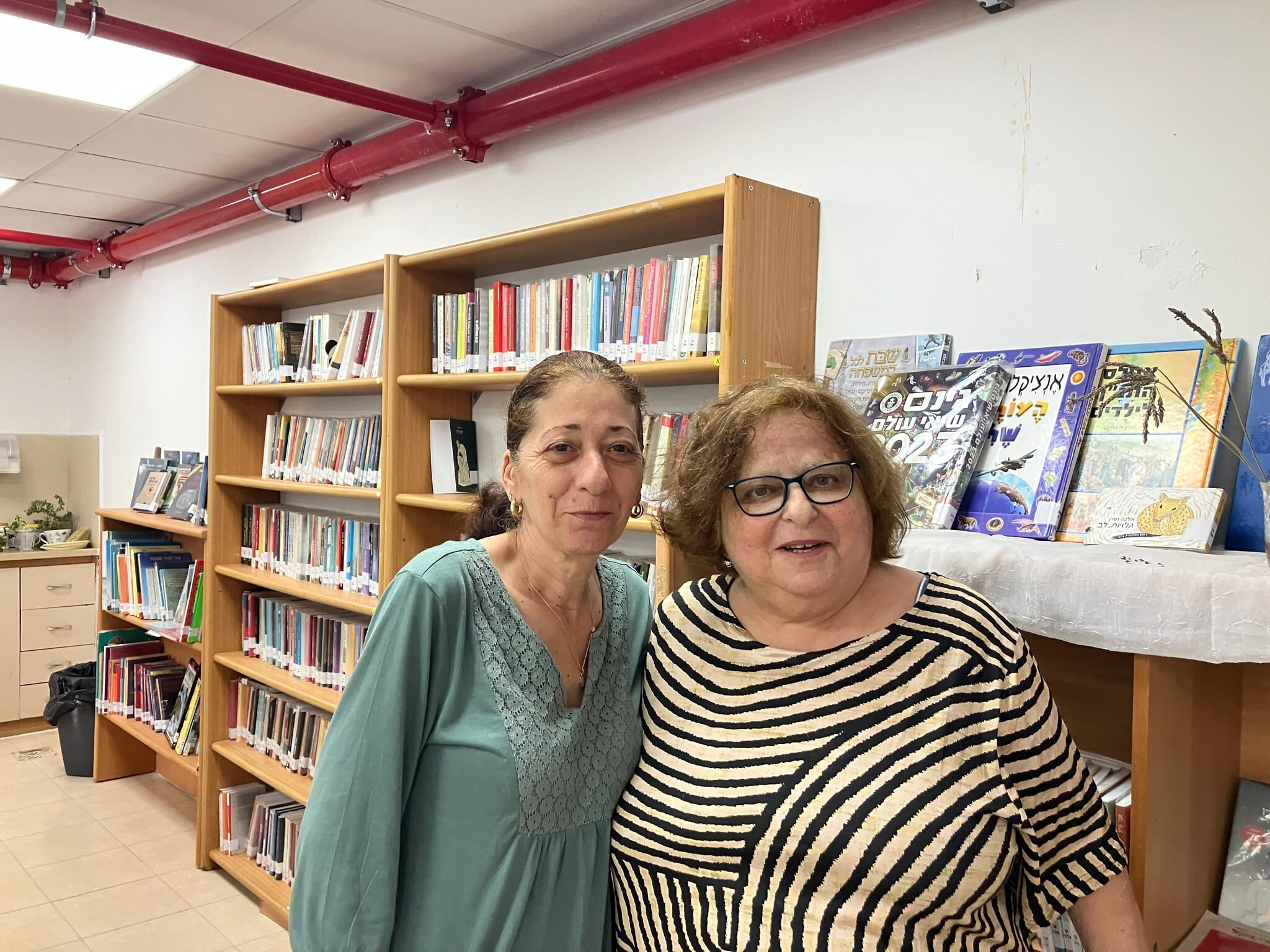
SHLOMI – Two librarians, Galia Handelman and Ayala Ben-David, opened the Shlomi library on Wednesday afternoon.
That event — on most days unremarkable — was of unfortunate note this week: It occurred a few hours after a Hezbollah-launched twin drone attack killed Sgt. Rotem Yanai, a 20-year-old service conditions NCO in the Givati Brigade’s Rotem Battalion. It also seriously wounded a reservist and left another in moderate condition close to the northern town’s border.
The library’s collection is now housed in a temporary, crowded space in the community center after the building was severely damaged in a Hezbollah missile attack in October 2024, during the first round of the war with the Iranian proxy terror group that began on October 8, 2023. Handelman said the renovated library will reopen in six months “if there’s not another war.”
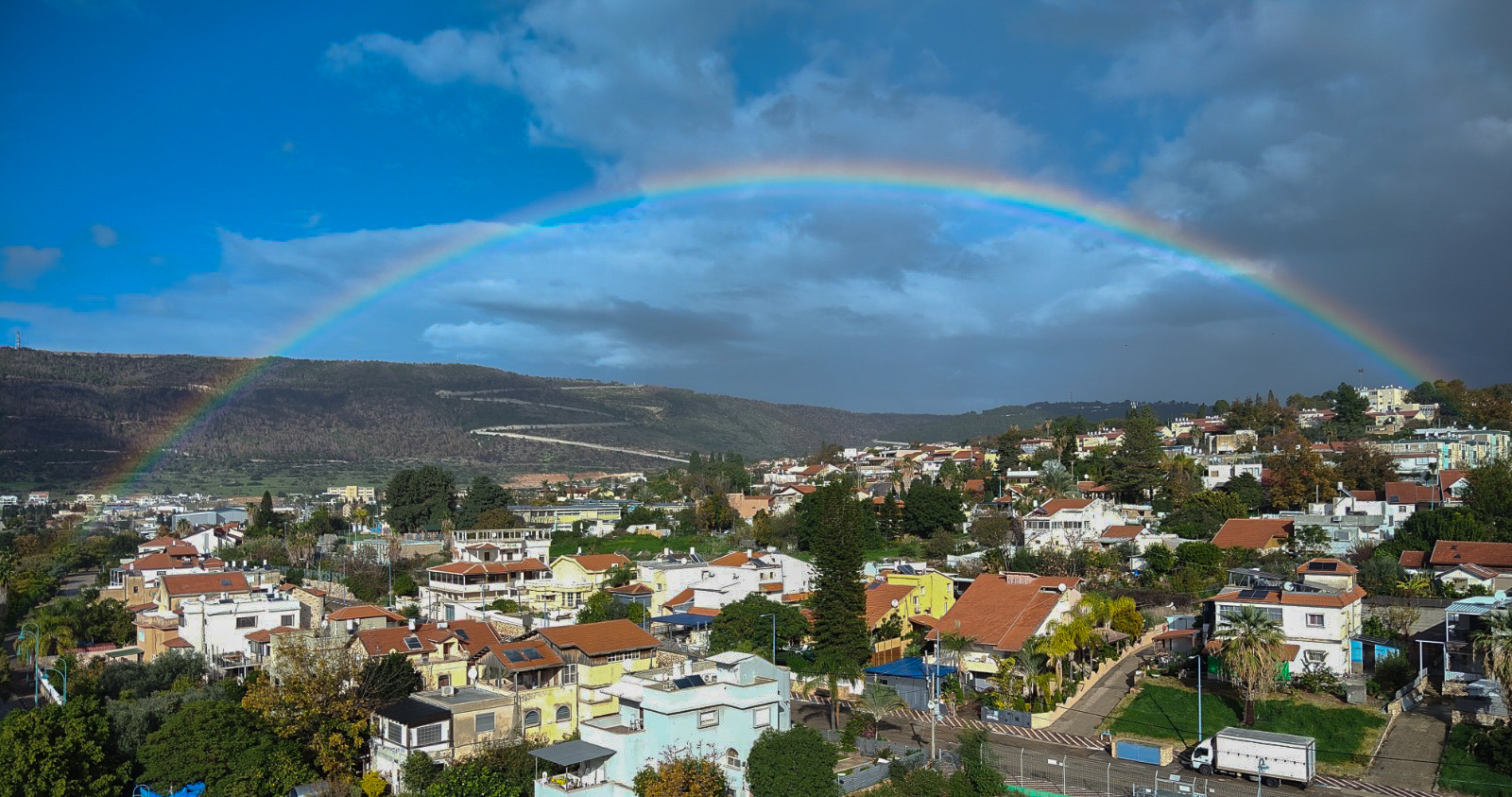
The Western Galilee town abuts the northern border with Lebanon. At one of its northernmost points, it is a mere 150 meters (490 feet) away.
On ordinary days, the library attracts some 30 adults and children every afternoon, because, said Ben-David, “people who like to read still read.”
However, since schools were closed due to the tense security situation, the librarians doubted the same number would come. Yet they opened the library all the same.
Despite the frequent drone attacks in and around Shlomi, the town was bustling on Wednesday afternoon. Stores were open, restaurants saw a brisk lunchtime business, and people were shopping for groceries at the supermarket.
Yet there was a lingering smell of burnt wood from the surrounding forests, where trees were destroyed by rocket fire, and the dismal reality that the town was still under attack.
Residents remain hyper-vigilant, listening to determine if explosions are incoming or outgoing, aware of the location of the nearest bomb shelter and how many seconds it would take to run there.
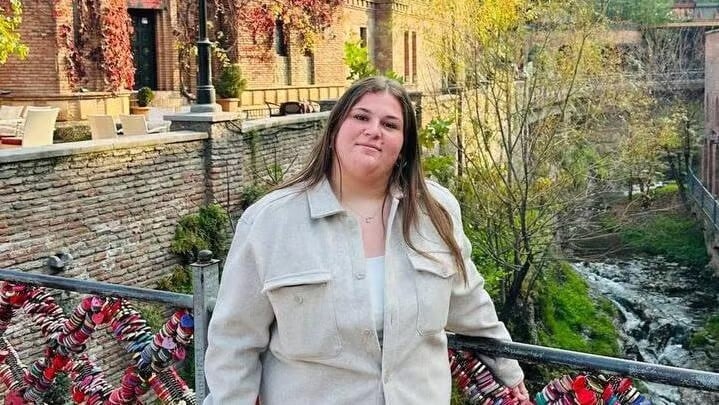
“There’s always the sense that there will be a tragedy,” Handelman said.
“We still have fear,” added Ben-David, who grew up in Shlomi. “That never goes away. But my house is here. Where else can I go?”
‘We must neutralize Hezbollah’s capabilities’
Israel has struggled to fend off growing attacks on troops in southern Lebanon and northern Israel by Hezbollah’s first-person view drones, which are largely impervious to jamming technology. The terror group has also fired rockets and other types of UAVs, hitting both military and civilian targets. Yanai, killed on Wednesday morning, is the eleventh soldier who fell on the Lebanese front since the start of the ceasefire between Israel and Hezbollah last month, which has largely unraveled.
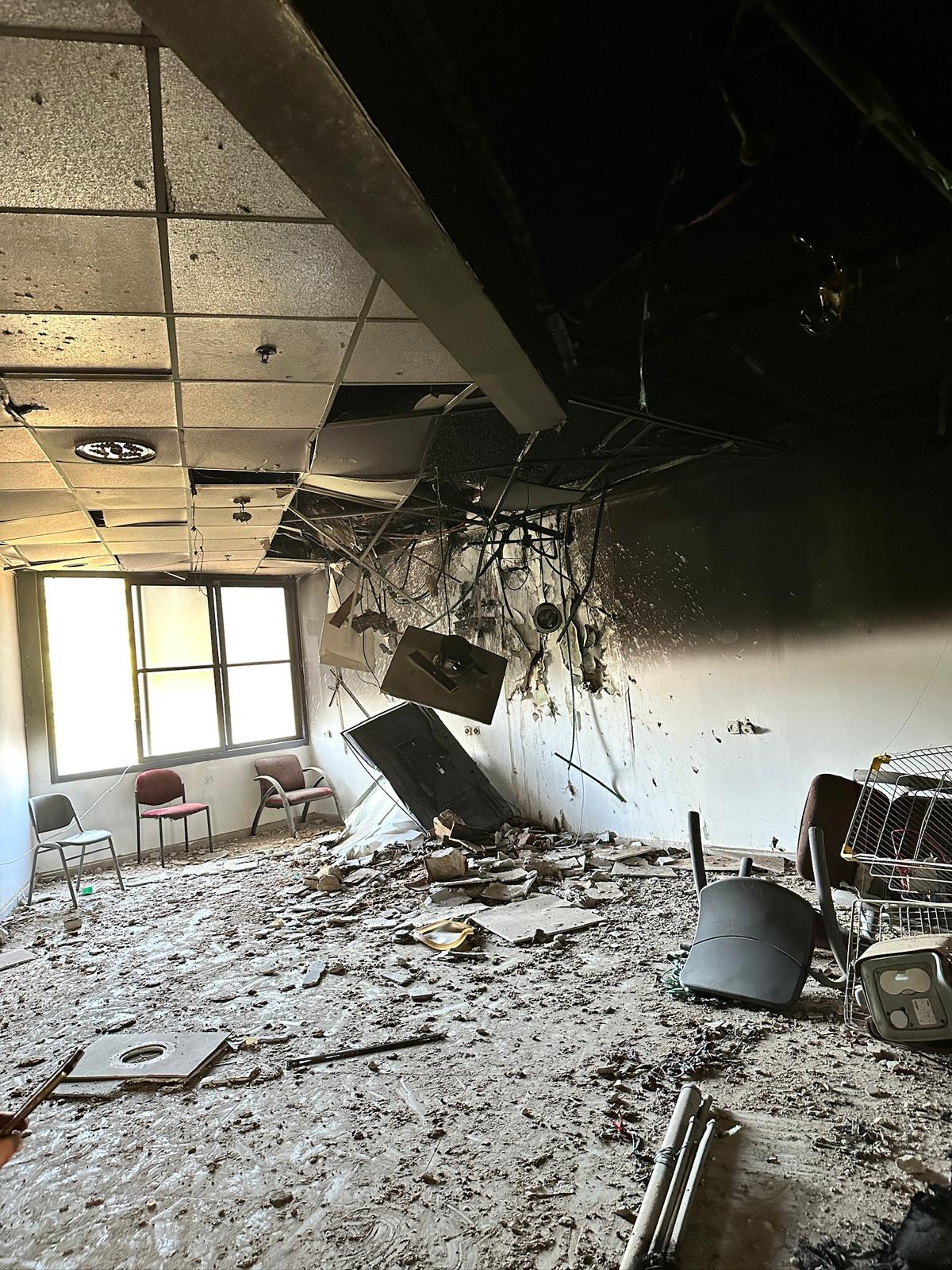
“There is no ceasefire. There was never a ceasefire with Hezbollah. It was between Tel Aviv and Beirut, not Israel and Hezbollah,” according to Major (res.) Avraham Levine.
Levine is the media director and senior speaker at the Alma Research and Education Center, an independent nonprofit specializing in security challenges on Israel’s northern border. He spoke with The Times of Israel about the low-intensity war raging in Shlomi and northern Israel, even as political and military leaders vow to ramp up operations in Lebanon and expand a ground campaign.
Sarit Zehavi, founder and president of the center, located 25 km (16 miles) away from Shlomi, said that she was “very worried” that the situation for the town and other communities in northern Israel would be similar to the war in Ukraine, saying, “We don’t see an end.”
“The less aggressive Israel is, the longer the war will be,” Zehavi said. “We don’t want deterrence. We must neutralize Hezbollah’s capabilities.”
On October 8, 2023, the 7,500 residents of Shlomi were among the 60,000 who were evacuated from 32 communities in the north.
More than 8,000 rockets were fired from Lebanon into Israel during the 2023-2024 Israel-Hezbollah war, along with hundreds of drones and anti-tank guided missiles. The Hezbollah-led attacks on Israel resulted in the deaths of 46 civilians and 80 soldiers until a ceasefire was reached in late November 2024.
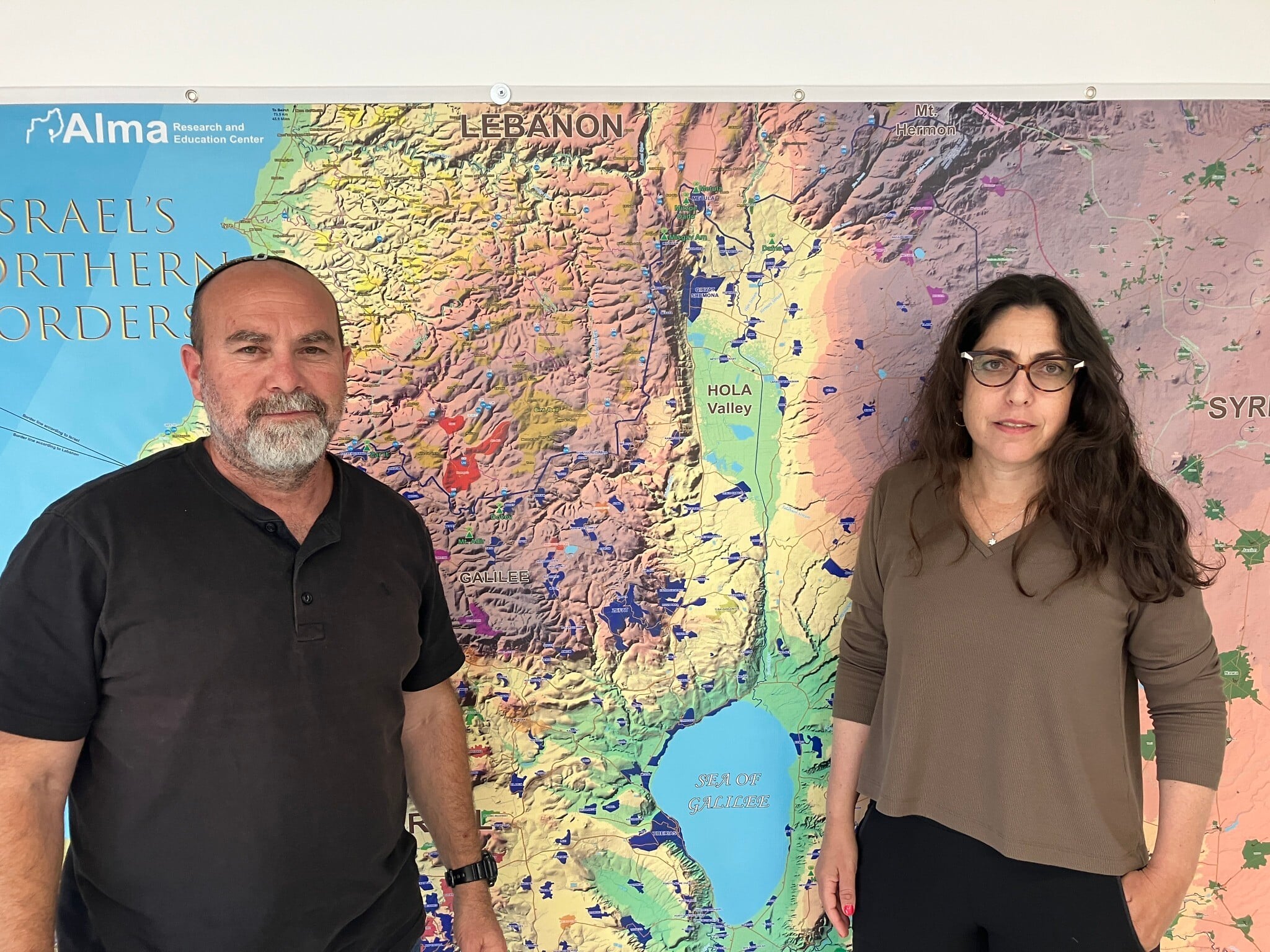
In Shlomi, over 420 homes and buildings were damaged as a result of direct hits and blasts.
By November 2024, the Israel Defense Forces took over the high ridge looming over the Western Galilee town. Before the war, it gave Hezbollah an easy vantage point, but today, it is one of five strategic points inside southern Lebanon where Israel has posted troops, ensuring the terror group can’t reestablish its foothold.
The first-person view drones, however, have given Hezbollah “a tactical advantage,” Levine said. “They’re cheap and easy to operate. The terrorists have turned a toy into a weapon.”
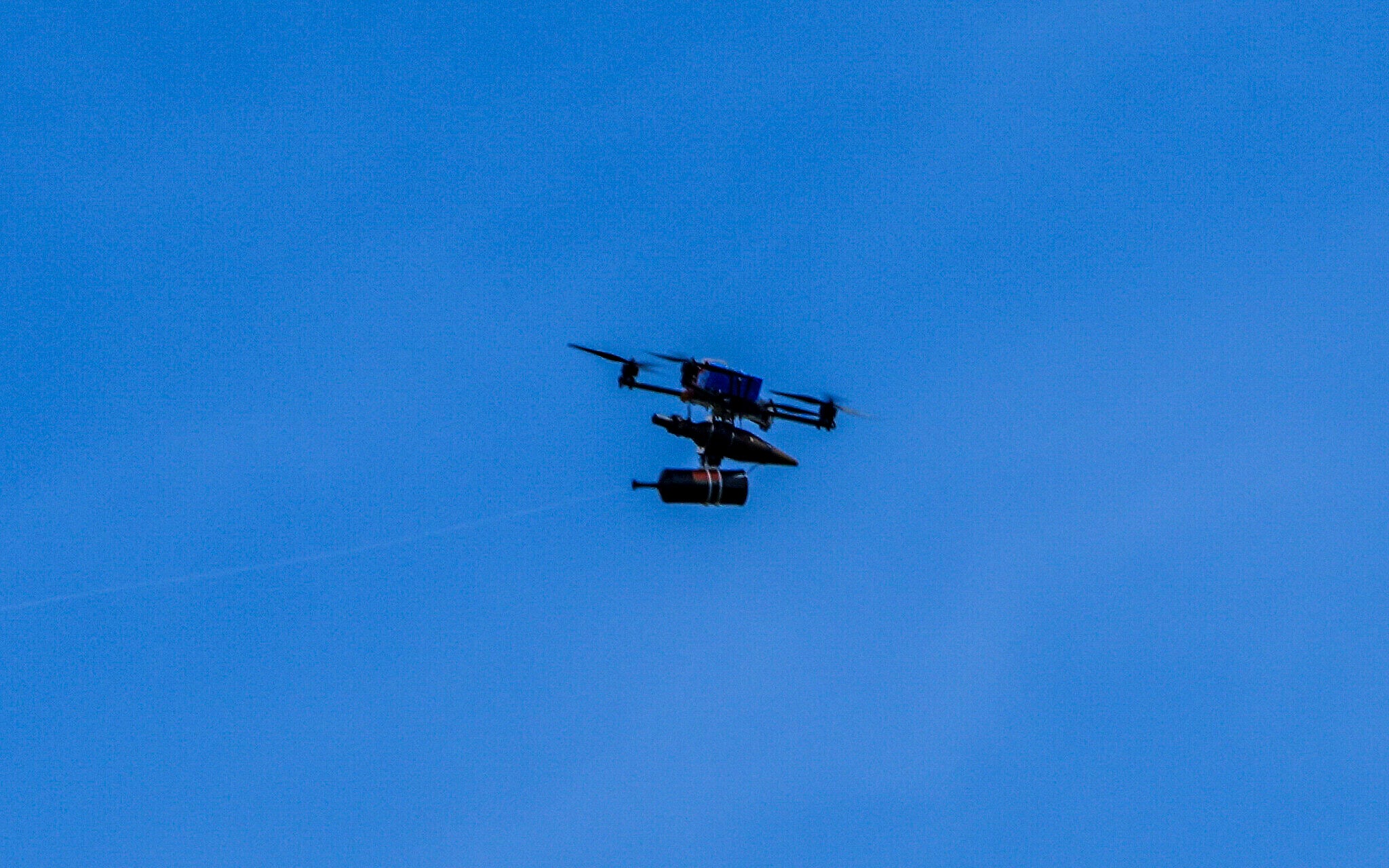
He believes that Israel will find a way to improve technology and stop the drones, yet Zehavi said that while wars have a “beginning, middle, and an end,” she fears that now, “this will last a long time.”
“The situation has now become normal that northern Israel is always under fire,” Zehavi said.
Double the population in a decade?
“Everyone has returned to Shlomi, and we have more people than we did 10 years ago,” Yosef Luchy, the Shlomi Local Council director-general, told The Times of Israel in his office. “The town plans to double its population in the next 10 years.”
Luchy seemed to take the situation of the battered town as part of daily life.
“If there’s a siren,” he told The Times of Israel, “we’ll go down to the ‘mamad,’ the protected room, wait 10 minutes and then go back to work,” Luchy said.
“We can’t solve the problem with Hezbollah,” Luchy said. “That depends on the army and the government. All we can do is make life easier for the citizens.”
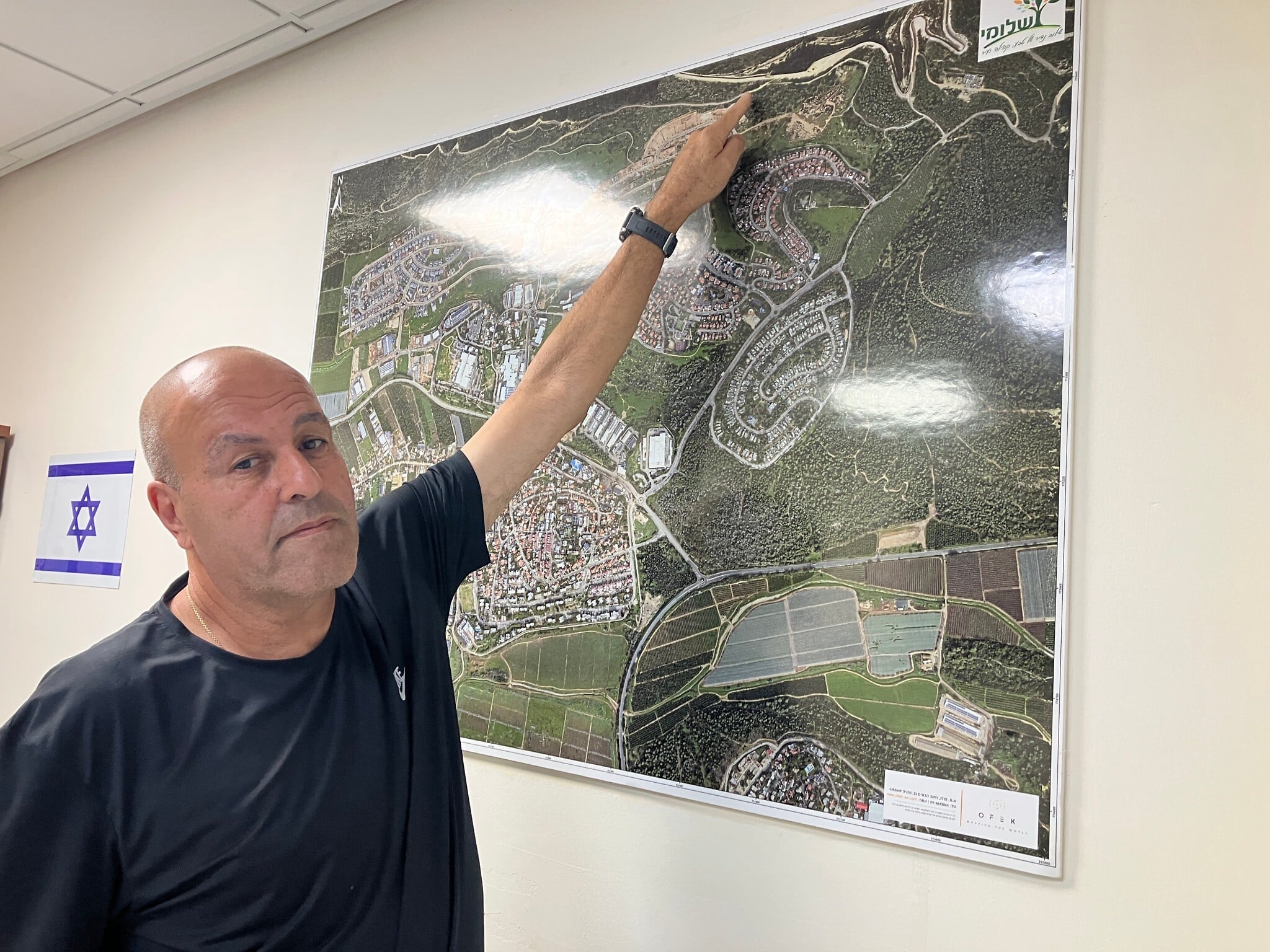
During the evacuation, some 4,000 of Shlomi’s residents were housed in hotels in Jerusalem, approximately 2,000 were in Haifa, and about 1,000 more were in Tiberias, Luchy said.
The town kept in touch with the residents, he said, and “all the teachers were with the same children before returning to the town.”
Since the war, town officials have built protected rooms in all the kindergartens and special-education schools so they can always remain open. The town has not yet begun building protected rooms in the rest of the schools.
“Danger is danger,” he said. “We’ll see what happens.”
‘Maybe there are fewer people’
Shaked Demry, a Shlomi resident, was walking with her older son, Harel, six, toward the supermarket when sirens were heard in the distance.
“Was that a siren?” Harel asked his mother.
“It isn’t for us,” she said calmly, although she told The Times of Israel in an undertone that the situation is “frightening because there are explosions without any siren warnings.”
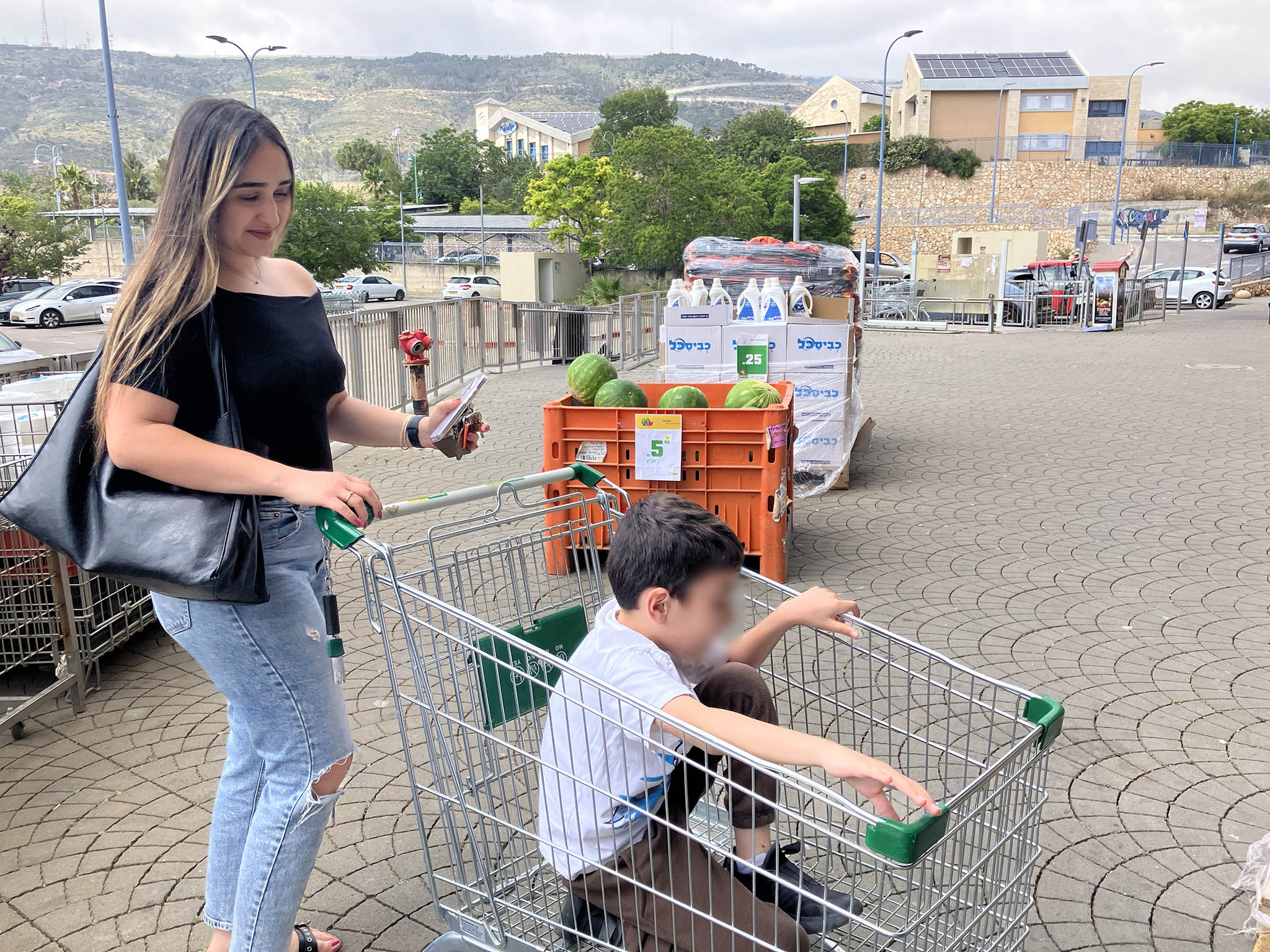
It was the second day that Harel’s first-grade class was canceled, and he was accompanying her. Demry said that after a siren sounded earlier in the day, signifying the drone that eventually killed Yanai, the kindergarten teacher for her younger son sent messages to all the parents saying that their children were safe.
“My son is very aware of the situation,” Demry said. “Yesterday, he looked up on the internet how many people lived in Israel. Then he told me, ‘Maybe there are fewer people now because of the war and soldiers being killed.’”
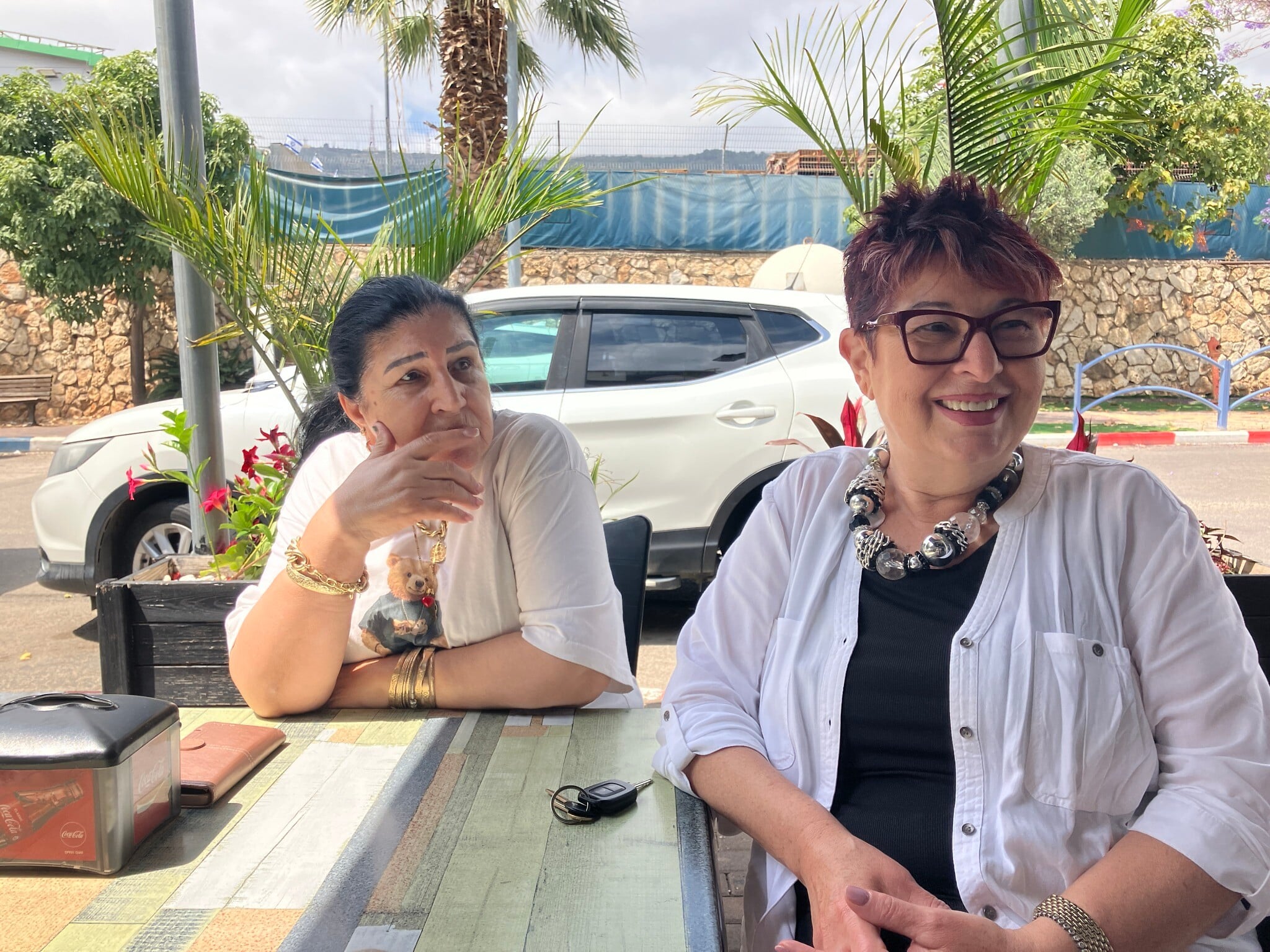
A few streets away, Carmela Gal was sitting at a local restaurant with her friend, Etti Azri.
Gal said she moved to Shlomi in mid-February 2026 — right before war with Iran — because of the way Shlomi Mayor Gabi Naaman “cared” about the residents during the war.
“It warmed my heart, and I wanted to be here,” she said.
She said that despite the war, ‘’we’re not afraid.”
Then she pointed to one of the many temporary bomb shelters scattered throughout the town.
“Look,” she said, “there’s a bomb shelter right there.”





The Times of Israel Community.