

As told by friends and family, an insider’s dissection of the evolution of al-Qaeda
Authors Cathy Scott-Clark and Adrian Levy say while the West carefully curates the narrative of the global jihadi group, there was rife dissent over 9/11 and other ‘policy’
 Add ToI as a Preferred Source on Google
Over the past two decades, there have been a number of pivotal moments in which al-Qaeda’s ongoing war against the West has shifted the contours of global geopolitics. Most notably, the 9/11 attacks sent the “war on terror” into a whole new dimension — first with the United States-led invasion of Afghanistan in October 2001, and then with the subsequent invasion of Iraq in March 2003.
Despite intensive military counter-operations, western understanding of al-Qaeda has been severely limited, primarily because governments and intelligence agencies tend to control and simplify narratives. No longer. A new book discusses the history of al-Qaeda’s forces — with an insider’s perspective.
Written by British investigative journalists Cathy Scott-Clark and Adrian Levy, “The Exile: The Stunning Inside Story of Osama Bin Laden and al-Qaeda in Flight” recounts the group’s evolution through unique access to Osama bin Laden’s inner circle.
The book documents the gradual formation of the Islamic State by bin Laden’s lieutenants and captures bin Laden’s rising paranoia in his final years in the Abbottabad compound in Pakistan where he was finally killed by US special forces in May 2011.
Frustrated this story was not being relayed in its totality, both Clark and Levy traveled to a host of countries in search of more information to tell what they feel is the real story of al-Qaeda as it evolved into a leading global brand of international jihadism.

To this end, Clark and Levy held meetings with al-Qaeda insiders, as well as with relatives and friends of those associated with the organization, in places like Yemen, Jordan, Saudi Arabia, the Emirates, Kuwait, the United States, Pakistan, and Afghanistan.
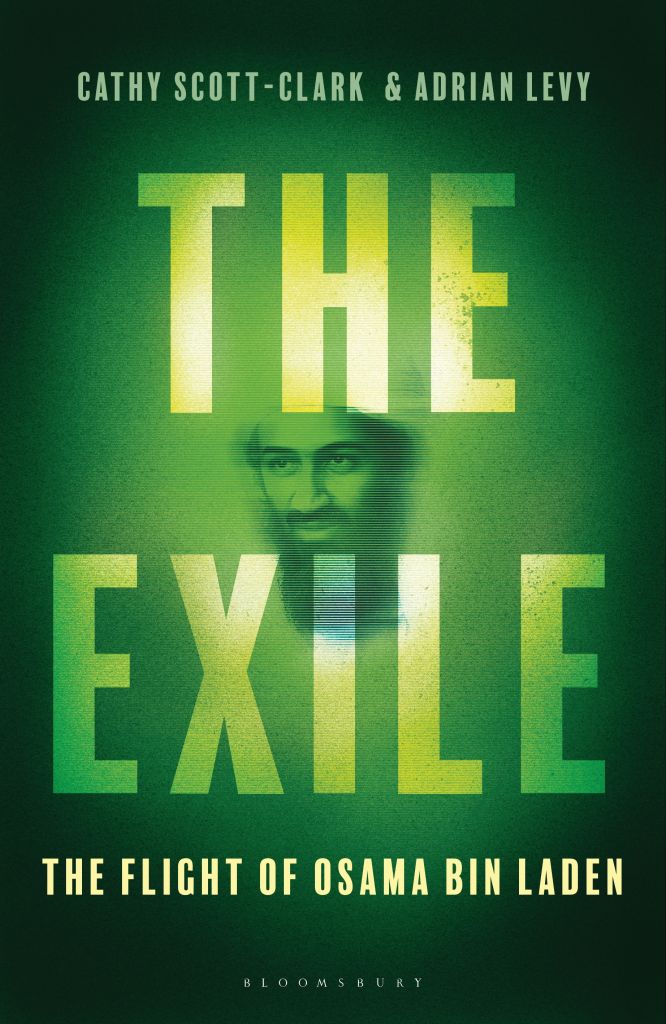
Startling details emerge, such as how the Bush administration knew the whereabouts of bin Laden’s family and al-Qaeda’s military and religious leaders, but rejected opportunities to capture them.
Details also surface relating to the development of the Central Intelligence Agency’s (CIA) torture program in Cuba and Thailand, and the subsequent coining of the phrase “forever prisoner,” as does information relating to Iran’s secret shelter for bin Laden’s family and al-Qaeda’s military council.
“It’s more than a fantasy the way the al-Qaeda narrative is constructed [in the west],” says Levy, a senior correspondent at the Guardian newspaper in the United Kingdom. “It’s seen through a western-European-Caucasian police procedural, in the form of analysts, the CIA, or from European intelligence agencies.”
“I can’t think of any other conflict where there is such an extraordinary act of control by western governments,” the journalist adds.
Levy cites films like “Zero Dark Thirty” — a slick blockbuster narrative that depicts the decade-long hunt for bin Laden — as a perfect example of sanitized western propaganda at work.

“What we are seeing is a Hollywood betrayal of this story,” says Levy, “which shows agents using torture successfully in an attempt to imbue the story with one single narrative.”
This torture was conducted far away from US soil, often in secret locations, and thus was not obligated to human rights conventions or other international laws.
The book recalls, for instance, how on July 24, 2002, Attorney General John Ashcroft, who then served in the George W. Bush administration, verbally approved to the CIA the use of 10 interrogation techniques on terror suspects who were arrested without trial. These techniques included walling, cramped confinement, and the use of diapers.
A face to the fighters
“The Exile” pays special attention to the prison diaries of Abu Zubaydah.
Born Zayn al-Abidin Muhammad Husayn in Saudi Arabia, Zubaydah moved to the west Bank as a teenager. Rejecting his middle class upbringing, he shunned his parents’ dream of him becoming a doctor and instead traveled to Afghanistan to train with al-Qaeda recruits. He was captured in Faisalabad, Pakistan, on March 28, 2002, suffering severe bullet wounds in the process. And, he famously lost an eye while under CIA interrogation.
The interrogation techniques used on him by the CIA have included stress positions, sleep deprivation, and waterboarding, among other forms of torture.
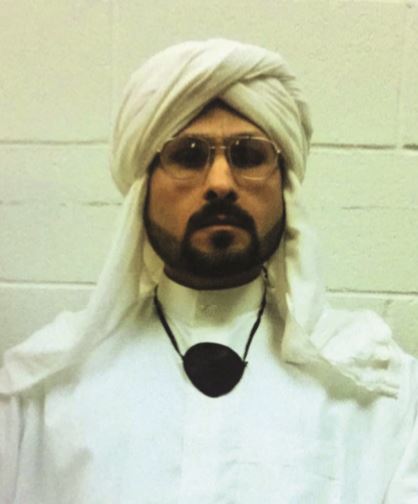
As Levy recalls, the CIA has accused Zubaydah of being al-Qaeda’s number three, Osama bin Laden’s lieutenant, and one of the main planners of 9/11.
The US government now admits that most of those allegations against Zubaydah remain unverified. Still, Zubaydah remains at Guantánamo Bay, in Cuba, without trial, where he is classed as a “forever prisoner.”
“Zubaydah’s lawyers managed to get hold of his torture diaries,” Levy says, “and it’s the first primary source by someone who has been through the capture rendition in the Guantánamo process. This is yet another example how this [controlled] narrative has been imposed on this very complex situation.”
“It’s deeply frustrating with the recent attacks in Manchester and [London], that we now have less material available [about jihadis] than we did post 9/11,” Levy adds.
Levy believes the key to really understanding jihadi fundamentalists like bin Laden and other al-Qaeda figures is not just to study their eschatological-fundamental-Islamic-vision of the world — but to analyze their day-to-day domestic lives too.
“One would have to emphasize the bin Laden family,” the journalist posits. “Primarily because it’s the story of an abusive father and a family in decay.”
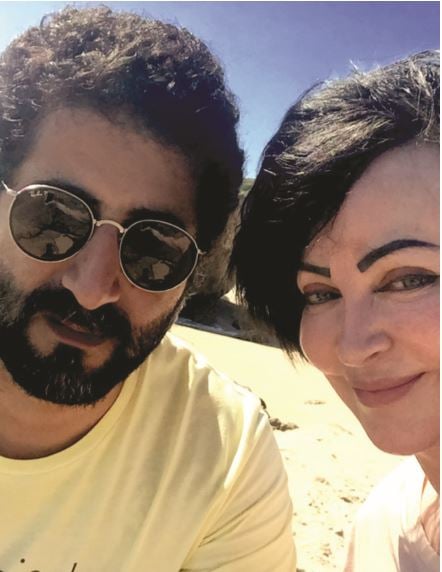
Levy cites how a number of bin Laden’s children, for example, were born autistic and with numerous other diseases which were essentially untreatable since the jihadi leader was against any kind of investment in medicine or science.
The journalist also explains how the eldest bin Laden daughter, Khadija, was married off in puberty to make pacts with other mujahed fighters. She then subsequently died in childbirth in Waziristan in 2007, despite the fact that she had been advised by doctors three years earlier to undergo a dilation procedure to cleanse her womb.
“There is a real sense of [huge] human failings within the bin Laden family,” says Levy.
Crossed wires
The west, led by the United States, has attempted to purposely construct and control how bin Laden and the al-Qaeda story is portrayed in the mainstream media, but the narrative from the jihadi side has been just as carefully constructed.
“Bin Laden understood the nature of digital terror, and was always shaping his image,” explains Levy, “whether it was the way he held his gun, the way he dressed, the shape of his beard, or the image of him as the messianic figure in the cave returning.”
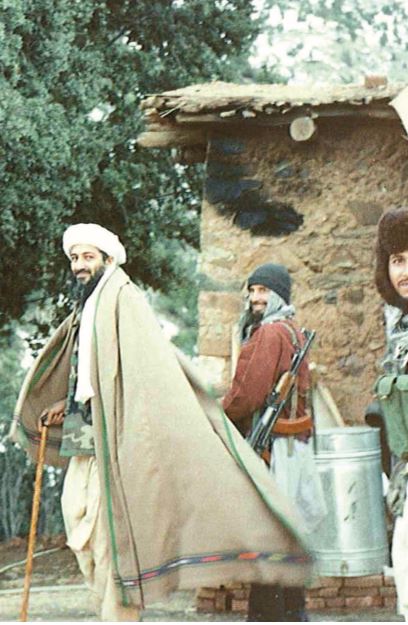
One of the more intriguing narratives to emerge from Levy and Clark’s book, however, is the revelation that the 9/11 plot to bring down the twin towers wasn’t handed down through conventional means, by way of the al-Qaeda military or religious council.
“[They] objected to the plans for 9/11 on the grounds that there would be too many civilian casualties, that it was an unjustified target, and that it would lead to the immediate dismantling of the Islamic emirate of Afghanistan,” says Levy.
“Since 9/11 we in the west have seen this in the framework of an al-Qaeda plot.
But that is not what happened,” he adds.
The journalists also document in their book how the two George W. Bush administrations widely misunderstood various countries’ roles across the Middle East — especially in relation to how certain states harbor terrorists.
Pakistan, for example — a country that the Bush administration viewed as a strategic partner in combating terrorism — is what Levy calls a “jihad factory.”
‘Al-Qaeda objected to the plans for 9/11 on the grounds that there would be too many civilian casualties’
“There are elements of the jihad factory [in Pakistan] which are controlled by the deep state — and then elements that are well beyond its control,” Levy adds.
The 2003 Iraq War, however, is absolutely pivotal and critical to understanding the west’s conflict with jihadi terrorism over the last 15 years, Levy believes.
After all, it was Iran, not Iraq, Levy says, that was harboring al-Qaeda terrorists in its country before the 2003 invasion of Iraq.
“The Iraq War set back the normalization of relations between the US and Iran massively,” the journalist says.
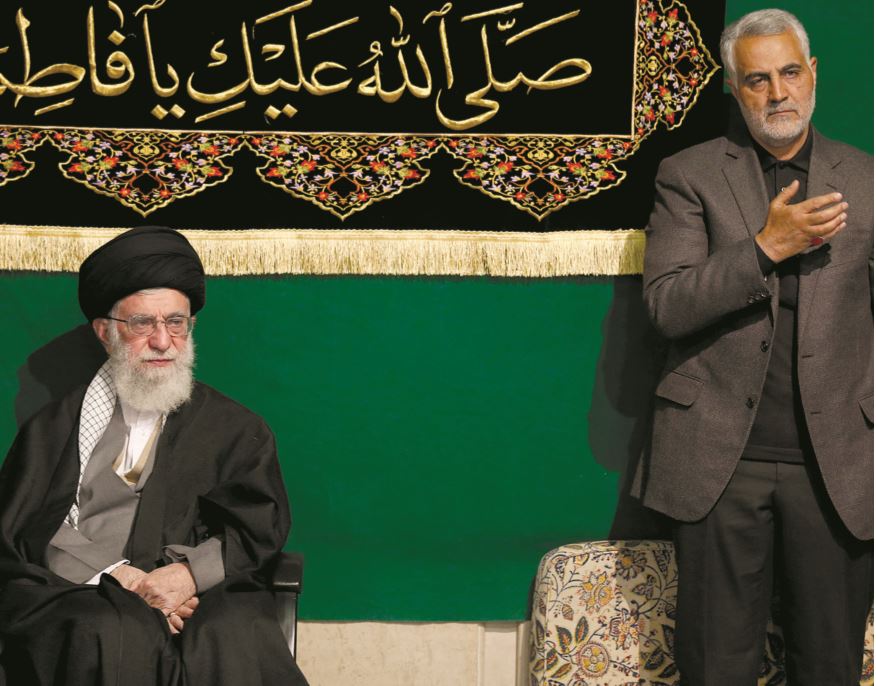
Once Iran was named in George W. Bush’s so called “axis of evil” speech, the country took a hardline approach to the west.
“Iran was admitting that it had given finances, transit, and [support] to al-Qaeda,” says Levy.
‘It’s like a series of matryoshka dolls, and the echoes out from that are Syria and Libya’
“But because of the axis of evil speech, Iran went hardline. After this it chose not to hand over of the religious Shura, and the military and the religious council of al-Qaeda [to the west],” Levy explains.
The Iraq War also upset the Shia-Sunni balance in Iraq, and subsequently led to the rise of IS.
“It’s like a series of matryoshka dolls,” says Levy. “And the echoes out from that are Syria and Libya. And that is how we have reached the point with the Manchester [and London attacks].”
Al-Qaeda in the Promised Land?
Throughout Clark and Levy’s book there are numerous quotes from al-Qaeda leaders about the need to constantly attack the Jewish state. Moreover, the United States and Israel are in many ways seen by fundamental jihadists almost as one single entity and viewed as the ultimate enemy together.
Still, while Israel is a target that al-Qaeda would gladly like to attack, there are subtle strands within this narrative that make sure it’s not that easy.
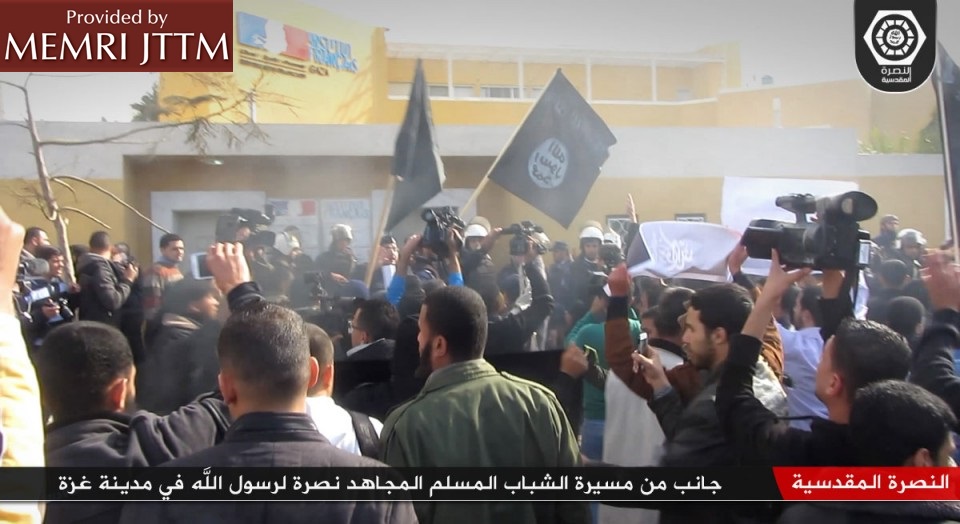
Levy argues, for instance, that much of the jihadi world that surrounds al-Qaeda is a hierarchy of nations.The Saudis and Egyptians are seen in this jihadi-worldview as the intellectuals. But the Palestinians, Levy explains, are not “necessarily highly regarded in the jihadi world.”
Levy recalls how Abdullah Yusuf Azzam, a Palestinian, who was known as the Godfather of Jihad in the Afghan conflict, ended up being up killed in a car bomb in 1989. Many suspect that he was killed by bin Laden.
‘Palestine and Palestinian politics aren’t given a lot of status within the mujahid and jihad world’
“Palestine and Palestinian politics aren’t given a lot of status within the mujahid and jihad world,” Levy explains. “And al-Qaeda have chosen different causes that were dictated by the ethnic makeup of the movement.”
Levy also points out that al-Qaeda usually tend to carry out their operations in failed or failing states, such as Algeria, Libya, Syria, Iraq, as well as a host of other failed states across Africa, where fundamental Islam is growing all of the time.
“So in that sense Israel could not be a worse location for al-Qaeda,” says Levy. “It’s a small locked down country with a militarized zone with a hugely successful domestic and foreign intelligence force. And it would be spectacularly more difficult for al-Qaeda to set off something on the scale of 9/11 within Israel than it would be in, say, the United States.”

Levy claims that a number of journalists within Israel have written about the so-called “al-Qaeda-ization” of the Palestinian cause. But he believes this is a misguided view.
“There is not yet an al-Qaeda brand within the Palestinian national liberation struggle,” Levy explains. “If one is to talk about al-Qaeda in Israel, the key question to ask is who would the local partners be?”
It is true, Levy concedes, that in Sinai al-Qaeda are relatively successful — primarily because they have local partners in Egypt. And in Jordan the group has had some level of success, garnering some support.
‘If one is to talk about al-Qaeda in Israel, the key question to ask is who would the local partners be?’
“But having no partners, no history, the wrong rhetoric, and a fear of the military intelligence apparatus in Israel, makes it enormously difficult for al-Qaeda to carry out an attack in Israel,” Levy says.
“It’s far more profitable for them to be in Manchester, Birmingham and London,” Levy adds. “They are sprawling cities with different rules. They have lots of local partners and huge diasporas. And it makes much more sense than Jerusalem does.”
Clark and Levy’s book concludes just as bin Laden gets assassinated in 2011 by US special forces in Pakistan. However, the journalists are keen to point out that al-Qaeda’s narrative has not ended there.
While IS is certainly pervasive, the geographic reach of the organization has diminished, says Levy. Moreover, he adds, IS depends on the contagious nature of its idea. He says the main problem with IS is that “it has no structure.”

With the politics of the Middle East in complete free fall, it’s hard to say what direction all of this is going in, Levy posits.
Still, “Al Qaeda is blossoming and is massively resurgent,” he says, pointing out that the jihadi world “has moved on from bin Laden.”
Al-Qaeda is far more ambitious, in complete resurgence and “a massive force to be considered,” Levy concludes.







The Times of Israel Community.