

Australian court overturns law clamping down on protests in wake of Bondi massacre protest law
Judge rules measure unconstitutional; pro-Palestinian plaintiff claimed NSW government sought to ‘rip up our democratic rights to protest’; State Premier Chris Minns stands by decision to limit demos
 Add ToI as a Preferred Source on Google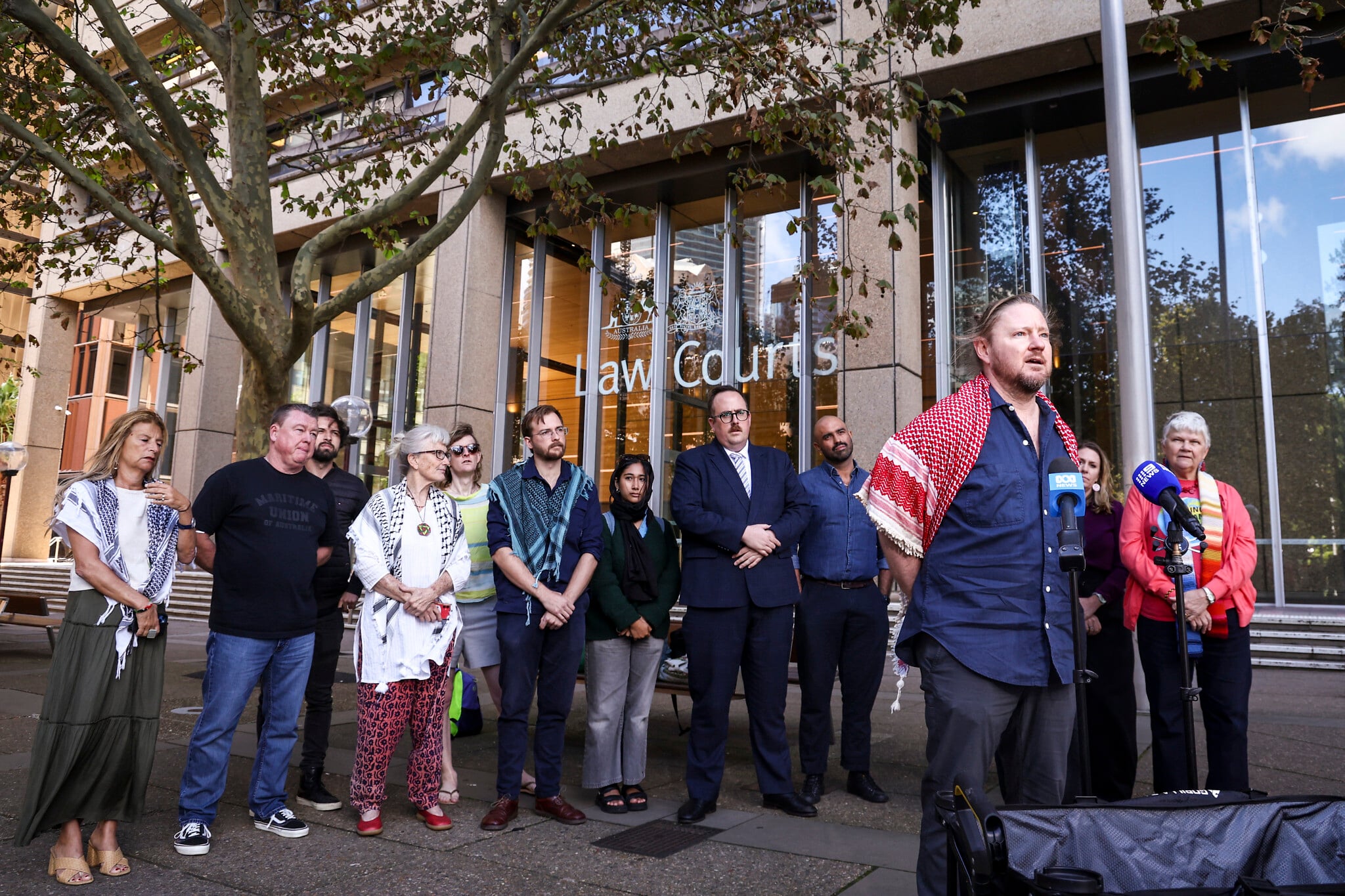
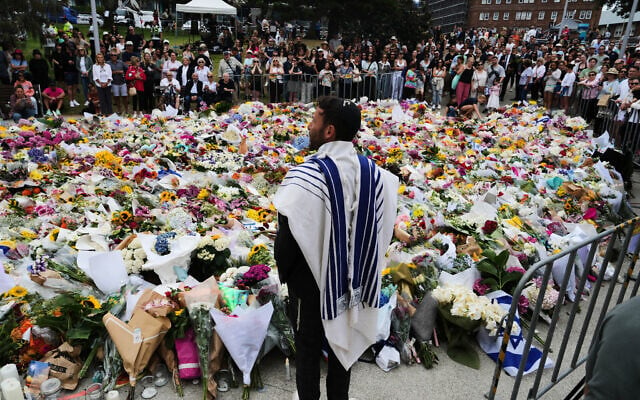
A law clamping down on protests following the deadly Bondi Beach terror attack targeting Australia’s Jewish community was overturned by a court on Thursday, a written ruling showed.
Activists had challenged the New South Wales legislation, enacted 10 days after the December 14 massacre that killed 15 people and wounded dozens at a beachside Hanukkah candlelighting event.
Australia launched a government-backed inquiry into antisemitism and social cohesion, with findings due by December. The government has already strengthened gun laws and introduced new hate speech legislation following the Bondi massacre.
The protest law gave police the power to restrict public assemblies in declared areas, making it impossible to get a permit for any protests and allowing officers to order people to move away.
The state government pushed for the crackdown to protect cohesion and community safety at a time of high tensions, the Court of Appeal heard.
But the legal provisions were “constitutionally impermissible,” Chief Justice Andrew Bell found in a written ruling.
They effectively discouraged all forms of protest in the declared area, irrespective of the purpose and possible impact on social cohesion, he said.
“The impugned provisions infringe the implied freedom of political communication,” the court ruled, declaring them invalid.
Immediately after the protest law was passed in December, the state’s police chief declared the first restrictions across a large swath of Sydney.
Clampdowns continued in various forms until February, including during a visit by Israeli President Isaac Herzog when police and demonstrators clashed in central Sydney.
Pro-Palestinian activist Josh Lees, who was one of three plaintiffs in the case, said New South Wales Premier Chris Minns had long sought to ban protests, especially over Gaza.
“While Israel and the US wage endless war, destroying the lives of millions of people, supported by Australian governments, they are continuing to try to rip up our democratic rights to protest,” the Palestine Action Group spokesman said in a statement.
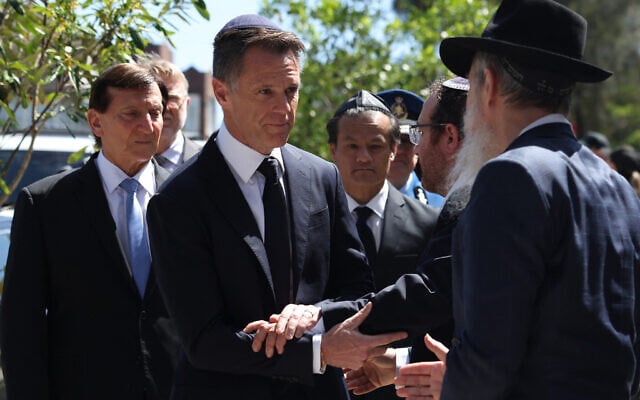
Minns said the government stood by its decision on the law.
“This was in the aftermath of the worst terrorist attack our country has seen, in which 15 innocent lives were lost,” he said in a statement to Australian media.
“We believe it was necessary and important for Sydney at the time.”
Police say the gunmen, Sajid Akram and his son Naveed Akram, were inspired by the Islamic State terror group.
Sajid Akram was shot dead by police at the scene, while Naveed Akram, who was also shot but survived, is currently facing charges including 15 counts of murder and a terror offense.
The Jewish community in Australia has been among the hardest hit in the tidal wave of antisemitism across the globe since Hamas attacked Israel on October 7, 2023, sparking the Gaza war.
Australia has seen successive pro-Palestinian, anti-Israel marches and protests that have included antisemitic rhetoric, a firebomb attack on a Melbourne synagogue, two nurses who threatened to kill Jewish patients at their hospital, and the law enforcement discovery of a trailer filled with explosives, said to have been intended to cause a mass-casualty event at a Sydney synagogue.







The Times of Israel Community.