

Barak reportedly meets Gabbay, furthering speculation of center-left unity pact
Former PM also met with opposition leader Livni and ex-defense minister Ya’alon, fueling suspicions the outspoken Netanyahu critic is preparing political comeback
 Add ToI as a Preferred Source on Google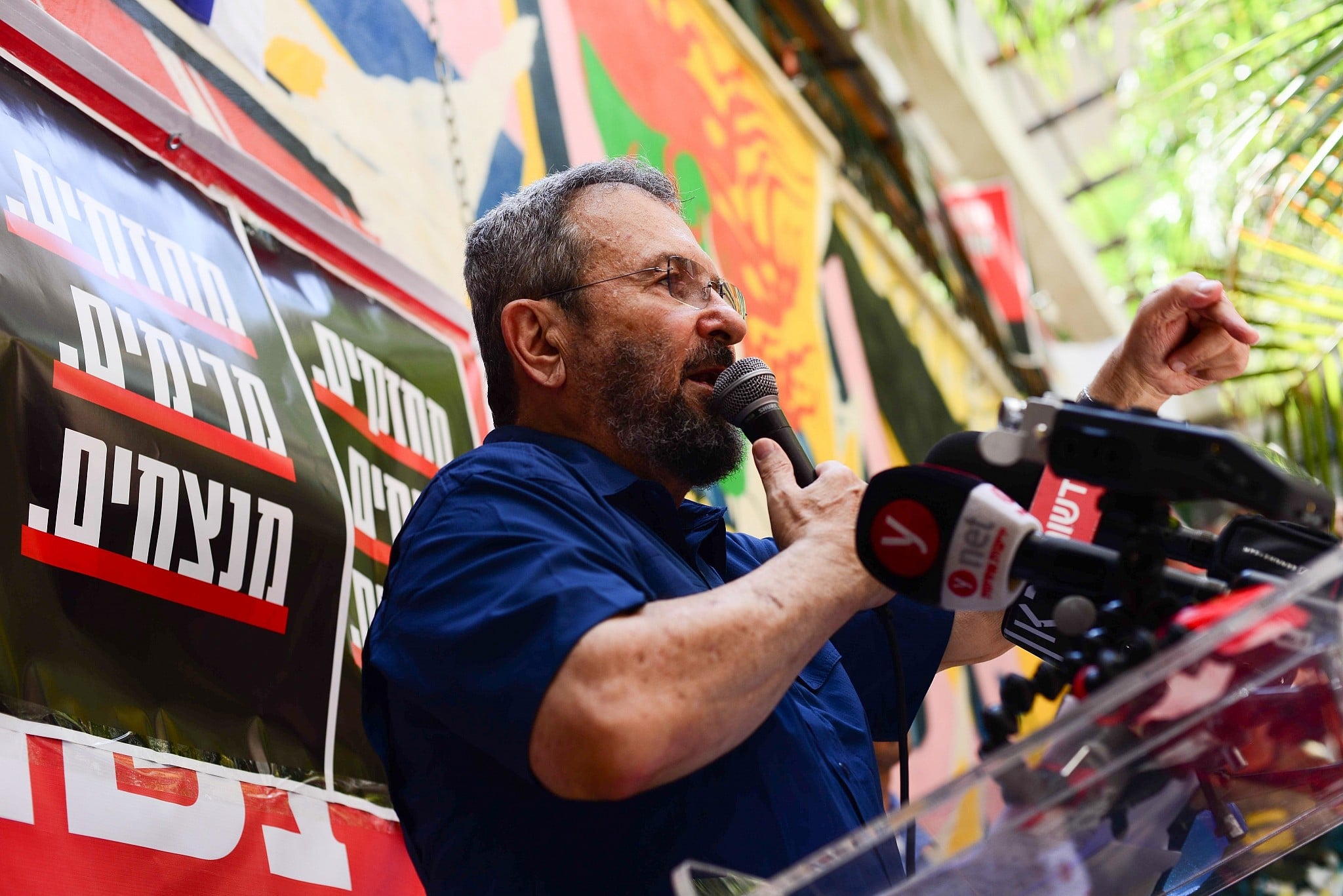
Former prime minister Ehud Barak met this week with Labor leader and Zionist Union Chairman Avi Gabbay, according to Friday Channel 10 news report, furthering speculation over the possibility of a political unification move for the country’s center-left camp.
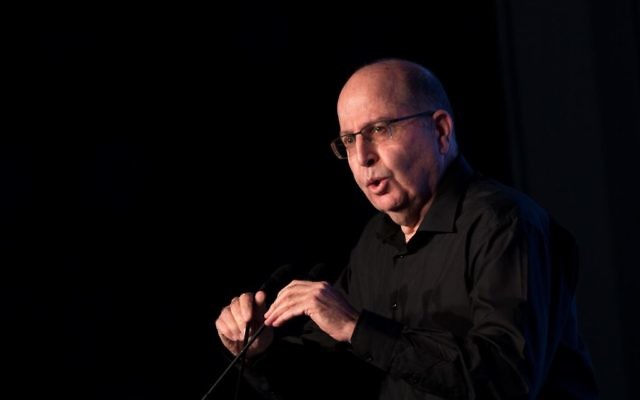
The two reportedly met at Gaabay’s home on Wednesday, days after Channel 10 said Barak met with opposition leader Tzipi Livni and former defense minister Moshe Ya’alon.
The TV news report said Gabbay had not been aware of Barak’s meetings with Livni and Ya’alon, and that the former premier reached out to him to show he was not attempting to undermine his authority.
A spokesperson for Livni told to Channel 10 it was “no secret” the opposition leader was “examining the possibility of joining the Zionist Union with all the factions involved in the road toward a revolution.”
Ya’alon’s spokesperson said in response to the report that “there are frequent meetings between various elements in the political system and outside it, who share the national concern to return Israel to the right track and bring about a different leadership.”
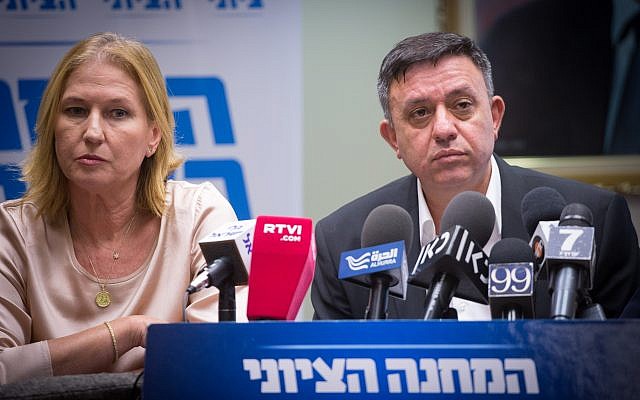
Ya’alon was ousted by Netanyahu as defense minister in May 2016. He quit the ruling Likud party and the Israeli parliament shortly thereafter. He has since frequently criticized Netanyahu and has indicated he would return to politics to run against him.
Earlier this month, he told the audience at a cultural event in the Eshkol Regional Council that “what is happening right now with the political situation is an existential threat to Israel.”
Barak called the investigation into suspected corruption in billion dollar deals to purchase naval vessels one of the most serious graft cases in Israel’s history, and “borderline treason.”
Speaking at a cultural event in Nes Tziona, just days after police recommended the indictment of a number of suspects in the probe, Barak also called on Prime Minister Benjamin Netanyahu to resign in light of criminal allegations against a number of his close associates.
The investigation, which is known as Case 3000, is considered to be one of the greatest corruption schemes in the country’s history and centers on the purchase of submarines from a German shipbuilder.
Netanyahu himself is not suspected in Case 3000, but has been questioned by police over suspicions that state officials were paid bribes to influence a decision to purchase four patrol boats and three Dolphin-class submarines costing a total of 2 billion euros from German shipbuilder ThyssenKrupp, despite opposition to the deal by the Defense Ministry.
In July, in cryptic comments possibly signaling plans for a political comeback, Barak said there was a “real, historic possibility” to replace the “dark, nationalist government” of Netanyahu with one that promises hope and vision.
Barak, 76, who served as Netanyahu’s defense minister between 2009-2013, has over the past year become an outspoken critic of Netanyahu, with many believing he may be setting the stage for a return to politics.
In December, Barak in a New York Times op-ed said the current government was endangering the entire Zionist project as it inches closer to an annexation of the West Bank, “precluding any permanent separation from the Palestinians.” He accused the Netanyahu-led government of showing a general disrespect for the rule of law, and claimed that it had “declared war” on the courts, the media, civil society, and the ethical code of the IDF.
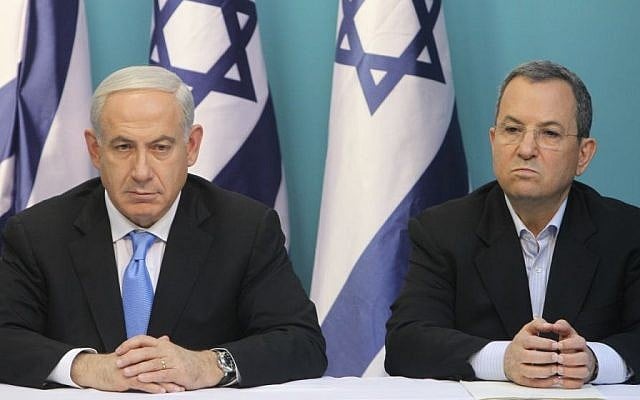
Barak was the IDF’s longest-serving chief of staff and the country’s most decorated soldier before becoming prime minister in 1999 after defeating Netanyahu in elections.
Following his defeat in 2001 to the late Ariel Sharon, Barak temporarily retired from politics, but returned to the Labor Party in 2005. From 2007 to 2013 he served as defense minister, the last four years under Netanyahu.
In 2011, he split from Labor, along with four other MKs, forming the short-lived Independence Party, in order to remain in Netanyahu’s coalition, despite the objection of most of Labor. The party was effectively disbanded upon Barak’s second retirement from politics in 2013.
An Army Radio poll conducted Mina Tzemach and Meno Geva earlier this month showed Israelis’ voting preferences shift slightly to the right.
Likud held its place at the lead with 30 Knesset seats, up from 24 in a poll last week but equal to its current Knesset showing. In second-place came Yesh Atid at 18, a high in recent polls. In keeping with other polls conducted in recent months, the center-left mainstay Zionist Union crashed from its current 24 to just 12. The Joint (Arab) List stood at 12.
Jewish Home, meanwhile, rose slightly from its current 8 seats to 9 and Yisrael Beytenu, the party of Avigdor Liberman whose resignation from his position of defense minister triggered a week-long political crisis, rose from its current 5 to 8.
The ultra-Orthodox United Torah Judaism recorded 7 seats with Shas scoring 6, a yet-to-be-launched party led by MK Orly Levy-Abekasis got 6, and the left-wing Meretz were at just 4, hovering just above the electoral threshold.
Earlier this month, Liberman resigned from the government over criticism of a ceasefire deal with Hamas after the Gazan terror group had fired hundreds of rockets at Israeli towns for two days. His withdrawal shrank the coalition to a barely-sustainable 61 seats in the 120-seat parliament.





The Times of Israel Community.