

Beirut bombing sees Iran drawn deeper into Lebanon quagmire
Tehran learns the bitter lesson it taught Israel: Explosives plus a highly motivated terrorist make for a devastating weapon

 Add ToI as a Preferred Source on Google
Avi Issacharoff, The Times of Israel's Middle East analyst, fills the same role for Walla, the leading portal in Israel. He is also a guest commentator on many different radio shows and current affairs programs on television. Until 2012, he was a reporter and commentator on Arab affairs for the Haaretz newspaper. He also lectures on modern Palestinian history at Tel Aviv University, and is currently writing a script for an action-drama series for the Israeli satellite Television "YES." Born in Jerusalem, he graduated cum laude from Ben Gurion University with a B.A. in Middle Eastern studies and then earned his M.A. from Tel Aviv University on the same subject, also cum laude. A fluent Arabic speaker, Avi was the Middle East Affairs correspondent for Israeli Public Radio covering the Israeli-Palestinian conflict, the war in Iraq and the Arab countries between the years 2003-2006. Avi directed and edited short documentary films on Israeli television programs dealing with the Middle East. In 2002 he won the "best reporter" award for the "Israel Radio” for his coverage of the second intifada. In 2004, together with Amos Harel, he wrote "The Seventh War - How we won and why we lost the war with the Palestinians." A year later the book won an award from the Institute for Strategic Studies for containing the best research on security affairs in Israel. In 2008, Issacharoff and Harel published their second book, entitled "34 Days - The Story of the Second Lebanon War," which won the same prize.
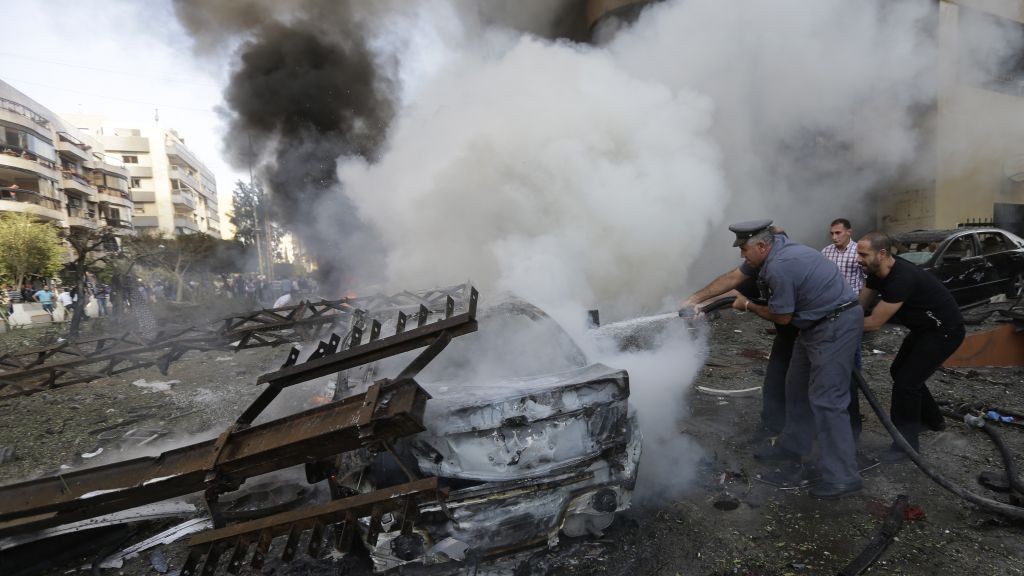
The double suicide bombing at the Iranian embassy in Beirut on Tuesday morning was anything but a surprise. In fact, it was almost expected given the battles in Syria between radical Sunni forces, on the one hand and Hezbollah and Iranian Revolutionary Guards forces on the other, along with the threats by al-Qaeda groups in Syria to hit Iranian targets in the area. Nonetheless, the bombings raise the confrontation between Sunnis and Shiites in Lebanon and Syria to new heights. Two suicide bombers acting in coordination, bent on harming as many Shiites as possible, may be an almost routine phenomenon in Iraq, but in Lebanon it represents an unprecedented escalation in hostilities.
In similar fashion to the methods used by Hezbollah and the Revolutionary Guards against Western targets in Lebanon in the early 1980s, Tuesday’s assailants — who apparently belong to an al-Qaeda offshoot — sent two bombers in a coordinated attack: The first rode his motorbike to the embassy gate and blew himself up, opening the path for the second, who drove an explosives-laden car. The result was devastating: 23 fatalities and almost 150 injured.
Hezbollah and the Revolutionary Guards have tried to take precautions against such attacks. For months ago their leaderships have been disseminating warnings to all personnel to be on the alert for suicide attacks on Shiite targets. At the same time, Hezbollah has been taking steps to boost security around potential targets. It has deployed bomb-sniffing dogs and set up surprise road blocks in Beirut to try to intercept potential bombers, and its Dahiyeh neighborhood stronghold of Beirut has become a fortress which is impossible to enter without security checks.
Evidently, however, even such stringent security precautions — introduced at potential Iranian targets as well — could not thwart Tuesday’s bombings. The Iranians are themselves now learning the bitter lesson they taught Israel: the combination of explosives and a highly motivated terrorist make the suicide bomber a devastating and hard-to-stop weapon.
Tuesday’s bombings were immediately condemned across the political spectrum in Lebanon. This, though, was a false and temporary display of unity; there are no signs that anything in this destabilizing country is going to change dramatically in the near future. It doesn’t appear that a full-scale civil war is looming. But the stream of bombings and other attacks between Sunnis and Shiites is becoming increasingly routine. Just as extremist Sunni groups fire missiles at Shiite targets and kill people identified with Syrian President Bashar Assad from time to time, so Tuesday’s two suicide bombers are unlikely to be the last to blow themselves up in this arena of the conflict.
In the wake of this attack, Tehran may decide to send more weaponry and more personnel to Lebanon to help Hezbollah in its fight against the Sunni militias. If so it might be on the way to discovering something Israel came to know well: getting bogged down in the quagmire of Lebanon.









The Times of Israel Community.