

Bennett backs Shaked on Supreme Court nominations
Jewish Home chief says justice minister working ‘to strengthen’ the court with shortlist dominated by national religious candidates
 Add ToI as a Preferred Source on Google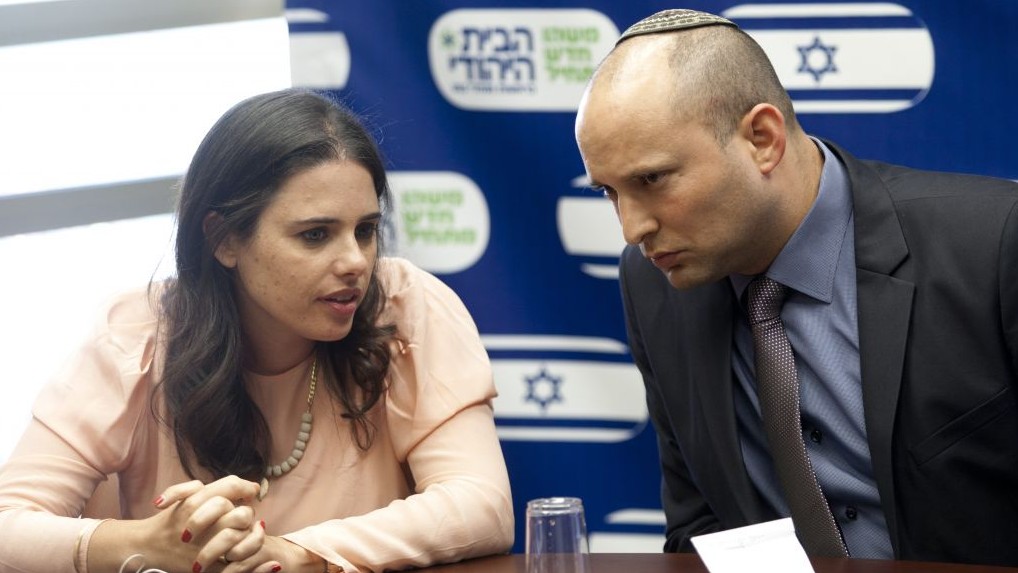
Education Minister Naftali Bennett backed Justice Minister Ayelet Shaked’s handling of the selection of justices for the Supreme Court, saying that “the legal system should reflect the Jewish and Zionist values of the state.”
Speaking at a meeting of a faction of their Jewish Home Party on Monday, Bennett lauded Shaked for how she has managed the process of selecting the new judges, saying her choices would “strengthen the Supreme Court, and, just as importantly, strengthen the public’s confidence in it,” Channel 10 reported.
On Sunday, Shaked released a list of 28 candidates for the four Supreme Court positions that will open up next year.
The list of names was noted for the number of national religious candidates included on it. Shaked’s Jewish Home party is primarily supported by the national religious sector, which is characterized by its active role in the state and the military despite its Orthodox brand of Judaism.
During the meeting, Bennett said that the Jewish Home will work towards ensuring that the Supreme Court is balanced and lessening the involvement of the court in government policy and the character of the state.
He also said that the justices on the Supreme Court “should reflect the diversity of opinions held by the Israeli public.”
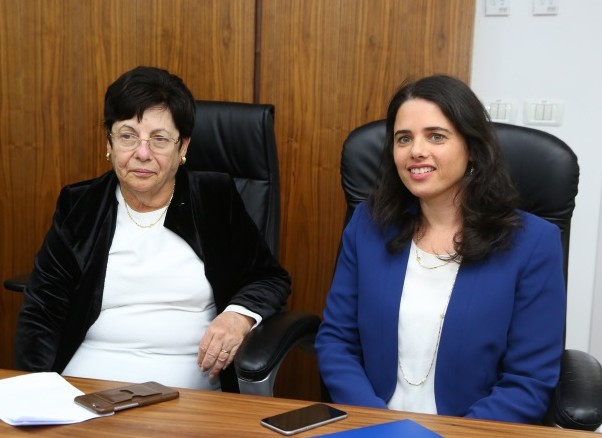
Last week, Shaked found herself in open conflict with Supreme Court President Miriam Naor, when Naor said that a bill supported by Shaked that would reduce the number of votes needed to confirm judges to the Supreme Court by the nine member panel from seven to a simple majority was equivalent to “placing a gun on the table.”
There are three Supreme Court justices on the Judicial Selection Committee, giving the Supreme Court a de facto veto over judicial nominations.
Critics of the court argue that the present system for selecting justices results in a court comprising largely like-minded figures who seek the appointment only of those who share their ideological agenda.
The court’s defenders say its powers have developed to fill the void left by a Knesset that is famously unable to settle key questions of law and society, and too often shirts its responsibility to decide on issues of religious freedoms or to act to protect civil liberties or the rights of Palestinians. In Israel’s fractious society, maintaining a strong independent judiciary, they say, serves as a counterweight against the danger that a “tyranny of the majority” –thanks to Israel’s unicameral parliament — might trample the rights of those who are not fully represented or sufficiently protected by the political system.








The Times of Israel Community.