

Berlin art exhibit in former Nazi bunker explores Jewish experience after October 7
Works by ‘Maus’ cartoonist Art Spiegelman, ousted Putin apparatchik-turned-gallerist Marat Gelman and others take aim at labels pushed on Jews in last two years
 Add ToI as a Preferred Source on Google
Jessica Steinberg, The Times of Israel's culture and lifestyles editor, covers the Sabra scene from south to north and back to the center
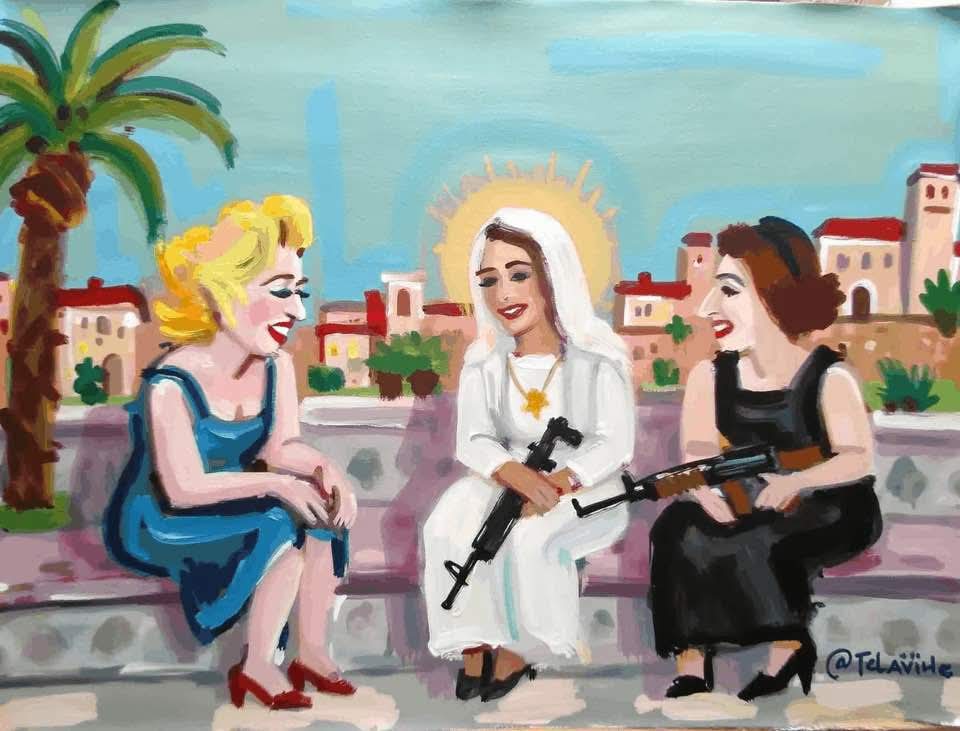
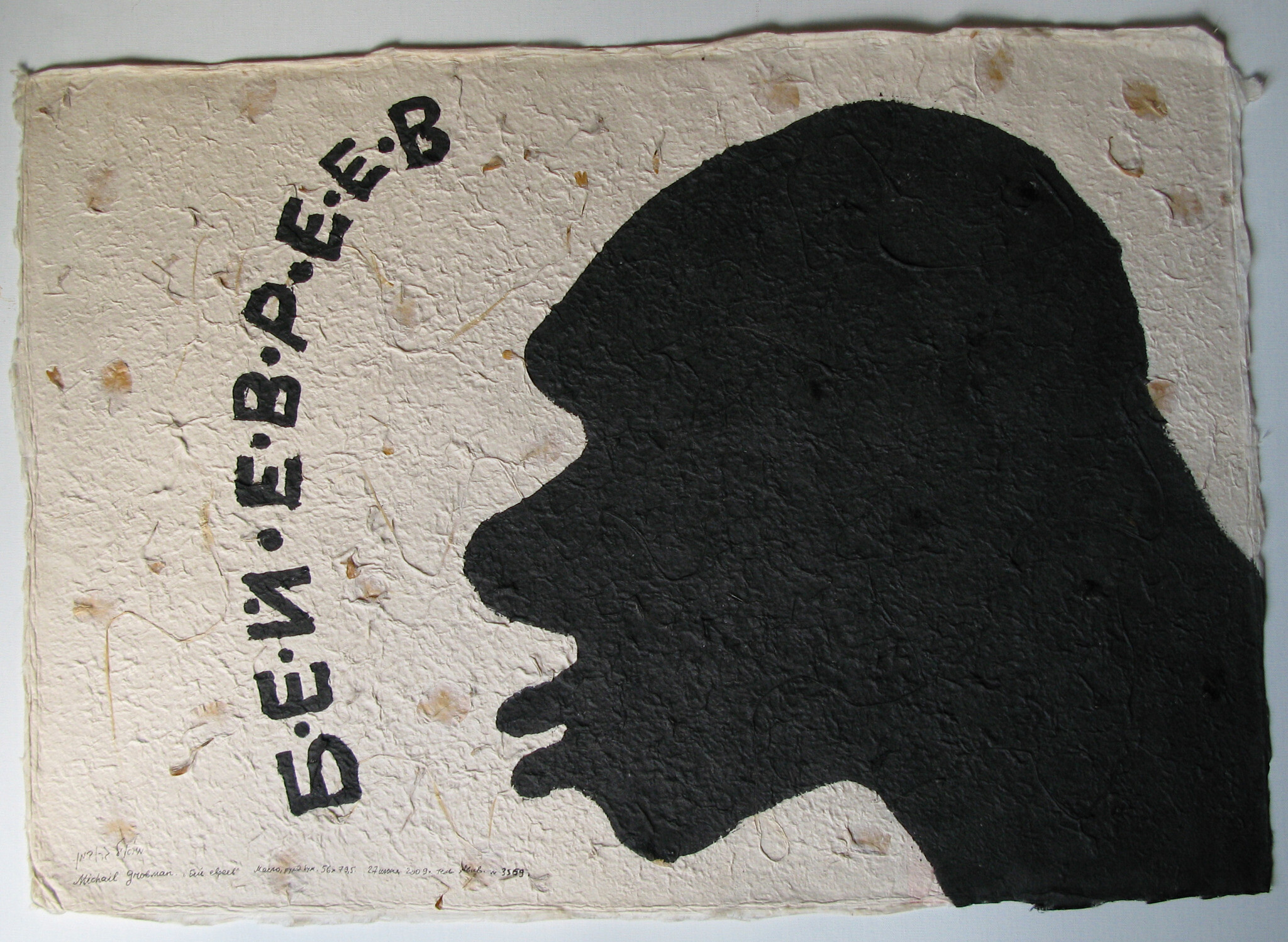
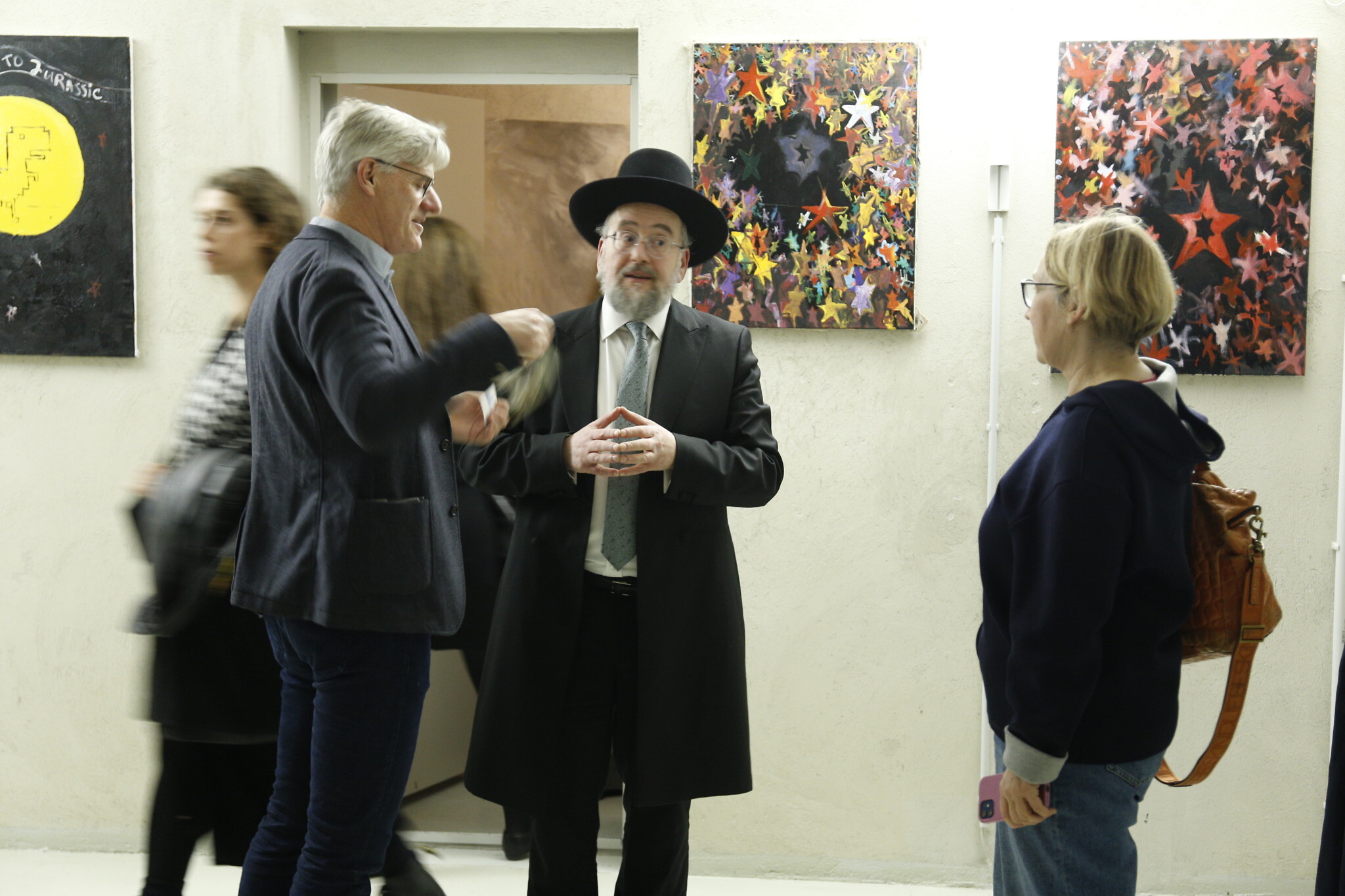
It was a chance visit to a former Nazi bunker while contemplating the complications of being Jewish in post-October 7 Berlin that inspired artist Yury Kharchenko to put together the exhibit, “Bad/Good Jews.”
The exhibit, which closes Thursday after a two-week showing, brings together works by five artists, including “Maus” cartoonist Art Spiegelman, Russian gallerist Marat Gelman, and visual artists Alexander Melamid, Michail Grobman and Kharchenko, who each pondered the question of being Jewish right now.
The show is being held in Bunker West, a former Nazi fortification in Berlin that was renovated in 2017 to host events and gatherings.
Kharchenko’s initial idea, concocted with Gelman, was to bring several Jewish artists together to display artworks that related to issues in the Jewish world. The two now view “Bad/Good Jews” as an ongoing initiative that they hope will bring together diverse Jewish artists in a proactive and supportive community, with plans for future shows.
The exhibit has fostered discourse among visitors about remembrance, Jewish culture, and antisemitism, particularly amid mounting anti-Jewish and anti-Israel sentiment worldwide since October 7, Kharchenko said.
“Most of the artworks were created before October 7 and didn’t relate directly to what happened that day,” said Kharchenko. “But October 7 relates to Jewish history.”
Those wishing to see the exhibit must make an appointment by email to schedule a visit.
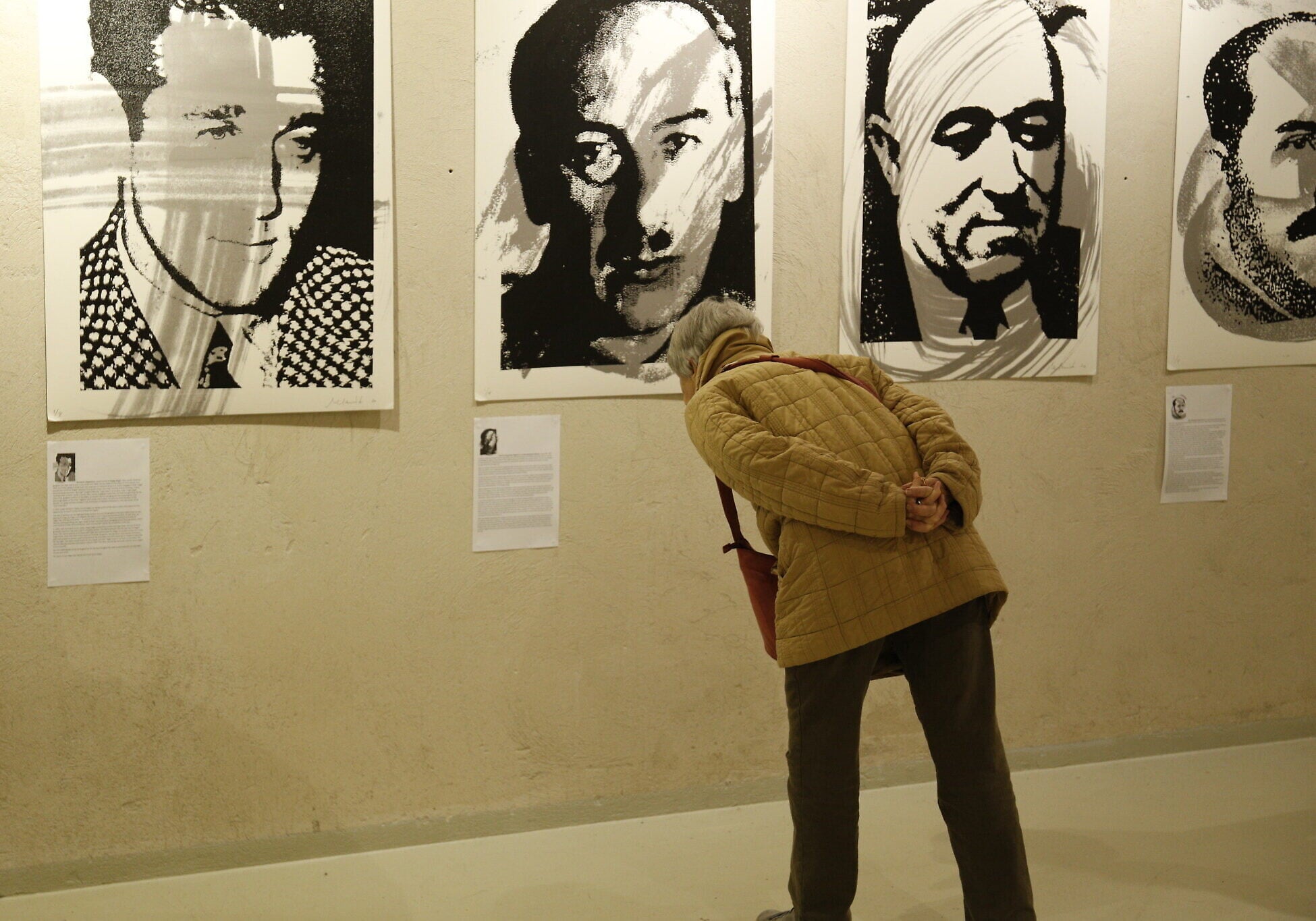
The pieces in “Bad/Good Jews” are quirky, unusual, and deeply Jewish. The name of the exhibit is meant to refer to labels foisted upon Jews in the wake of October 7.
“The exhibit isn’t political because I’m not a political person, I don’t see myself as left-wing or right-wing,” said Kharchenko. “But after October 7, the world divided Jews into good Jews and bad Jews, and this shows a bunch of different kinds of Jews.”
Melamid, a Russian-born artist who lives in New York, contributed “The Other 10 Jews of the 20th Century,” referencing Andy Warhol’s famous 1980s series, “Ten Portraits of Jews of the Twentieth Century.”
Unlike Warhol’s display of leading Jewish figures like Louis Brandeis and Martin Buber, Melamid’s portraits are of gangsters and criminals, such as Bugsy Siegel and Meyer Lansky.
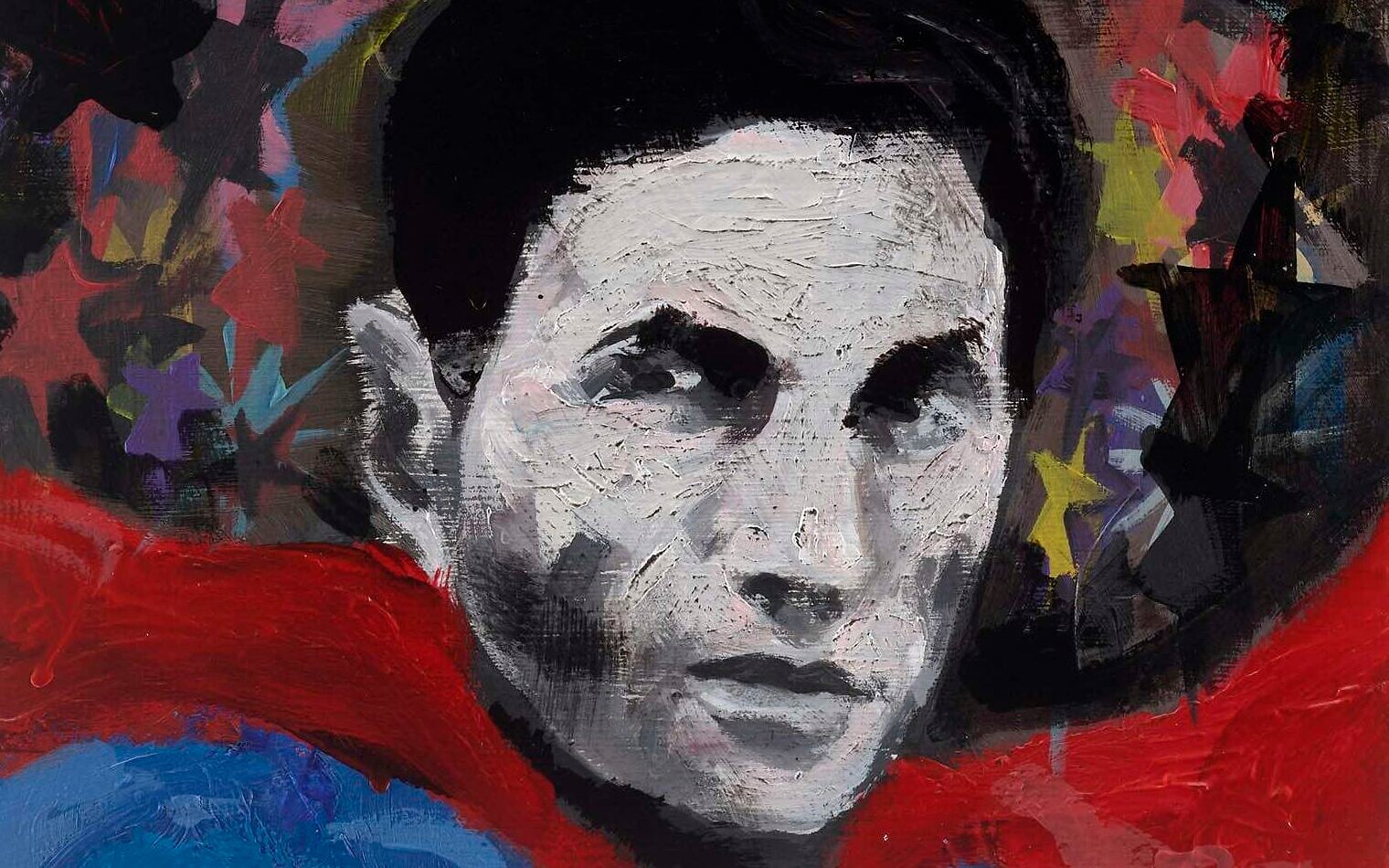
Kharchenko’s own work involves placing pop culture figures against tragic backdrops; in the show, Superman, representing his own grandfather, a hero of the Russian Army, is pictured against the gates of Auschwitz.
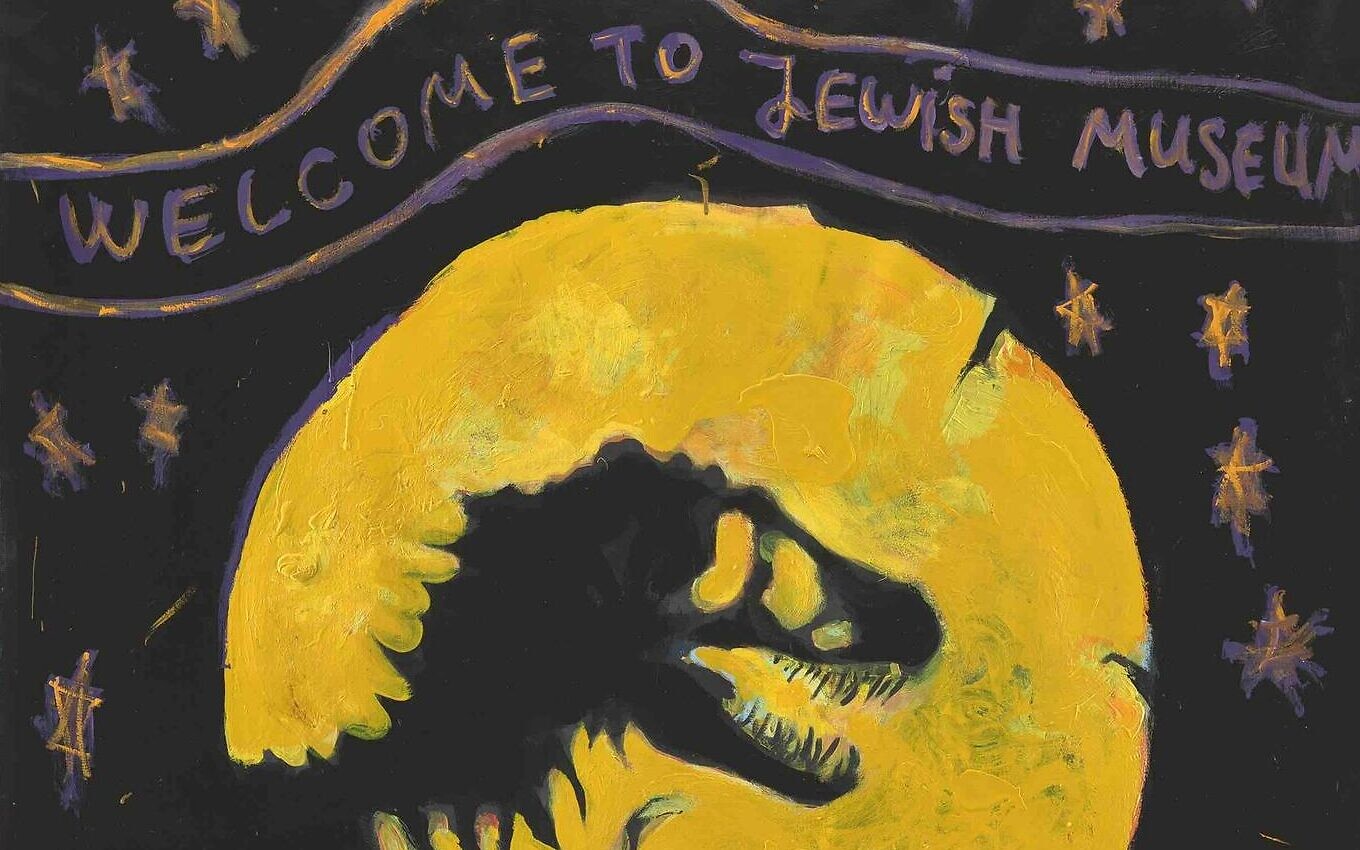
Another shows a Tyrannosaurus rex at the entrance to the death camp, a symbol of the extinction of six million Jews during the Holocaust, said Kharchenko.
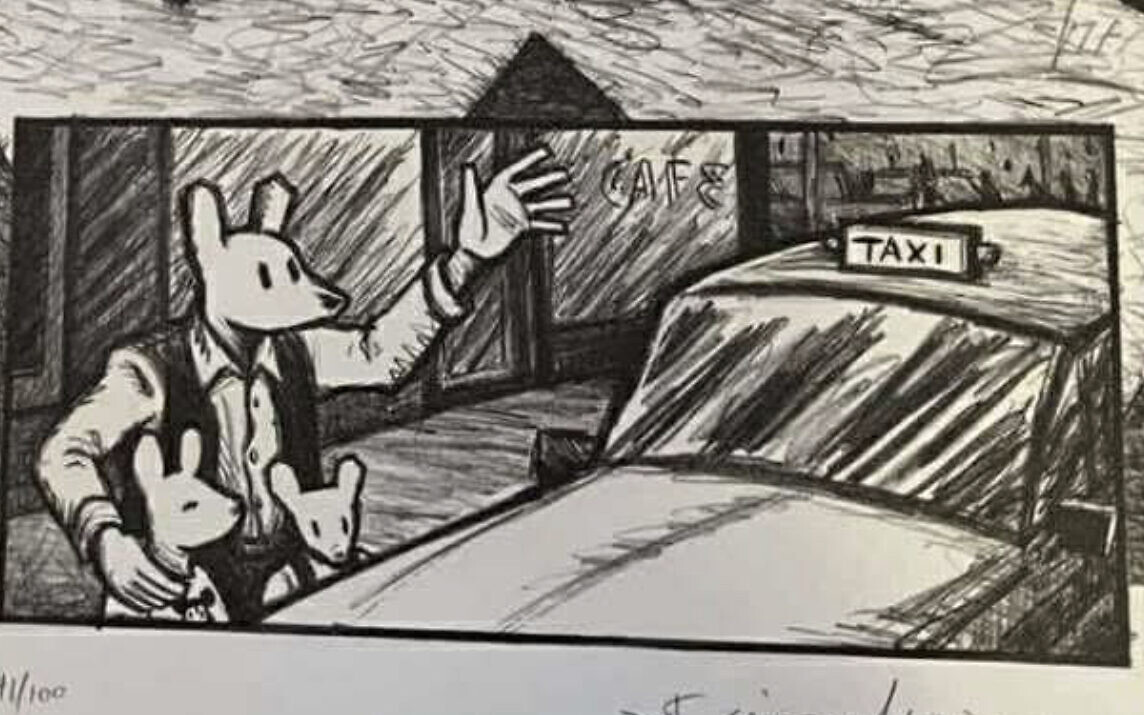
Spiegelman’s contribution is a rethinking of Gustave Doré’s “The Legend of the Wandering Jew,” with mouse faces on his subjects, echoing the motif from his graphic novel, “Maus,” about his parents’ experiences in the Holocaust.
The show came together after Kharchenko met Gelman, a gallerist turned artist who was once an adviser to Russia’s President Vladimir Putin, but was banned from Russia as a foreign agent due to his opposition against the war against Ukraine, eventually landing in Berlin.
“He was moved by October 7 and started to feel he was Jewish,” said Kharchenko.
Gelman brought in his friend Spiegelman, who won a Pulitzer Prize in 1992 for “Maus.”
They added works by Melamid, a Russian-born conceptualist and performance artist long based in New York, and Grobman, an artist and a poet who worked in Israel and Russia. Grobman died Sunday in Tel Aviv. He was 86.
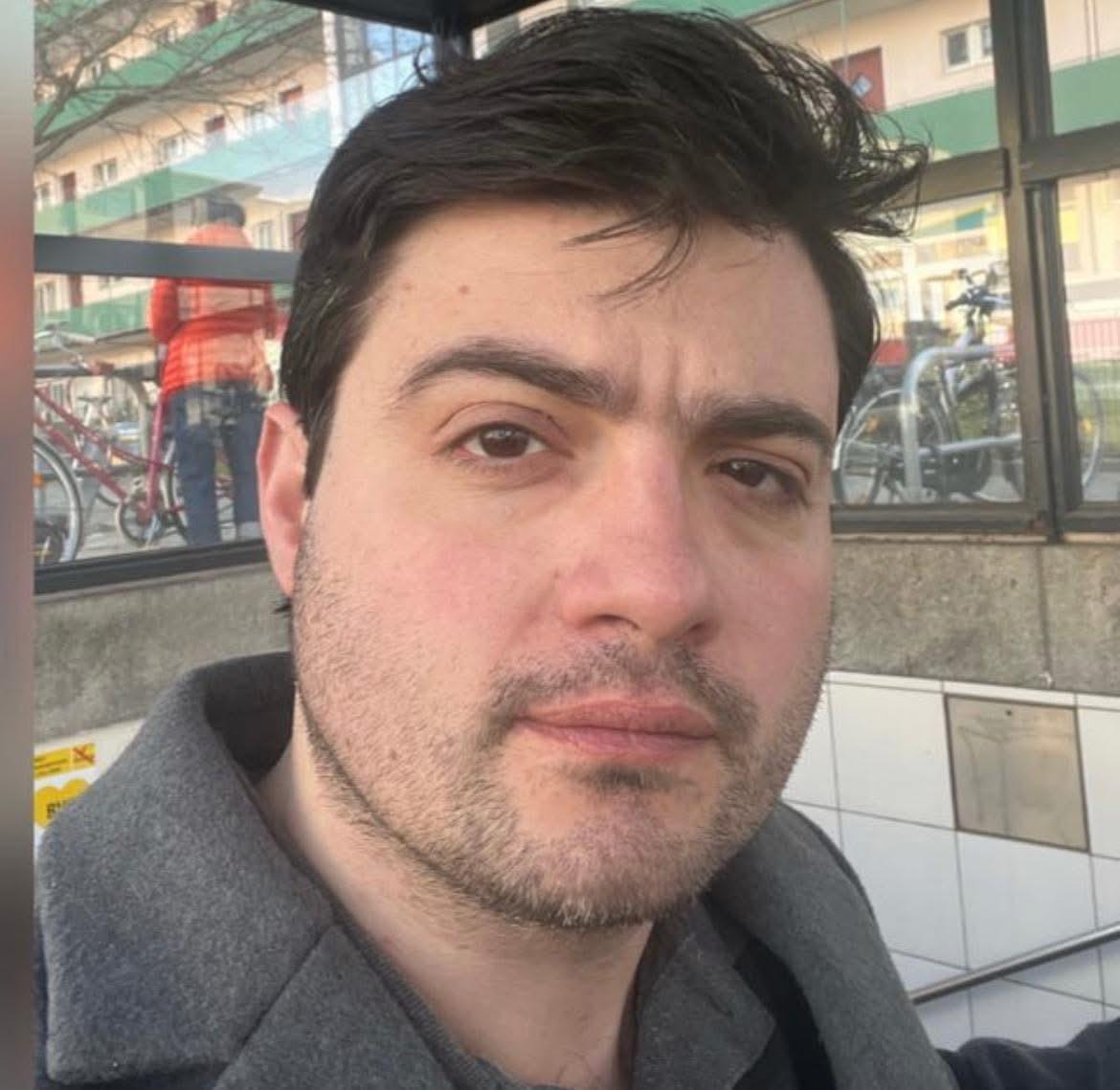
Kharchenko, who currently lives in Berlin, was educated and brought up in West Germany.
He studied in a yeshiva after being beaten up by neo-Nazis and then experienced “crazy racism” from ultra-Orthodox Jews due to his Russian heritage, but still retains a strong relationship with Judaism.
Choosing the bunker as the exhibit gallery is meant to be ironic, said Kharchenko, pointing to his own family history with two grandfathers who were awarded for their heroism for their service in Russia’s Red Army.
“They were my superheroes, they killed Nazis,” said Kharchenko, “but their actions ultimately led to my family leaving Russia and moving to Germany.”
Kharchenko says the bunker space is essential to the exhibit, as are the five different Jewish artists and their various takes on the show’s theme.
“Now we’re in the bunker and Hitler is no longer there, and we’re speaking about life after October 7, and there is a connection that here are Jewish artists in the bunker, but no Nazis,” said Kharchenko.



The Times of Israel Community.