

‘Who does Putin think gives him the right?’ Biden announces sanctions over Ukraine
Decrying start of ‘invasion,’ president says: ‘We are united in our support of Ukraine’; adds he’s sending ‘defensive’ forces to Baltics, but has ‘no intention of fighting Russia’
 Add ToI as a Preferred Source on Google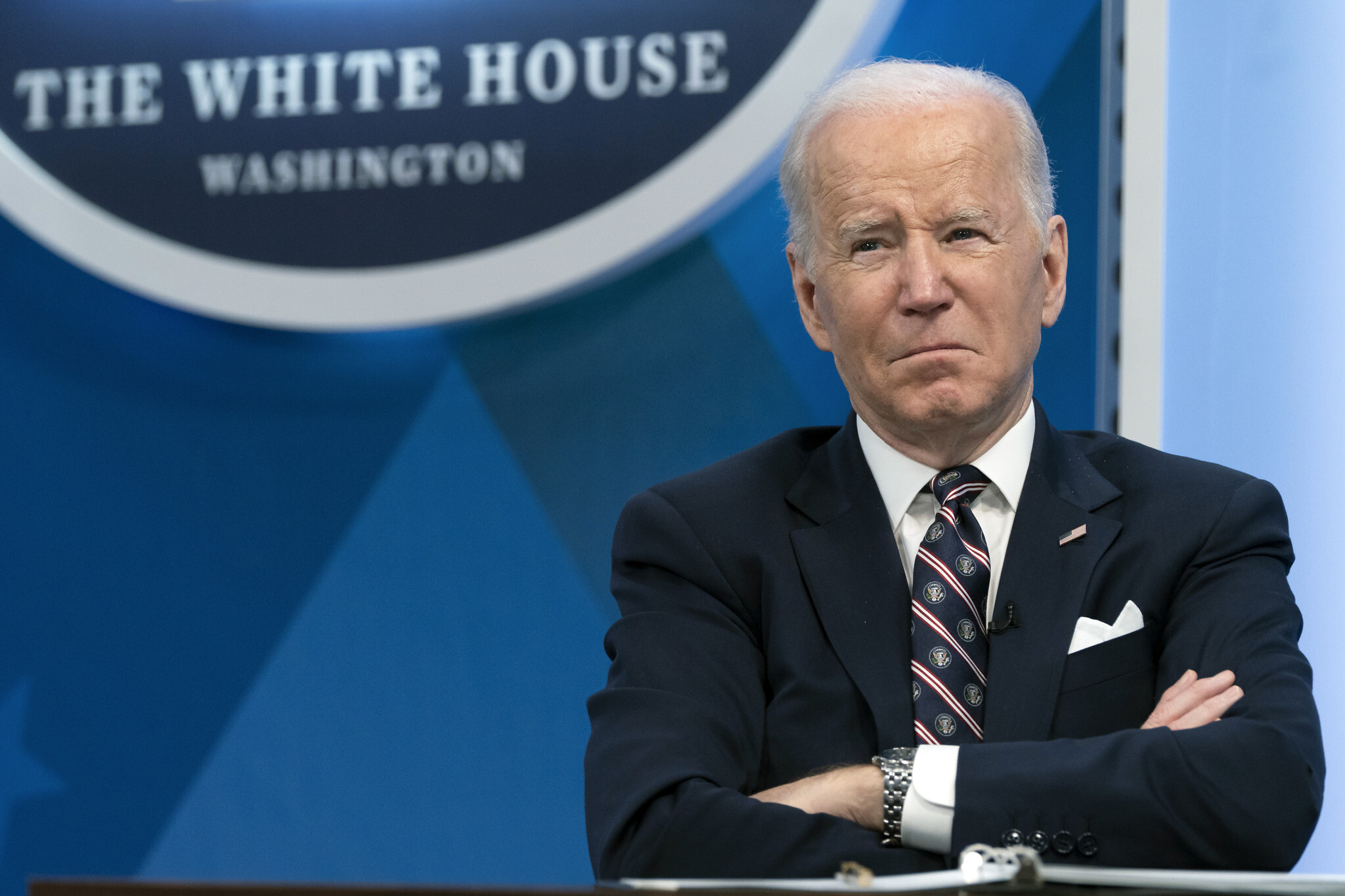
WASHINGTON — US President Joe Biden on Tuesday announced an initial set of sanctions against two Russian banks and the country’s wealthy elite after what he said was Moscow’s move to invade Ukraine.
“This is the beginning of a Russian invasion of Ukraine,” Biden said in a televised speech at the White House.
Biden stressed that the measures were only a “first tranche” in response to Russian President Vladimir Putin “carving out a big chunk of Ukraine.”
“Who in the Lord’s name does Putin think gives him the right to declare new so-called countries on territory that belongs to his neighbors? This is a flagrant violation of international law,” Biden asked. “None of us will be fooled” by Putin’s claims of Ukrainian aggression.
Biden said that more sanctions will follow if Putin extends Russia’s military grip beyond two small territories in the eastern Donbas region that are already under control of Russian-backed separatists.
Putin announced Monday that he has recognized the independence of both areas and said the Russian military would mount a so-called “peacekeeping” mission in the territories.
“He’s setting up a rationale to go much further,” Biden said.
“We are united in our support of Ukraine,” Biden said. “We are united in our opposition to Russian aggression.” When it comes to Russian claims of a justification or pretext for an invasion, Biden said, “None of us should be fooled. None of us will be fooled. There is no justification.”
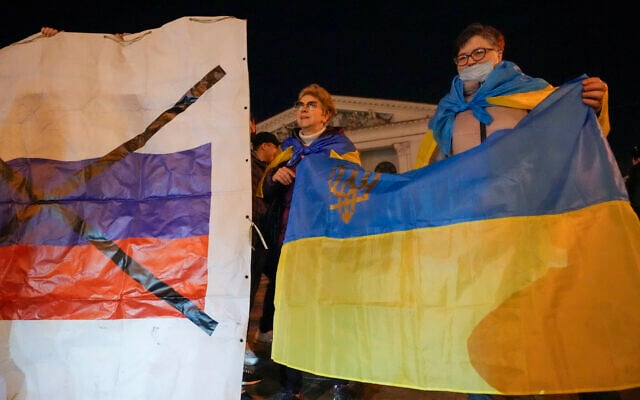
The first round of sanctions targeted Russia’s sovereign debt, cutting “off Russia’s government from Western financing,” Biden said. Also targeted are two banks and specific members of the Russian “elites,” he added.
Biden said the United States will continue to send “defensive” weapons to Ukraine’s military but underscored there was “still time” for diplomacy and “to avert the worst-case scenario.”
Biden said he was moving additional US troops to the Baltics, though he described the actions as purely “defensive,” asserting, “We have no intention of fighting Russia.” The US is sending about 800 infantry troops and 40 attack aircraft to the Baltics and NATO’s eastern flank from other locations within Europe, according to a senior defense official. In addition, a contingent of F-35 strike fighters and AH-64 Apache attack helicopters will also be relocated.
Biden’s tough approach followed an initially more hesitant US response to Putin’s recognition of the two rebel-held enclaves in Ukraine on Monday.
For weeks, the United States and its allies have said that a full invasion of Ukraine by Russian forces massing on its ex-Soviet neighbor’s borders would trigger devastating economic sanctions.
Russia's decision to order troops into parts of eastern Ukraine is "the beginning of a Russian invasion," President Biden said Tuesday as he announced a new set of sweeping sanctions targeting Russia's ability to do business with the West. pic.twitter.com/ex1v102Ev3
— NPR (@NPR) February 23, 2022
But with doubts continuing over Putin’s ultimate intentions after a speech he delivered Monday, it took hours for the Biden administration to shift to a harsher tone.
Biden announced limited sanctions against the two separatist enclaves, which already have next to no dealings with the United States. And in the first public comments from the administration after Putin’s geopolitical bombshell, a US official said merely that “we are going to assess what Russia’s done.”
Beyond Nord Stream 2
Putin’s move has sparked intense phone diplomacy between Washington, European capitals and Ukraine, as the United States tries to maintain unity among dozens of partners over how to respond to Russia, which supplies much of the European Union’s energy needs.
The White House welcomed Germany’s decision to halt the mammoth Nord Stream 2 pipeline project meant to deliver Russian natural gas to Europe, describing it as a severe financial and geopolitical blow to Putin.
Shelving the pipeline will “relieve Russia’s geostrategic chokehold over Europe through supply of natural gas,” a senior US official said, calling it “a major turning point in the world’s energy independence from Russia.”
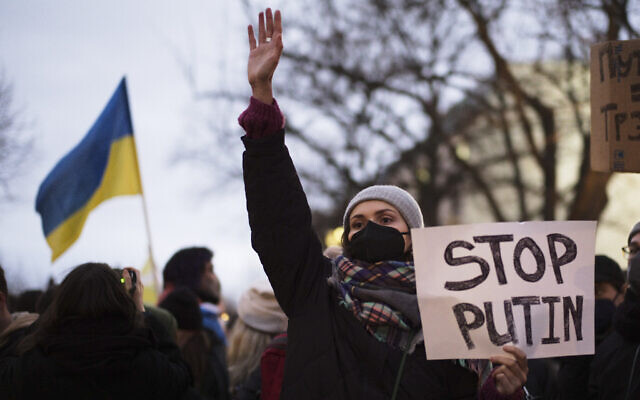
The “$11 billion investment and a prized gas pipeline controlled by Russia… will now go to waste,” the official said, calling the project “Putin’s prized pipeline.”
After announcing he was stopping the all-but-completed project, German Chancellor Olaf Scholz warned Russia “there are also other sanctions that we can introduce if further measures are taken.”
The senior US official noted there were more heavyweight measures being teed up in Washington as well.
“No Russian financial institution is safe if this invasion proceeds,” the official told reporters after the announcement of sanctions against the VEB state development bank and PSB, which is tied to the defense sector.
Export controls stopping the flow of high-tech components to Russia are also a “key component of our potential sanctions,” the official added, calling the measures “really potent because we’re talking about critical technology that Russia needs to diversify its economy.”







The Times of Israel Community.