

Comedy writer gallops to success with ‘BoJack Horseman’
Raphael Bob-Waksberg parlays childhood TV watching and genetic sense of humor into Netflix hit series
 Add ToI as a Preferred Source on Google
Renee Ghert-Zand is the health reporter and a feature writer for The Times of Israel.
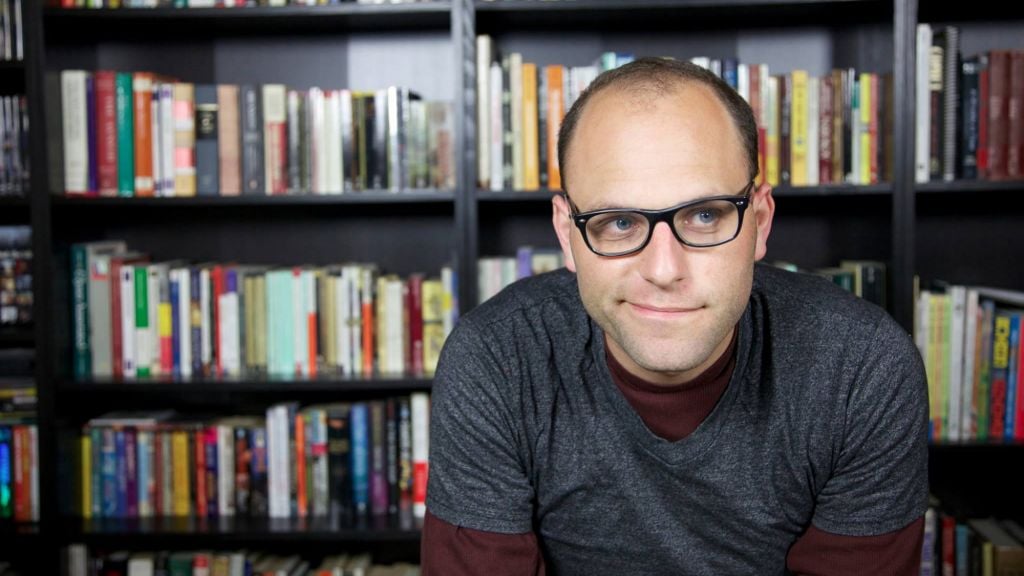
Raphael Bob-Waksberg watched an awful lot of television as a kid. But far from being time wasted, it looks as though all that excessive boob tube exposure has turned out to be a valuable education.
The Jewish creator of the breakout Netflix Original hit “BoJack Horseman” began honing his personal sense of humor as a teen through “study” of 1990s sitcoms. After years of trying out original material on receptive family members, classmates and teachers, now, at age 30, he has discovered that a major segment of the American viewing public appreciates his take on life, too.
“BoJack Horseman,” with its star-studded cast led by Will Arnett (“Arrested Development), may be Bob-Waksberg’s first major Hollywood gig, but the positive buzz created by the animated series’ naughty and droll sense of humor is proof that its creator’s success is no joke.
Case in point: mere days after his new animated adult comedy series debuted on August 22, Netflix announced it is ordering another round of 12 episodes.
Bob-Waksberg, who was a member of the Olde English sketch comedy troupe and co-writer and co-star of a comedy-drama film titled, “The Exquisite Corpse Project,” before becoming a television comedy writer, is still getting used to how things get done in Hollywood.
“Things happened very slowly and then very quickly with the show,” Bob-Waksberg tells The Times of Israel by phone from Los Angeles.
He says the new series was in production with Michael Eisner’s company, Tornante Co., for a couple of years, and then last fall went to Netflix. “They asked us to get it ready to premiere this summer,” he says.
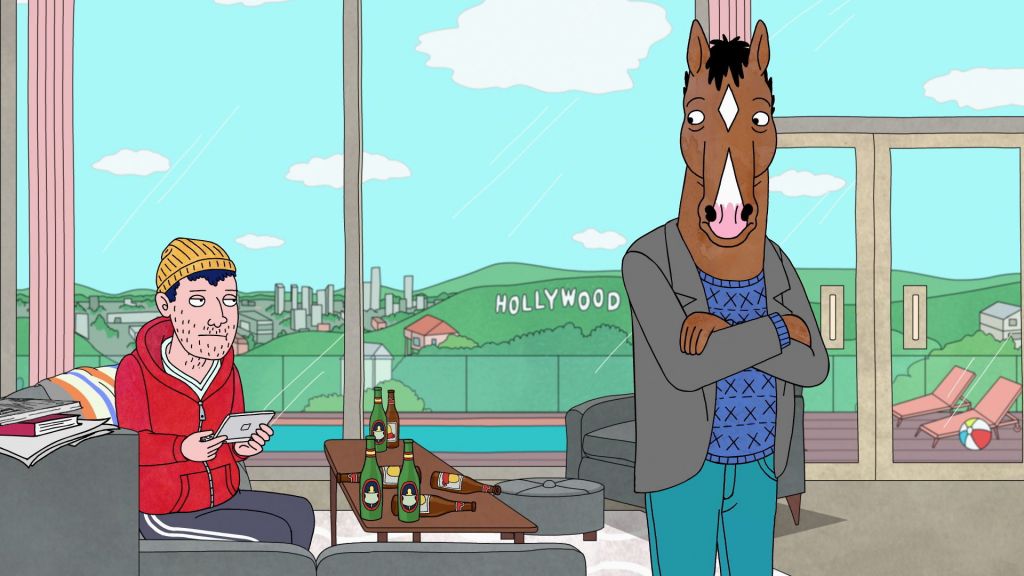
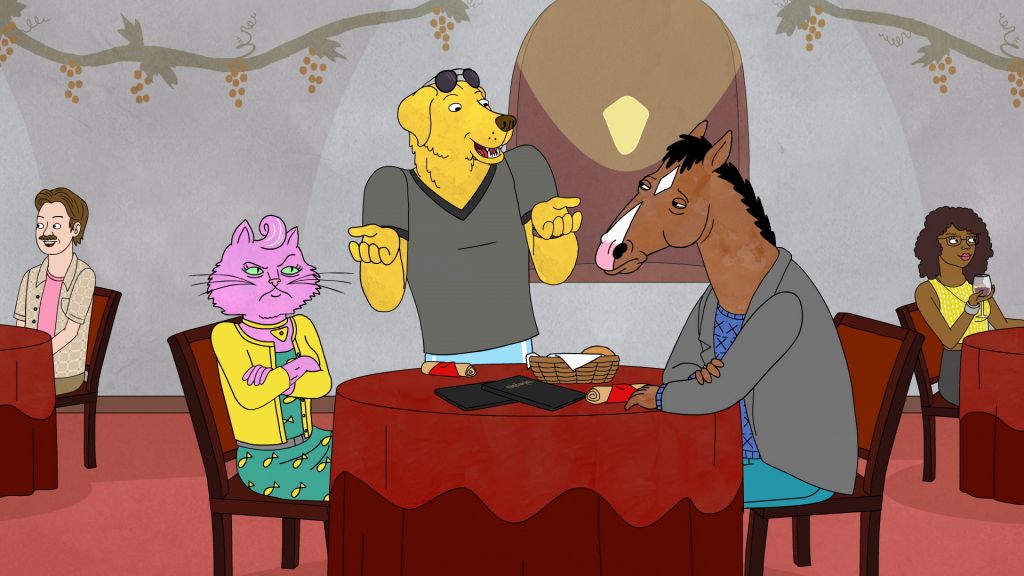
“BoJack” focuses on the struggles of the title character (half-horse, half-man and voiced by Arnett), a washed up star of a 1990s family sitcom called “Horsin’ Around” about a horse who adopts three human children. BoJack’s Hollywood world is populated by a mix of human and animal characters, including his human best friend (voiced by Aaron Paul of “Break Bad”), his feline agent (Amy Sedaris), a canine rival actor named Mr. Peanutbutter (Paul F. Tompkins), and his human ghostwriter and love interest (Alison Brie).
According to Bob-Waksberg, the original inspiration for the series’ concept came from figures with human bodies and animal heads that his old friend artist Lisa Hanawalt drew on her blog.
Bob-Waksberg and Hanawalt, who is the series’ designer, have been friends since they went to high school together in Palo Alto, California, where Bob-Waksberg grew up in family that was highly active in the Jewish community. His mother and grandmother ran a popular local Jewish book and gift store, and his father was at one point a leader in the movement to free Soviet Jewry and now serves as executive director of Jewish LearningWorks, the Bay Area’s central agency for Jewish education.
‘My teachers used to tell my mom, “Raphael thinks he’s a real comedian”‘
The family was seriously Jewish, but humor was also a central aspect of Bob-Waksberg’s upbringing.
“Humor was a big part of my childhood,” he says. “My family was full of comedians. We’d sit around the dinner table and try to one-up each other. It sometimes ended in tears, but usually in laughter.”
Comedy was never dismissed as an inappropriate professional pursuit, and he always knew, based on Jewish tradition and cultural heritage, that comedy was an option for a Jewish person.
“There was a warm and encouraging environment at home. My self-loathing and neuroticism are not because of my upbringing,” he jokes.
As he was growing up, Bob-Waksberg was influenced by “Seinfeld,” “The Larry Sanders Show,” and “The Simpsons.”
“I was very moved by shows that combined things that were funny and sad. I remember liking ‘Simpsons’ episodes in which emotions were central. And I thought family sitcoms like ‘Full House,’ ‘Growing Pains’ and ‘Family Ties’ [the models for ‘Horsin’ Around’ in ‘BoJack’] were actually kind of powerful. There was something wonderful about their cheesiness and warmth,” he says.
“I had ADD as a kid and often acted as the class clown,” he says. “My teachers used to tell my mom, ‘Raphael thinks he’s a real comedian.’”
It turns out his teachers were right.









The Times of Israel Community.