

Court extends restrictions on PM’s chief of staff, citing ‘strengthened’ suspicions
Braverman, the designated ambassador to the UK, is still barred from leaving the country, contacting Netanyahu; judge strongly criticizes lower court decision over ‘legal error’
 Add ToI as a Preferred Source on Google
Jeremy Sharon is The Times of Israel’s legal affairs and settlements reporter
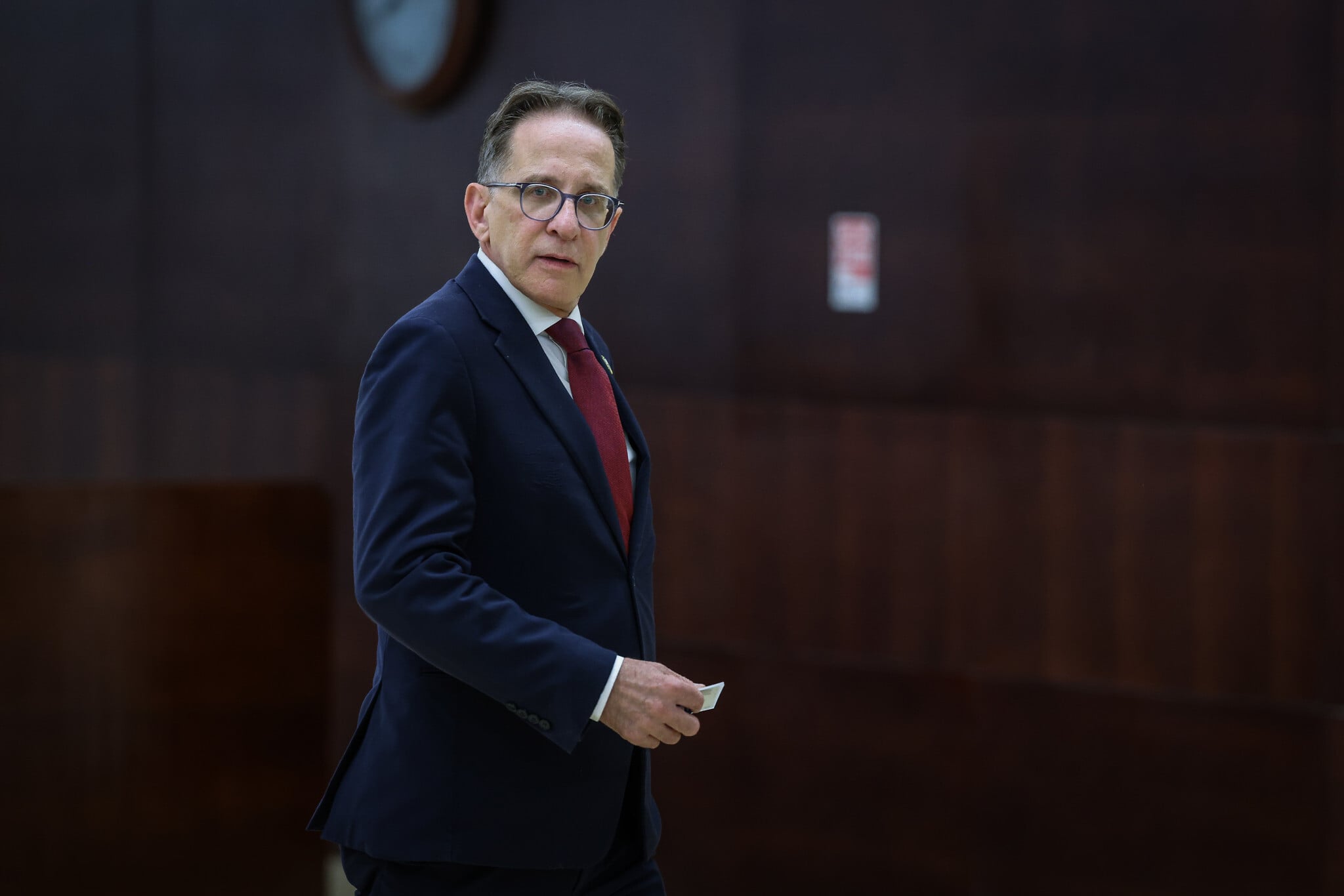
The Lod-Central District Court extended the restrictive release conditions on Prime Minister Benjamin Netanyahu’s chief of staff Tzachi Braverman on Tuesday, and said that the evidence gathered during the police investigation had “substantially strengthened” the suspicions against him.
The decision overturned a ruling last week by the Rishon Lezion Magistrate’s Court that rejected the police’s request to extend the restrictive conditions.
The restriction — extended by the district court until February 24 — include barring Braverman from the Prime Minister’s Office and IDF headquarters in Tel Aviv; prohibiting him from contacting Netanyahu’s former media adviser Eli Feldstein, who is a suspect in the Bild and Qatargate investigations, Netanyahu himself, and a list of other employees in the PMO; and prohibiting him from leaving the country.
Braverman was scheduled to become ambassador to the United Kingdom, but the restrictions on him leaving the country have delayed the appointment.
The district court noted in its decision that the travel ban was harming Braverman’s rights to a greater extent than is usual, but ruled that the growing suspicions against him ruled out lifting it.
Braverman is being investigated on suspicion of interfering with an investigation, the transmission of official information by a public servant, and fraud and breach of trust, in connection to allegations that Braverman told Feldstein he could quash a military investigation into Feldstein’s leak of a classified document to the German Bild newspaper.
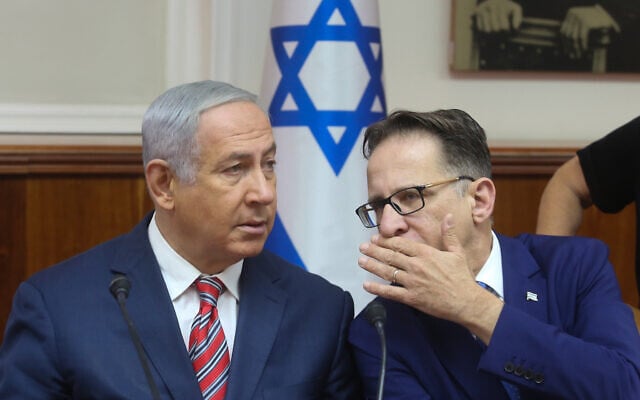
The police investigation into Braverman is focused on an alleged overnight meeting he set up in the underground parking lot of the IDF’s Kirya military headquarters in Tel Aviv with Feldstein.
During the meeting, Feldstein alleges that Braverman told him he was aware of what should have been a secret IDF investigation into Feldstein’s leak of classified intelligence, which Braverman said he could quash.
“After reviewing the investigative material collected so far in the case, I have come to the conclusion that the reasonable suspicion against the respondent has strengthened significantly,” Judge Michael Karshen of the Lod-Central District Court wrote in reference to the suspicion of interfering with an investigation.
The judge added, “This was already the case when the material was placed before the lower court” and said that the suspicions had been strengthened even further since that decision.
Karshen was also strongly critical of Rishon Lezion Magistrate’s Court President Menahem Mizrahi, saying his ruling last week against extending the restrictions was flawed in numerous ways, and further criticized disclosures of details of the case that Mizrahi had made in his decision.
“There is no foundation to the rationale of the lower court that the reasonable suspicion against the respondent [Braverman] has weakened. The opposite is true,” concluded Karshen.
He also rejected Mizrahi’s assertion that police have worked too slowly and without a proper investigative plan.

Karshen also determined that Mizrahi’s consideration of the possible damage to the diplomatic relationship between Israel and the UK as a result of delays to Braverman’s appointment was “a legal error,” and said that the law did not entitle the court to weigh such interests.
Judges in the Lod-District Court have criticized Mizrahi on numerous occasions over his decisions and handling of the Bild and Qarargate cases, over which he has presided.
The investigation into Braverman stems from the broader investigation into the Bild leaked documents affair, in which Feldstein and a reservist NCO who leaked him the material have already been indicted, and in which two other senior aides to Netanyahu, Jonatan Urich and Israel Einhorn, are key suspects.
The documents purported to show that the Hamas leadership was not interested in a ceasefire and hostage release deal, and were leaked as part of an effort to buttress Netanyahu’s claim that it was not he who was holding up such an agreement.
Feldstein, Urich and Einhorn are all implicated in the Qatargate investigation, in which they are suspected of taking money to spearhead a public relations campaign to cast Qatar in a positive light for over a year after the October 7, 2023, Hamas attacks on Israel, despite the Gulf state’s strong ties to the terror group, and while Feldstein and Urich were working as aides to Netanyahu.






The Times of Israel Community.