

‘Defending from the goal line isn’t enough’: IDF entrenches grip in southern Lebanon
Israeli flags line Lebanon’s southern coastal road, as military razes structures deep inside ‘security zone’; Hezbollah launches drone during journalists’ visit

 Add ToI as a Preferred Source on Google
Emanuel (Mannie) Fabian is The Times of Israel's military correspondent
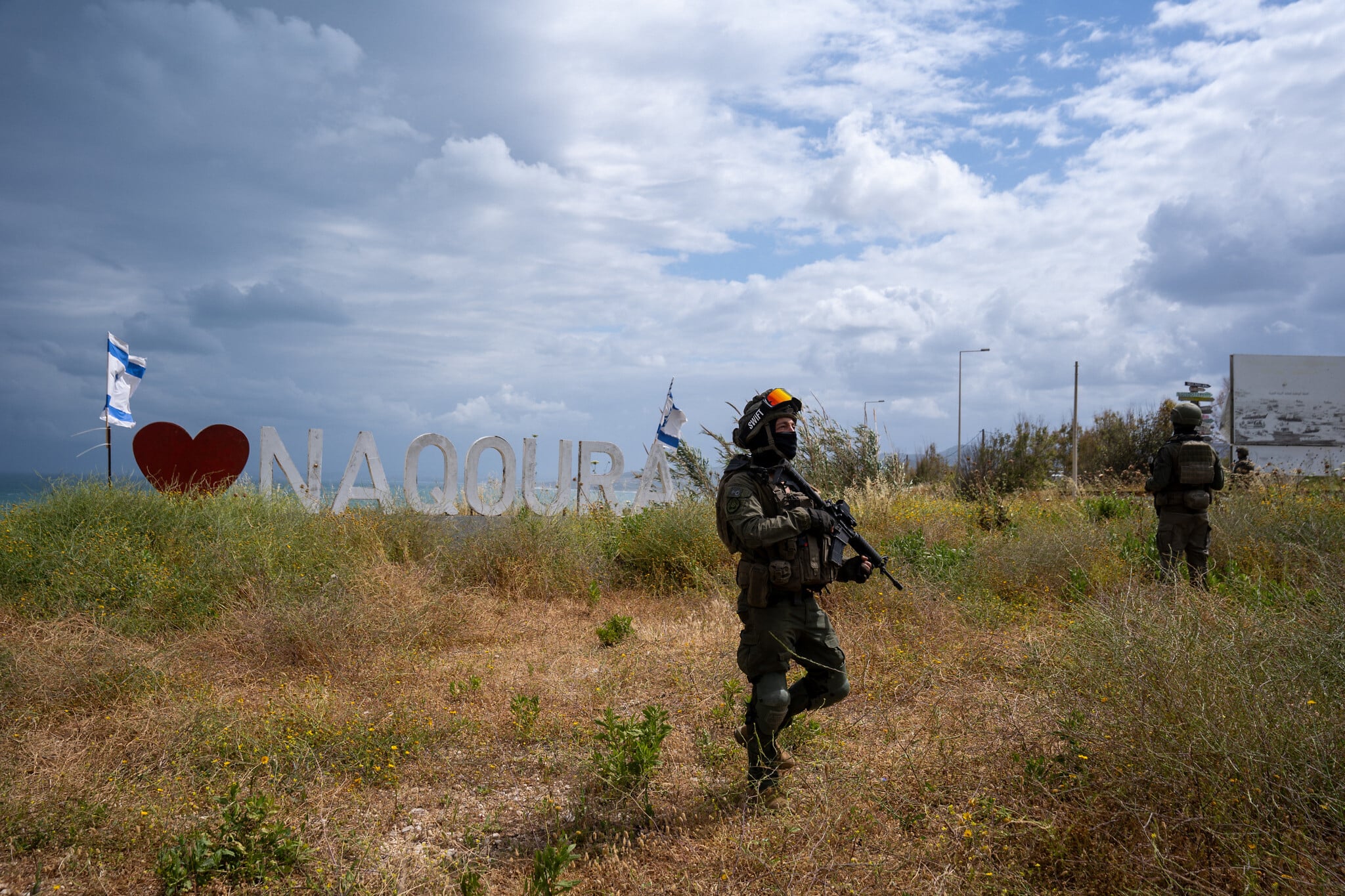
RAS AL-BAYADA, Lebanon — Israeli flags and razed structures dotted the coastal road in southern Lebanon, as journalists were taken to one of the army’s deepest positions in its new “security zone.”
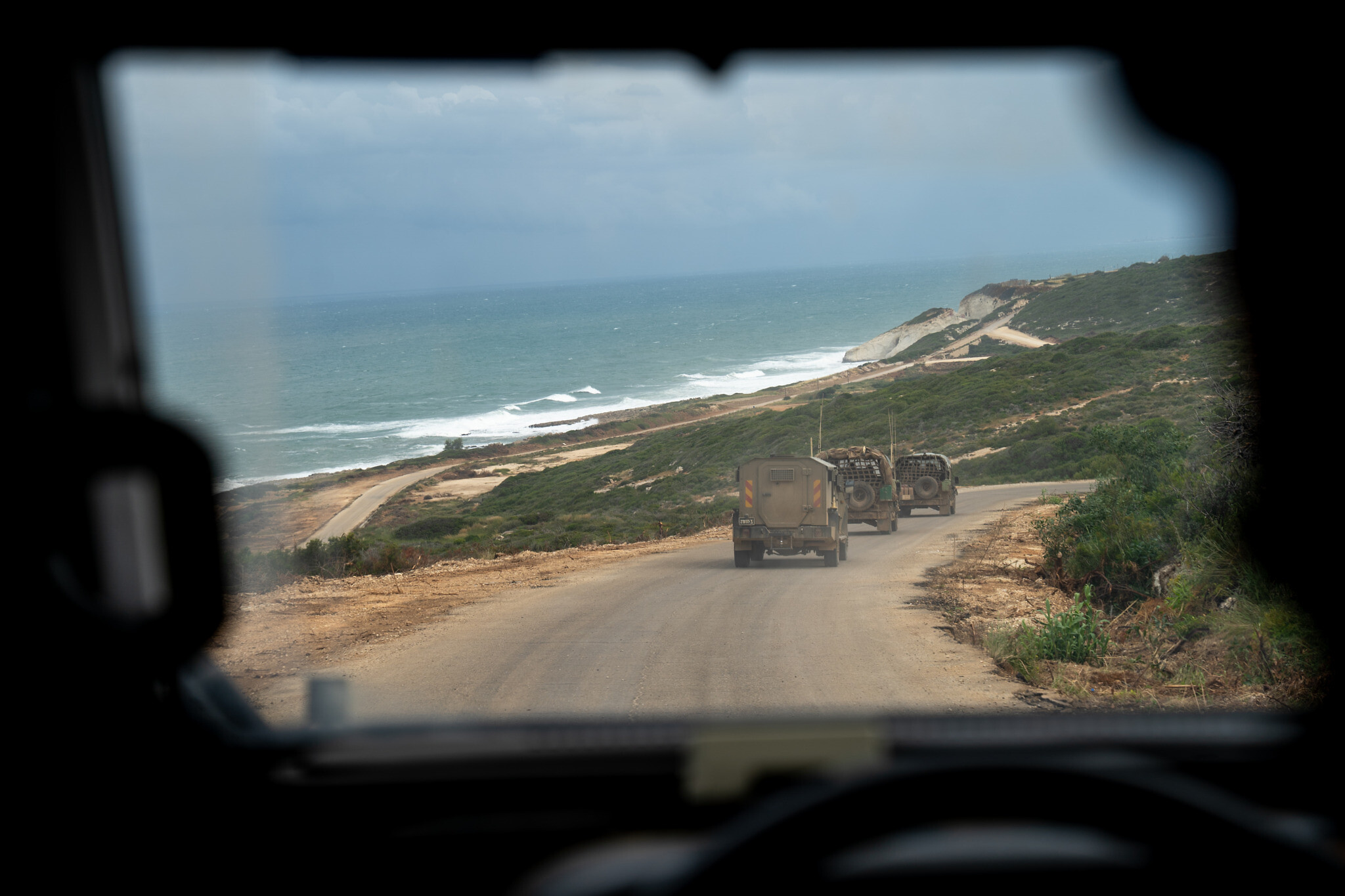
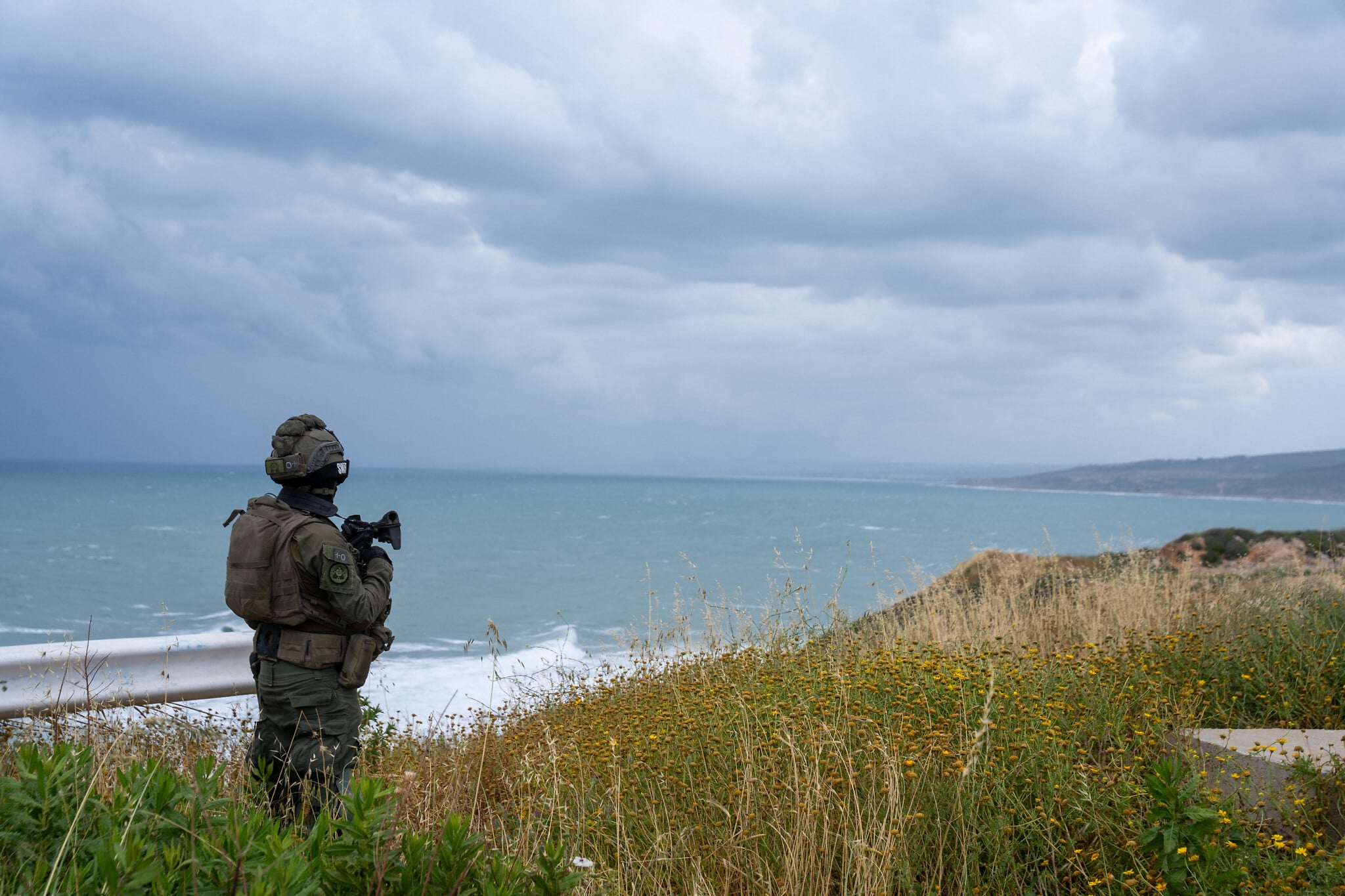
The tranquillity of the stormy waves crashing into the rocky coast amid a downpour was broken by an alert of a Hezbollah drone attack targeting the Israeli military in the Ras al-Bayada headland, located around eight kilometers (5 miles) north of Israel’s border, and just south of the coastal Lebanese city of Tyre.
“Air Hammer,” the Israel Defense Forces’ code for a drone attack, was heard over the radio. “There’s an enemy drone here,” one soldier said, as reporters were rushed into the lightly armored vehicles that brought us into Lebanon and escorted back to Israel.
Hezbollah later claimed to have targeted several Israeli military vehicles in Ras al-Bayada. The IDF reported that several explosive drones and anti-tank missiles targeted forces across southern Lebanon, but with no injuries caused.
Despite a (somewhat defunct) ceasefire, the troops stationed in southern Lebanon have been dealing with daily Hezbollah attacks, mostly first-person view (FPV) drones, but at times also rocket fire and anti-tank guided missiles.
“It really is a challenge,” said Col. “Aleph,” the commander of the IDF’s 226th Reserve Paratroopers Brigade, when asked about Hezbollah’s FPV drones. “It is an operational challenge, like other operational challenges we have here in the area, like the anti-tank and the rockets. This is part of war.”
The brigade commander said that the reason for the military’s deployment deep into southern Lebanon was to ensure that only troops face these threats, not civilians.
“We are here so that this will not be a tangible threat on the home front. And we are dealing here with this threat, and it is mainly, mainly directed at us,” he told reporters.
Stretching east to west, Israel’s new south Lebanon security zone runs 5-10 km (3-5 miles) deep from the border into Lebanese territory, covering an area where the IDF has been razing entire villages, as instructed by Defense Minister Israel Katz, to prevent Hezbollah from using the area to stage attacks.
Even eight kilometers deep at Ras al-Bayada, the IDF has been destroying structures, which it said were used by Hezbollah.
Senior officers described to reporters that their forces discovered massive amounts of weapons inside homes in the coastal Lebanese villages, and the IDF on Tuesday reported destroying five Hezbollah tunnels in the area.
According to the paratroopers officer, Hezbollah has been attempting to send reinforcements to southern Lebanon to replace the hundreds of operatives who have been killed during the fighting in recent weeks.
“There are certain forces that are really trying to get close, but every time they get close, they are hit, and I hear their spirit breaking. I hear it, I know it, and when [their spirit] breaks, they also try to flee,” he said.
How long Israel would remain in the new security zone was a question none of the officers could answer.
“Defending from the goal line, or the line of the communities, sometimes isn’t enough,” the brigade commander said. “And we can’t let big problems grow.”








The Times of Israel Community.