

Dozens protest policy on African migrants outside Chief Justice’s home
One of the ringleaders arrested as police try to keep the demonstrators a safe distance from the house of Esther Hayut
 Add ToI as a Preferred Source on Google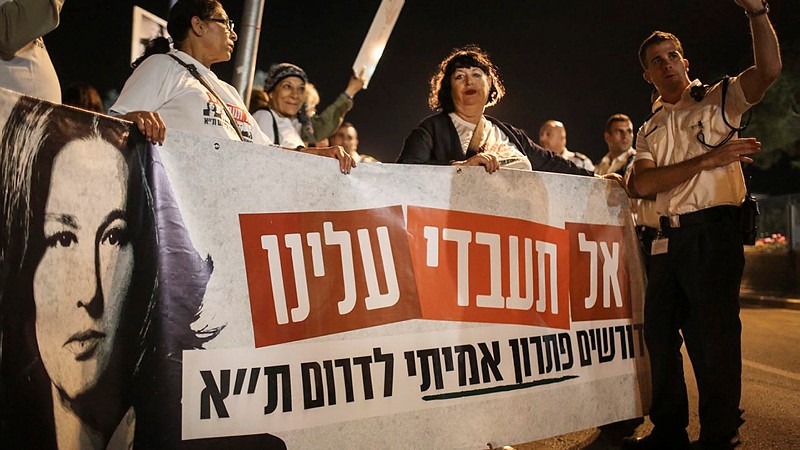
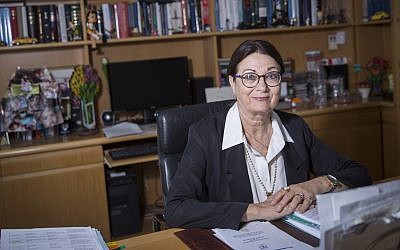
Some 100 residents of south Tel Aviv protested outside the home of High Court Chief Justice Esther Hayut in the city on Saturday night against what they called the court’s inaction on illegal African migrants.
Police arrested Sheffi Paz, one of the leaders of the protests.
Police said that while they were committed to allowing free speech and protests, the demonstrators were asked not to come too close to Hayut’s home, in accordance with a safety assessment from the Shin Bet security service.
Paz, 65, was arrested for “public disorder.”
She was later released and ordered to stay away from the area for 15 days, police said.
Israel says there are some 40,000 illegal African migrants residing in the country as of 2016, almost all from Eritrea and Sudan. Many live in the poorer neighborhoods of southern Tel Aviv, where some residents blame them for rising crime rates in the city.
Israel has in recent years sought to limit the migrants’ numbers. It has built a fence along the border with Egypt, a once-common migration route, and sent many migrants to a desert detention facility — and in some cases to third-party countries in Africa, identified in reports as Uganda and Rwanda.
Many say they are fleeing conflict and persecution and are seeking refugee status. Israeli officials contend they are economic migrants, and have resisted calls to recognize them as refugees.
Between 2009 and 2015, 2,408 Eritreans requested refugee status in Israel. The state has responded to 1.42% of these requests, or 45 people, rejecting 40 outright and granting temporary protection to five, while the Interior Ministry granted refugee status to four people.

Israel’s approval ratings for refugee status are drastically lower than international levels. According to the United Nation’s High Commissioner for Refugees, internationally, 84 percent of Eritreans and 56 percent of Sudanese asylum seekers received either refugee status or extended protection in 2014.
The High Court in August backed a government plan to deport the migrants to third-party country, though it also said the government can no longer detain them in a holding facility as a means of exerting pressure on them to agree to be deported. The cabinet last week voted to close the main migrant detention facility, Holot, in the coming months.









The Times of Israel Community.