

EU sanctions Hamas politburo members along with four settler groups
Bloc names Khaled Mashaal, nine other officials in terror group for ‘promoting, defending’ ‘violence’; move comes day after confirmed sanctions on settler groups
 Add ToI as a Preferred Source on Google
Nava Freiberg is The Times of Israel's deputy diplomatic correspondent.
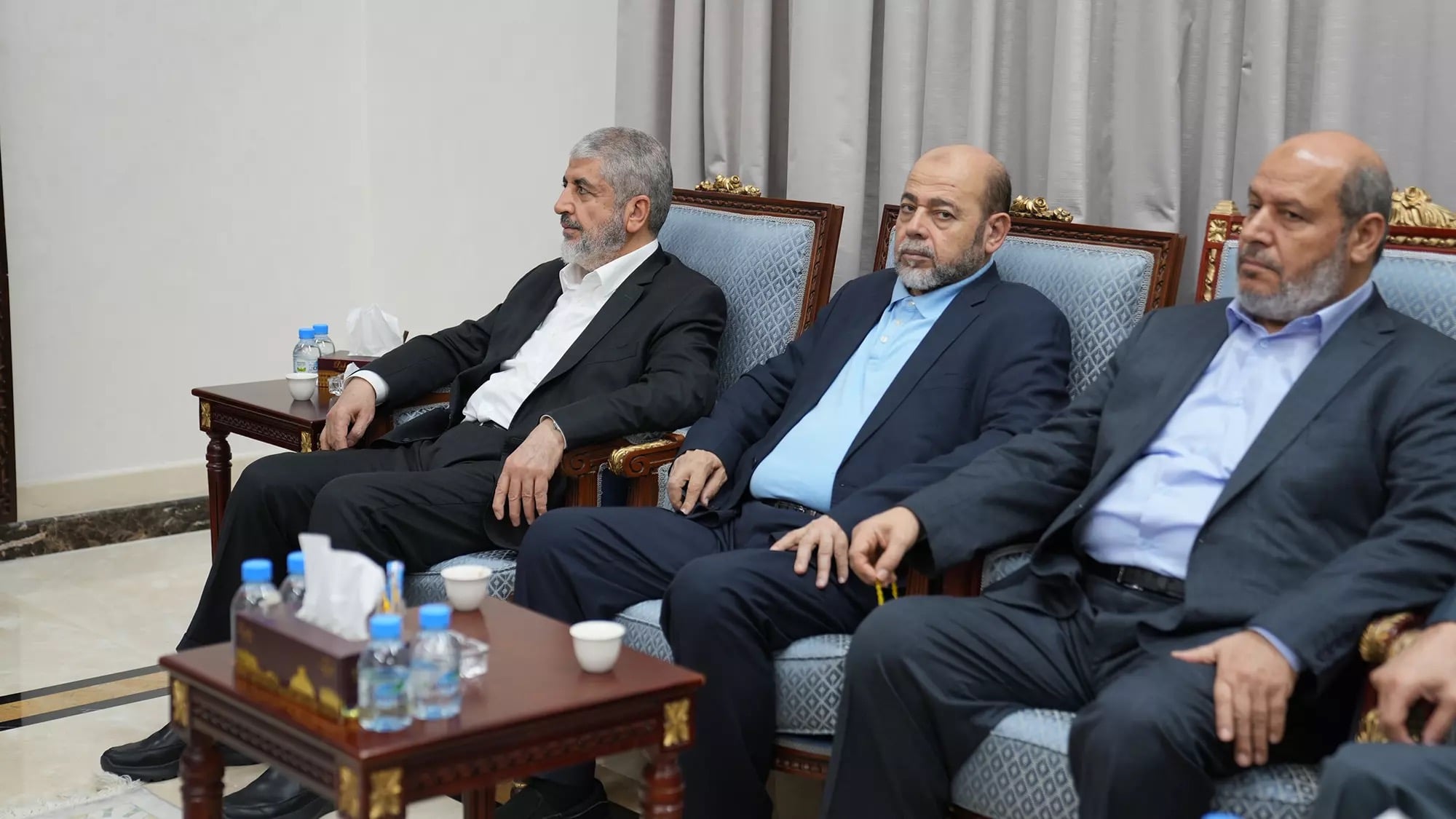
The European Union adopted further sanctions against Hamas and the Palestinian Islamic Jihad on Thursday, a day after the bloc imposed sanctions against some Israeli settlers.
“The EU decided to expand the scope of the EU’s restrictive measures regarding Hamas and the Palestinian Islamic Jihad to also target members of the Political Bureau of Hamas (Politburo), who promote, defend, and justify violent actions. The EU also listed 10 individual members of the Politburo,” it said in a statement.
The move marked a shift in EU policy, as senior figures in the politburo — Hamas’s supreme decision-making body — had long operated largely beyond the reach of EU sanctions, which were limited to the movement’s military wing.
“The members of the Politburo play a significant role in the decision-making process and exert considerable influence over the actions of the military wing of Hamas, including its violent actions. Therefore, they bear overall responsibility for those actions,” the EU statement read.
The individuals listed included senior Hamas officials Khaled Mashaal, Nizar Awadallah, Mohammad Nazzal, Husam Badran, Khalil Al-Hayya, Muhammad Darwish, Zaher Jabarin, Abu Khalil Al Quds, Fathi Hamad, and Moussa Abu Mazrouk.
Those named are among Hamas’s most senior surviving leaders, many of whom operate from Qatar.
Mashaal, a former political bureau chief, was reportedly elected as the movement’s overall head during ongoing internal elections, and Al-Hayya, former deputy of late Hamas leader Yahya Sinwar, has led Hamas’s negotiating team in ceasefire and hostage talks since the terror group’s October 7, 2023, invasion and massacre.
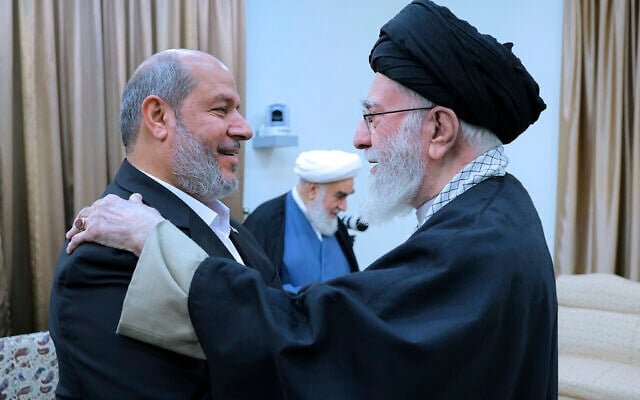
Al-Hayya was recently elected Hamas leader in Gaza, and Jabarin was picked as the group’s head in the West Bank, according to reports. The two were already serving in those roles without elections being held, having assumed the positions in the wake of Israel’s targeted killings of Sinwar and Saleh al-Arouri, respectively.
Among the restrictions listed in the framework were a travel ban and an asset freeze, which includes a prohibition on making funds or economic resources available to the individuals either directly or indirectly, according to the EU statement.
Hamas condemned the move in a Saturday statement, accusing Brussels of ignoring “documented violations of international law” by Israel, and vowing to continue its goal of establishing a Palestinian state with Jerusalem as its capital.
The expansion of sanctions followed a political agreement reached among EU foreign ministers on May 11, which also approved sanctions against “extremist and violent” Israeli settler organizations and their leaders.
The May 11 decision was roundly condemned by Israeli officials and politicians, including by Prime Minister Benjamin Netanyahu, who accused the bloc of “drawing a false symmetry between Israeli citizens and Hamas terrorists.”
An EU official told The Times of Israel at the time that the decision on Hamas sanctions was not made on the same day to draw any sort of comparison, but was rather a condition by some member states for their support for sanctions on settlers.
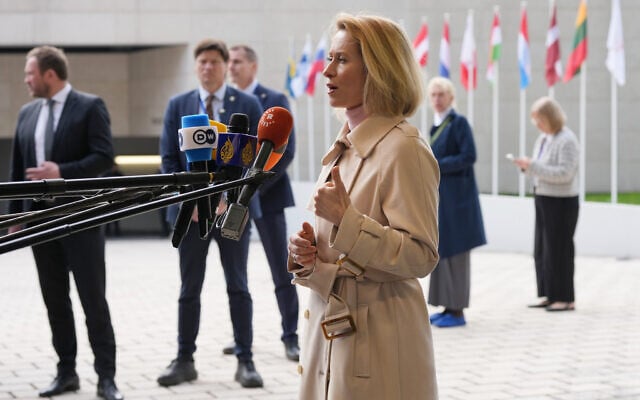
Also on Thursday, the EU formally named the entities and individuals it was sanctioning for abuses against Palestinians in the West Bank.
An EU statement Thursday confirmed that sanctions will be leveled against Israeli NGO Regavim and its director Meir Deutsch “for the demolition of Palestinian property with the aim to expand the control of Israel to the whole West Bank.”
It also confirmed that NGO Hashomer Yosh and its former president Avichai Suissa will be sanctioned for the organization’s efforts “supporting at least 28 violent outposts and settlements” and for Suissa’s role in “facilitating and encouraging serious human rights abuses in the West Bank.”
The statement confirmed as well that the Nachala Settlement Movement and its leader Daniella Weiss will be sanctioned over “coercive acts that lead to the forced displacement of Palestinians.” Nachala outposts are a “persistent source of settler violence,” it added.
Finally, the EU Council said it was sanctioning the Amana settlement organization, which it said has “played a key role in initiating, financing, and facilitating at least 30 violent outposts and settlements” that have “forced widespread displacement” and “dispossession of Palestinian properties.”
Nurit Yohanan, Times of Israel staff, and agencies contributed to this report.





The Times of Israel Community.