

EU foreign ministers approve sanctions on violent Israeli settlers, Hamas leaders
New Hungarian leadership lifts veto on measure, which targets 7 organizations and individuals; Netanyahu says EU morally bankrupt for drawing symmetry between Israel and Hamas
 Add ToI as a Preferred Source on Google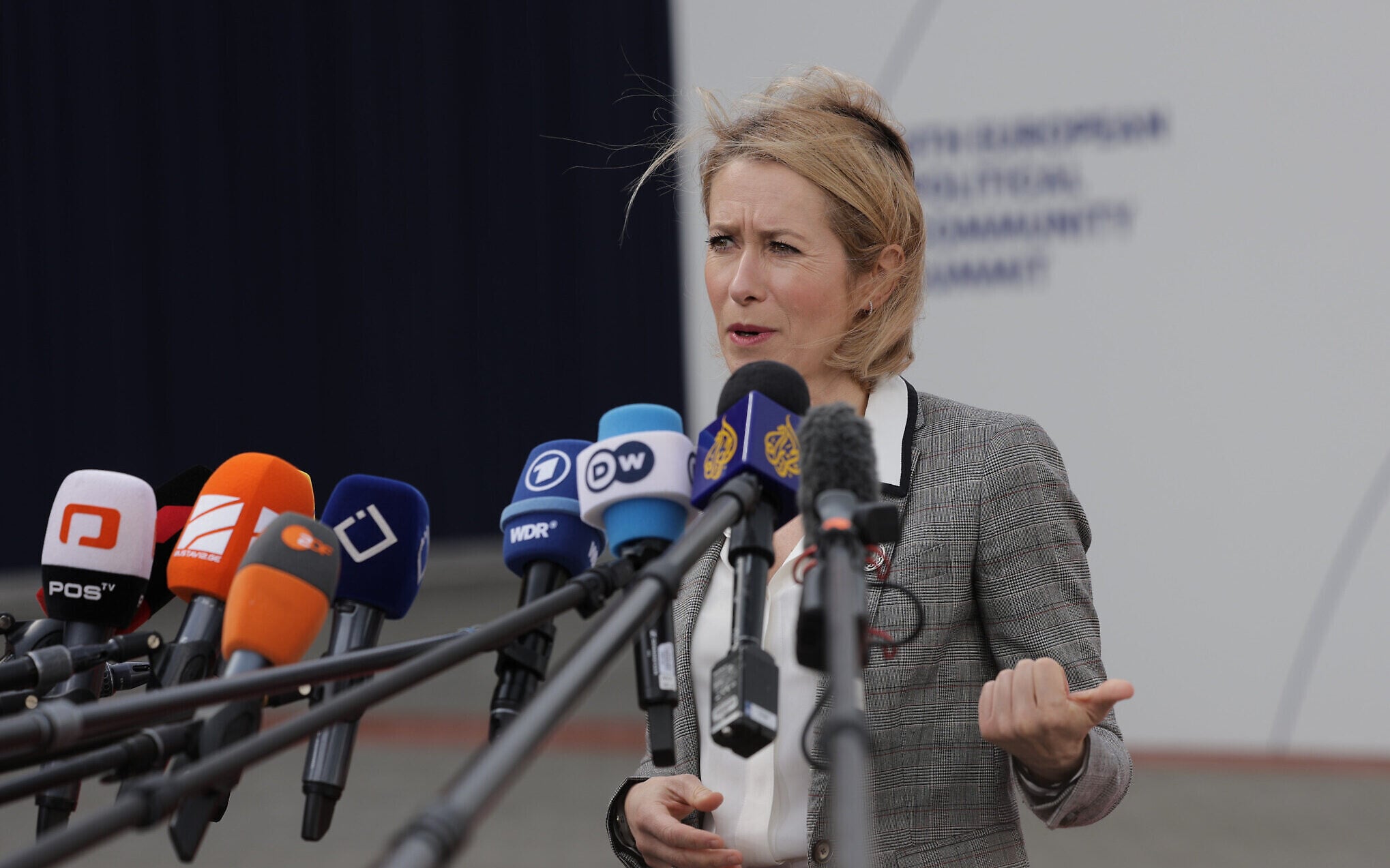
The European Union on Monday approved sanctions against “extremist and violent” Israeli settler organizations and their leaders, as well as against Hamas terror group leaders.
The decision, made during a meeting of the 27 EU foreign ministers in Brussels, is only a political move at this point, and there is still technical and legal work that must be done before the sanctions are officially imposed by the EU executive.
“It was high time we move from deadlock to delivery,” said EU foreign policy chief Kaja Kallas. “Extremisms [sic] and violence carry consequences.”
“It’s done. The European Union is sanctioning today the main Israeli organizations guilty of supporting the extremist and violent colonization of the West Bank, as well as their leaders,” French Foreign Minister Jean-Noel Barrot wrote on X.
“These most serious and intolerable acts must cease without delay,” he said. “It is sanctioning the main leaders of Hamas, responsible for the worst antisemitic massacre in our history since the Shoah, during which 51 French people lost their lives, a terrorist movement that must imperatively be disarmed and excluded from any participation in the future of Palestine,” Barrot added, using the Hebrew term to describe the Holocaust.
The move, which comes in response to rising violence by extremist Israelis in the West Bank and the expansion of Israeli communities in the disputed territory, had been stalled by former Hungarian prime minister Viktor Orban.

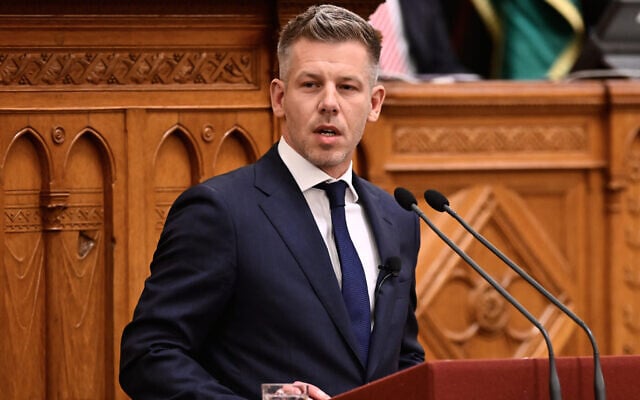
But last month’s election defeat of Orban, a staunch ally of Prime Minister Benjamin Netanyahu, by rival Peter Magyar appeared to have paved the way for the veto to be lifted.
Monday’s move “validates the notion that Orban was blocking them single-handedly,” said Martin Konečný, head of the Brussels-based European Middle East Project.
An EU official told The Times of Israel that a total of seven settlers and settler organizations will be blacklisted. The individuals will have assets frozen and be banned from entering the EU, among other measures.
According to the Peace Now settlement watchdog, sanctions will be leveled against Regavim and its head Meir Deutsch; HaShomer Yosh and its former chief Avichai Suissa; Nachala and its head, settler leader Daniella Weiss; and the Amana settlement organization.
Weiss, often regarded as the godmother of the Israeli settler movement, said she had received no formal notification of the sanctions and told The Associated Press that she did not understand the justification for them.
She described the sanctions as “ridiculous” and the situation as “banal,” saying that it would not stop the settlement movement.
Regavim said the group considers it “a badge of honor” to be sanctioned by the EU and would “continue working to restore governance and sovereignty throughout all parts of our homeland.”
But the decision could have massive implications on the work of Regavim and the other organizations designated, given that entities linked to the EU will be barred from maintaining financial ties or funding those sanctioned by Brussels. This includes Israeli banks as well as the Israeli government itself, which provides funding to most of the organizations that the EU is moving to sanction.
Regavim promotes the expansion of Israeli settlements and outposts in the West Bank, while calling out illegal Palestinian construction — a phenomenon that critics say exists because Jerusalem doesn’t approve building permits for Palestinians.

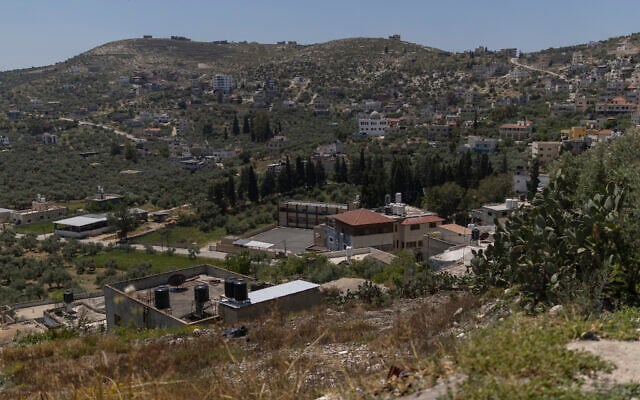
HaShomer Yosh sends volunteers to help work and protect farming communities and illegal outposts in the West Bank, which have become hotbeds for attacks on neighboring Palestinian villages, with critics claiming they are also used as a tool to dispossess Palestinians from their lands.
Amana and Nachala both promote the establishment of settlements and illegal outposts in the West Bank, with Weiss’s organization placing a particular emphasis on outposts.

While the international community considers all settlements illegal, Israel differentiates between settlement homes built and permitted by the Defense Ministry on land owned by the state, and illegal outposts built without the necessary permits, often on private Palestinian land. In recent years, though, the government has increasingly sought to fund and regulate the wildcat outposts, rather than demolish them.
Monday’s approved sanctions were notably focused more against individuals and groups pushing for the de facto Israeli annexation of the West Bank — something the EU adamantly opposes — than against those involved in violent assaults on Palestinians.
This was the third package of sanctions approved by the EU, since Brussels followed the Biden administration’s path in levying these sanctions in 2024.
US President Donald Trump reversed Washington’s sanctions regime against violent settlers on his first day in office in January 2025, leading Orban to maintain a veto on the EU continuing with the policy since then.
Before Monday, the EU had sanctioned five Israeli individuals, two illegal outposts, and one organization.
‘Moral bankruptcy’
The sanctions decision was roundly condemned by Israeli officials and politicians.
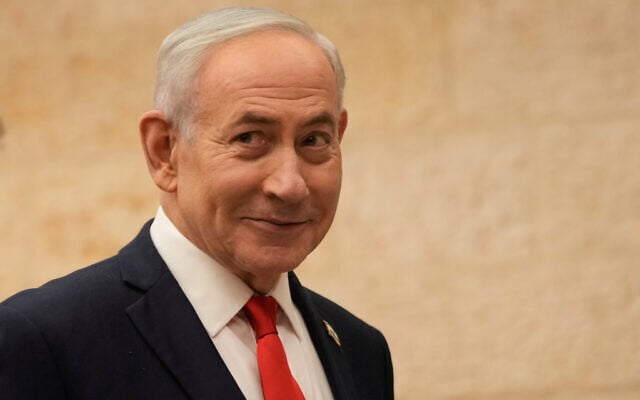
On his office’s official X account, Netanyahu said, “As Israel and the US are ‘doing Europe’s dirty work’ by fighting for civilization against jihadist lunatics in Iran and elsewhere, the European Union exposed its moral bankruptcy by drawing a false symmetry between Israeli citizens and Hamas terrorists.”
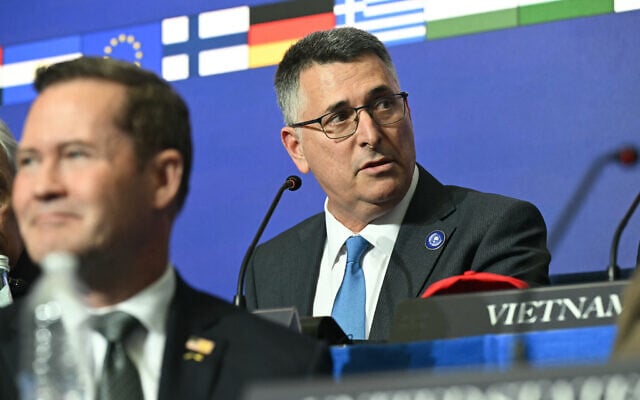
Israel “firmly rejects” the decision, Foreign Minister Gideon Sa’ar said on X, saying that the EU imposed sanctions “in an arbitrary and political manner… because of their political views and without any basis.”
“Equally outrageous is the unacceptable comparison the European Union has chosen to make between Israeli citizens and Hamas terrorists,” he continued. “This is a completely distorted moral equivalence.”
An EU official told The Times of Israel that the decision on Hamas sanctions was not made on the same day to draw any sort of comparison, but was rather a condition by some member states for their support for sanctions on settlers. The number and names of sanctioned Hamas leaders was not made public.
“Israel has stood, stands, and will continue to stand for the right of Jews to settle in the heart of our homeland,” Sa’ar said. “No other people in the world has such a documented and longstanding right to its land as the Jewish people have to the Land of Israel. This is a moral and historical right that has also been recognized by the law of nations, and no actor can take it away from the Jewish people.”
Sa’ar made no mention of the massive uptick in settler attacks that led to the EU sanctions.
Former prime minister Naftali Bennett, who is running to replace Netanyahu in the upcoming elections, called the sanctions “a dangerous action against the State of Israel as a whole,” while blaming the current government for Israel’s diplomatic isolation.

“This stems, among other things, from a chain of harmful and childish statements and videos by government ministers, a complete absence of a public diplomacy apparatus, and an active invitation to foreign entities to impose sanctions on Israeli public servants for political ends,” Bennett wrote on X. “When you call on President Trump to impose sanctions on Israeli judges, you gravely undermine Israeli sovereignty, and it comes back like a boomerang.”
Finance Minister Bezalel Smotrich, a dedicated backer of the settlement enterprise, said in a statement that “European hypocrisy is reaching new heights.”
He called for Netanyahu to approve his plan to put strategic areas of the West Bank under full Israeli civil and military control.
Growing violence, growing frustration
The EU’s highly critical attitude toward Israel over its conduct of the war in Gaza reached new heights after Israel invaded Lebanon in March — in response to the Iran-backed Hezbollah terror group’s attacks on Israel — and after the Knesset passed a new law on the death penalty for Palestinian terror convicts in the West Bank.
Last month, several EU states rejected a push by Spain, Slovenia, and Ireland to suspend the bloc’s cooperation agreement with Israel.
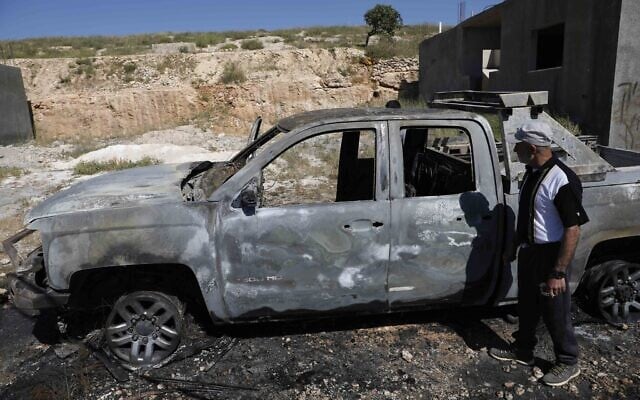
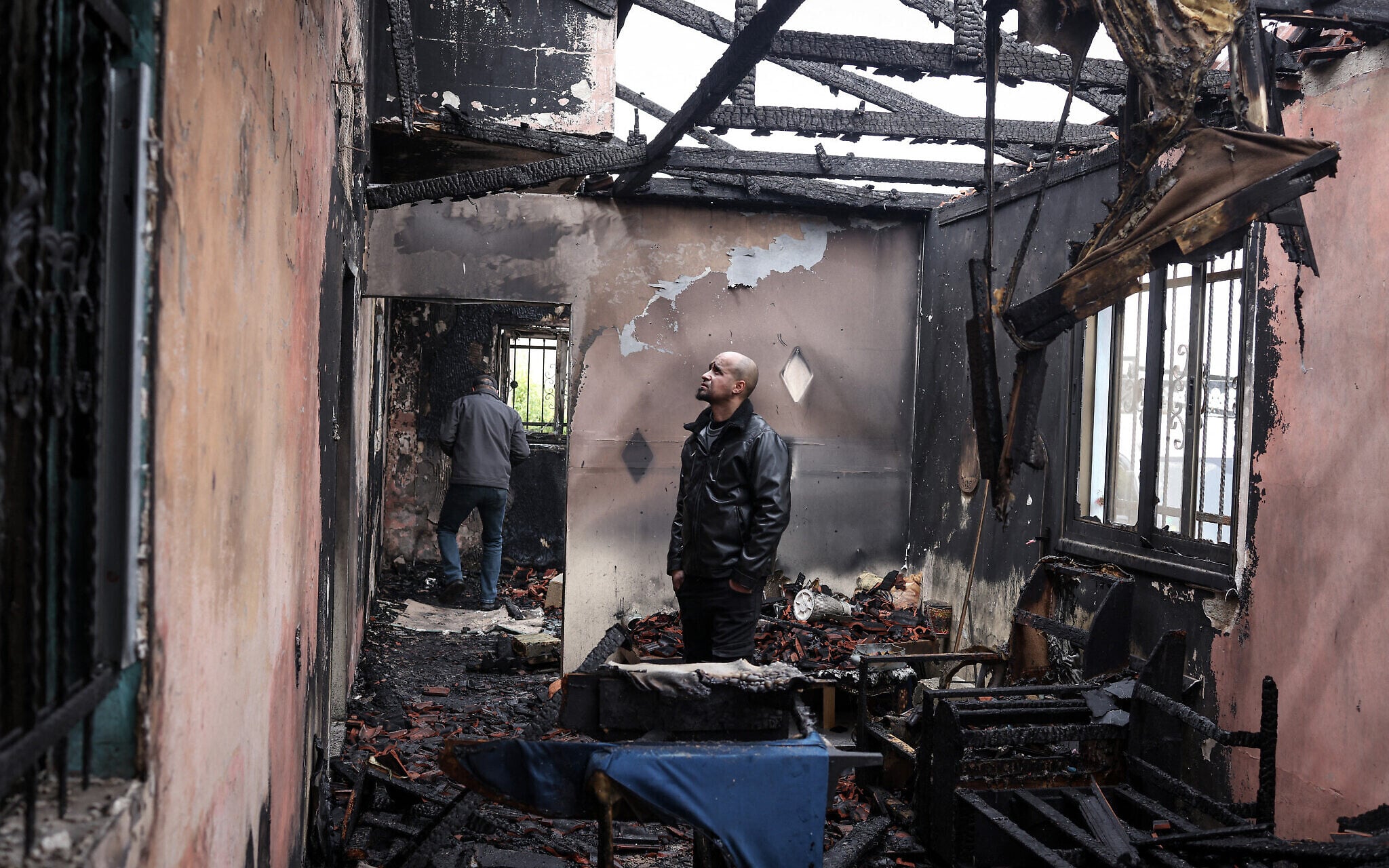
Extremist settlers, sometimes in mobs, have been recorded assaulting Palestinians, torching cars, and damaging property. Arrests in such cases are rare, and convictions are even less common, though the attacks take place on a near-daily basis.
Critics accuse the government of turning a blind eye to the violent attacks, which have become increasingly common and deadly in recent years. Eight Palestinians were shot and killed, and 200 were injured, by extremist settlers during the period of the Iran war from the end of February to early April, the Israeli human rights NGO Yesh Din said last month.
The IDF has also faced criticism for often standing by while attacks unfold — with troops sometimes actively participating — or failing to prosecute those responsible.
IDF Central Command chief Maj. Gen. Avi Bluth recently warned about the phenomenon, which he called out as “Jewish terrorism.”
IDF Chief of Staff Lt. Gen. Eyal Zamir last month issued a sharp condemnation of settler violence, calling attacks against Palestinian civilians and soldiers in the West Bank “morally and ethically unacceptable” and a major strategic impediment.
Agencies contributed to this report.





The Times of Israel Community.