

Finance minister opposes bill that would weaken top court
Moshe Kahlon notes that some High Court rulings were against bills pushed by his party, but it’s better to maintain the ‘hierarchy’
 Add ToI as a Preferred Source on Google
Finance Minister Moshe Kahlon (Kulanu) said that he opposes a bill that would give the Knesset power to overturn High Court of Justice rulings, even though several of the court’s recent decisions have targeted his own party’s legislation.
“The High Court is the last refuge of the weak. The strong want to destroy it because it interferes with their intentions,” Kahlon said during an interview Wednesday to a local radio station, Radio 101.5FM.
“I am a guardian of the rule of law and I safeguard the High Court. I don’t want to live in a state where there is no judicial review and people disappear in the night. I don’t want to be at that point,” Kahlon said.
Kahlon was referring to an initiative by Justice Minister Ayelet Shaked and Education Minister Naftali Bennett, from the Orthodox-nationalist Jewish Home party, a coalition partner.
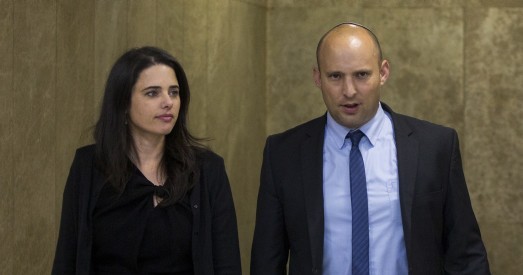
Introducing it last week, the two ministers said their bill would “restore the balance” between the legislature and judiciary, while critics charged it would weaken the court, several of whose recent rulings have frustrated the government.
The plan includes two new Basic Laws, the so-called Jewish state bill, which is currently being debated in Knesset, and a second Legislation Basic Law, that would allow Israel’s parliament to circumvent the twin High Court of Justice and Supreme Court in the event justices disqualify Knesset legislation.
The latter “will include a paragraph allowing the Knesset to redraft and re-legislate a law after it was struck down by the court, under certain conditions,” according to a statement the two ministers issued. “It will also include clauses related to the drafting of Basic Laws, and the fact that these are not subject to the judiciary review custom in many countries around the world.”
The proposal came on the heels of a series of High Court rulings that unraveled existing Knesset legislation, including on its revised IDF ultra-Orthodox enlistment bill, its policies on detaining African migrants, the two-year budget, a plan by the finance minister for third-apartment taxation, and the revocation of permanent residency status of four Palestinian parliamentarians from East Jerusalem with ties to the Hamas terror group a decade ago.
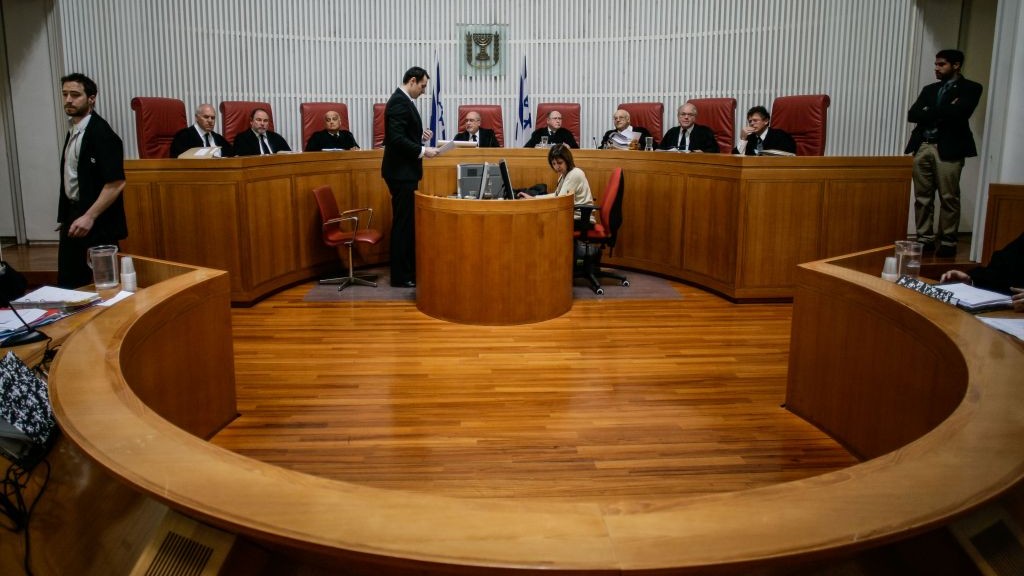
Shaked last month accused the High Court of Justice of degrading Israel’s Jewish character, attacking the bench for a ruling against the government’s policy of indefinitely jailing asylum-seekers who refuse deportation. Speaking at a Tel Aviv conference of the Israel Bar Association, Shaked said that the High Court decision “did not see the preservation of a Jewish majority [in Israel] as a value worth being weighed.”
Kahlon said that he was for regulating the relations of the High Court and the Knesset, but opposed the manner in which the Jewish Home bill was phrased.
“To say that I like all latest rulings by the High Court of Justice? The answer is no,” said Kahlon, and added: “You can fix but not destroy. This is my policy.”
Kahlon said he thought the new bill would harm the separation of powers between the various authorities in the State of Israel. “The overcoming clause [as it’s dubbed in Hebrew] does not safeguard, it overcomes. I have no intention to overcome, I want to regulate,” Kahlon said.
The finance minister noted that some of the court’s recent rulings – including a ruling against a bill on taxing real estate that he sponsored – were not to his liking, “but in the end, when you do the math, it’s better to live in a framework where there is some hierarchy,” he said.







The Times of Israel Community.