

Government backs bill restricting teachers educated in Palestinian universities
Coalition lawmakers argue measure is necessary to prevent spread of Palestinian ‘antisemitism’ and ‘incitement’ in Israeli schools
 Add ToI as a Preferred Source on Google
Sam Sokol is a former political correspondent at The Times of Israel. He was previously a reporter for the Jerusalem Post, Jewish Telegraphic Agency and Haaretz. He is the author of "Putin’s Hybrid War and the Jews"
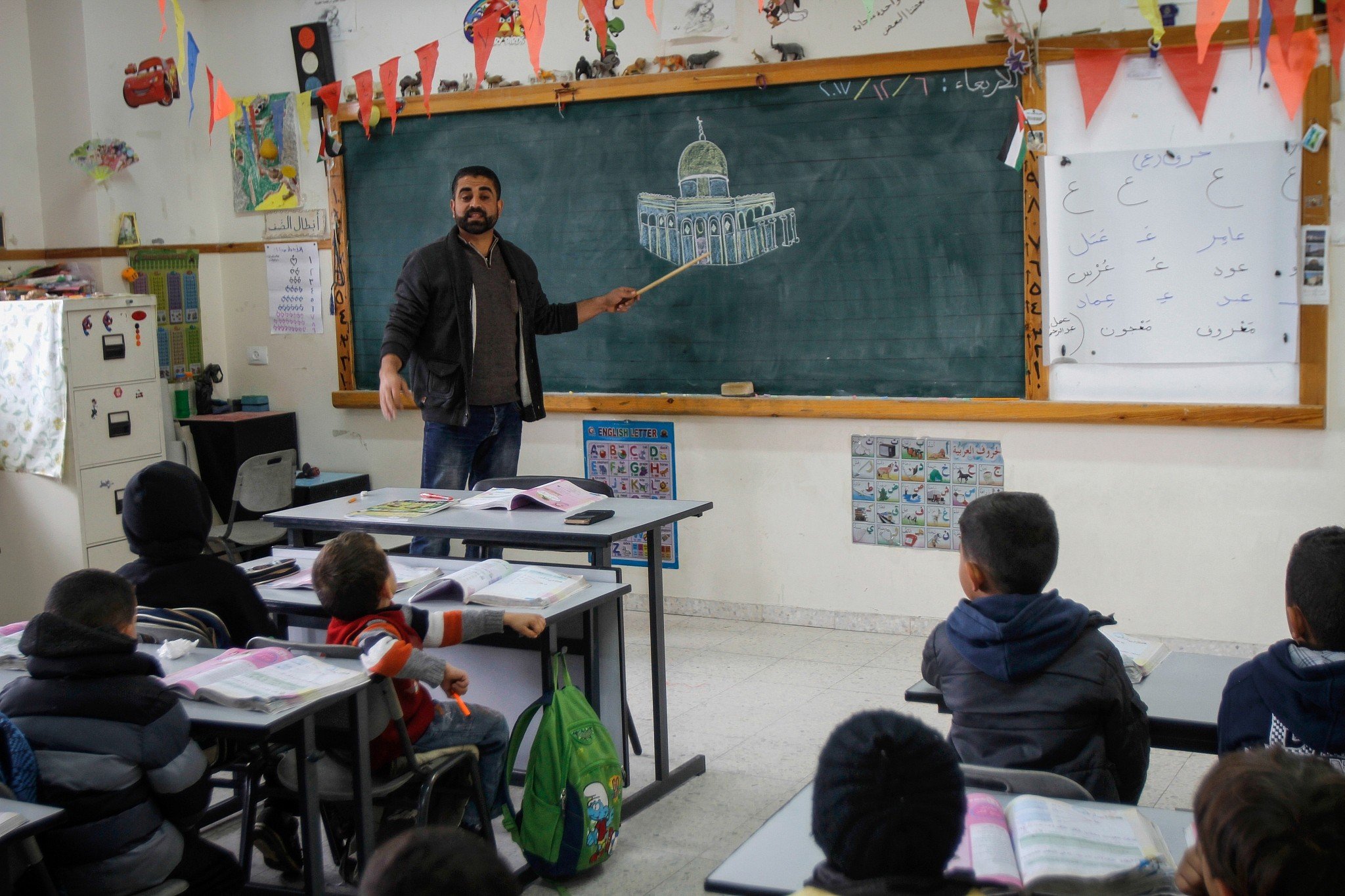
A bill restricting people with academic degrees from Palestinian institutions from teaching in Israeli schools received government backing on Sunday.
The legislation — sponsored by Likud MK Amit Halevi, among others —allows the Education Ministry’s director general to withhold accreditation from teachers with a degree from an institution within the Palestinian Authority, “provided that such a degree is required for his work as an education worker.”
In its explanatory notes, the bill argues that recent years have seen an increase in the numbers of Israeli citizens and residents who have received degrees with Palestinian Authority institutions who have gone on to teach in Israeli schools.
“The studies at these institutions include, in many cases, antisemitic content and indoctrination whose purpose is to deny the existence of the state of Israel and to seriously incite against it,” the bill states — calling it inappropriate for such people to “expose helpless children” to such viewpoints.
Many Arab Israelis have studied in PA universities.
The Ministerial Committee for Legislation’s approval means that the government will lend its support to the bill as it goes to the Knesset, where it must pass three readings to become law.
If passed into law, the legislation would carve out exceptions for those who had received their degree or completed the bulk of their studies prior to it coming into effect if they “undergo supplementary studies for the purpose of training as an education worker in Israel.”

Palestinian Authority schoolbooks for children contain incitement to violence and hatred despite European Union pledges to work with the PA to revise them, a study by the Israeli nonprofit IMPACT-se found in 2022.
In April, the European Parliament adopted a resolution condemning educational material produced by the Palestinian Authority and by the United Nations agency for Palestinian refugees UNRWA for its role in inciting hatred against Israelis.
A series of bills
The advancement of Halevi’s bill came less than two months after the Knesset passed another bill co-sponsored by Halevi authorizing the Education Ministry to fire teachers who publicly identify with an act of terrorism.
That law grants the director-general of the Education Ministry the authority to fire, without prior notice, teachers who have either been convicted of a security or terror offense, or have “published a direct call to carry out an act of terrorism or published words of praise, sympathy or encouragement for an act of terrorism [or] support for or identification with it.”
It also allows the ministry to cut or reduce funding for schools in which such expressions have been found, if it has been determined that “the management of the educational institution knew or should have known about their existence.”
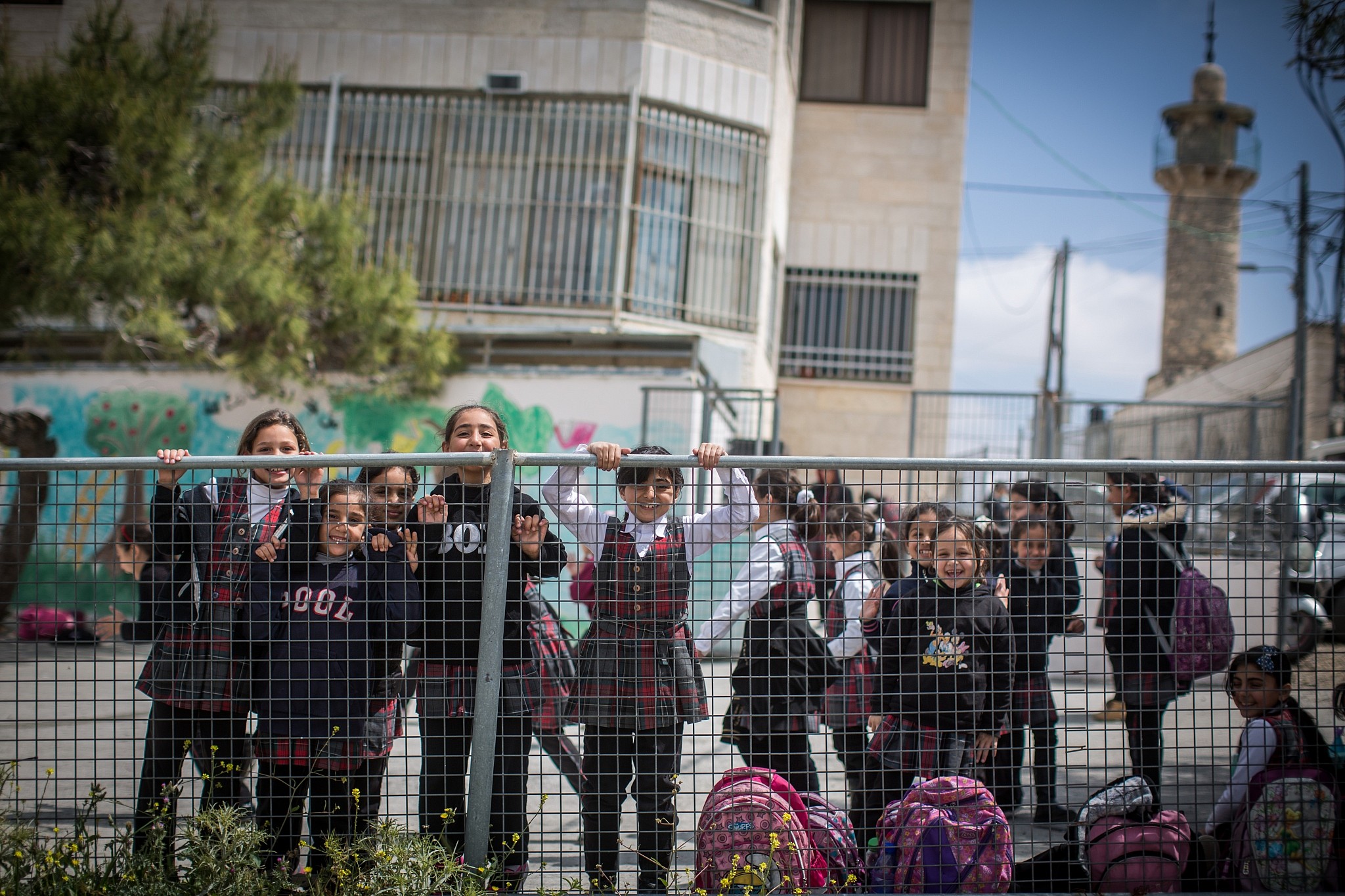
According to its explanatory notes, the bill is primarily aimed at Arab schools in East Jerusalem where alleged incitement turns minors “against the State of Israel” and terrorists are glorified in a way that has a “destructive and long-term effect [that], among other things, may be expressed in the large number of minors living in East Jerusalem who carry out or attempt to carry out terrorist attacks.”
The legislation was almost immediately panned by Hadash-Ta’al MK Ahmad Tibi, who retweeted a statement by the Association for Civil Rights in Israel (ACRI) arguing that its purpose was “to regulate the discourse in schools and to harm teachers whose statements and worldview do not coincide with those of the education minister and the political parties controlling the Education Ministry.”
“The purpose of the law is to threaten teachers and principals of Arab schools, to mark them and make them a target for surveillance and persecution,” the rights group stated, arguing that the tools already at its disposal before the current law were “adequate and sufficient.”
Policing the universities
A similar bill, focused on higher education, passed a preliminary reading in the Knesset this summer and is currently waiting for committee approval to go to the first of three readings necessary to become law.
That bill — which was written in cooperation with the National Union for Israeli Students (NUIS) and is sponsored by coalition whip Ofir Katz (Likud), among others — would require universities to fire without compensation any instructors who deny Israel’s right to exist as a sovereign Jewish nation, incite terrorism, or express support for a terrorist organization or an armed struggle against the State of Israel.
Another bill, prohibiting the waving of the flags of enemy nations, including the Palestinian flag, on the premises of any institution funded or supported by the state, was approved by the Ministerial Committee for Legislation last month.
The law would apply to institutions such as universities, where protesters have at times waved Palestinian flags at demonstrations.








The Times of Israel Community.