

Government tries to contain fallout after Haredi exit, with Knesset recess days away
Netanyahu reportedly weighs election threshold change as coalition faces uncertainty and shrinking numbers, though 3-month parliamentary hiatus will likely save it from rapid fall

 Add ToI as a Preferred Source on Google
Ariela Karmel is a political correspondent at The Times of Israel. She previously reported for Calcalist and Haaretz. She holds an MA in Middle Eastern and African History from Tel Aviv University and a BA in Political Science from the University of British Columbia.
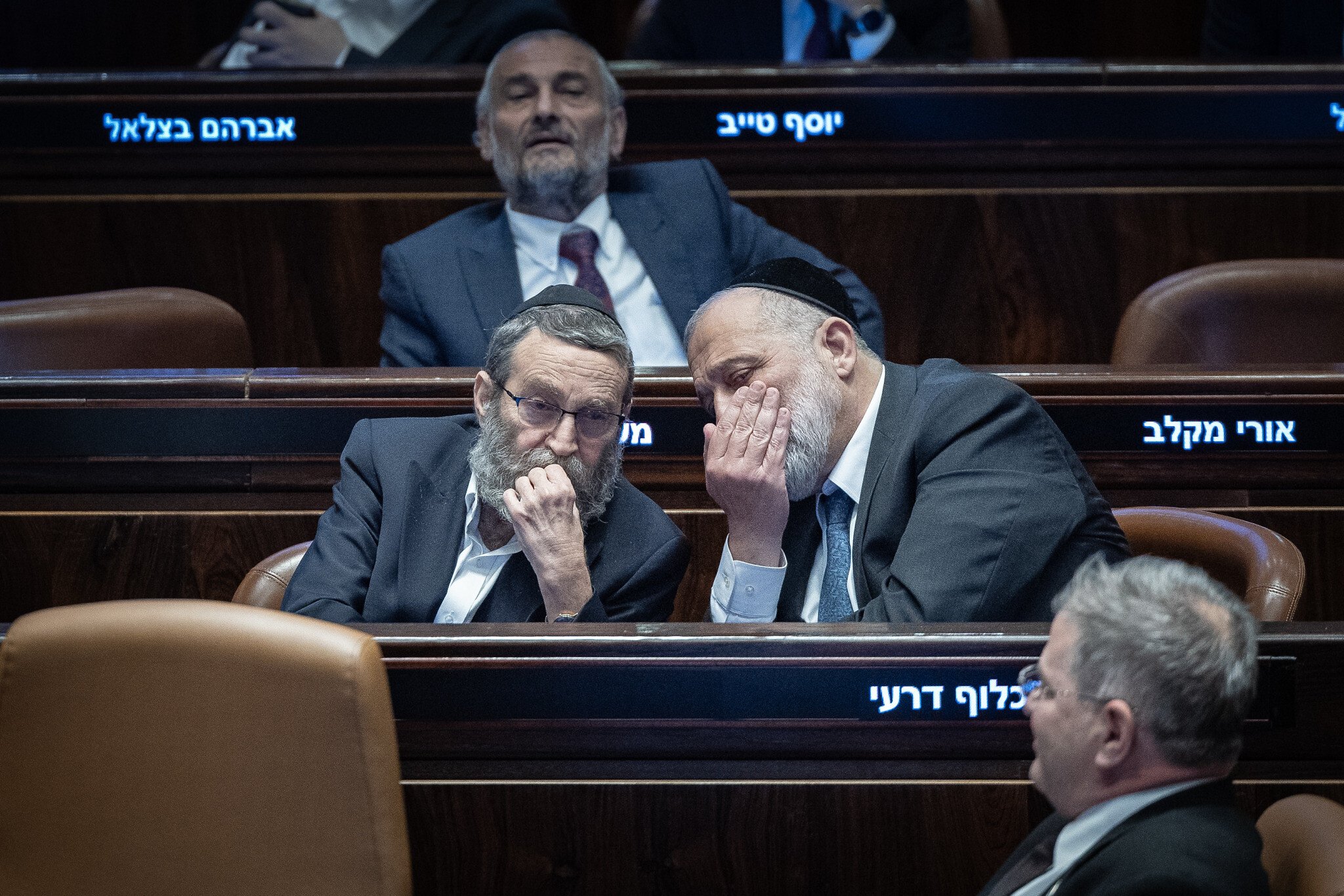
Prime Minister Benjamin Netanyahu’s government is navigating a period of mounting uncertainty following last week’s exit of the ultra-Orthodox parties, which triggered a wave of ministerial resignations and left a long-sought bill to exempt Haredi men from military service in limbo.
With his bloc weakened, Netanyahu is reportedly considering electoral reforms aimed at improving his odds in the next nationwide election, while his lawmakers race to finalize legislation ahead of a three-month Knesset recess, which begins July 27.
Interior Minister Moshe Arbel, of the ultra-Orthodox party Shas, formally resigned on Sunday for the second time, capping days of political maneuvering as his party completes its exit from the government — but, unlike fellow Haredi party United Torah Judaism (UTJ), not from the coalition — over the failure to pass a draft exemption law for yeshiva students.
And UTJ MK Moshe Gafni, who also resigned his post last week, nevertheless briefly took his seat at the helm of the Knesset’s Finance Committee on Sunday — despite no longer holding the chairmanship — in a bid to push through an economic relief package before the parliament’s summer session ends.
Taken together, the recent developments reflect a government under intense strain, rushing to pass urgent legislation while managing the political fallout of losing its ultra-Orthodox partners and the Knesset majority.
In the wake of Shas’s departure from the government — ordered last week by its Council of Torah Sages — its party leaders are attempting to retain influence in key ministries. Arbel, who submitted his resignation along with two other Shas ministers, withdrew it temporarily last week, reportedly to oversee the appointment of Israel Uzan, a longtime party loyalist, to replace the outgoing director general of the Interior Ministry.
In his office on Sunday, during a meeting regarding a development plan for the city of Nazareth, Arbel contended that his motive was more noble.
“Few believed that the reason I withdrew my resignation letter was to address Nazareth’s situation. The mission to rehabilitate the city is urgent and a matter of principle,” he said, indicating that this was his stated reason for temporarily withdrawing his resignation.
The government has since named Anat Laxner as acting director general until Uzan’s appointment is formally confirmed.
The resignations of multiple Shas MKs under the Norwegian Law — giving up their Knesset seats so that the ex-Shas ministers can sit in parliament — will also push out backbenchers Erez Malul and Semion Moshiashvili, further reshuffling the Knesset lineup.
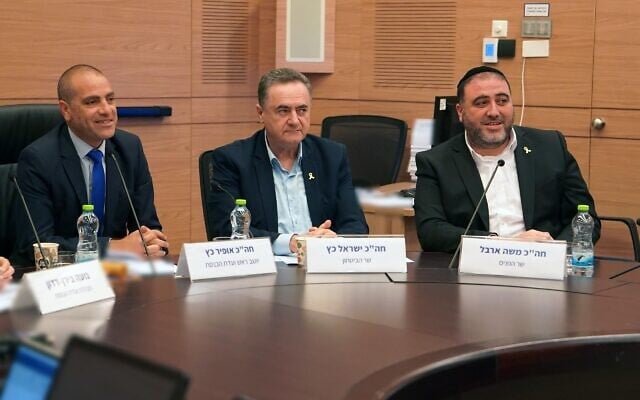
The Norwegian Law allows ministers and deputy ministers from large factions to resign from the Knesset, with their seats then filled by other members of their parties. Now, those ministers want the seats back.
Meanwhile, Gafni’s unexpected reappearance at the Finance Committee — which he led until his resignation Monday — caused confusion among those present during a session on economic compensation for businesses harmed during last month’s war with Iran.
To the visible bewilderment of committee members, Gafni said that interim chair Shas MK Yinon Azoulai had asked him to temporarily fill his seat, and that he was attending in his capacity as a regular committee member.
Since Gafni’s resignation, the Knesset House Committee has approved Likud MK Ofir Katz as the new Finance Committee chair following disagreements over the chairmanship between Likud and Smotrich’s Religious Zionism party.
A coalition insider told The Times of Israel that discussions at this stage over whether ultra-Orthodox MKs will renegotiate ministerial portfolios or who will take over Knesset committee chairmanships vacated by ultra-Orthodox MKs are “purely speculative.”
Likely, they continued, much will be negotiated behind closed doors during the Knesset’s nearly three-month recess.
Shas and United Torah Judaism ministers will likely continue to retain some degree of control of their ministries even after their resignations, since their political appointments to directors general who run the ministries have largely remained.
Enlistment law stalemate paralyzes coalition
As the Knesset heads into its final week before recess, the draft exemption bill remains frozen, and the exit of the UTJ party and far-right lawmaker Avi Maoz — the sole MK representing the anti-LGBTQ Noam party — have left Netanyahu with a 60-member coalition that lacks a majority in the 120-member Knesset.
Though this does not in itself trigger the government’s collapse, the prime minister is reportedly exploring every option to hold his political bloc together.
Netanyahu reportedly proposed the removal of MK Yuli Edelstein — who has refused to accede to the demands of the ultra-Orthodox parties regarding the draft bill — as chair of the Foreign Affairs and Defense Committee, which is tasked with drafting the legislation enshrining draft exemptions for full-time yeshiva students. Edelstein could have been ousted in an effort to placate Shas, which left the government over the failure to advance the bill.
However, the proposal to fire Edelstein was rejected by Shas as too little, too late, and, instead, the Haredi party insisted on immediate movement on the exemption bill.
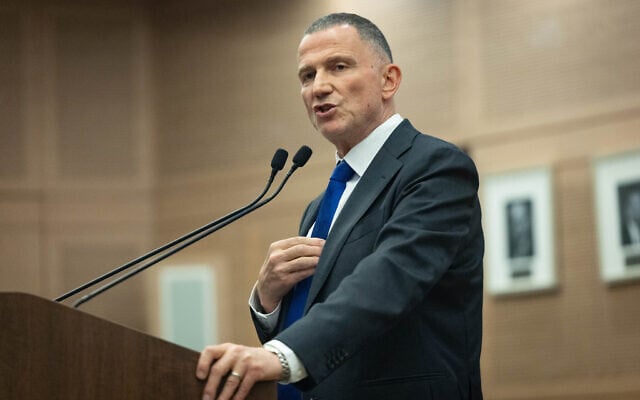
After the Kan public broadcaster reported over the weekend that Edelstein had decided not to submit the conscription law to the Knesset plenum, Edelstein’s office told The Times of Israel that this was “nothing new” and that his position had long been that he would not bring the bill in its current form to a vote without full coalition backing, which he did not have.
Over the weekend, he reiterated in an interview with the Maariv daily that the bill remains “serious” and “based on principles we’ve discussed all along,” including strict sanctions and high draft quotas. “Without these,” he said, “this will not be a draft law, but a bluff.”
Given the seemingly unbridgeable impasse between Edelstein and the ultra-Orthodox parties, Netanyahu is scrambling to bolster the ranks of his remaining far-right allies.
Hebrew media reported Thursday that Netanyahu is weighing legislation to lower the electoral threshold for entering the Knesset. Described as a “law to save Smotrich,” the proposal is aimed primarily at helping Finance Minister Bezalel Smotrich’s Religious Zionism party, which recent polls suggest would fall below the current 3.25 percent threshold needed to enter the Knesset.
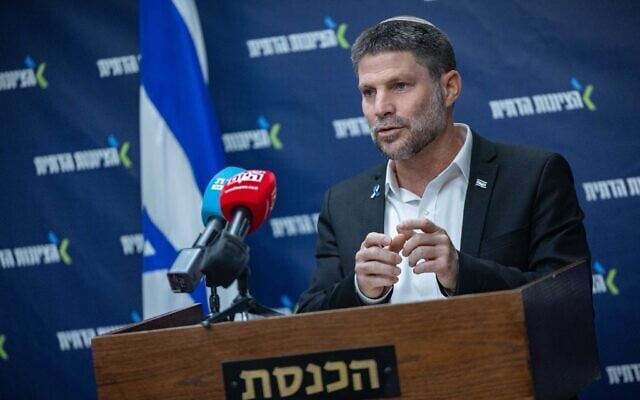
Were that to happen, what polls indicate are Netanyahu’s slim chances of retaining power would be significantly diminished.
However, the move could end up boosting smaller parties in the opposing camp as well.
A coalition insider told The Times of Israel that no legislation to this effect will be brought forward before October, when the Knesset reconvenes after its three-month recess.
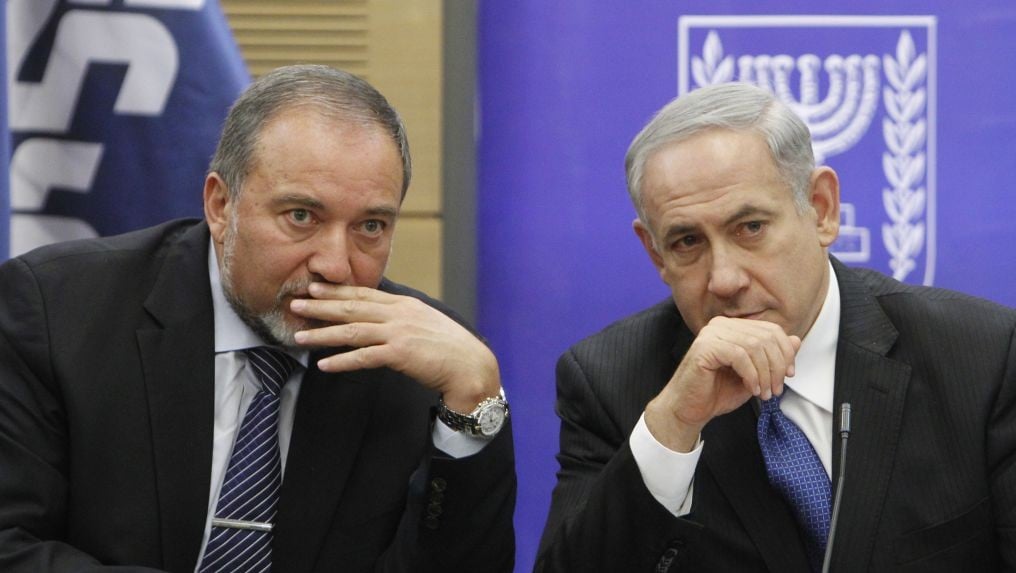
The threshold was raised to its current level from 2% in 2014 by then-foreign minister Avigdor Liberman, who argued it would boost governance and stability by helping reduce the number of small parties in the Knesset.
At the time, as the head of a healthy majority government, Netanyahu supported the move. Now, at the helm of an increasingly fractured and steadily shrinking minority government, his views appear to have shifted.







The Times of Israel Community.