

Hadassah mediator asks for more time as sides fail to reach agreement
Ex-Supreme Court judge Rubinstein gets an extra 24 hours to solve dispute surrounding children’s cancer unit
 Add ToI as a Preferred Source on Google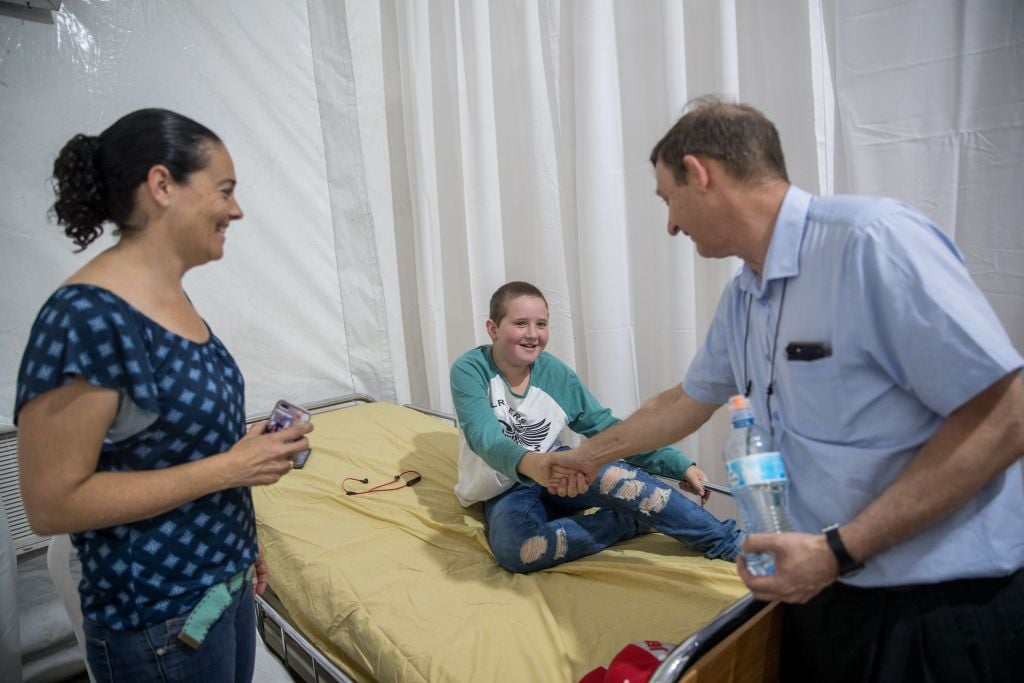
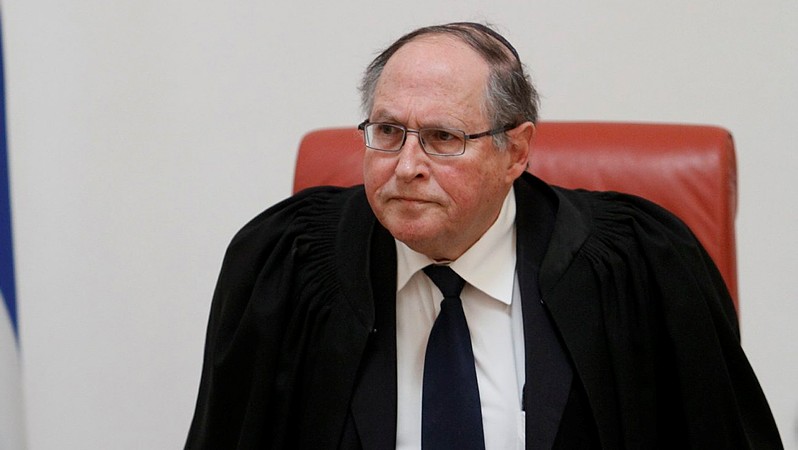
The former Supreme Court judge mediating a dispute between doctors at Hadassah Ein Kerem Hospital’s children’s cancer ward and the hospital’s management has asked the High Court of Justice for more time after a proposed compromise was rejected by the physicians on Sunday.
Elyakim Rubinstein was given until 7 p.m. Monday evening to reach a deal between the parties.
Parents of patients at the hospital had petitioned the High Court of Justice demanding the court approve the opening of a new child cancer department at Shaare Zedek in Jerusalem, fire Hadassah director-general Zeev Rotstein, and open legal proceedings against him and Health Minister Yaakov Litzman.
On Sunday, the parents rejected Rubinstein’s proposal, backed by the Health Ministry, to move the ward from Hadassah Ein Kerem to Hadassah Hospital on Mount Scopus, which would be under completely new management, Walla news reported. They said it was unrealistic.
The doctors at the ward, who had resigned over the dispute, also reportedly rejected this compromise, saying that there was no infrastructure for the ward on Mount Scopus and none of the facilities they needed. Furthermore, a source close to the doctors told Walla that the doctors felt that the head of pediatrics on Mount Scopus, Professor Eitan Kerem, was also against them. Two weeks ago he publicly criticized them for leaving Ein Kerem and setting up a ward in Sacher Park. The doctors were concerned that it would be only a matter of time before they were made unwelcome in Mount Scopus and would have to move once again.
Channel 2 reported that the only reason a hemato-oncology ward was not being opened in Shaare Zedek was because Litzman was blocking it. However Professor Yonatan Halevy, Director General of Shaare Zedek, told the news network last week that he was ready to open a ward and had the resources to do so as soon as he got the green light. Channel 2 said it was possible that if Litzman did not give permission, Halevy would simply hire the Hadassah doctors for his Shaare Zedek pediatric department and let them treat the patients in the existing pediatric facility.
The parents and doctors believe that the government is doing everything possible to avoid the most sensible solution, which is to open a ward at Shaare Zedek Hospital, according to the report. Some of the parties involved think that the suggestions of the Health Ministry to open temporary wards are “delusional and insane.”
High Court of Justice judges indicated they will be available to hear the case at 11:30 a.m. on Tuesday if no agreed solution is reached.
According to a Channel 2 report, several temporary solutions have been proposed by the various parties. One of the suggestions involved setting up temporary wards in Schneider Children’s Medical Center of Israel in Petah Tikva and Ziv Medical Center in Safed — the latter being more than two hours away from Jerusalem. These proposed wards would operate for six months until a new Jerusalem facility is ready. The government would pay for transportation and accommodation for the children and their families during that time, according to the suggestion.
The crisis was set off by a management plan that emerged last fall to transfer a child bone marrow transplant expert, Dr. Paulina Stefansky, from the unit without consulting Professor Michael Weintraub — who previously headed the unit before resigning in March — to an adult transplant unit in another building.
The idea was to use available beds in the adult unit to treat non-Israeli child “medical tourists” from the West Bank and East Jerusalem and countries from the former Soviet Union — who would pay high fees for transplants that would help replenish Hadassah’s depleted coffers — and have the already overstretched team from the children’s unit care for them, along with their Israeli patients in the children’s department.
Before the doctors’ resignation, the children’s department had six doctors and three interns caring for 160 new child cancer cases a year – the same size team that was caring for 120 children four years ago. The figures, according to a Channel 10 investigation, compared with 13 doctors and four trainees for 170 new cases annually in the child cancer department at Sheba Hospital, outside Tel Aviv, and 15 doctors and 5 interns for 160 new cases a year at the Schneider Children’s Hospital in Petah Tikva.
Most of the children who were being treated at the unit before the crisis erupted have moved to other hospitals in other cities at the recommendation of the doctors who resigned.
Sue Surkes contributed to this report.





The Times of Israel Community.