

Haredi extremists brag openly of campaign to obstruct cops, but evade consequences
In carefully worded emails, Jerusalem Faction organizers boast of mobilizing protests to block enforcement against draft dodgers, sometimes violently, while hiding behind laws protecting free speech

 Add ToI as a Preferred Source on Google
Sam Sokol is a former political correspondent at The Times of Israel. He was previously a reporter for the Jerusalem Post, Jewish Telegraphic Agency and Haaretz. He is the author of "Putin’s Hybrid War and the Jews"
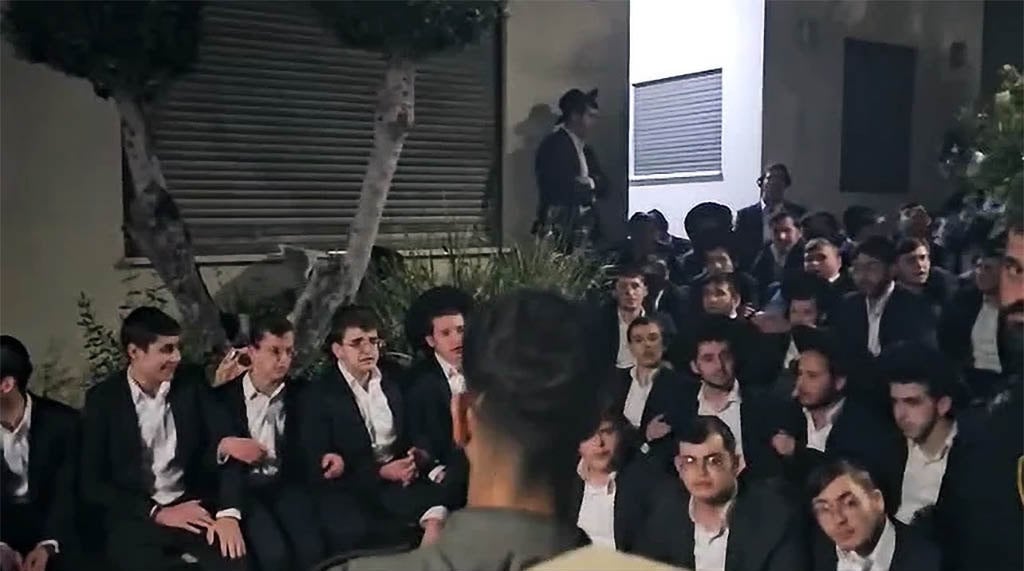
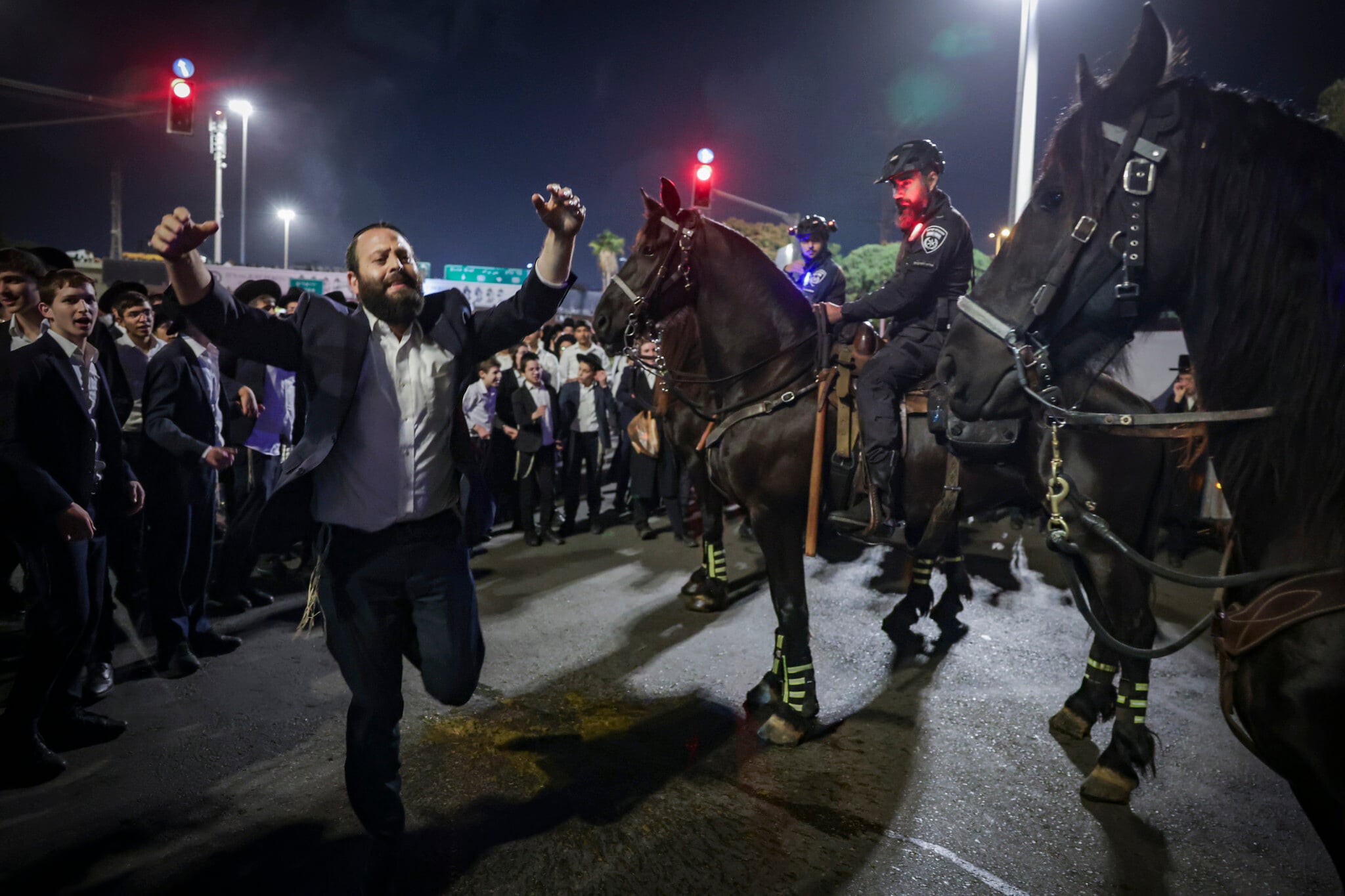
Last month, ultra-Orthodox demonstrators belonging to the extremist Jerusalem Faction breached the home of the head of the IDF’s Military Police in the southern city of Ashkelon to protest the arrest of yeshiva students who had evaded military conscription.
During the incident, which occurred while Brig. Gen. Yuval Yamin’s family was at home, dozens of rioters “trespassed into the yard, acted violently, and disrupted the routine of life in the area,” according to police. Twenty-five of them were arrested.
Responding to harsh criticism of its actions, the Jerusalem Faction was unapologetic, simply stating: “Red lines have been crossed; leave the Torah students alone.”
This simple statement, and the accompanying riot, neatly encapsulate the ideology of the extremist ultra-Orthodox group, numbering some 60,000 members, which regularly holds rowdy demonstrations against the military enlistment of yeshiva students.
While the leaders of the Jerusalem Faction’s anti-IDF campaign have distanced themselves from the illegal actions of those they have mobilized, a Times of Israel investigation has found the group openly and repeatedly boasting of obstructing the arrest of draft evaders, including mobilizing masses of young men, as they wage a campaign aimed at circumventing the government’s already weak efforts to enforce conscription.
Despite the group’s brazen activities, many of which have captured national attention, authorities acting under the orders of a government that critics say is in the thrall of ultra-Orthodox interests have largely failed to crack down on the group in any systematic way, allowing the Jerusalem Faction to continue bringing chaos to Israel’s streets.
תבינו את הדרמה באשקלון: עשרות מפגינים מהפלג הירושלמי נכנסו לתוך ביתו של מפקד המשטרה הצבאית תת אלוף יובל יאמין ומתבצרים שם https://t.co/2ohPMV8KN4 pic.twitter.com/iimgCNsbY3
— יואלי ברים yoeli brim (@yoeli_brim) April 28, 2026
Among other activities, Jerusalem Faction organizers have been involved in paying evaders financial rewards, have awarded raffle prizes to yeshiva students who refuse conscription orders, and even established more than one “national alert system” to mobilize wildcat street action when someone spots a draft dodger being arrested.
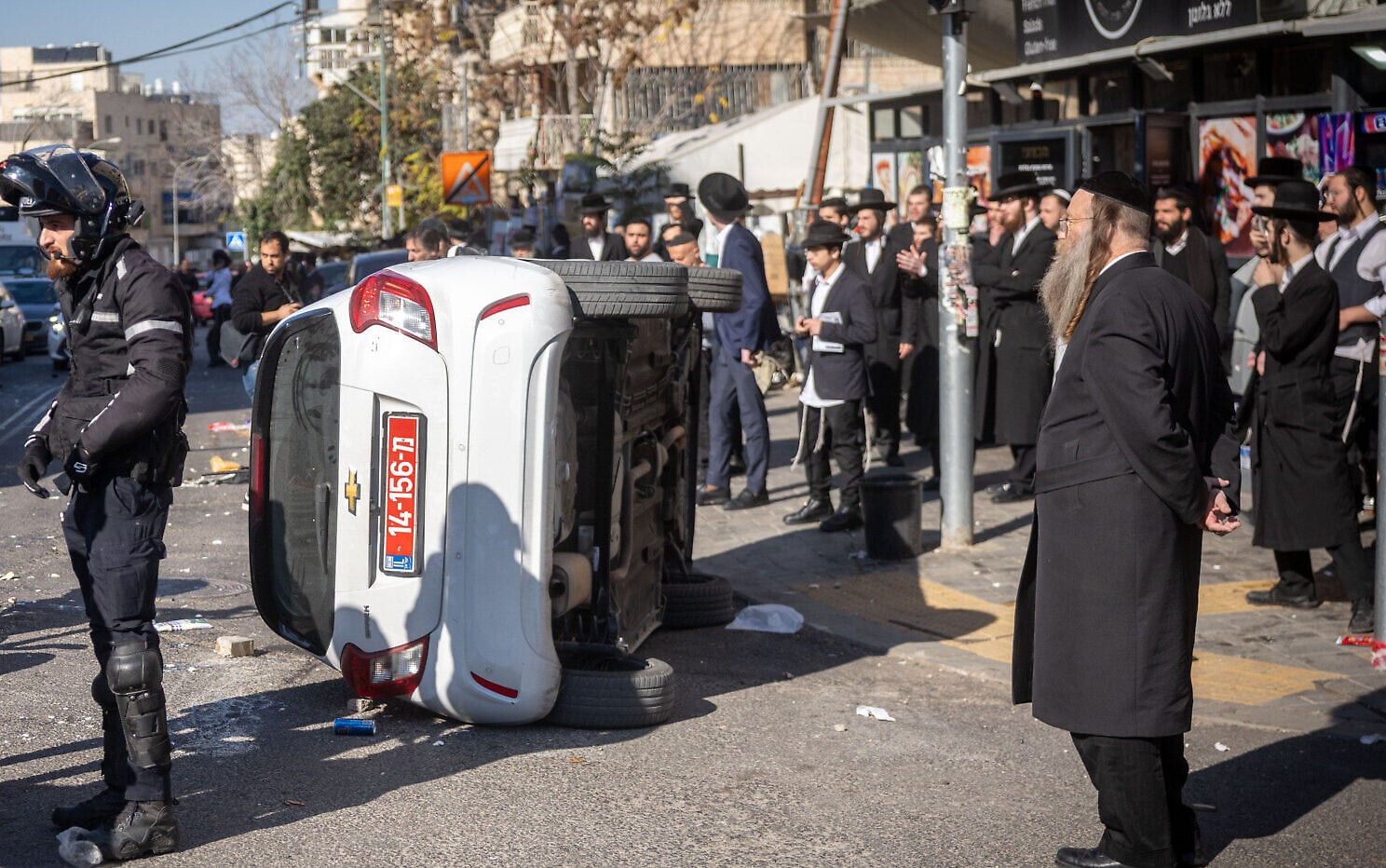
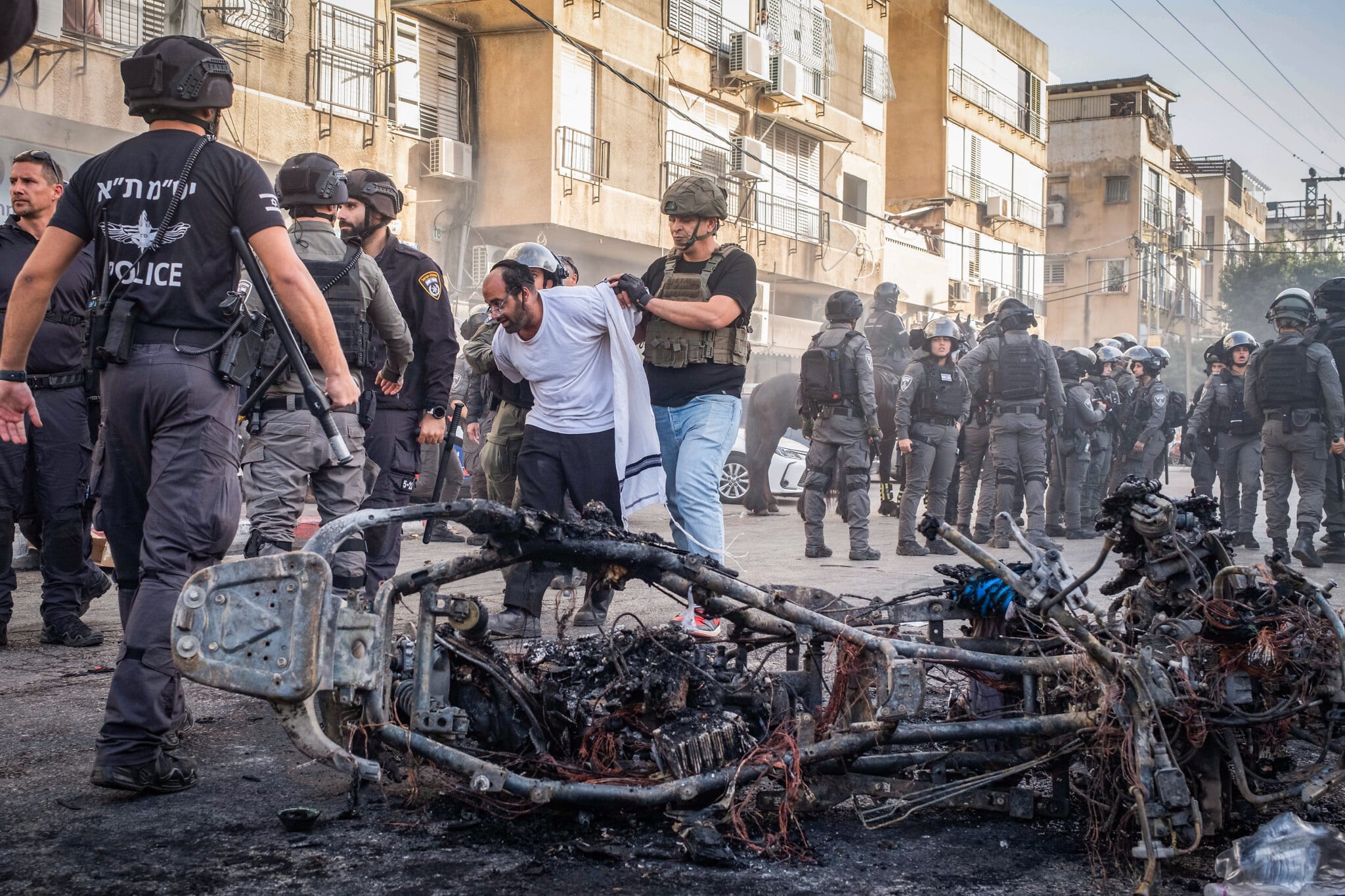
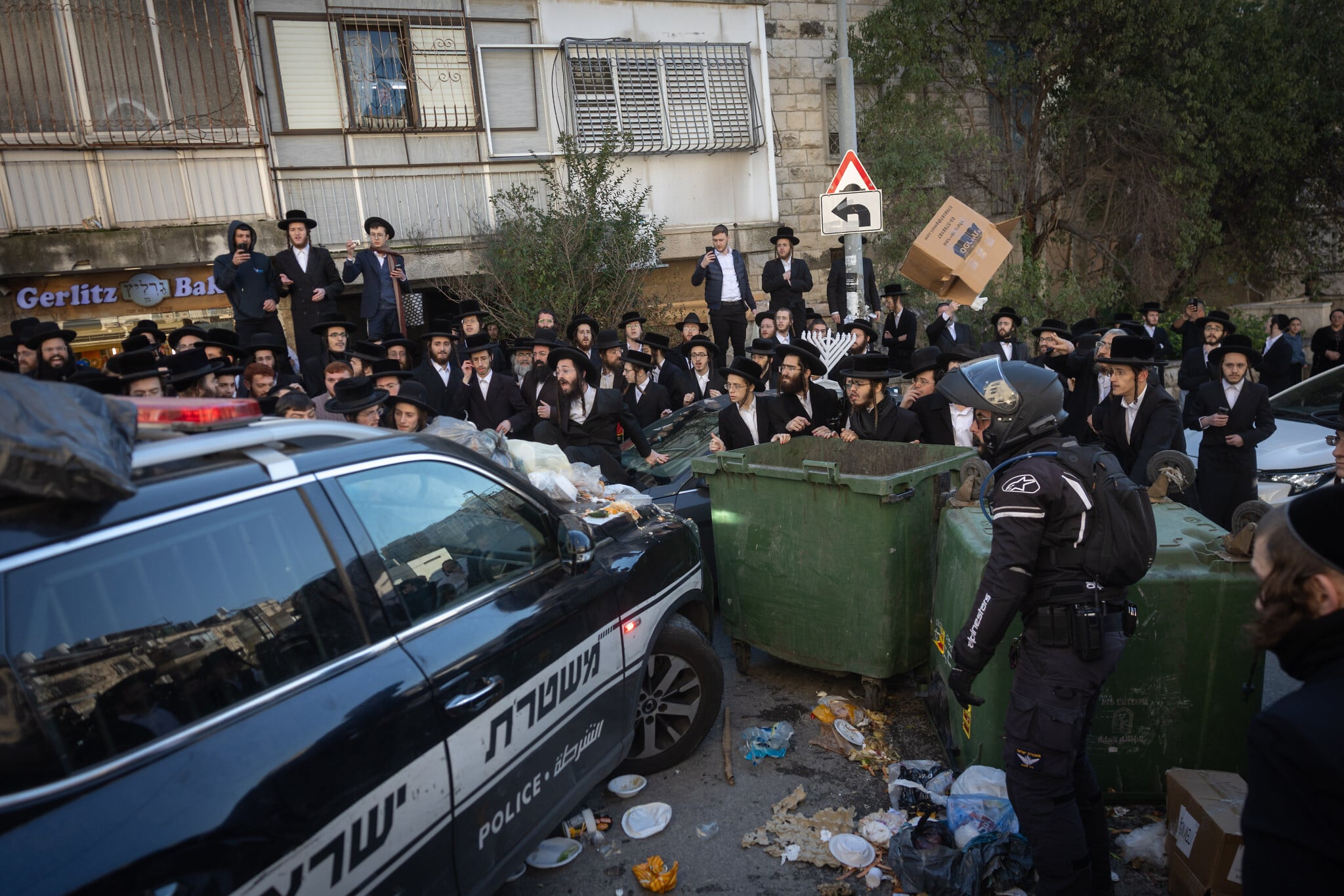
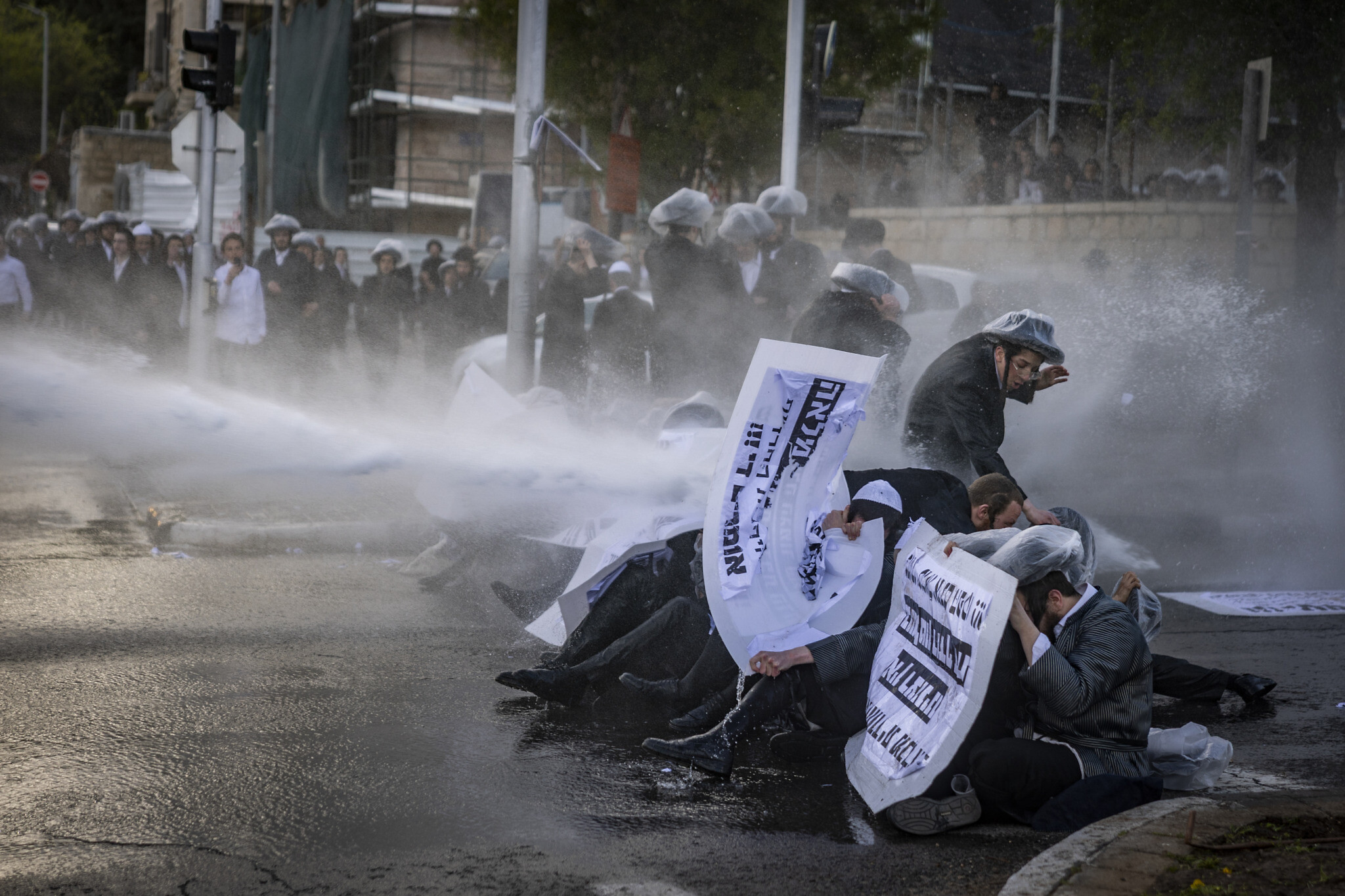
On more than one occasion, messages on the group’s alert system have resulted in mass riots, with those called to the streets overturning patrol cars, vandalizing property and fighting with police, putting some of them in hospitals.
Obstructing police operations
Over the past two years, the military has sent out tens of thousands of enlistment orders to members of the ultra-Orthodox community whose exemptions from mandatory service in the Israel Defense Forces were revoked under a 2024 High Court ruling. Most have ignored the orders, leading to large numbers of young men being classified as evaders and being subject to arrest or other sanctions.
While the military has made no move to arrest all 80,000 ultra-Orthodox men aged 18-24 believed to be eligible for service, the detainment of even a small fraction has ignited anger and occasionally violence in the country’s various Haredi enclaves.
At least some of the attempts to prevent arrests have been organized by the Jerusalem Faction, according to an extensive review of email updates sent to supporters of the group’s Notnim Gav (Got Your Back) anti-conscription initiative and its affiliated Tzeva Shachor effort.
Tzeva Shachor, whose name translates to Color Black but also sounds similar to Black Army, operates both as a hotline for activists to report arrest attempts and as an alert system to call activists to action in real time.
Multiple messages sent by official addresses maintained by Notnim Gav and Tzeva Shachor appeared to explicitly admit to having actively prevented military and civil police from arresting draft evaders — actions that could potentially constitute obstruction of justice.
In a July 6, 2025, email, the group bragged about its network of “tens of thousands of Haredi Jews who are determined to protect the yeshiva students,” asserting that it had “been proven time and again” that “the army has been forced to release every deserter it has come across following threats of protests.”
“Now, too,” the group stated, “the army is expected to suffer a crushing defeat.”
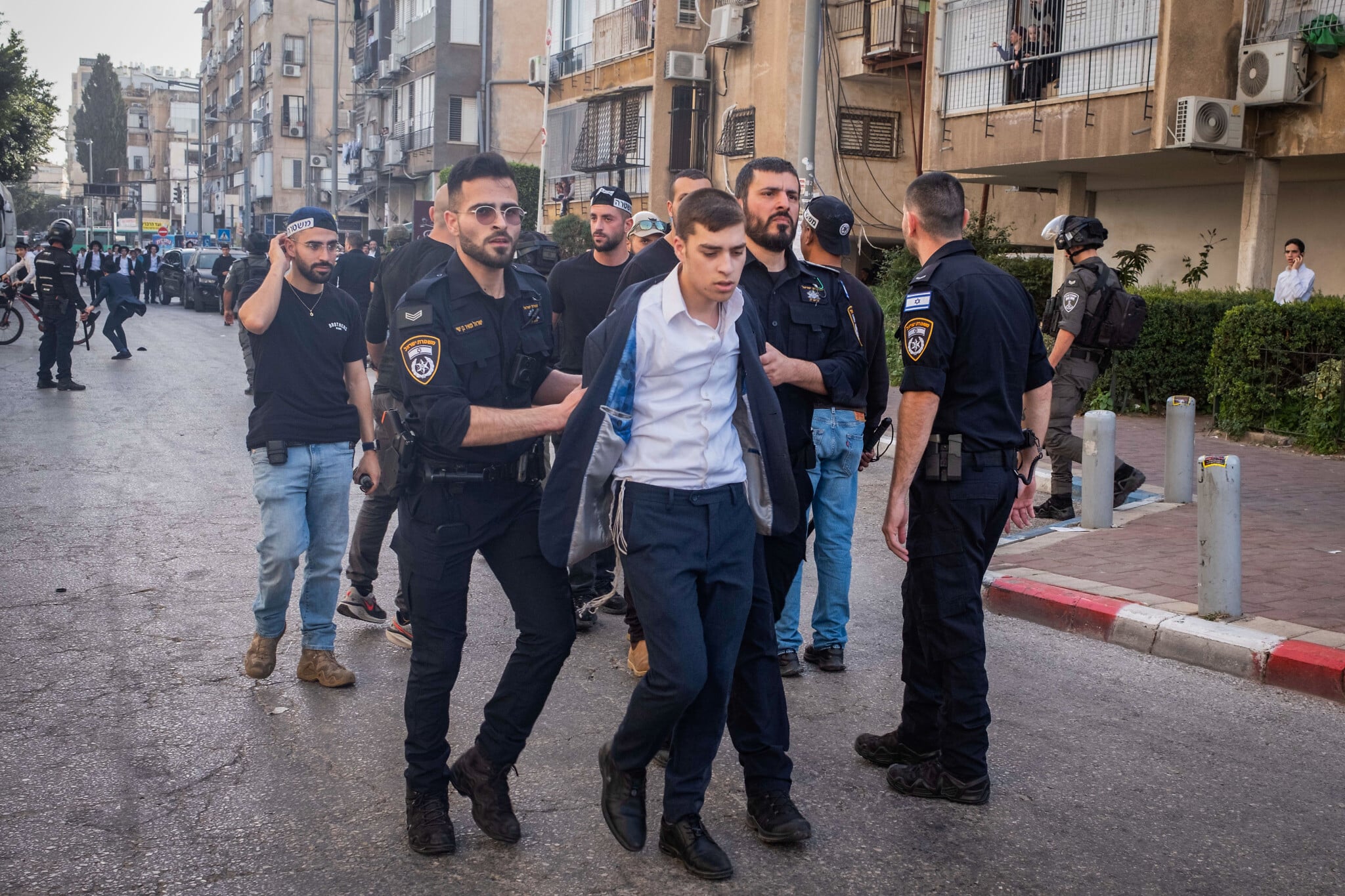
Subsequent emails showed that Notnim Gav and Tzeva Shachor were adhering to this playbook, describing repeated mobilizations of yeshiva students in order to block law enforcement. Tzeva Shachor also used emails to get people into the streets to stop arrests.
A January 29 message to supporters reported that the police were “attempting to send a yeshiva student to the Military Police at the Kfar Saba police station” and called for the public to show up and offer support. A follow-up email sent 20 minutes later indicated that the protesters had prevented the handover.
“With the arrival of the crowds at the scene, with God’s help, the yeshiva student was released and will not be handed over to the Military Police,” the email stated.
On February 3 and 10, Notnim Gav boasted that it had mobilized groups that had turned the Military Police away from two evaders’ homes, and on February 15, its hotline marshaled protesters in the central Israel city of Bnei Brak after a resident who spotted two IDF servicewomen falsely claimed that they were attempting to deliver conscription orders.
The latter incident quickly spiraled out of control, with a mob attacking the soldiers, overturning a patrol car and setting fire to a police motorcycle.
Speaking with The Times of Israel following the incident, a spokesman for the Jerusalem Faction denied any responsibility for the violence, stating that the riots were “not something organized.”
Asked about the legality of its operations, a spokesman for Notnim Gav told The Times of Israel that it encouraged legitimate protest and that its calls to action served “not to prevent arrests, but rather to provide support and backing” for yeshiva students “privileged to be arrested for the sake of our holy Torah.”
The protesters gather to “strengthen him so that he may go to prison with his head held high” and all of Tzeva Shachor’s activities “are conducted according to the law and are regularly supervised by an attorney,” the spokesman said.
While arrests of protesters at such demonstrations are common, no effort has been made to prosecute the organizers helping bring masses to the street.
Under the law, someone inciting others to evade service during wartime is liable to a prison term of 15 years. Proving incitement, though, can prove tricky.
According to Ran Cohen Rochverger, the IDF’s former chief military defense counsel, demonstrators blocking military or civilian police from approaching the home of a draft evader can be easily prosecuted for obstructing an officer performing his duty. But securing indictments for those who call for such protests is much more difficult.
Regardless of whether they know that the demonstrations they call are likely to end in violence or illegal activity, the messages sent out by the Tzeva Shachor hotline are “clearly drafted with deliberate caution and ambiguity,” he said.
“People are called to come and protest, and sometimes riots occur during the protest, but it’s too far of a stretch to say that everyone who calls for and initiates a protest is responsible for everything that happens during that protest,” Cohen Rochverger added. “Even though we all know the truth, legally you still need evidence and sufficient proof to link them, and it’s not always possible.”
“They are careful with their phrasing, but everyone knows what is meant,” he said.
Weak enforcement
Over the past two years, law enforcement and the Attorney General’s Office have done little to stem the growth of an extensive ecosystem of ultra-Orthodox organizations aimed at promoting military draft evasion by yeshiva students and other Haredi men, allowing them to operate unchecked despite multiple demands for investigation by advocacy groups following the issue.
These draft-evasion support groups include an advice line linked to former Jerusalem Affairs Minister Meir Porush, which a 2025 Times of Israel investigation found was counseling callers to “just ignore” summonses to the IDF’s recruitment bureau. Another call center operated by the Vaad HaYeshivot, a body that traditionally liaises between ultra-Orthodox seminaries and the Defense Ministry on matters of service deferments, insisted that yeshiva students “not report [to the army] under any circumstances.”
Critics accuse the Israel Police of being reluctant to crack down on violent Haredi demonstrations, and there have been allegations of police systematically preventing the army from arresting draft evaders in ultra-Orthodox neighborhoods.
Some have linked the police’s alleged apathy on the issue to the government, which includes ultra-Orthodox parties that have made securing Haredi exemptions from military service a central goal.
While the police are mandated to act independently, National Security Minister Itamar Ben Gvir has been accused by critics, including Attorney General Gali Baharav-Miara, of politicizing the force.
Police deny discriminating among groups when enforcing the law and have not commented on the process of granting Military Police officers clearance to operate in Haredi neighborhoods.
Despite this, law enforcement’s approach to the Jerusalem Faction may be slowly changing. In a filing to the High Court in late March, the State Attorney’s Office said that the police viewed the activities of Tzeva Shachor “with great severity,” and as information regarding additional activities comes to light, they “will act using all available tools to handle and prevent recurrent activities.”
The State Attorney’s Office said it had okayed police to launch an incitement probe into a recording attributed to a Jerusalem Faction leader allegedly calling for violence against Haredi lawmakers.
At the same time, it noted that it had not authorized police to investigate the Jerusalem Faction for incitement to violence following a violent riot in Jerusalem in December, though members of the group are still under investigation for taking part in the riot. And it said it had rejected an unrelated request by Yisrael Beytenu MK Sharon Nir for police to probe Tzeva Shachor for incitement to evasion.
Asked why the State Attorney’s Office had not allowed police to probe the Jerusalem Faction for incitement to evasion of military evasion given the nature of the material it sends out on its email list, a spokesperson for the Attorney General’s Office replied that “a petition has been filed with the High Court of Justice in this matter, and our position will be conveyed there, to the extent necessary.”
עשרות מפגינים חרדים מקיפים ניידת משטרה, שלטענתם ניסתה לעצור שלושה עריקים בירושלים@daniel_grovais pic.twitter.com/yhc9HBlS68
— גלצ (@GLZRadio) December 18, 2025
However, the one probe it allowed police to open may have also stalled.
In an email to The Times of Israel, a police spokesperson said the investigation into the recording had been closed “after no investigatory approval was received from the State Attorney’s Office.”
Beyond speech
Rochverger noted that authorities were typically reluctant to police free speech.
“The policy of the State Attorney’s Office is a restrictive one when it comes to purely verbal matters [like] speech,” he said. “This is because of the heavy weight the prosecution gives to freedom of expression.”
But messages explicitly offering financial benefits for evading, or quoting a rabbi instructing readers to throw out conscription orders, “are harsh and unequivocal statements in my view,” he said, arguing that “there isn’t enough action in many areas, including enforcement, criminal investigations, arrests, and prosecutions.”
Indeed, material distributed by Notnim Gav and Tzav Shachor reviewed by The Times of Israel included flyers with quotes by leading rabbis calling on their followers to ignore enlistment orders.
In another email from this month, the Jerusalem Faction announced that it had begun arranging discounts for draft evaders upon presentation of a conscription order at participating businesses, including an eyeglasses store in Bnei Brak.
The Jerusalem Faction has announced it is partnering with businesses to offer discounts to draft dodgers — including at an eyeglasses shop in Bnei Brak pic.twitter.com/9Um8QACc1d
— Sam Sokol (@SamuelSokol) May 4, 2026
In February, a few weeks before the Purim holiday, the group sent an email containing an image of a flyer that had been circulating on WhatsApp purporting to contain instructions to students of a Haredi yeshiva in case of a Military Police raid.
Draft dodgers should flee while their peers attempt to use whatever is at hand to prevent law enforcement officials from following them, it said. It also called on students to lock the doors and shut off the lights of the building.
The email coyly described the instructions as a “Purim joke, for now.”
“But it didn’t come out of nowhere,” the email added.
“Most of the messages… are carefully crafted,” Rachverger said. “They even include a template of what to say. Maybe it’s for Purim — but they give actual instructions on what to do, how to avoid police, to turn off lights.”
“As they say,” he added, “‘a word to the wise is sufficient.'”
This article is part of an ongoing series investigating the ecosystem of Haredi anti-conscription and draft evasion organizations. More on the subject can be found at:
- Hotline linked to cabinet minister is advising Haredi callers to ignore draft orders
- ‘Do not cooperate’: Nonprofit linked to top Haredi rabbis encourages draft dodging
- AG, police silent in face of growing ecosystem of Haredi evasion organizations
- Haredi extremists pay grants to draft evaders after their release from military prison
- Haredi ‘national alert system’ provides warning of IDF operations against draft dodgers
Jeremy Sharon and Charlie Summers contributed to this report.





The Times of Israel Community.