

High Court ends hearing on AG’s dismissal after government fails to send counsel
‘No point holding oral arguments in front of an open goal,’ says court president Amit; justice minister denounces proceedings he says will ‘force’ legal adviser on the government
 Add ToI as a Preferred Source on Google
Jeremy Sharon is The Times of Israel’s legal affairs and settlements reporter
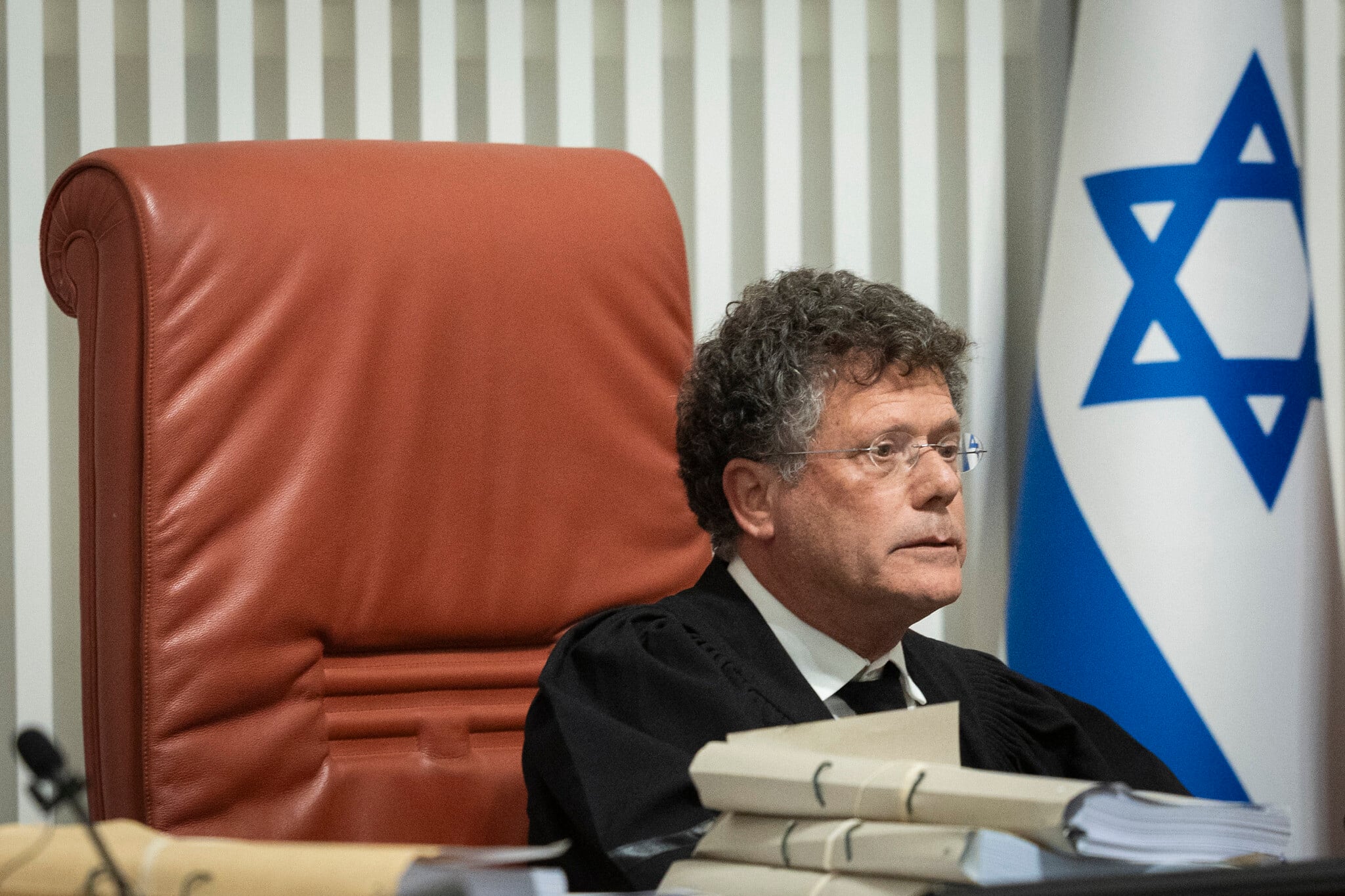
In a rebuke to the government, the High Court of Justice refused on Monday to hold oral arguments over the government’s decision to fire Attorney General Gali Baharav-Miara, due to the government’s failure to send a legal representative to the hearing.
“We find that there is no point in holding oral arguments in front of what is practically an open goal,” Supreme Court President Isaac Amit told the lawyers for the petitioners and members of the public who were present in court for the hearing.
Amit said that the seven-justice panel will now formulate its ruling based on the written materials submitted to it by the petitioners and by the government, which filed a much-delayed response to the petitions in mid-November.
This is the second time the court has advanced the case without a hearing due to the government’s refusal to participate in the proceedings.
On September 1, the court unanimously recommended that the government cancel its August 4 decision to fire Baharav-Miara and abolish the new method for firing an attorney general that it had created in June. It did so after the government decided not to submit a response to the petitions and had refused to appoint a lawyer to represent it in court at that time too.
That decision was seen as a strong indication that the High Court had taken a dim view of the government’s process for removing Baharav-Miara from office, and would likely rule her dismissal unlawful if the government did not back down from it.
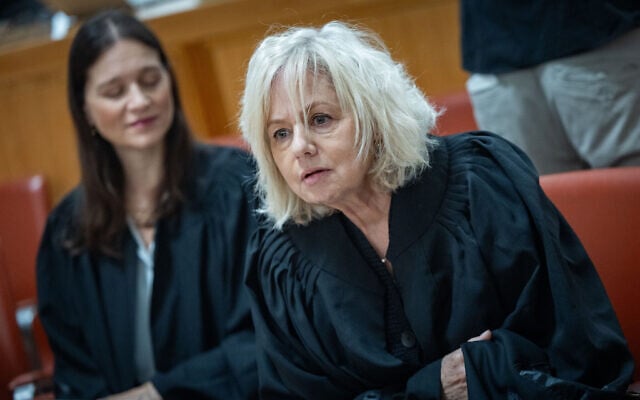
In the meantime, the government is advancing legislation to split the position of the attorney general into three roles, gutting its remaining powers.
The law is likely to take effect immediately if approved by the Knesset, making it unclear whether Baharav-Miara would be able to remain in office, regardless of the outcome of the proceedings in the High Court.
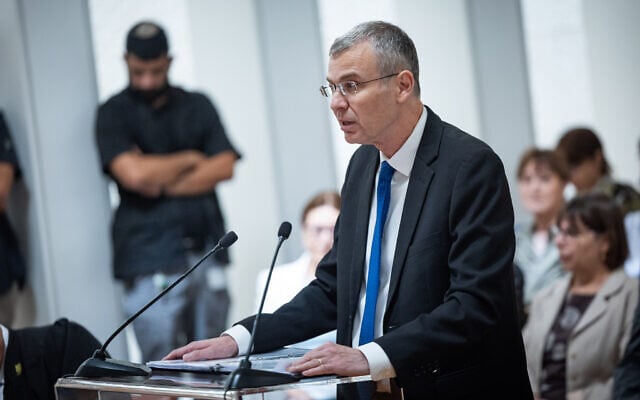
Justice Minister Yariv Levin and Diaspora Affairs Minister Amichai Chiki attempted to justify their decision not to send a lawyer to the hearing, calling the proceedings an “absurd charade” and denouncing the attorney general’s conduct.
“There is no legal process in the world in which a government official who has been removed from office subjugates the legal advisory service and the State Attorney’s Office to represent herself instead of the government, in order to prevent her own dismissal,” said the two ministers.
Levin and Chikli were referring to the fact that, since the High Court froze the dismissal of Baharav-Miara and preserved all her authority until it makes a final decision, she has remained in office. As she retains the attorney general’s authority under the law, she opposed the government’s position that her dismissal was valid and issued a legal submission on behalf of the state asserting that the government’s decision to fire her was unlawful.
“The government cannot participate in a process the outcome of which is predetermined — making the government the only entity in the State of Israel upon whom the decision as to who will be its legal adviser is forced upon it,” argued Levin and Chikli.
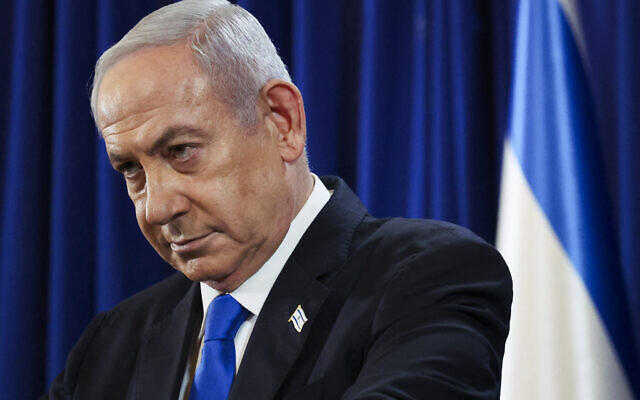
On August 4, the government voted unanimously to fire Baharav-Miara, but only after it failed to complete the dismissal process established in the year 2000, which determined that a public, professional committee be charged with recommending the appointment and dismissal of attorneys general.
In a cabinet resolution in June, the government had established a ministerial committee to make the recommendation instead, and adopted that committee’s recommendation when it fired her in August.
Petitions to the court by liberal watchdog groups argued that changing the dismissal process while it was already underway was unlawful, and that the government lacked legitimate legal grounds to fire Baharav-Miara in the first place.
Shortly before Monday’s hearing began, the court issued a decision allowing judicial panels in all courts to close the hearing to the public if they have reason to fear that there would be riots, disturbances, or severe interruptions by members of the audience during the scheduled hearing.
The decision, issued by the same seven-justice panel hearing the petitions against the dismissal of the attorney general, said that the reason for the move was the recent phenomenon in which several High Court and lower court proceedings have been severely disturbed by members of the audience, including MKs, repeatedly shouting at lawyers and judges, and resisting being removed from courtrooms.
Closing hearings to the public will, however, only be possible when a hearing is broadcast live by the Judicial Authority or on a closed-circuit TV system, enabling the viewing public to watch proceedings in a separate room in the courthouse.
“Unfortunately, we have recently witnessed a new phenomenon that was previously unheard of – interruptions to hearings by the audience present in the courtroom and attempts to make it difficult for lawyers to plead and for the court to do its job,” the judges said.
They noted that some lawyers have reported being harassed by members of the public waiting outside courtrooms, while court security guards have been verbally abused when evicting audience members, disturbing court proceedings.
“This is an attempt to intimidate the court, the parties [to legal proceedings], and their attorneys, and in effect, to prevent the court from carrying out its role in serving the public,” they said.








The Times of Israel Community.