

High Court gives state 30 days to clarify policy on press entry to Gaza amid ceasefire
Foreign Press Association petitioned court in 2024, asserting ban on independent access violated fundamental democratic principles of freedom of press and expression
 Add ToI as a Preferred Source on Google
Jeremy Sharon is The Times of Israel’s legal affairs and settlements reporter
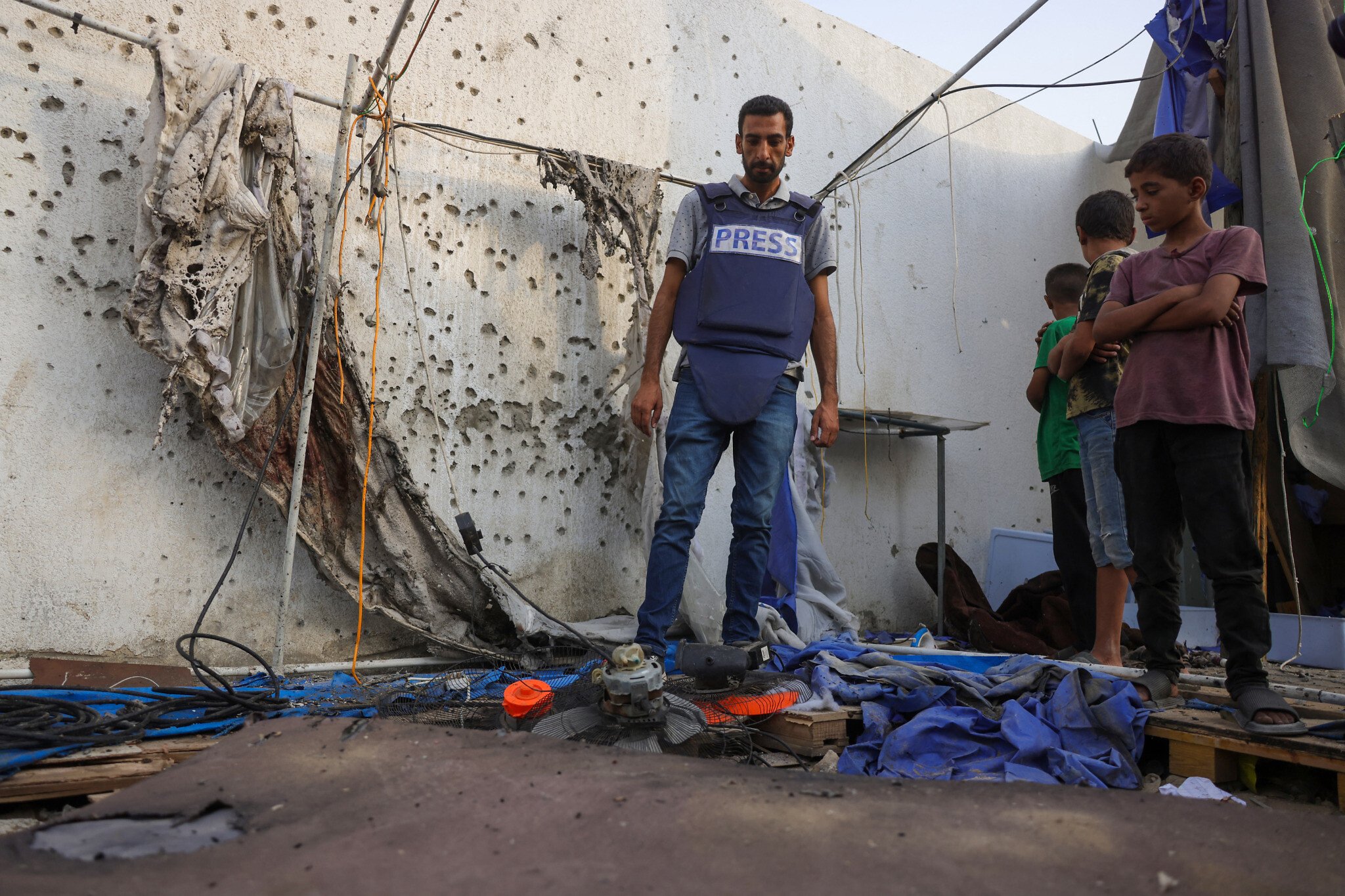
After a brief hearing, the High Court of Justice on Thursday gave the state another 30 days to file an update on its position on the independent entry of journalists into the Gaza Strip, in response to a petition by the Foreign Press Association demanding such access.
The petition was filed in 2024, and the state filed its response in June this year.
During the short hearing, the three presiding justices pointed out that the circumstances in Gaza had changed substantially since the state had filed its response due to the ceasefire that came into force earlier this month.
Judge Ruth Ronen told the State Attorney’s Office employee representing the government that this would require a new review of the situation.
The basis of the state’s arguments against allowing independent access to Gaza for the press rests on concerns that the entry of journalists into the Strip would pose security risks to IDF soldiers and the journalists themselves — concerns that would presumably be mitigated by the cessation of hostilities.
Gilead Sher, representing the FPA, pointed out that the proceedings have already been seriously delayed, and asked the court to ensure that the state indeed provides an update within 30 days.

He also asked the court to provide an interim solution for independent press access to Gaza.
Justice Ofer Grosskopf headed the three-judge panel, which also included Gila Canfy-Steinitz and Ronen.
Following the hearing, the FPA said it was “disappointed in the Israeli Supreme Court’s decision to grant the State of Israel yet another delay.”
Israel’s policy, determined by the defense minister and the IDF, has been to deny independent access to all journalists to Gaza since the beginning of the war.
It has, however, allowed Israeli journalists, and to a lesser extent foreign journalists, to enter Gaza as embedded reporters with IDF forces.
Since the petition was filed a year ago, the state has requested seven deferrals for submitting its response, which were all granted by the court. The war against Iran in June this year also led to the postponement of a hearing.
In its petition, the FPA argues that the blanket ban on independent access to Gaza for journalists “contravenes the foundational principles of the state as a democratic country, and represent a severe, unreasonable and disproportionate injury to the freedom of the press, freedom of expression, and freedom of employment for journalists and the right to information.”
The FPA contends that the IDF has granted limited opportunities for embeds to foreign reporters compared to Israeli reporters, has chosen which reporters can enter mostly without consulting the FPA, and that the embeds are anyway tightly controlled and do not allow for full and proper coverage of the war.
The state argued in response to the petition that the High Court had already rejected an FPA petition on the same issue in January 2024, determining that there was “no vested right” for anyone, including journalists, to receive a permit to enter the Gaza Strip.
The court ruled at the time that the restrictions were justified on security grounds, asserting that allowing journalists inside Gaza could give away operational details, including troop locations, in a way that could “put them in real danger.”
“The state today once again relied on stalling tactics to prevent the entry of journalists,” said the FPA in a statement to the press following the hearing.
“For two years, the Israeli government has sought one delay after the next, with the clear aim of barring journalists from carrying out their journalistic duties and hindering the public’s right to information. The government’s position remains unacceptable.”






The Times of Israel Community.