

Historic Odesa synagogue sustains heavy damage from Russian drone strike
Flames engulf Nachlas Eliezer after suicide drone crashes into building, in latest Russian attack to hit a Jewish communal space in Ukraine; no injuries reported
 Add ToI as a Preferred Source on Google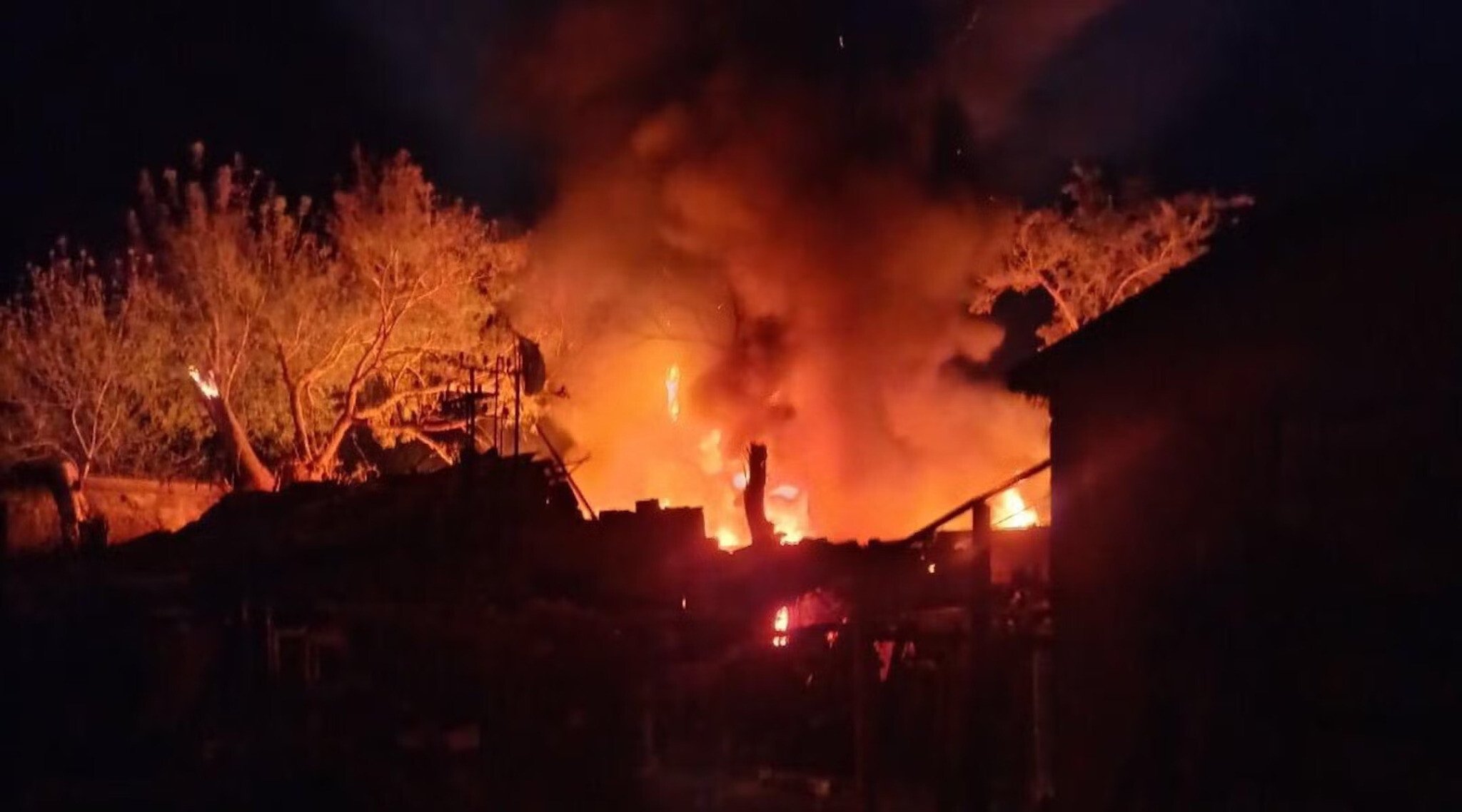
JTA — A historic synagogue in Odesa, Ukraine, sustained significant damage following a Russian drone strike this week, one of several Jewish sites caught up in intense bombardments this summer.
The Nachlas Eliezer Synagogue in the Peresyp district of Odesa, which was built in 1898 and served the Jewish community until it was closed in the 1920s under Soviet rule, was struck Monday evening by a Russian suicide drone.
The strike caused a large fire in the building, which had already partially collapsed in 1992, according to the United Jewish Community of Ukraine. No injuries were reported.
“This sacred building, constructed at the end of the 19th century, served as a place of prayer, hope, and spiritual strength for the Jewish community of Odesa,” wrote Rabbi Moshe Azman, a leading rabbi in Ukraine, in a post on X. “Today, once again, we have witnessed how war affects not only people but also holy sites and our historical memory.”
Rabbi Pinchas Goldschmidt, the exiled chief rabbi of Moscow and the president of the Conference of European Rabbis, urged European leaders to “speak out and condemn this assault on faith and history” in a post on X.
The strike on the historic synagogue marks the latest attack on Ukrainian Jewish community spaces as Russia’s invasion of Ukraine continues after nearly three and a half years, with this summer bringing some of the heaviest and deadliest bombardments yet.
During a nighttime attack by Russian drones in Odesa, the historic synagogue “Nachlas Eliezer” in the Peresyp district was damaged.
This sacred building, constructed at the end of the 19th century, served as a place of prayer, hope, and spiritual strength for the Jewish… pic.twitter.com/bUX1tphgjv
— Chief Rabbi Of Ukraine Moshe Azman (@RabbiUkraine) August 4, 2025
Many of Ukraine’s Jews have fled either to Europe or Israel during the war, but the Institute for Jewish Policy Research estimates that there is a core Jewish population of 32,000 still living in Ukraine.
Last month, the home of Chabad Rabbi Moshe Weber was hit by a Russian missile while his family slept after their Shabbat dinner in Dnipro, a heart of the Chabad-Lubavitch movement that has carried on with difficulty during the war.
“I felt it was really, really close to us, and then I saw from the window that bricks were falling and broken windows,” Weber told The Times of Israel at the time.
The bombardment of Weber’s home came weeks after the car of another Chabad Rabbi, Yosef Yitzchak Wolff, was struck by a Russian suicide drone while driving with his wife and daughter.
Wolff, the director of Chabad-Lubavitch of Kherson, Ukraine, told Chabad.org that it was a “miracle” that his family survived the strike.

“I just saw it, for an instant, and then a few seconds later there was a crazy explosion,” Rabbi Wolff told the website. “You can see a picture of the car. It’s a miracle that we’re alive and well. You can’t call it anything else — a miracle.”
“Of course I’ve heard these drones in the air before, but not like this — attacking you directly,” he continued.
Chabad rabbis make up the majority of Jewish clergy in Ukraine. While some helped their families leave early in the war, all have returned, in keeping with the philosophy of their movement, whose emissaries typically commit to the cities where they are stationed and stay there through thick and thin.
Azman shared a statement from the chief rabbi of Odesa, Avraham Wolff, who said, “We are here, and we are staying here — and we will continue our work, no matter what.”







The Times of Israel Community.