

How vaccinated tourists can now enter Israel: The full guide
Only those vaccinated in last 6 months will be allowed in; in shift, Russia’s Sputnik V vaccine will be recognized but serology test required; most children prevented from visiting
 Add ToI as a Preferred Source on Google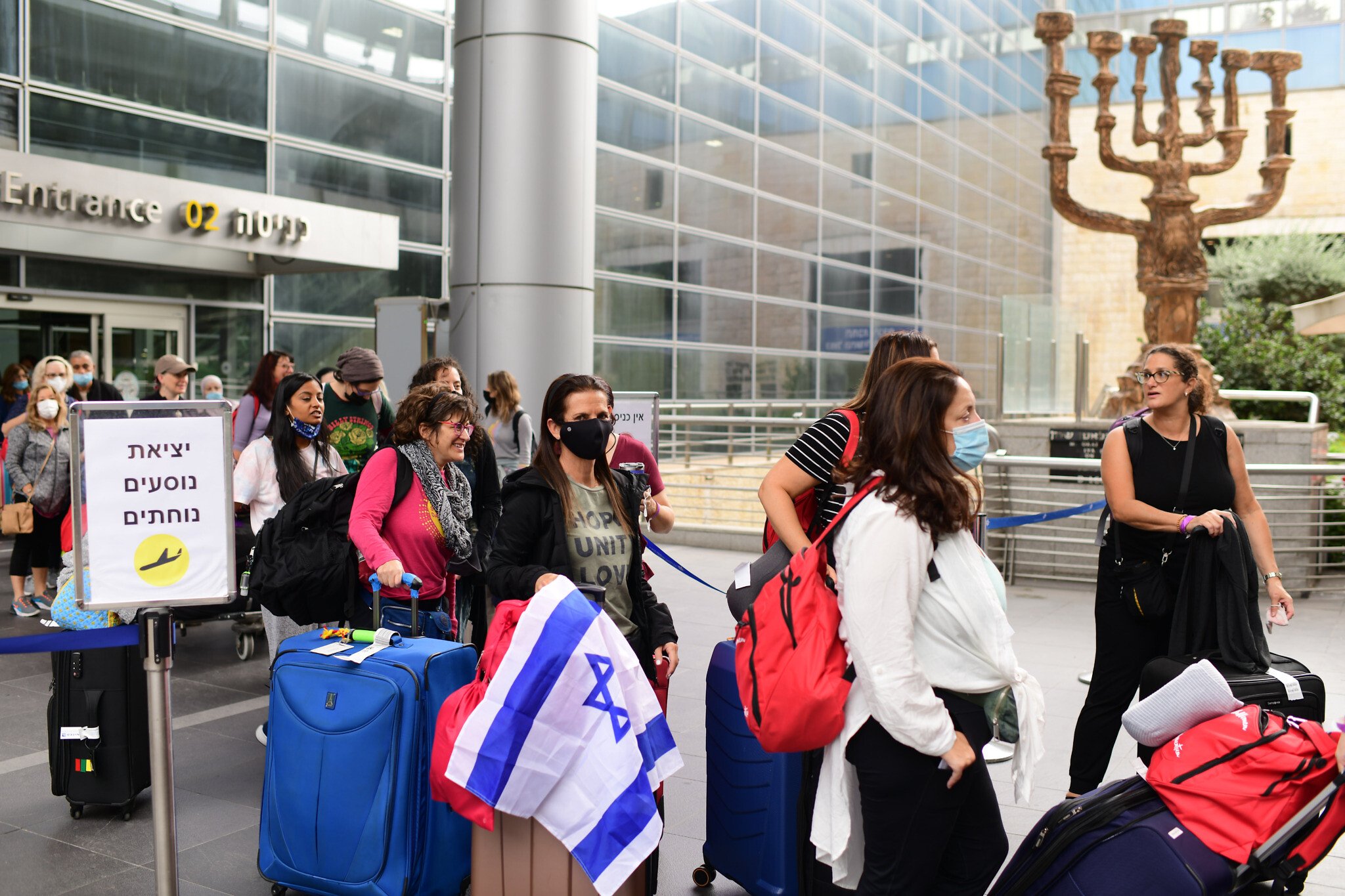
Israel on Monday opened its borders for the first time since March 2020 to tourists who are vaccinated against COVID-19 or have recovered from it.
Until now, the vast majority of tourists have effectively been banned from entering Israel since the start of the coronavirus pandemic. The reopening of borders has been delayed numerous times throughout the year, as COVID infections waxed and waned.
The move is seen as a vital step toward restoring Israel’s tourism industry, which has been devastated by the pandemic and accompanying restrictions.
However, not all tourists will immediately be eligible to visit Israel, and those who do come will face restrictions.
Additionally, the vast majority of children will not able to visit Israel, as they are not vaccinated.
A detail explanation of the new rules can be found, in English, on the Health Ministry website.
Here are the latest guidelines for entering Israel:
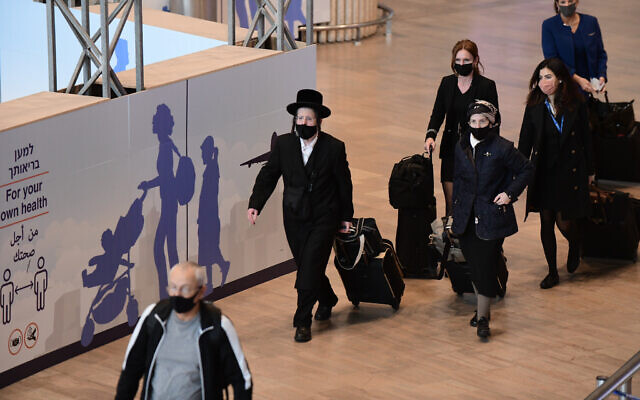
Visitors must arrive through Ben Gurion International Airport, located on the outskirts of Tel Aviv, the country’s main terminus.
Only tourists from countries that aren’t defined as “red” due to high infection rates will be allowed in. As of Monday, there are no countries labeled as red.
Tourists must have received their latest vaccination shot during the 180 days before their departure from Israel.
Only vaccines recognized by the World Health Organization will be accepted, plus Russia’s Sputnik V vaccine, which has special conditions requiring a serological test.
For foreign travelers who have been vaccinated with the Pfizer, Moderna, AstraZeneca, or China’s Sinovac or Sinopharm vaccines, 14 full days must elapse between the traveler’s second or third (booster) shot and entry to Israel. One shot is not sufficient.
For those who got the Johnson & Johnson vaccine, 14 full days must elapse between their first or second (booster) dose and entry to Israel.
Recovered coronavirus patients
Those who have recovered from COVID-19 must present documented evidence that they had a positive result in a PCR or NAAT (Nucleic Acid Amplification Test) test.
The document must be of a type that can be verified by the Health Ministry’s systems, such as the European Union’s Digital COVID Certificate. The test must have been carried out at least 11 days before arrival and they must leave Israel no more than 190 days after the test date.
In addition, recovered travelers must have had at least one dose of a recognized vaccine, although there are no constraints on how long before arrival the dose must be received, nor does it matter if it was before or after illness.
Making the journey to Israel
All arrivals must undergo a PCR test up to 72 hours prior to flying to Israel and another upon arrival. Proof of a negative result is needed to board the plane. All incoming tourists will need to take a second PCR test at the airport upon arrival and quarantine for 24 hours or until they receive a negative test result, whichever comes first.
Those with verifiable digital certificates can either scan or upload the document and then attach it to a declaration form that all passengers fill in before boarding the flight. Passengers without a digital certificate will fill in the details of their vaccinations in the declaration form.
Passengers will then be issued with a so-called Green Pass, which grants entry to venues in Israel for those who are vaccinated or have recovered from COVID-19.
Travelers who do not meet all of the requirements will not be permitted to enter the country, even by undergoing a full quarantine period of 14 days. However, special requests for entry can be made to a government-run Exceptions Committee.
Infection after arrival, or breaking the rules
Those who are confirmed as infected with COVID-19 after they have arrived in the country will be taken to a government-run isolation center for 14 days, where they will stay at their own expense or that of their insurance company.
Infected travelers who refuse to go to an isolation center or who break isolation rules will be denied entry to Israel for five years.
Likewise, any travelers caught entering the country with forged documents will be banned from Israel for five years.
Uninfected travelers who are caught breaking the initial 24-hour quarantine period after arrival will be denied entry to Israel for three years.
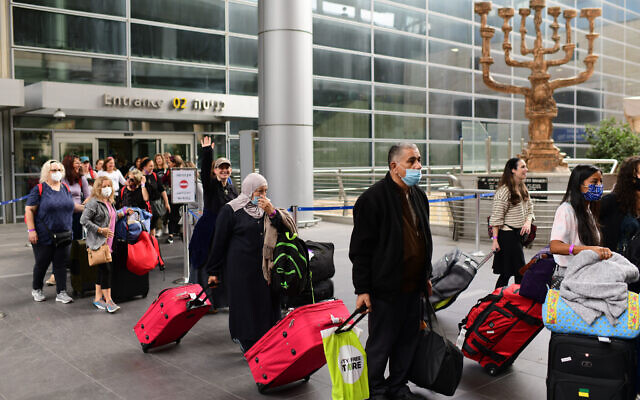
Starting from the middle of this month, Israel will also allow entry to visitors inoculated with Russia’s Sputnik V COVID-19 vaccine, in a policy shift for the country, which until now has only recognized immunizations approved by the United States Food and Drug Administration.
Those who have been vaccinated with Sputnik V will have to undergo a serology test, in addition to the standard PCR tests that all visitors must take before boarding their incoming flight and upon arriving in Israel.
The serology test, which detects antibodies, will verify that those who enter the country really are inoculated against the coronavirus.
Sputnik V vaccinated tourists who do not show antibodies in the serology test will be permitted to stay in Israel if they go into quarantine for 14 days. However, they will be permitted to return to their point of origin earlier than that if they want to. They can qualify for an early exit from quarantine after seven days by taking a second virus test and getting a negative result.
Under the previous regulations, tourists began arriving in organized groups in May, though in a very limited capacity. Additionally, first-degree relatives of Israeli citizens or residents were able to apply for permits to travel to the country.
Israel appears to be at the tail end of its fourth coronavirus wave, as new infections and serious cases have ticked down over the past few weeks.








The Times of Israel Community.