

Huge dam shows ancient Jerusalem adapted to climate change with advanced engineering
C-14 dating finds vast structure was built in 805–795 BCE; peer-reviewed study matches biblical narrative, reveals Jerusalem’s wealth, power under biblical kings 2,800 years ago
 Add ToI as a Preferred Source on Google
Rossella Tercatin is The Times of Israel's archaeology and religions reporter.
A massive dam wall in the heart of Jerusalem has been fully excavated by a team of Israeli researchers and dated precisely to 2,800 years ago, the time of biblical kings Joash and Amaziah of Judah, according to a study published on Monday in PNAS, the peer-reviewed journal of the National Academy of Sciences.
The new discovery offers evidence that, in line with the biblical narrative, Jerusalem was a powerful center earlier than many scholars thought, as the city had the capability to build monumental architecture to store water.
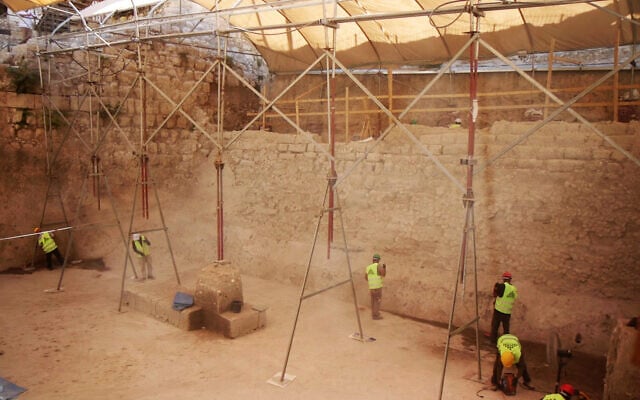
Archaeologists from the Israel Antiquities Authority (IAA) have fully uncovered the sloped side of the huge dam in the City of David park, just south of Jerusalem’s Old City walls in the predominantly Palestinian neighborhood of Silwan. Organic material collected from the structure and analyzed with radiocarbon dating at the Weizmann Institute of Science pinpointed its construction to a remarkably narrow window between 805 and 795 BCE, the team said.
The team cross-checked its findings with existing climate data from the time, drawn from geological and chemical studies of Dead Sea drill cores and stalagmites in the Soreq Cave near Beit Shemesh. The data indicate that during that period, the region experienced unusual aridity, combined with violent rains that resulted in flash floods — conditions that, the scholars argue, likely spurred the construction of Jerusalem’s complex water system to control flooding and secure a reliable water supply.
“The question of how Jerusalem developed is crucial,” Dr. Nahshon Szanton, one of the paper’s authors, told The Times of Israel over the phone.
Part of the dam wall had been known to archaeologists for over a century, but the lower part and the sloped side had not been exposed, leaving open the question of the structure’s size.
Until now, scholars generally dated its construction to the late Iron Age, roughly two centuries later, about a hundred years after another major water project — the famous “Hezekiah’s Tunnel,” built around 700 BCE to channel water from the Gihon Spring to the Pool of Siloam.
King Hezekiah and his reign are well documented in historical sources. Among others, he is known for ambitious construction projects.
“We know that by Hezekiah’s time, Jerusalem was already a major city, but we do not have a good picture of the 9th century or earlier,” Szanton said. “This monumental water system — the largest in Judah and perhaps the entire region — shows that Jerusalem was wealthy, resourceful, and technologically advanced, already emerging as a powerful center.”
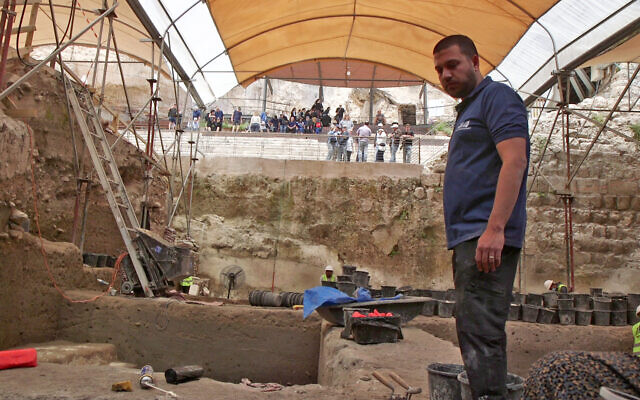
The dam wall was some 12 meters (40 feet) high and over 8 meters wide. The section uncovered by the archaeologists stretches for about 21 meters.
“The wall is located in the lowest part of Jerusalem,” Szanton said. “It received water from the Gihon spring through another monumental water installation called ‘Channel Two’ that is now dry because all the water was diverted to the Hezekiah tunnel.”
A nearby water tower was also radiocarbon-dated to the same period.
“Our interpretation is that Jerusalemites decided to build the wall because they understood the condition of their environment,” Szanton said.
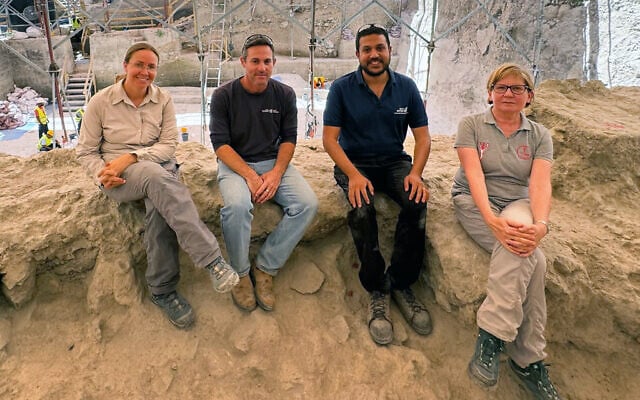
The IAA archaeologists were joined in the excavation by Weizmann scientists, including Dr. Johanna Regev and Prof. Elisabetta Boaretto, head of the Weizmann’s Dangoor Research Accelerator Mass Spectrometry Laboratory (D-REAMS), which employs sophisticated micro-archaeological methods and cutting-edge technology to provide the most accurate chronology for past events.

Carbon-14 dating allows for the measurement of a decaying radioactive isotope of carbon. Since it is present in all living things on Earth, the decay rate can usually determine the approximate age of a sampled piece of biological matter.
“A dam is not a domestic environment where people lived, cooked, and left food remains,” Boaretto told The Times of Israel in a phone interview, explaining that the team therefore needed to find a valid alternative in order to date the construction of the wall.
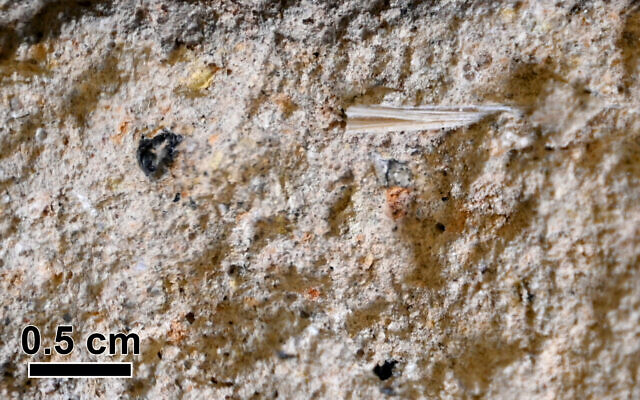
“We looked at the construction material, and specifically at the mortar, and we noticed that it included small fragments of straw, added to make its solidification more efficient,” she explained.
Because straw exposed to the elements decays quickly, Boaretto and her colleagues are confident it was gathered no more than a year or two before the dam was built — unlike charcoal or wood, which can also be used for radiocarbon dating but provide less precise results.
“In order to have accurate dating, strategic sampling is crucial; that is why my colleagues and I go in the field with archeologists, we study the context, and we try to find the best samples to answer our questions,” Boaretto said.
To date the dam, the team used three straw strands and a fine twig.
Boaretto emphasized that it was important to place the results of the C-14 dating in the environmental context of the time.
“During the last few decades of the 9th century, solar activity [a phenomenon connected to the sun’s magnetic field that can impact the earth in several ways] decreased to a minimum, apparently causing a shift in the regional climate,” said Boaretto. “Dead Sea deposits show both an increase in aridity and segment depositions that were characteristics of floods. Stalagmites [from the Soreq Cave] show a decrease in rain.”
“This is why there was a need to preserve water, especially in the case of unexpected floods,” she added. “A reliable source of water was indispensable for a city to exist, and this large structure suggests that Jerusalem was an important center, able to sustain a significant population.”
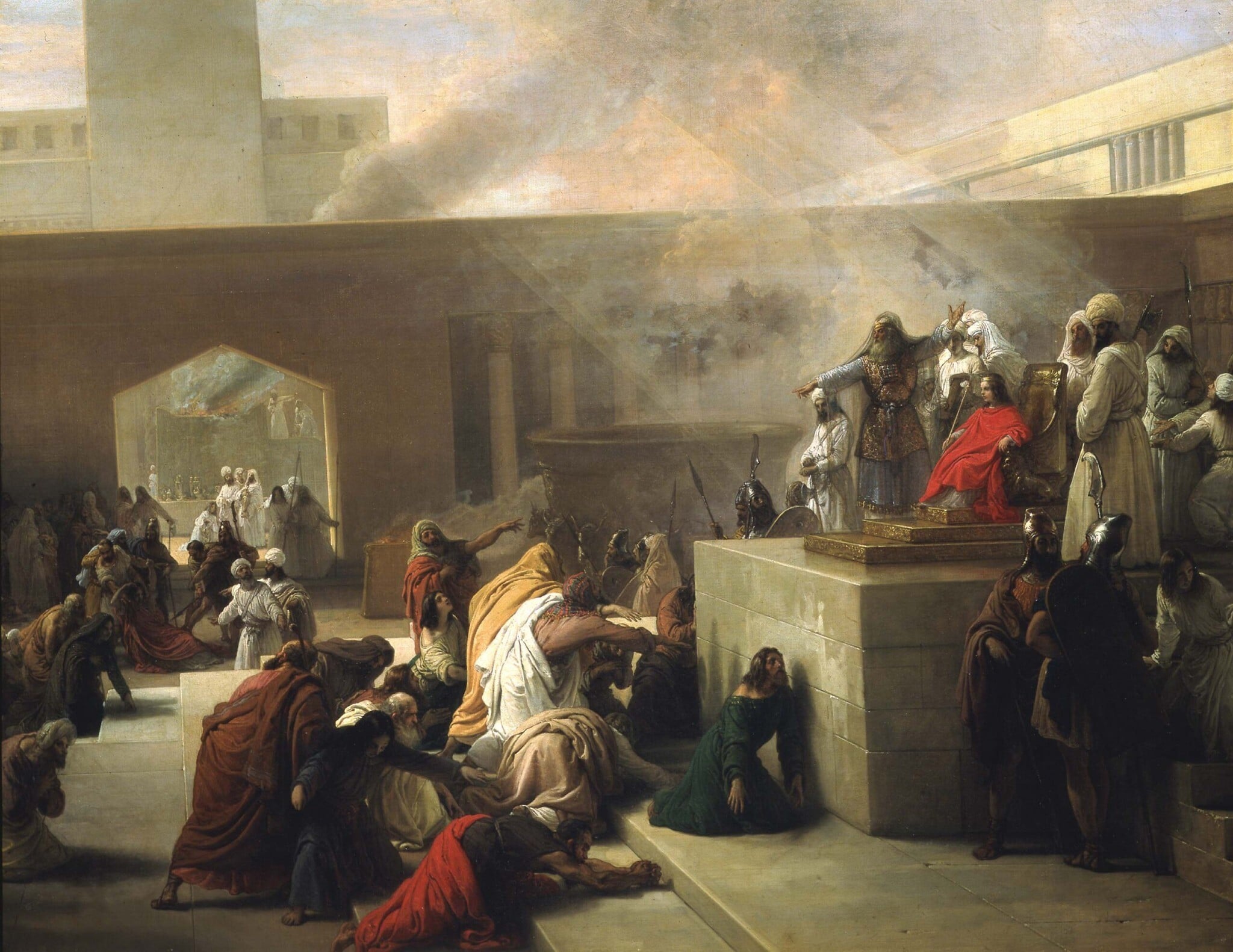
According to the accepted chronology of biblical kings, the decade during which the dam was built saw the reigns of both Joash and his son Amaziah over Judah.
“It is possible that the dam was built by one of them, or started by Joash and finished by Amaziah,” Boaretto said.
“Maybe if we uncover more remains from this period, we will be able to know more about what happened in Jerusalem during those ten years,” she noted.
According to Szanton, the findings are set to reshape the debate over Jerusalem’s early history.
“We’ve reopened the question of the city’s wealth and power a century before Hezekiah,” he said. “The task now is to compare this evidence with biblical and historical sources to better understand what was really happening in Jerusalem at the end of the 9th century BCE.”
He added that further excavations will likely bring “not only new questions, but also answers that can reveal just how large and powerful Jerusalem was in this period.”










The Times of Israel Community.