

IDF says it killed 2 Hezbollah operatives in southern Lebanon drone strikes
Separate attacks eliminate members of the Iran-backed Lebanese terror group’s anti-tank missile and rocket units, according to military
 Add ToI as a Preferred Source on Google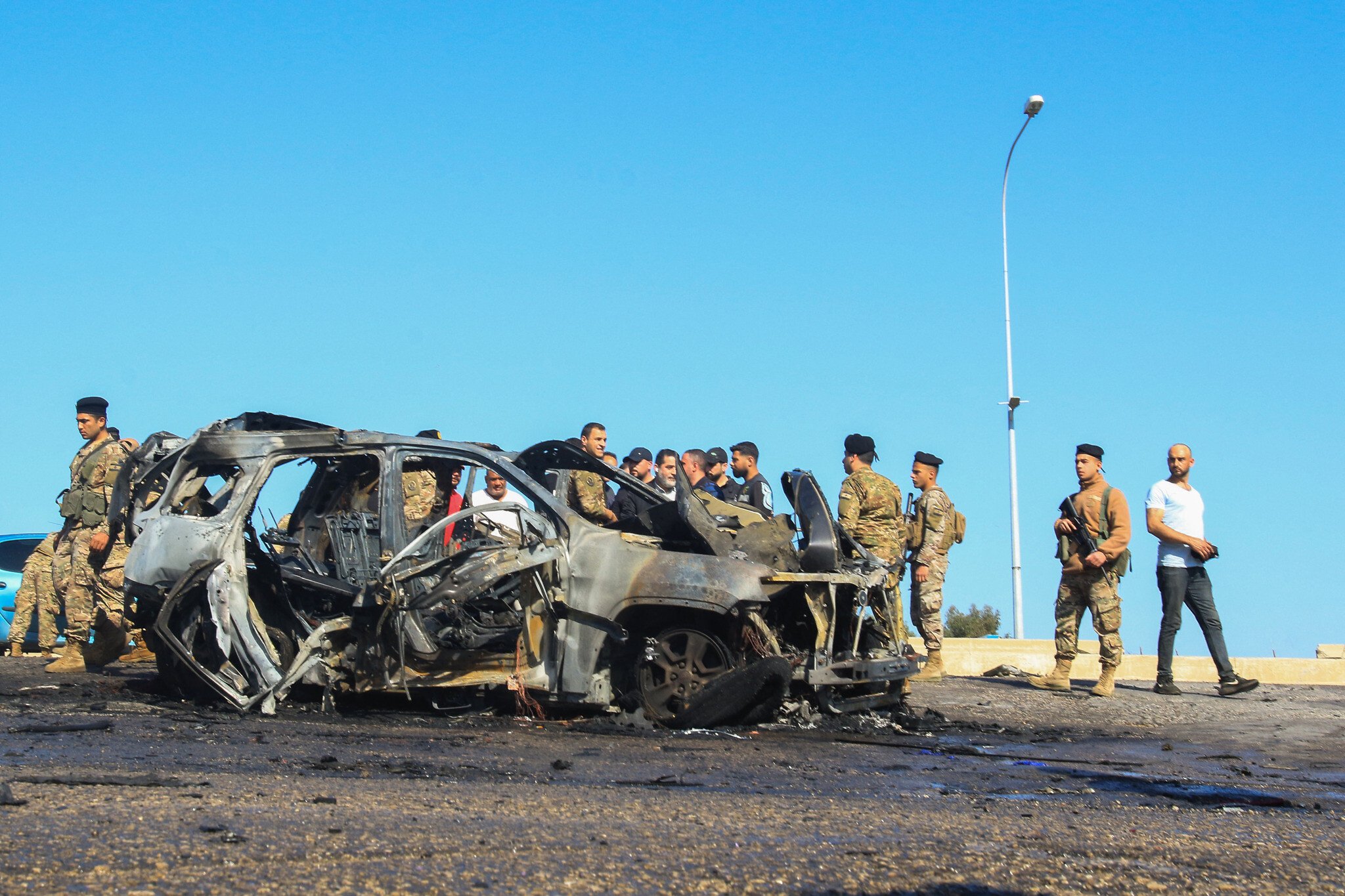
Israeli drone strikes killed two Hezbollah operatives in southern Lebanon on Sunday, the Israel Defense Forces said, marking the latest in a string of deadly exchanges that continue to strain a fragile ceasefire between Israel and the Iran-backed terrorist group.
The IDF said the first strike, carried out in the village of Arnoun in Lebanon’s Nabatieh region, targeted a member of Hezbollah’s anti-tank unit. Lebanon’s health ministry confirmed one fatality in the attack, which it described as an “Israeli enemy strike” on a motorcycle. Arnoun lies just five kilometers (three miles) from the Israeli border.
It said another person was killed in an Israeli raid that “targeted a vehicle on the Debl road” in the Bint Jbeil district. The IDF later confirmed the attack, saying a drone strike in Ayta ash-Shab killed a member of Hezbollah’s rocket unit.
Another strike on a car in nearby Beit Lif wounded one person, the Lebanese health ministry said.
The IDF did not immediately comment on the Beit Lif attack.
Since the initiation of a ceasefire agreement in November 2024, which expired in mid-February, Israel has continued to launch targeted strikes on Hezbollah operatives and infrastructure, claiming violations of the truce by the terrorist organization. According to the IDF, over 180 Hezbollah operatives have been killed in Israeli strikes since the deal was reached.
The November truce followed over a year of cross-border violence that began when Hezbollah started attacking Israel a day after its Palestinian ally Hamas’s October 7, 2023, terror onslaught. The fighting between Israel and Hezbollah included two months of open warfare, and the ceasefire was based on the framework of United Nations Security Council Resolution 1701, which ended the 2006 Second Lebanon War.
The resolution required Hezbollah to withdraw its fighters north of the Litani River — about 30 kilometers (19 miles) from the border — and dismantle all military infrastructure in southern Lebanon. Israel, in turn, was to withdraw its troops, though it has maintained five positions along the frontier it considers “strategic.”
בדרום לבנון עוד שני הרוגים היום בשורות חיזבאללה בשתי תקיפות שונות לעבר כלי רכב ואופנוע בכפרים בית ליף וארנון בהתאמה. מתחילת הפסקת האש בסוף חודש נובמבר 190 מחוסלים בלבנון הרוב המוחלט מחיזבאללה pic.twitter.com/64HyIjL1cI
— roi kais • روعي كايس • רועי קייס (@kaisos1987) June 1, 2025
The escalating violence has drawn regional criticism. During a visit to Baghdad on Sunday, Lebanese President Joseph Aoun condemned the Israeli raids as violations of Lebanese sovereignty. In a joint press conference with Iraqi Prime Minister Mohammed Shia al-Sudani, both leaders denounced the Israeli actions.
“These repeated Israeli attacks against Lebanon’s sovereignty are in violation of international law,” Sudani said. He called for full implementation of the 2006 UN resolution and reiterated Iraq’s support for Lebanon’s territorial integrity.
President Aoun’s trip to Iraq, his first since taking office in January, also focused on strengthening bilateral ties in energy, telecommunications, and trade. Lebanon, grappling with a severe economic crisis, has relied heavily on Iraqi fuel shipments to keep its power grid functioning. The two nations have also discussed increased wheat deliveries, with Lebanon expecting 320,000 tons from Iraq in the coming months.
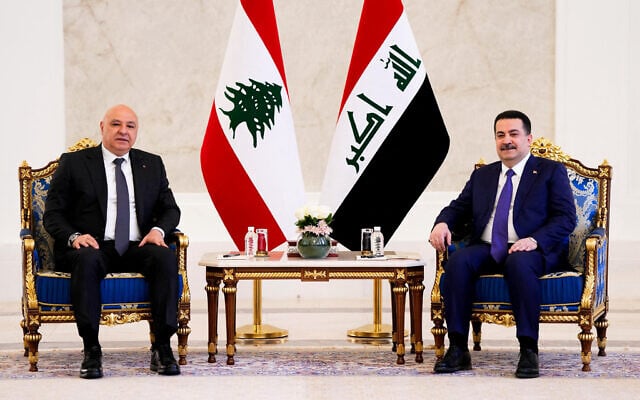
In his remarks, Aoun thanked Iraq for “all the support and donations,” particularly during last year’s war, when Iraq welcomed thousands of displaced Lebanese civilians, primarily Shiite Muslims.
Hezbollah, which maintains strong political and military ties with Iran and enjoys support from pro-Iran factions in Iraq, has not publicly commented on Sunday’s strike.
The developments come amid heightened uncertainty over the long-term viability of the ceasefire, with tensions simmering along the border and diplomatic efforts to de-escalate appearing increasingly strained.






The Times of Israel Community.