

IDF strikes Hezbollah military compounds in eastern Lebanon; teenager said killed
Military says strikes targeted eight sites belonging to terror group’s elite Radwan Force; Lebanese health ministry reports 29 people injured, Syrian teen killed
 Add ToI as a Preferred Source on Google
Emanuel (Mannie) Fabian is The Times of Israel's military correspondent
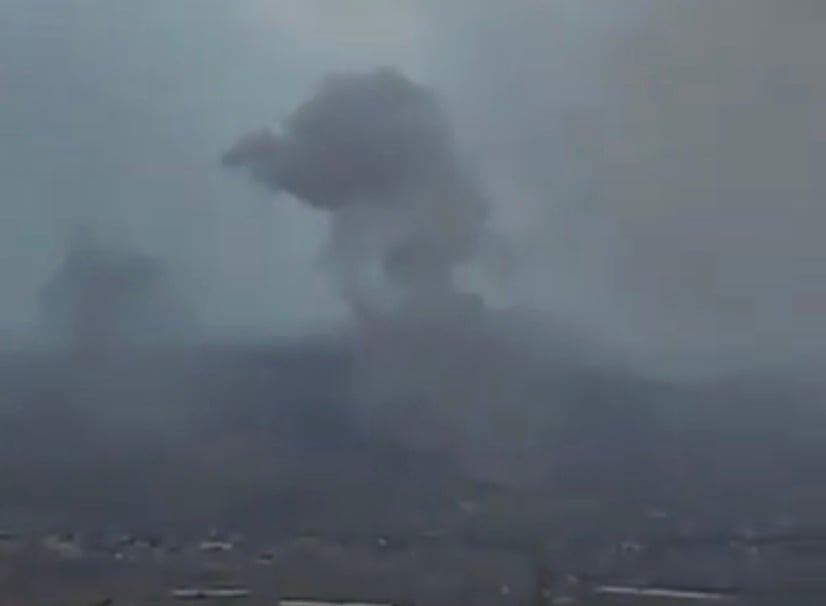
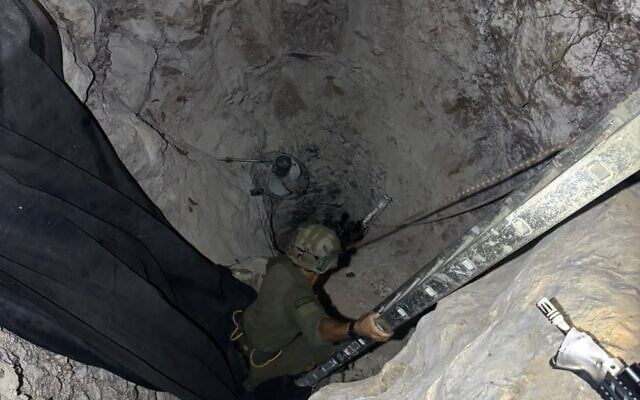
The Israeli Air Force carried out multiple strikes in eastern Lebanon on Thursday, which it said targeted eight military compounds belonging to Hezbollah’s elite Radwan Force.
The Lebanese Health Ministry said the Israeli strikes had killed a teenager.
According to the Israel Defense Forces, the sites in the Beqaa Valley area were used by Hezbollah to store numerous weapons, including rockets, as well as for training by the Radwan Force for planned attacks on Israel.
Hezbollah’s activity at the sites and attempts by the terror group to rearm “constitute a violation of the ceasefire understandings between Israel and Lebanon, and pose a threat to the State of Israel,” the IDF said.
The Radwan Force was previously tasked with invading Israel in a future war, and the IDF says the elite unit had advanced the terror group’s “Conquer the Galilee” plan for years, until the 2023-2024 war that saw most of Hezbollah’s leadership eliminated.
The Lebanese Health Ministry said after the strikes that a 16-year-old Syrian teen had been killed and 29 other people had been injured.
מצורף תיעוד מתקיפת מחנות צבאיים של יחידת 'כוח רדואן' במרחב בעלבכ שבלבנון באמצעות חיל האוויר pic.twitter.com/4cNyEaFv7c
— צבא ההגנה לישראל (@idfonline) February 26, 2026
Airstrikes in Lebanon have become routine as the IDF says Hezbollah is continuing to rebuild its capabilities in violation of the November 2024 US-brokered ceasefire. Israel says it has killed over 400 Hezbollah operatives and members of allied terror groups in that time.
The military has stepped up its strikes in recent weeks, with assessments indicating that the Iran-backed terror group may join Tehran in attacking Israel if war erupts between America and Iran.
Recent Israeli attacks in Lebanon have included raids on weapon depots, missile launchers, and other military sites, and the killing of at least 16 Hezbollah operatives, two Palestinian Islamic Jihad operatives, and two Hamas members since the start of the month.
Hezbollah is widely considered to be Iran’s most prized proxy, built up over decades as a strategic deterrent situated on Israel’s northern border.
There are also signs that Tehran is now exerting greater control over its proxy. On Saturday, Saudi outlet Al-Arabiya reported that IRGC officers have effectively taken charge of Hezbollah in anticipation of a war.
A Hezbollah official told AFP on Wednesday, though, that the group would not intervene on Iran’s behalf if the US carries out a limited strike against the Islamic Republic.
The November 2024 truce came after over a year of war along the border, including two months of open conflict that saw the IDF carry out a ground operation in Lebanon’s south in a bid to enable the safe return of some 60,000 residents of northern Israel displaced by the terror group’s near-daily attacks.
Hezbollah began attacking Israel on October 8, 2023 — a day after fellow Iran-backed terror group Hamas invaded southern Israel, sparking the war in Gaza.
The Israeli offensive launched in September 2024 devastated the terror group’s leadership and significantly curtailed its military capabilities.
The ceasefire required both Israel and Hezbollah to vacate southern Lebanon, to be replaced by the Lebanese armed forces. Israel has withdrawn from all but five strategic posts along the border.
Weakened by the war and still facing regular Israeli strikes, Hezbollah is under internal and international pressure to hand over its weapons, with the Lebanese army having drawn up a plan to disarm it. It has so far refused.
Times of Israel staff and AFP contributed to this report.


The Times of Israel Community.