

In first, Bennett implies he won’t sit in a government under Netanyahu
Former premier and current PM’s main election rival says ‘failed leadership’ can’t continue, suggests premier should step aside for overseeing ‘disaster’ of October 7
 Add ToI as a Preferred Source on Google
Ariela Karmel is a political correspondent at The Times of Israel. She previously reported for Calcalist and Haaretz. She holds an MA in Middle Eastern and African History from Tel Aviv University and a BA in Political Science from the University of British Columbia.
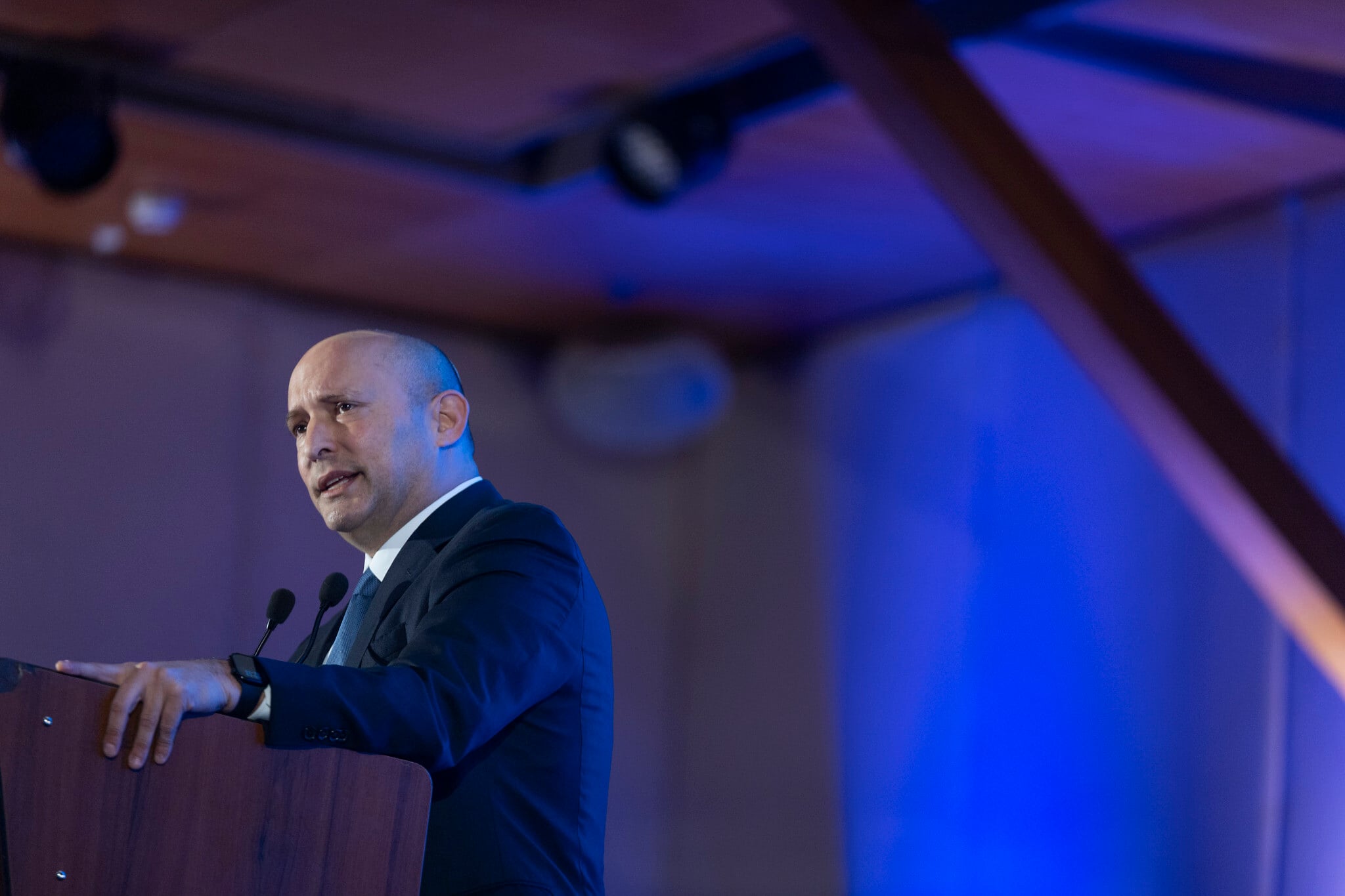
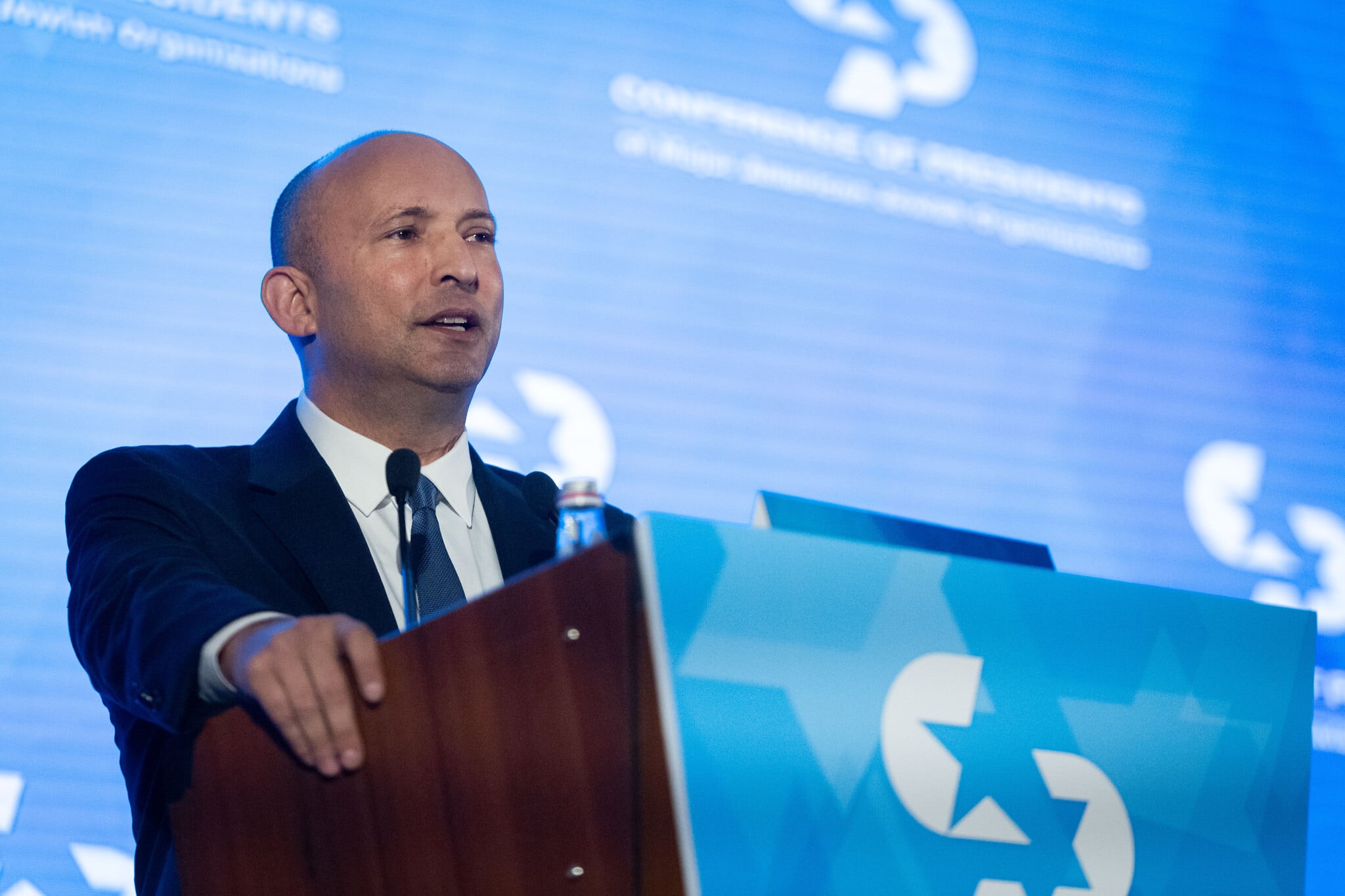
Former prime minister Naftali Bennett said Tuesday that he would not allow Israel’s “failed” leadership to continue or be part of it, and that a leader “must know when to step aside,” in what appeared to be his first remarks suggesting that he will not sit in a government with Prime Minister Benjamin Netanyahu.
“An Israel divided against itself will not stand,” Bennett told Jewish leaders at a Conference of Presidents of Major American Jewish Organizations gathering in Jerusalem.
“Israel’s current leadership has divided us and continues to divide us even now, more than ever… I will not allow that failed and divisive leadership to continue, nor will I be part of it. I intend to lead Israel into its next, stronger chapter,” he continued.
Though he didn’t name Netanyahu, Bennett seemed to suggest that the prime minister should step down.
“After three decades since taking power, and after the greatest disaster in Israel’s history happened on his watch, a leader must know when to step aside with dignity,” he said.
“Israel is bigger than any one man,” he continued.
Bennett added that Israel’s “next chapter must be written by new leadership” and not by “the same people that are responsible for the disaster” of the Hamas-led October 7 attack, which saw the killing of some 1,200 people and the abduction of 251 hostages, sparking two years of war in Gaza.
Bennett himself served as prime minister and in other senior posts in the years preceding the onslaught, meaning an eventual commission of inquiry could end up attributing responsibility to him as well. Unlike Netanyahu, however, Bennett has called for a state commission of inquiry, while the premier has opposed this and hasn’t formed any sort of inquiry in over two years.
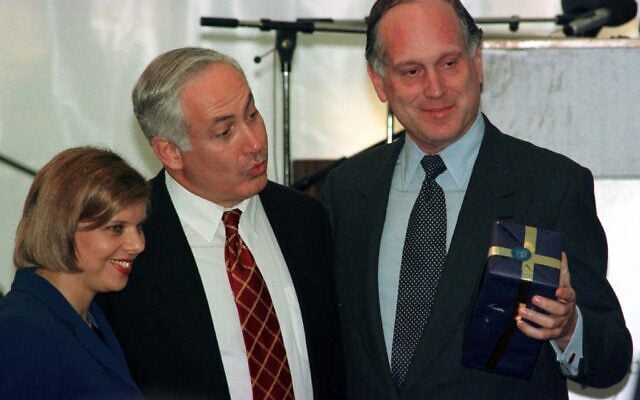
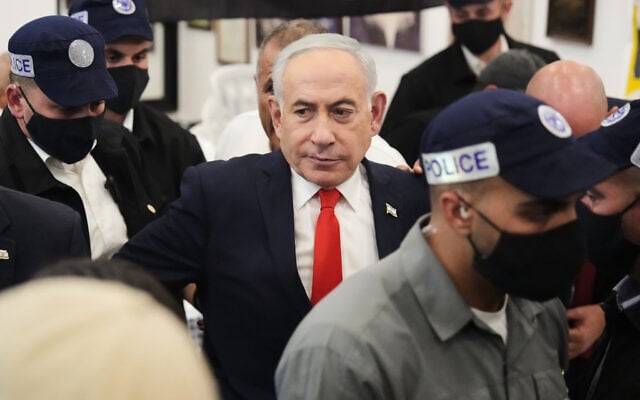
Netanyahu has served as prime minister since 2009, with the exception of 18 months in 2021-2022, and previously served from 1996-1999.
He has never acknowledged direct responsibility for the failures surrounding October 7 and has attempted to place the blame on others.
Bennett, whose party is currently predicted by most polls to be the second-largest in the Knesset following this year’s election — after Netanyahu’s Likud — is widely seen as Netanyahu’s main challenger for the premiership. The vote must be held by the end of October, but could come earlier if the coalition collapses.
Although a fierce critic of the government and despite leading what is predicted to become the largest party in the anti-Netanyahu bloc, Bennett has not explicitly ruled out sitting in a government with Netanyahu and may still opt to join a unity government with Likud, though his comments Tuesday suggest that scenario is less likely.
This is especially since, as the blocs currently stand in opinion polls and barring major electoral shifts — which may well come — the opposition parties would only be able to form a new government and topple the current one by including Arab parties in the coalition or relying on them from the outside, which both Bennett and Yisrael Beytenu’s Avigdor Liberman have vetoed.
Days ahead of the 2021 elections, Bennett explicitly promised not to sit in a government under Yesh Atid party leader Yair Lapid or with Arab parties — a promise he broke weeks later as he formed the coalition that ousted Netanyahu.



The Times of Israel Community.