

In first, poll shows Eisenkot’s party overtaking Bennett’s as potential leader of anti-Netanyahu bloc
Ex-IDF chief’s Yashar hits 16 seats to Bennett’s 15, while Lapid’s Yesh Atid collapses to 5; Likud by far the biggest party at 28, but coalition slightly weaker; poll finds severe toll of war on work, mental health
 Add ToI as a Preferred Source on Google
In a new poll published Thursday, former IDF chief of staff Gadi Eisenkot’s Yashar party emerged as the second-largest for the first time, overtaking Naftali Bennett’s yet-unnamed party and trailing only Prime Minister Benjamin Netanyahu’s Likud.
The survey published by Zman Yisrael, The Times of Israel’s Hebrew-language sister site, gave Eisenkot 16 seats, up from 15 last week and 12 three weeks ago. Likud was at 28 seats.
Bennett, who has long been seen as the leading challenger to Netanyahu, and whose party has consistently been projected as the largest in the opposition and second-largest overall, fell from 17 seats last week to 15 this week.
The results also showed Yair Lapid’s Yesh Atid collapsing to just 5 seats, down one seat from last week, in its lowest showing yet in Zman Yisrael polls. It marks a major decline for what is currently the Knesset’s leading opposition faction and second-largest faction overall with 24 seats.
As for the remaining anti-Netanyahu parties, Avigdor Liberman’s Yisrael Beytenu remained at 10 seats, while Yair Golan’s left-wing Democrats gained one seat to reach 9.
While the opposition bloc technically saw a decrease from 56 seats last week to 55 this week, Benny Gantz’s Blue and White managed to cross the electoral threshold this week, which it failed to do last week, adding another four seats to the equation.
Though Gantz has waffled over whether he would join a government with Netanyahu, the potential addition of his four seats to the opposition bloc would give the opposition 59 seats — closing in a 61-seat majority in the 120-member Knesset.

This does not include the four Arab parties that signed an agreement in January to work toward running together on a joint list, since most of the parties in the anti-Netanyahu bloc have vowed not to rely on Arab politicians for support due to their generally non-Zionist and anti-Zionist positions.
The poll had the parties running separately, since no deal has yet been made. It projected Mansour Abbas’s Ra’am and Ayman Odeh’s Hadash-Ta’al union winning five each. The fourth party, Balad, did not pass the electoral threshold if running alone.
Meanwhile, the coalition appeared to have weakened, dropping from 54 seats last week to 51, in part due to Religious Zionism once again falling below the electoral threshold after briefly clearing it last time.
A poll published by Channel 12 on Thursday also showed Netanyahu’s Likud with 28 seats, although, unlike the Zman Yisrael poll, it gave Bennett 20 seats, making his the second-largest party.
It predicted that of the parties that make up the current coalition, Shas would receive nine seats if elections were to be held today, while Otzma Yehudit and United Torah Judaism would each receive seven. Smotrich’s Religious Zionism would fall below the electoral threshold.
Joining Bennett in the anti-Netanyahu bloc, Channel 12 estimated that The Democrats would win 12 seats, as would Eisenkot’s Yasher. Yisrael Beytenu would win nine seats, and Lapid’s Yesh Atid would receive just six mandates.
Hadash-Ta’al and Ra’am would each receive five seats, and Gantz’s Blue and White and Sami Abu Shehadeh’s Balad would both fail to pass the electoral threshold.
According to the Channel 12 poll, Netanyahu’s bloc would win 51 seats if elections were to be held today, compared to the Bennett-led opposition bloc’s 59, with the mainly Arab parties holding the other 10.
War takes toll on Israelis’ mental health
The survey also polled Israelis regarding the impact of the ongoing Iran war on work routines, finding that 44% have altered their work or study routine, including 14% who said they have temporarily stopped working altogether and another 14% who said they have shifted to working or studying from home, while roughly half reported no change.
Nationwide restrictions amid the war have left most businesses, schools, and educational activities shuttered. Workplaces partially reopened two weeks ago to ease the costs of shutting down the entire economy, and in-person studies resumed in some locations less targeted by missiles, but most students remain at home.
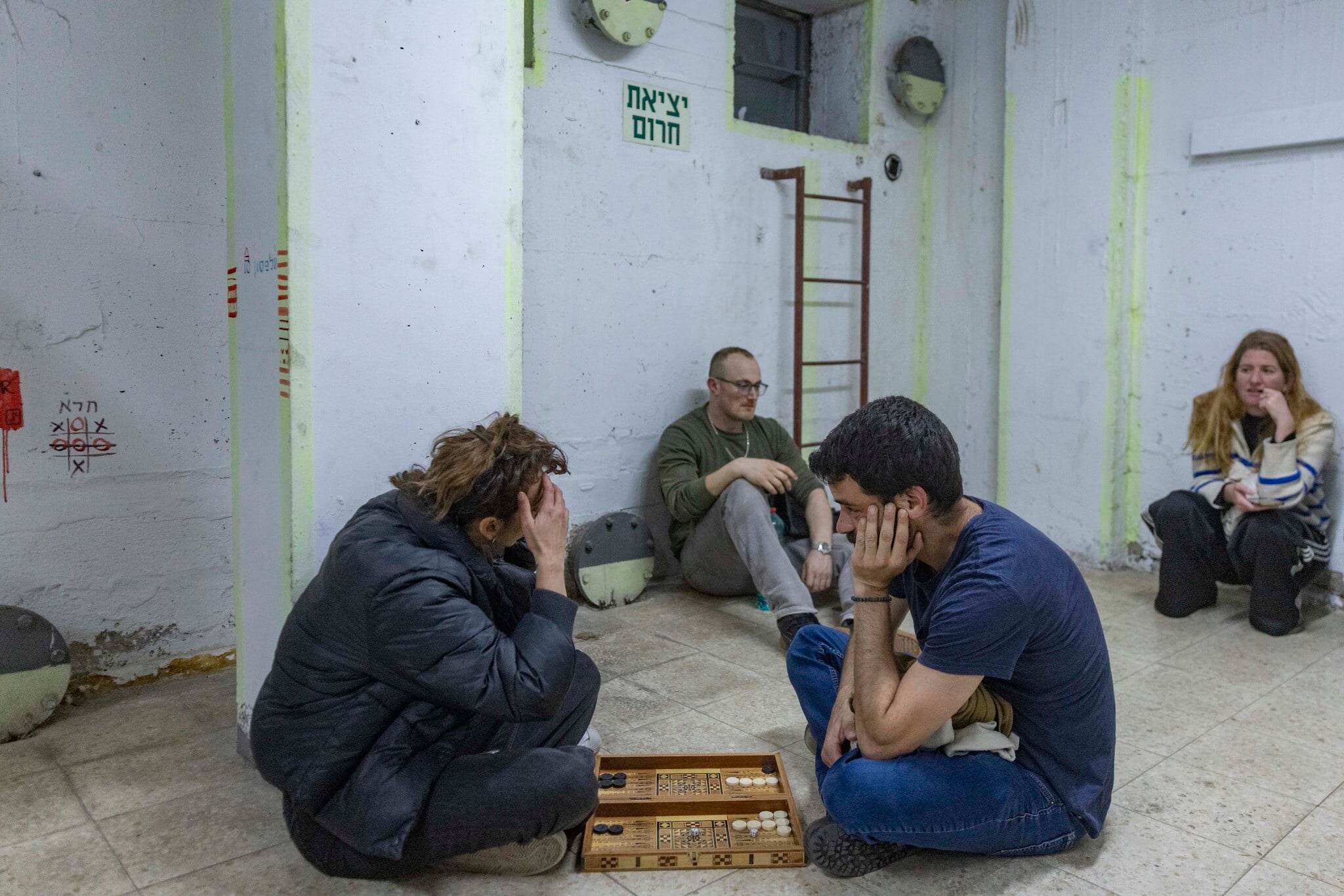
The toll on mental health is also evident in the current war, which follows nearly two-and-a-half years of military conflicts on multiple fronts, since the deadly Hamas invasion of October 7, 2023.
Forty-one percent of respondents said they are experiencing increased anxiety, depression, and/or irritability, while 45% said that their moods have remained the same, and eight percent said their mood had improved.
The survey also found that Israelis are glued to the news, with nearly half of the country, at 48%, watching two to three hours or more a day, a third saying they tune in for an hour a day, and only 16% saying they don’t watch at all.
The poll was conducted on March 18-19, 2026, among 500 respondents, controlled by age, religion, gender, and place of residence. The margin of error was 4.4%.









The Times of Israel Community.