

In Gazan cemeteries, some evacuees live among the dead
While some have returned home following the ceasefire, others no longer have homes to return to or lived in neighborhoods now controlled by the IDF
 Add ToI as a Preferred Source on Google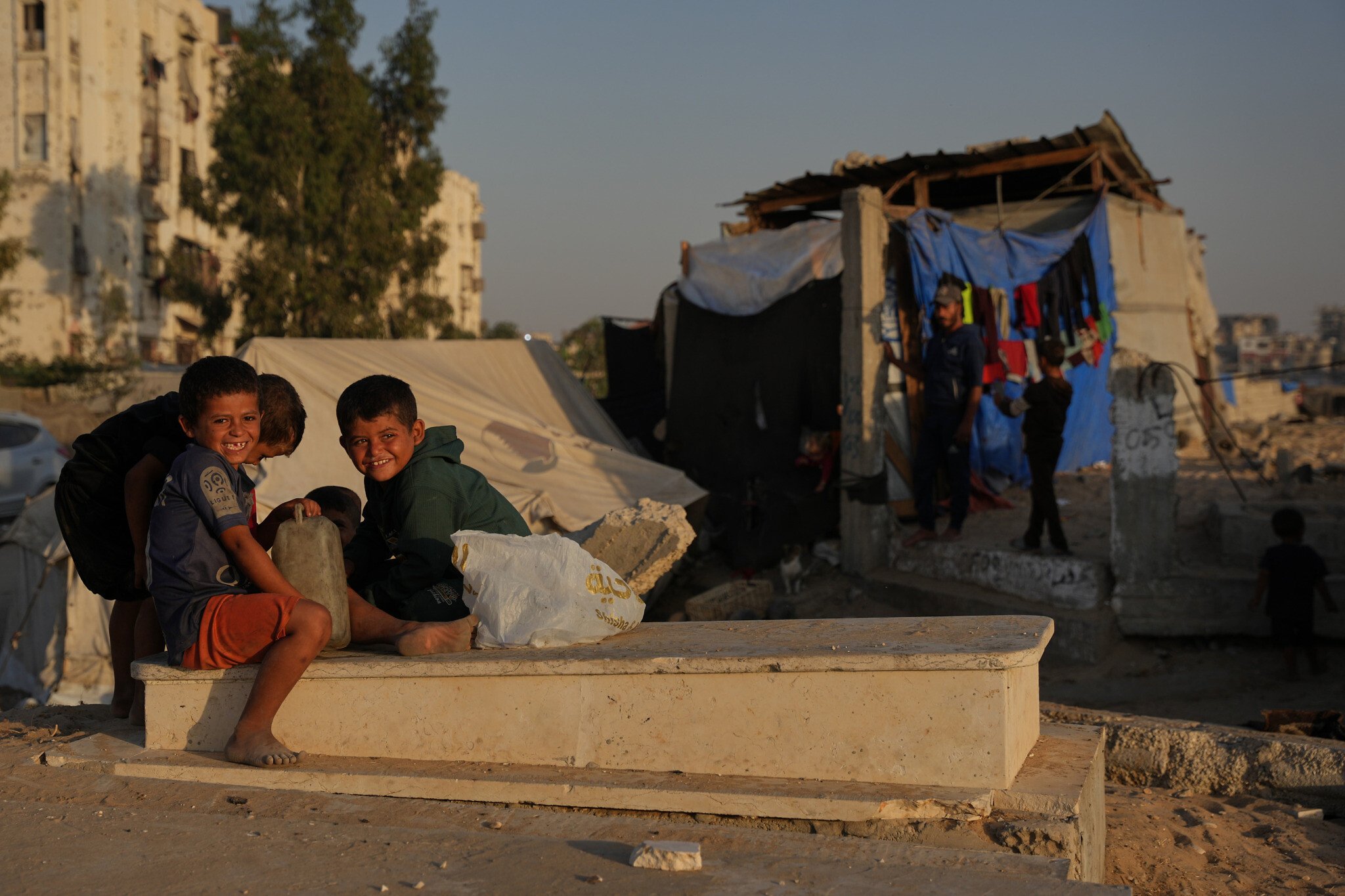
KHAN YOUNIS, Gaza Strip — Skeletons are neighbors for some Palestinians in Gaza who found nowhere but cemeteries to shelter from the war.
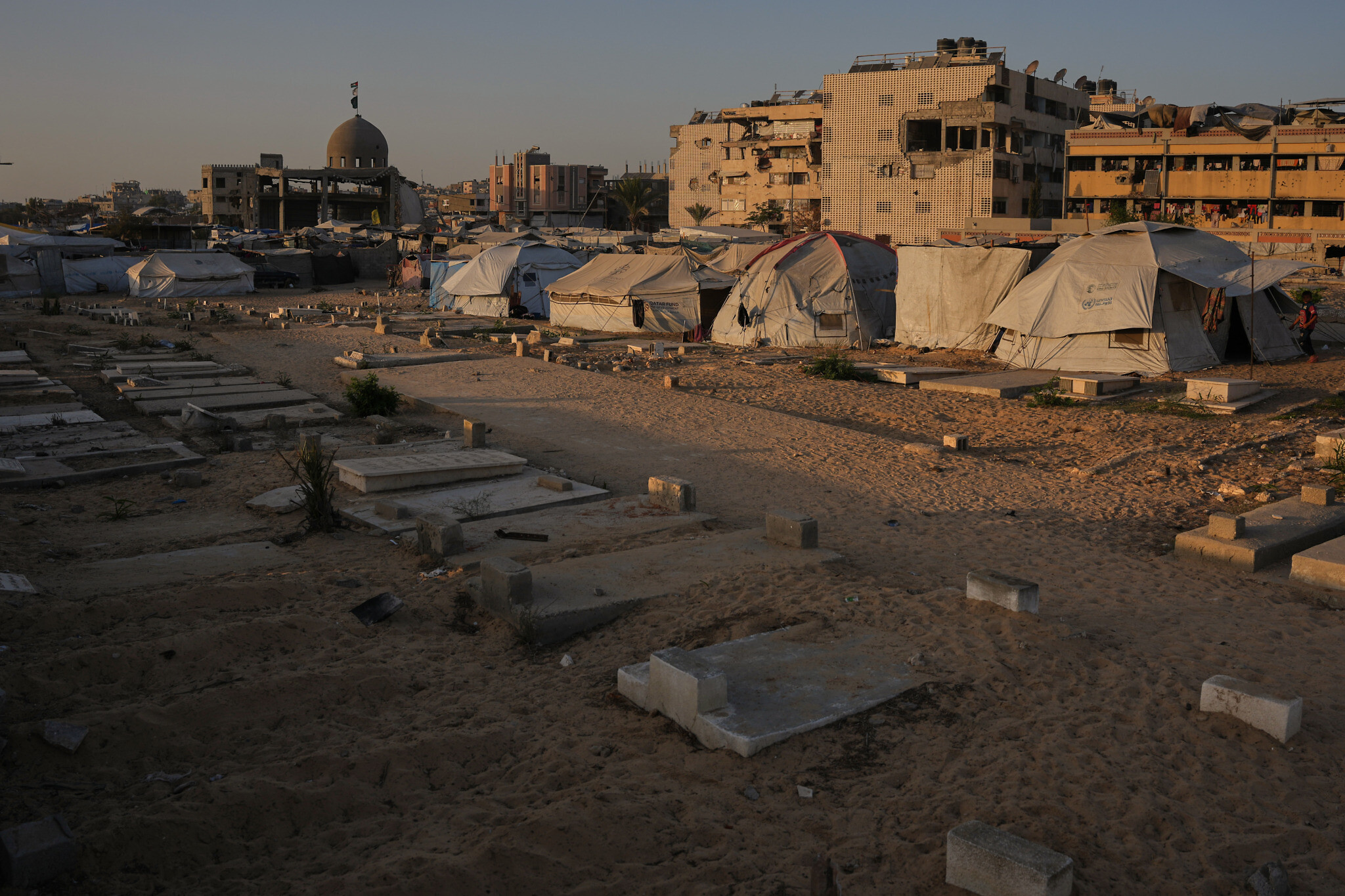
Gravestones have become seats and tables for families like that of Maisa Brikah, who has lived with her children in a dusty, sun-baked cemetery in the southern city of Khan Younis for five months. Some 30 families shelter here.
A blonde toddler sits outside one tent, running fingers through the sand. Another peeks playfully from behind a drape of fabric.
Nighttime is another matter.
“When the sun goes down, the children get scared and don’t want to go, and I have a few children, four small ones,” Brikah said. “They are afraid to go out because of the dogs at night, and the dead.”
The vast majority of Gaza’s population of over 2 million people has been displaced by the two years of war between Hamas and Israel. With the ceasefire that began on October 10, some have returned to what remains of their homes. Others are still crowded into the strip of remaining territory that Israeli forces don’t control.
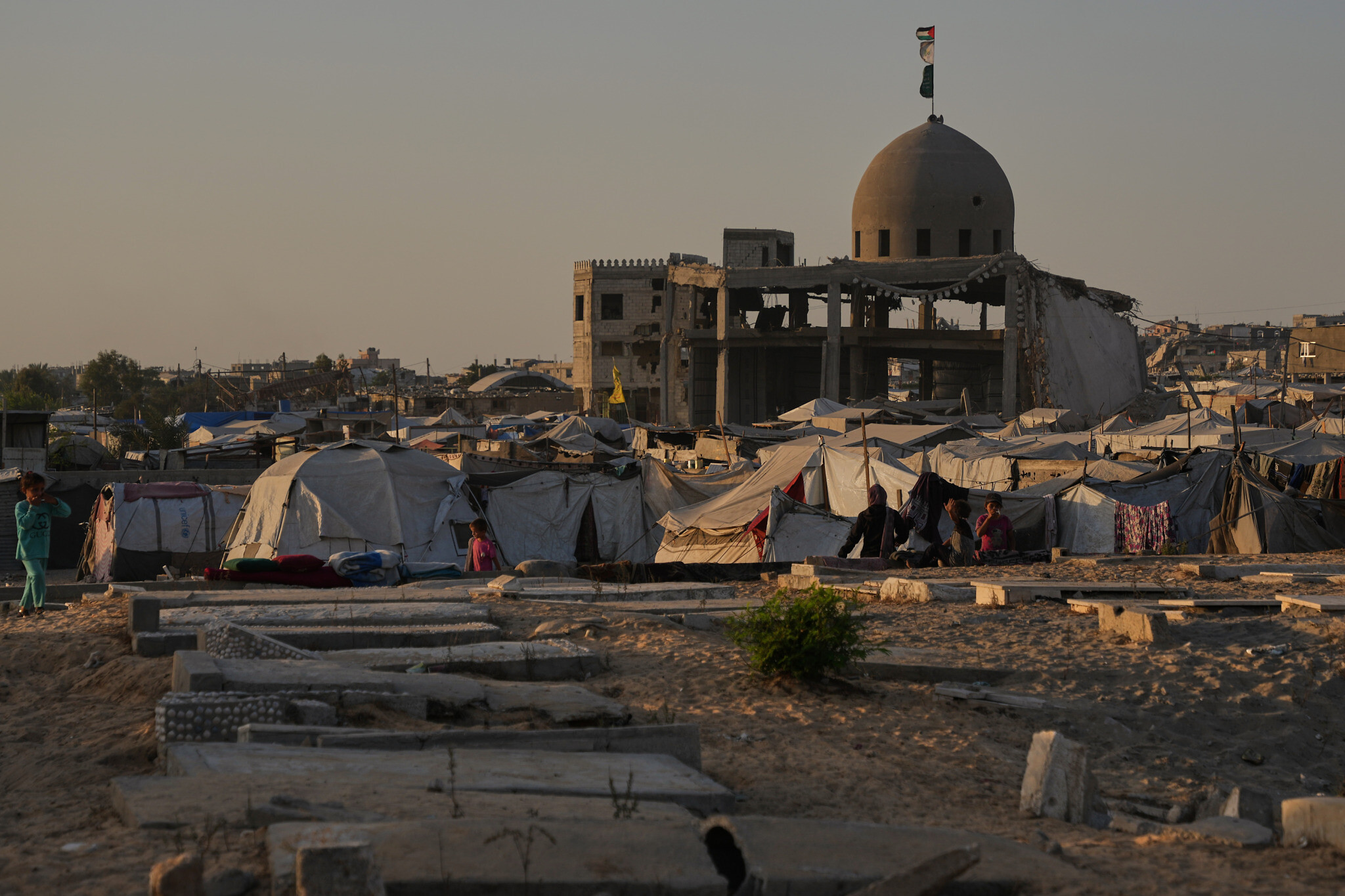
Here and in other cemeteries in Gaza, there is life among the dead. A prayer rug hangs on a line. A child pushes a water jug on a wheelchair between the graves. Smoke rises from a cooking fire.
One of Brikah’s nearest neighbors is Ahmad Abu Said, who died in 1991 at the age of 18, according to the carving on his tombstone that begins with lines from the Quran. There is unease, a feeling of disrespect, at setting up camp here.
But there is little choice. Brikah said her family’s home elsewhere in Khan Younis was destroyed. There is no return for now. Israeli forces control their neighborhood.
Other residents of this cemetery come from Gaza’s north. They are often far from the land where their own loved ones are buried.
Mohammed Shmah said he has been living here for three months. He said his house had been destroyed, too.
“I’m a grown man, but I still get scared of the graves at night. I hide in my tent,” he said, perched on a broken tombstone and squinting in the sun. He said he had only 200 shekels (around $60) on him when a friend took it to help bring his family to the cemetery.
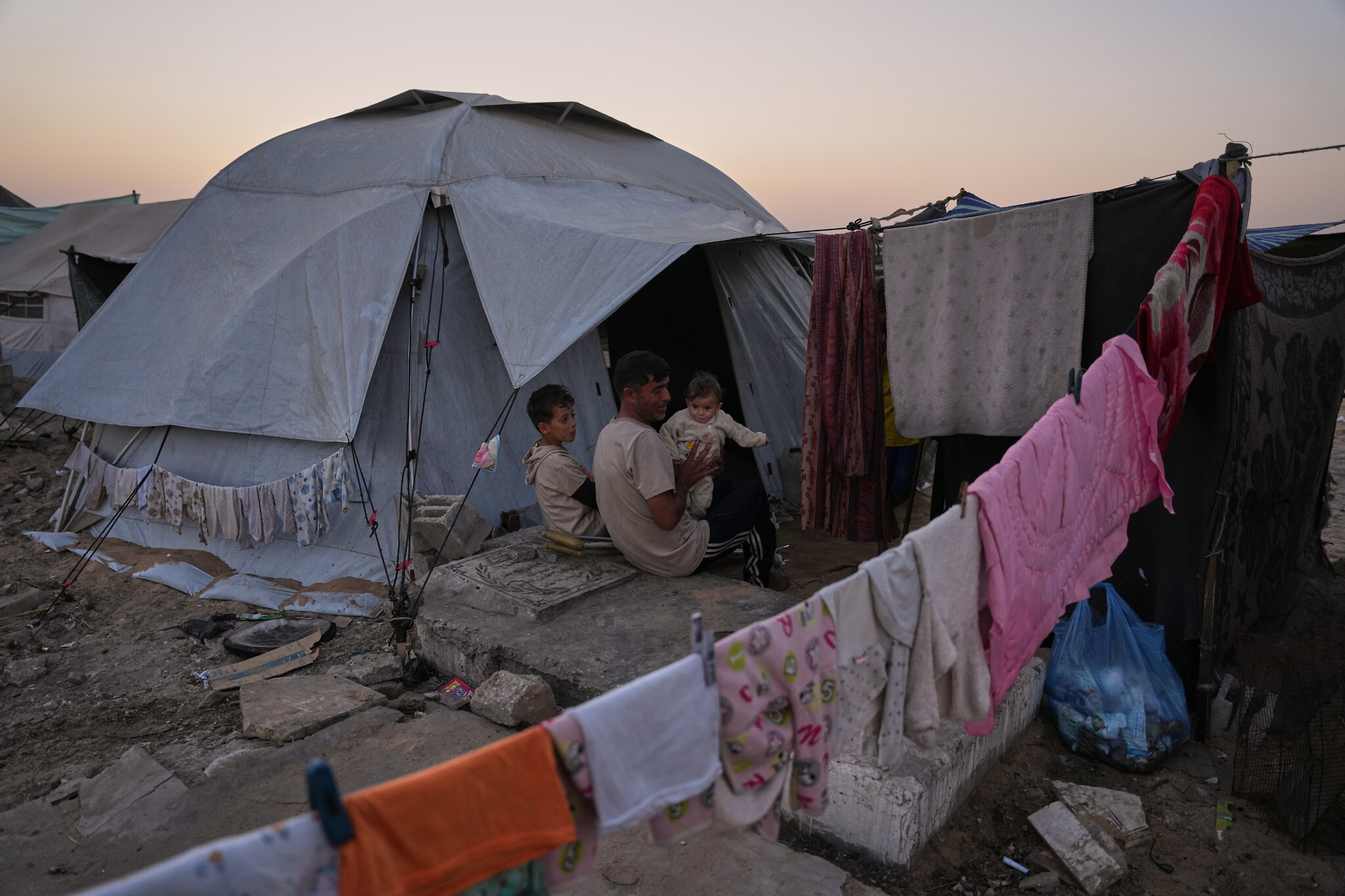
The lack of money for shelter elsewhere is one reason keeping families living among the graves, said Hanan Shmah, Mohammed’s wife. With care, she washed dishes in a soapy container the size of a pie tin, guarding precious water.
“Of course, life in the cemetery is full of fear, dread and worries, and you don’t sleep in addition to the stress we experience,” she said.
There is no guarantee of safety, even among the dead. Israeli forces have bombed cemeteries during the war, according to the United Nations and other observers. Israel has accused Hamas of using some cemeteries for cover, and has argued that the sites lose their protection when they are used for military purposes.
During the war, bodies in Gaza were buried wherever they could be buried, including in hospital courtyards. According to custom, Palestinian families are buried near loved ones. The fighting has largely disrupted that.
The Gaza war death toll claimed by the Hamas-run health ministry — now over 68,800 — has jumped by hundreds since the ceasefire began from the recovery of remains alone. The toll cannot be verified and does not differentiate between civilians and fighters. Israel says it has killed over 22,000 combatants in battle as of August and another 1,600 terrorists inside Israel during and immediately after Hamas’s October 7, 2023, onslaught.
Israel has said it seeks to minimize civilian fatalities and stresses that Hamas uses Gaza’s civilians as human shields, fighting from civilian areas including homes, hospitals, schools and mosques.
Israel’s toll in the ground offensive against Hamas in Gaza and in military operations along the border with the Strip stands at 476. The toll includes two police officers and three Defense Ministry civilian contractors.
Families in this Khan Younis cemetery have watched the arrival of new additions, often buried not under slabs but under sand, marked off by stones.
“After the ceasefire, my life is the same inside the cemetery, meaning I gained nothing,” Mohammed Shmah said.

The Times of Israel Community.