

Incendiary balloons from Gaza spark fires in south ahead of Jerusalem flag march
Protesters clash with IDF troops on Gaza border, with Palestinian reportedly shot in leg; contentious parade set to go ahead despite warnings it could reignite conflict with Hamas
 Add ToI as a Preferred Source on Google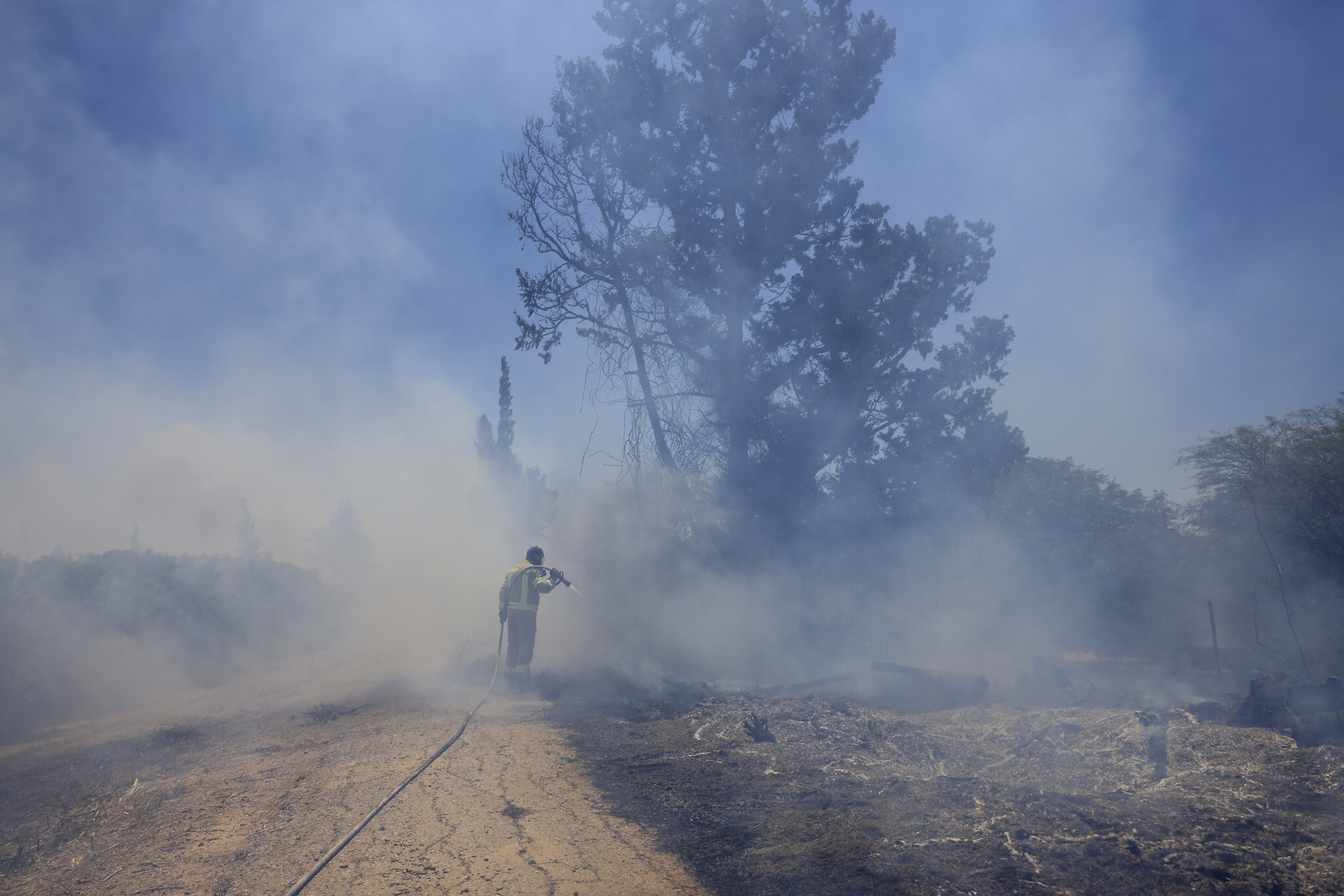
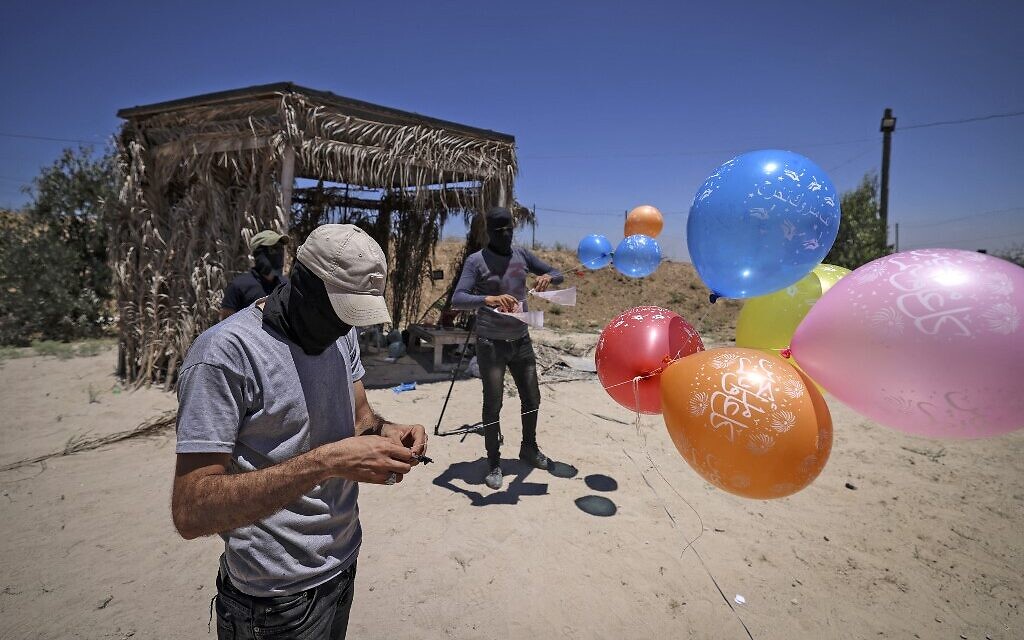
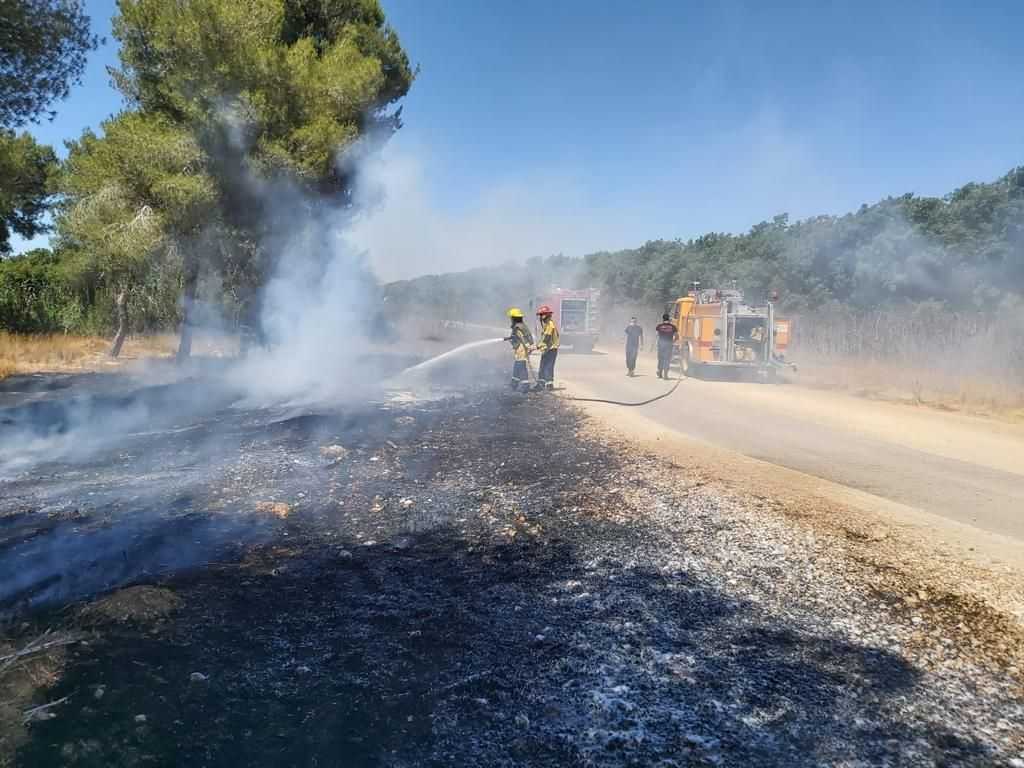
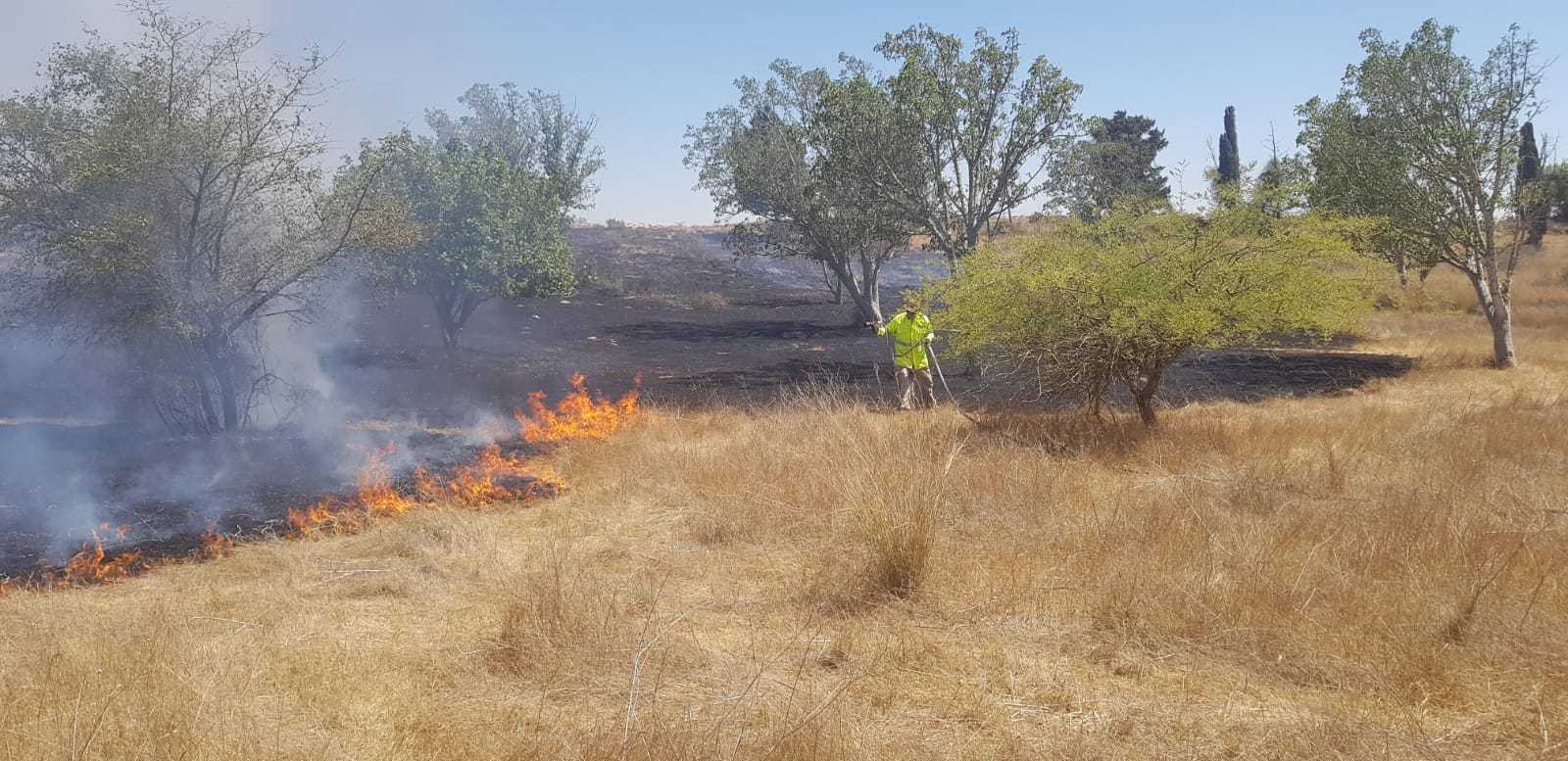
Numerous fires blazed in southern Israel near Gaza on Tuesday, with fire services saying at least 20 were sparked by balloon-borne incendiary devices launched by terrorists in the Strip.
According to Fire and Rescue Services, some 20 blazes — mostly small brush fires — broke out in the Eshkol and Sha’ar Hanegev regions immediately adjacent to the Gaza Strip throughout the day, which investigators determined were started by airborne arson attacks from Gaza. The fires were quickly brought under control by firefighting teams from Fire and Rescue Services, the Parks Authority, the Jewish National Fund, the Israel Defense Forces and volunteers from local communities.
Meanwhile, clashes broke out between dozens of Palestinian protesters and IDF troops on the Gaza border amid tensions over a controversial flag march planned for later in the day in Jerusalem.
One Palestinian was reportedly shot in the leg, suffering light injuries.
The IDF has been bracing for a resurgence in Gaza fighting and a flare-up of clashes across the West Bank in recent days amid Palestinian threats of violence if the march by Jewish nationalists through parts of Jerusalem’s Old City goes ahead.
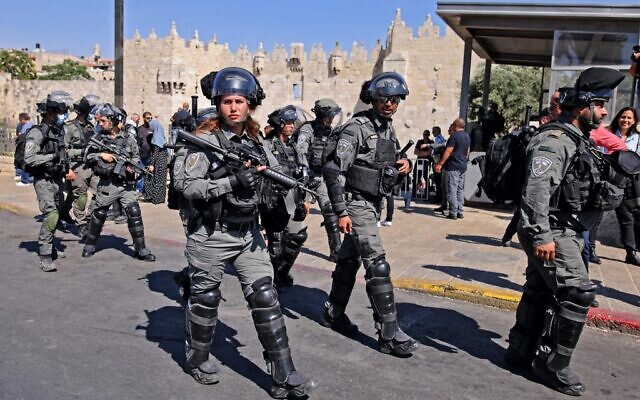
The parade, rescheduled after the original event on May 10 was stopped short by Hamas rocket fire at Jerusalem, is the first major test faced by Israel’s new government, which was sworn in on Sunday and gave the go-ahead for the event on Monday.
However, Channel 13 news cited unnamed Palestinian sources Tuesday saying Egypt had asked Hamas not to cause an escalation, warning that such a move would “embarrass” Cairo and that Prime Minister Naftali Bennett’s government would respond forcefully.
According to the sources, Hamas responded that “all options are on the table” but escalation could be avoided “if the event doesn’t get out of control.”
בעזה נערכים להפרחת בלוני טרור לקראת מצעד הדגלים אחר הצהרים. באחת התמונות ניתן לראות ראש נפץ שצפוי לעשות את דרכו לעבר ישראל. pic.twitter.com/XYDZmmAM9K
— ???????? נועם אמיר (@noamamir74) June 15, 2021
For the past three years, Palestinians in the Gaza Strip, mostly linked to Hamas and other terror groups, have launched thousands of balloon-borne incendiary and explosive devices into southern Israel, causing widespread fires and significant damage to agricultural fields, nature reserves, and private property.
התחילו? 2 שריפות פרצו בדקות האחרונות בשער הנגב. נבדק חשד לבלוני תבערה. pic.twitter.com/wpknxWKBb6
— almog boker (@bokeralmog) June 15, 2021
רשמית: שתי שריפות היום בעוטף עזה – נגרמו מבלוני תבערה. בסרטון: פעולות הכיבוי במועצה האזורית שער הנגב@Itsik_zuarets (צילום: מתנאל בושרי, דוברות כב"ה דרום)https://t.co/CA3SkQ631P pic.twitter.com/S2ncaxerFr
— כאן חדשות (@kann_news) June 15, 2021
Bennett, who replaced Benjamin Netanyahu on Sunday, has long urged a tougher response to arson balloons, saying in previous years that they should be treated the same as rockets and that attacks on southern Israel should receive the same response as attacks targeting central Israel. In 2018, for instance, Bennett — then the education minister — called for the IDF to try to kill all those launching attack balloons from Gaza, a proposal that was opposed by then-IDF chief of staff Gadi Eisenkot.
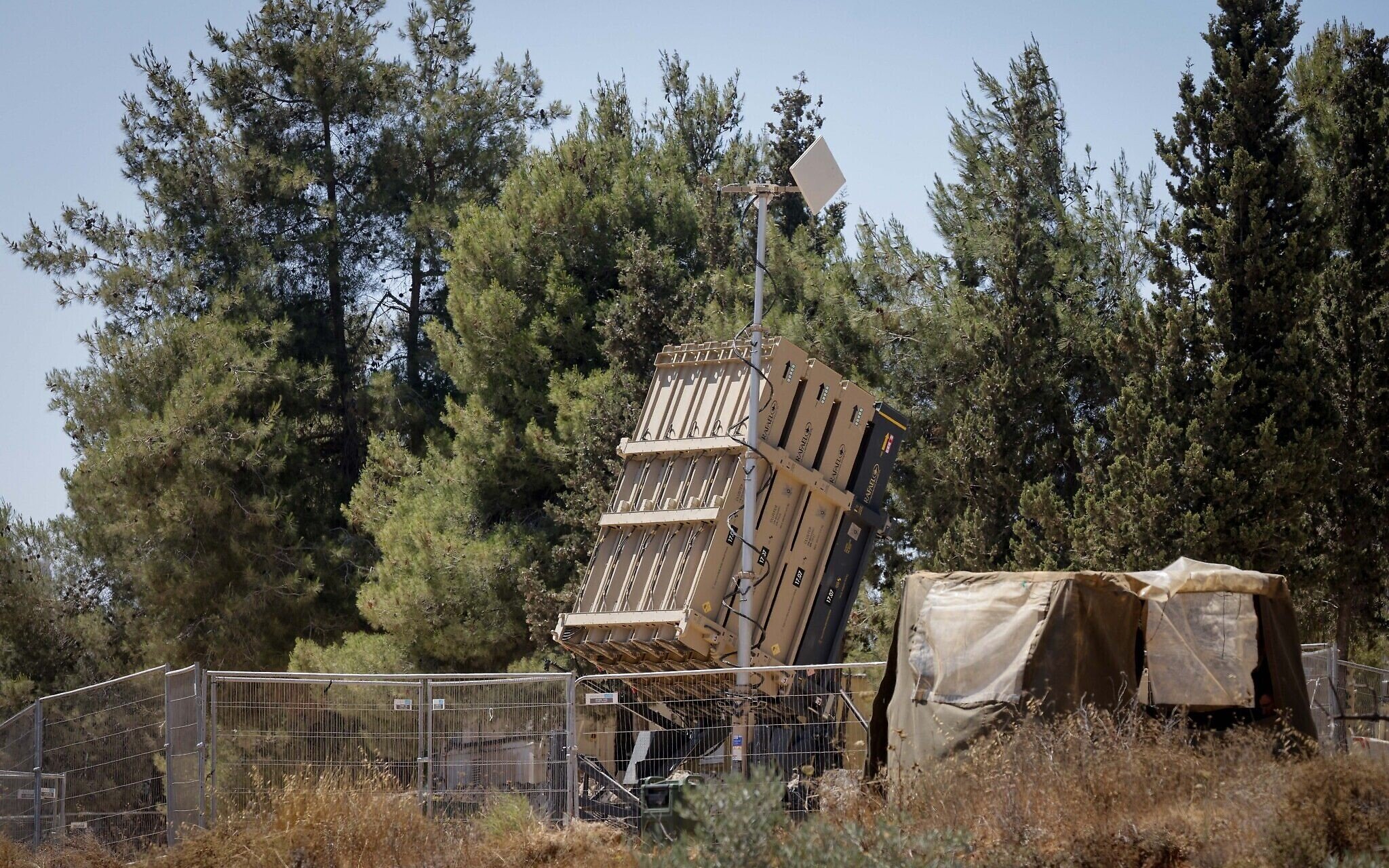
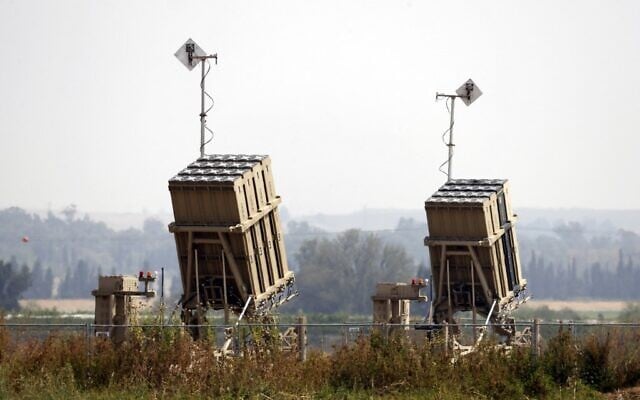
Meanwhile, the IDF on Monday deployed Iron Dome missile interceptor batteries across the country and sent reinforcements to the West Bank. Palestinian media claimed Tuesday that batteries were also placed near Jerusalem. The Israel Police was on high alert, deploying more than 2,000 officers across Jerusalem for the event
“The situation in the Palestinian sphere is volatile and we are prepared for a renewed outbreak of fighting,” IDF Chief of Staff Aviv Kohavi said late Monday.
“With respect to the IDF, what was is not what will be,” he said, referring to promises from Israel to take a much tougher stance with the Hamas terror group that rules Gaza and has threatened to launch fresh attacks.
Both Hamas and the Palestinian Authority have warned of violence if the march goes ahead.
“The flags march is like an explosive that will cause a new campaign to protect Jerusalem and the Al-Aqsa Mosque to ignite,” Hamas spokesperson Abd al-Latif Qanou said in a statement Monday.
The terror group also called on Palestinians to “confront Israeli settlers” during the march. “The nation and the resistance are behind you in the effort to thwart the plans of occupation,” Qanou said.
The May 10 — Jerusalem Day — rocket attack during the original parade, which came amid already rising tensions over planned East Jerusalem home evictions and police actions against Muslim rioters on the Temple Mount, touched off 11 days of intense fighting between Israel and Hamas-led terrorists in the Gaza Strip, as well as a rash of lower-level clashes in the West Bank and mob violence between Arabs and Jews inside Israel.
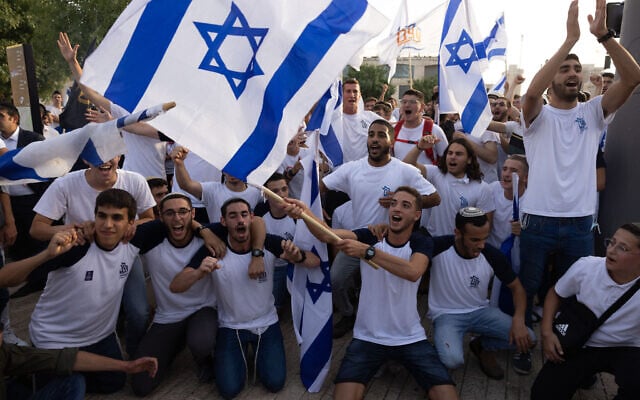
Since the fighting ended, Hamas has repeatedly warned that it could reopen hostilities over developments in Jerusalem, and has responded with increased belligerence to plans for the march, an annual event — held to mark Israel’s 1967 capture of East Jerusalem — during which thousands of nationalist youths parade through the Muslim Quarter of the Old City toward the Western Wall.
New Public Security Minister Omer Barlev said Monday that the march would proceed as scheduled, following a meeting with Israel Police Chief Kobi Shabtai on preparations for the march.
“I am under the impression that the police are well prepared and that a great effort has been made to maintain the delicate fabric of life, and public safety,” Barlev said.
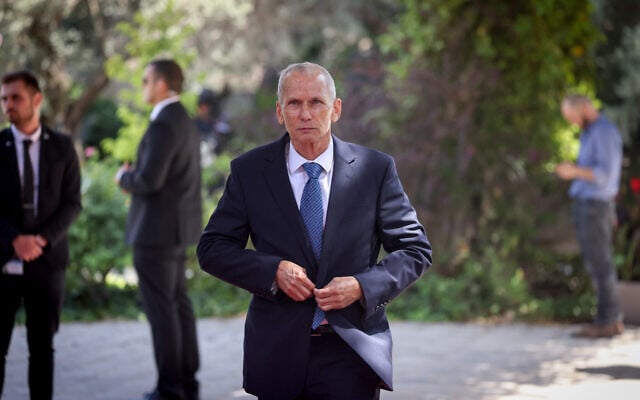
Prior to the meeting, Barlev said that “in a democracy, it is allowed and important to demonstrate within the confines of the law,” adding that “we will operate according to the recommendations of the police.”
The rescheduled event was initially planned for last Thursday, but was postponed to this Tuesday when police refused to authorize its planned route through the Old City’s Damascus Gate entrance and Muslim Quarter.
Emanuel Fabian and Judah Ari Gross contributed to this report.





The Times of Israel Community.